What a Fire Resistant Conveyor Belt Is
A Fire Resistant Conveyor Belt is a rubber conveyor belt engineered to resist ignition and limit flame spread when it carries combustible or hot materials. In mines, coal preparation plants, cement works, power stations, and port bulk terminals, the belt is often the longest continuous combustible element in the material handling line, so its flame behavior matters as much as its tensile strength. The same product is also described as a flame retardant conveyor belt, and buyers should confirm which term a supplier uses and what test basis stands behind it.
The fire resistance does not come from a single additive. Cover compounds, core construction, and the bonding system are formulated together so that the belt can self-extinguish after the ignition source is removed, resist glowing combustion, and reduce the risk of static discharge in dusty atmospheres.
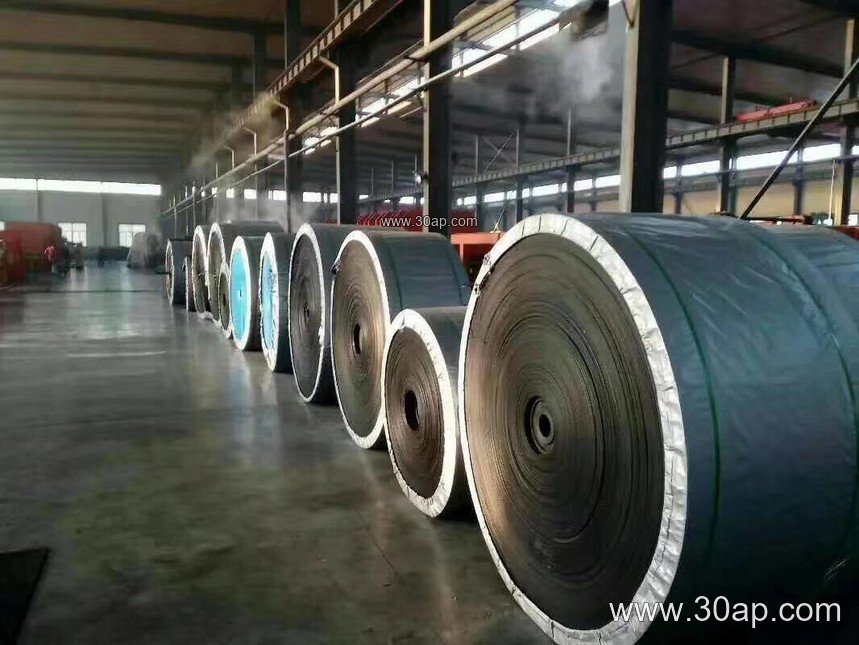
Construction and Common Configurations
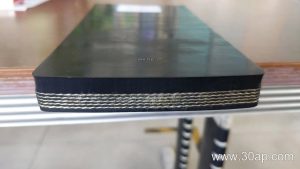
Most fire resistant belts use a fabric core, either EP conveyor belt fabric (polyester warp, nylon weft) or NN conveyor belt fabric (nylon warp and weft). Multi-ply fabric core construction with two to six plies is typical. For very long centers or high tension, a steel cord conveyor belt carcass may be specified, but the flame retardant requirement must be written into the order because not every steel cord belt is formulated for underground service.
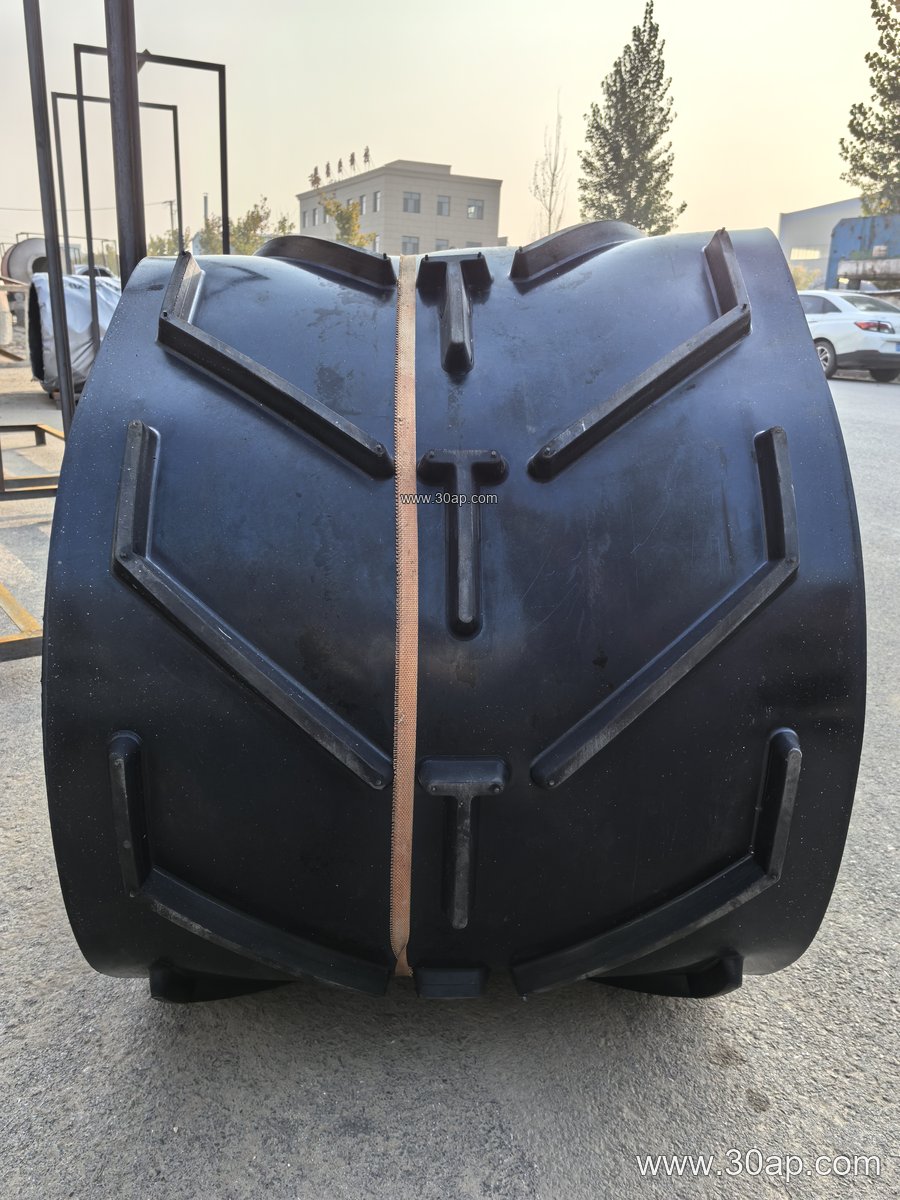
Cover thickness is usually expressed as top plus bottom, for example 4+2 mm, 5+2 mm, or 6+2 mm, with heavier 8+3 mm covers used where impact and abrasion are severe. A common reference table looks like this:
| Property | Typical reference values |
|---|---|
| Fabric types | EP200, EP315, EP400, EP500, EP630, EP800, EP1000 |
| Belt widths | B650, B800, B1000, B1200, B1400, B1600 |
| Cover thickness | 3+1.5 mm, 4+2 mm, 5+2 mm, 6+2 mm |
| Carcass plies | 2 to 6 plies, depending on duty |
These figures are reference data only. Final strength, cover grade, and width are determined by the conveyor design, not by a fixed pairing of belt width and pulley diameter.
Where It Fits in the Plant
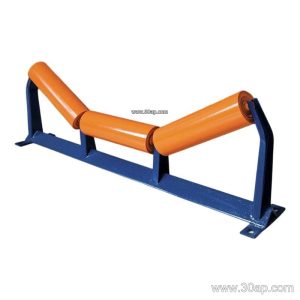
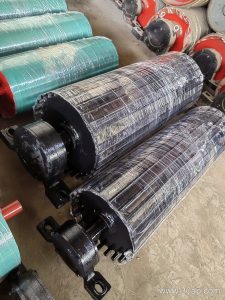
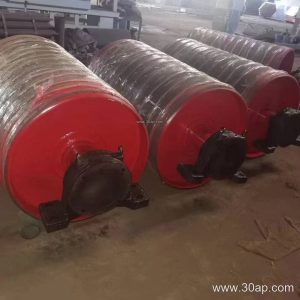
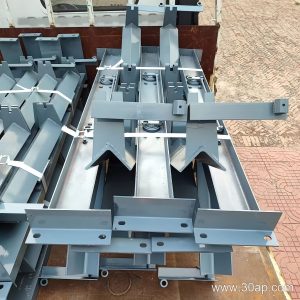
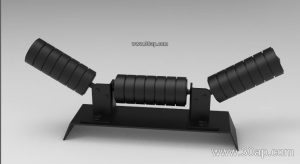
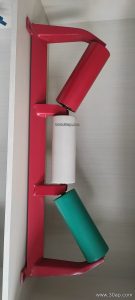
Underground coal mining conveyor belt service is the classic application, where the belt runs on idler rollers between a drive pulley and a tail pulley, with conveyor brackets holding the idlers in alignment. The same fire resistant specification appears in cement plants handling coal and pet coke, in power plant coal yards, and in quarry and aggregate lines where dust and fuel coexist. A mining conveyor belt of this class is often ordered together with anti-static and abrasion resistant properties, because a single compound must survive cutting, gouging, and static build-up at the same time.
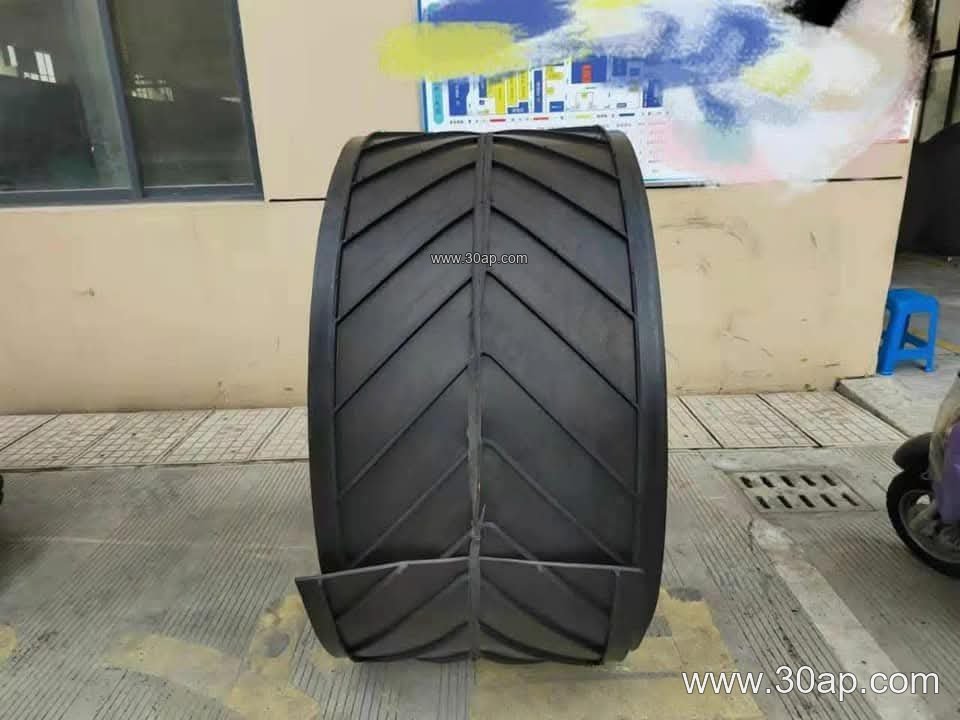
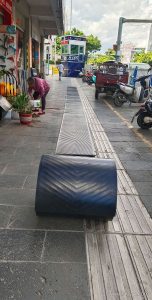
Where the route includes steep inclines, a chevron conveyor belt or corrugated sidewall belt may be considered, but those are separate designs; the flame retardant requirement has to be confirmed for each pattern. Likewise, a heat resistant conveyor belt is not a substitute when the risk is open flame rather than hot material, and an oil resistant conveyor belt addresses a different failure mode.
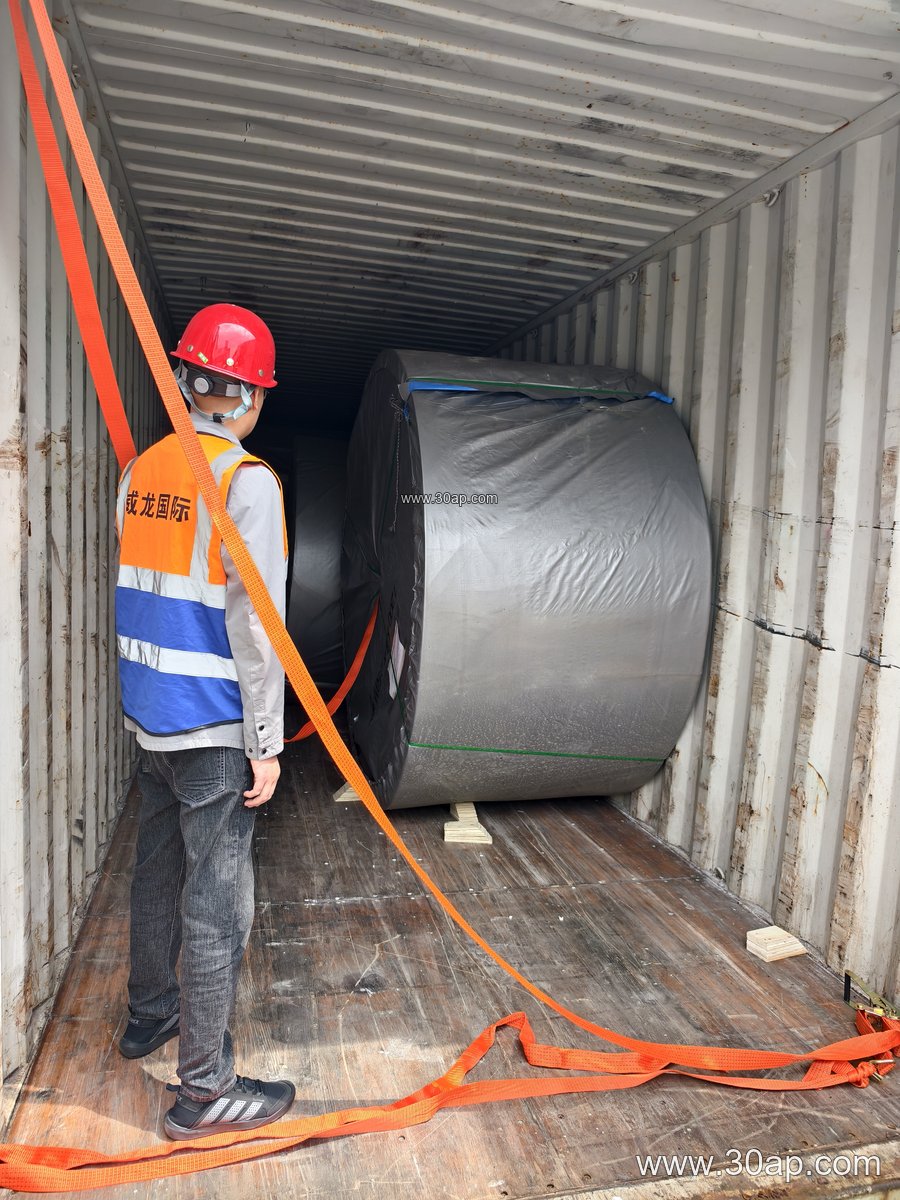
Specification Points Buyers Should Confirm
- Flame test method and acceptance criteria, stated in writing rather than assumed from the product name.
- Anti-static surface resistance requirement, especially for underground coal mining conveyor belt use.
- Carcass type, ply count, and full thickness, not just the cover figure.
- Belt width and edge condition, including whether an endless conveyor belt splice is required on site.
- Compatibility with the drive pulley, tail pulley, bend pulleys, idler roller spacing, and conveyor bracket geometry.
Ask for the compound data sheet and a sample splice procedure. A belt that passes a flame test but is spliced with the wrong cover gum can lose much of its protection at the joint, which is often where failures begin. For high-abrasion duty, a high abrasion resistant conveyor belt compound may be offered alongside flame retardancy, and the trade-off between cut resistance and flame performance should be discussed openly.
Installation and Maintenance Notes
Keep the belt tracking straight so edges do not fray and expose the carcass. Check idler roller rotation and pulley lagging regularly; a seized roller creates frictional heat that no flame retardant compound is designed to survive indefinitely. Remove spilled coal or cement dust from the return run, because accumulated fines near a hot bearing are a common ignition path. Store spare belt rolls away from welding areas and direct sunlight.
When replacing a belt, match the new fire resistant conveyor belt to the original specification and record the batch. If the conveyor is later upgraded for higher tonnage, revisit the flame requirement rather than simply increasing ply count. For anyone comparing options across rubber conveyor belt grades, the practical rule is simple: state the fire risk, the material, and the environment, then let the belt construction follow from those facts.