What a Heavy-Duty Lagged Pulley Does on a Conveyor
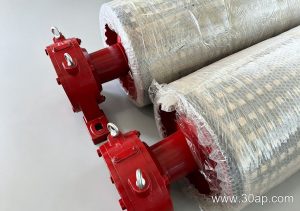
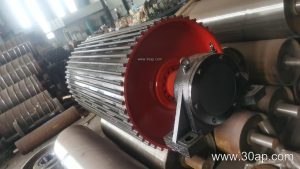
A heavy-duty lagged pulley is the robust, rubber-covered drum that drives or guides the belt in high-load conveying systems. The lagging is the sacrificial layer bonded to the shell, and its job is to raise friction between drum and belt so the conveyor can move material without slip. In a quarry, a cement plant or a power station coal yard, a standard bare drum may struggle once the belt is wet, dusty or heavily loaded. A lagged drum keeps grip and protects the shell from abrasion.
This drum should not be confused with other positions in the same conveyor. A drive pulley transmits torque, a tail pulley returns the belt at the rear, and a bend pulley changes belt direction. They are separate components and are not interchangeable, even though all three may be lagged.
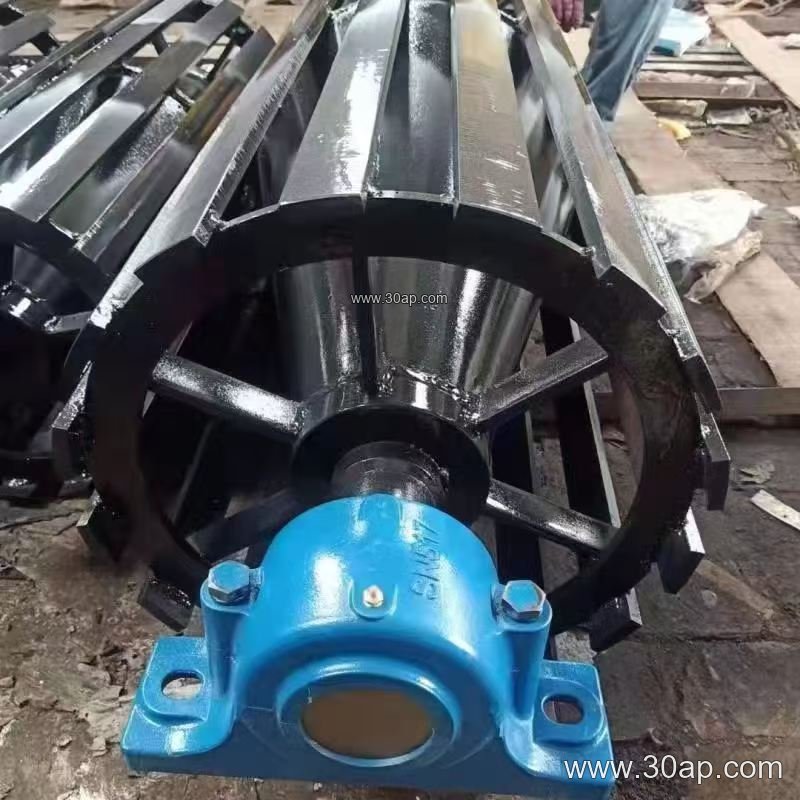
Construction and Surface Options
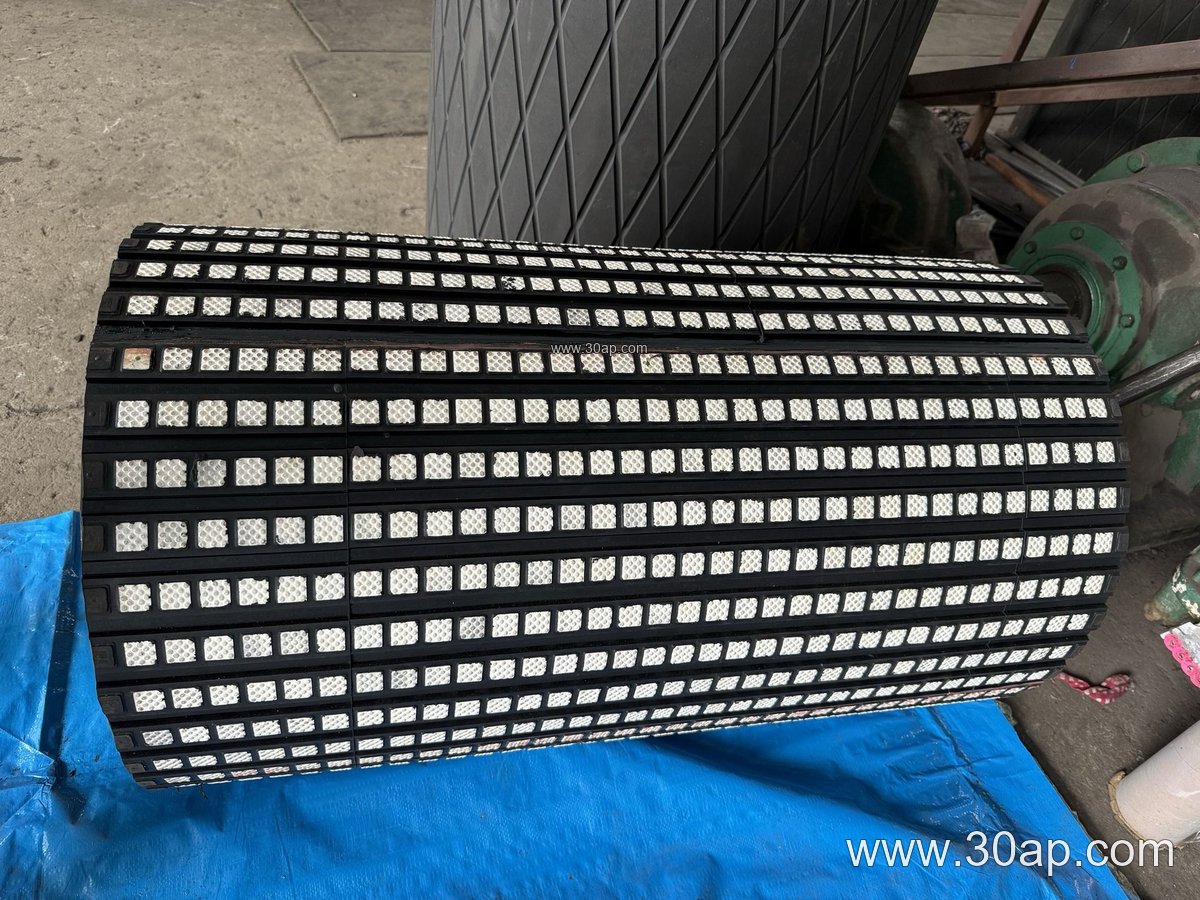
The core is usually a welded steel shell with machined end discs and a shaft sized by torque and load, not by belt width alone. Common shaft diameters include Ø80, Ø100, Ø120, Ø140 and Ø160 mm, but final choice comes from the drive calculation. The lagging is applied in several ways: hot vulcanized rubber, cold-bonded rubber, cast rubber, or ceramic tiles for extreme wear. Plain, diamond and herringbone patterns are all available, and thickness commonly runs 8, 10, 12, 15 or 20 mm.
For abrasive ore or sinter, a ceramic or thick diamond lagging reduces polishing and extends service life. For a belt that must stay centered, herringbone grooving can help shed water. The right surface depends on the material being carried and the environmental conditions, not on a single universal rule.
Typical Sizes and Dimensions
Drum width usually exceeds belt width so the belt is fully supported. Reference values are shown below; these are common design references, not fixed supply promises.
- B800 belt: shell face about 950 mm, drum diameter options include Ø500 and Ø630 mm
- B1000 belt: shell face about 1150 mm, diameter options include Ø630 and Ø800 mm
- B1200 belt: shell face about 1400 mm, diameter options include Ø800 and Ø1000 mm
- B1400 belt: shell face about 1600 mm, diameter options include Ø1000 and Ø1250 mm
- B1600 belt: shell face about 1800 mm, diameter options include Ø1250 and Ø1400 mm
One belt width can pair with several drum diameters depending on wrap angle, belt tension and space. A B1200 × Ø1000 mm drum and a B1200 × Ø800 mm drum can both be valid in different layouts.
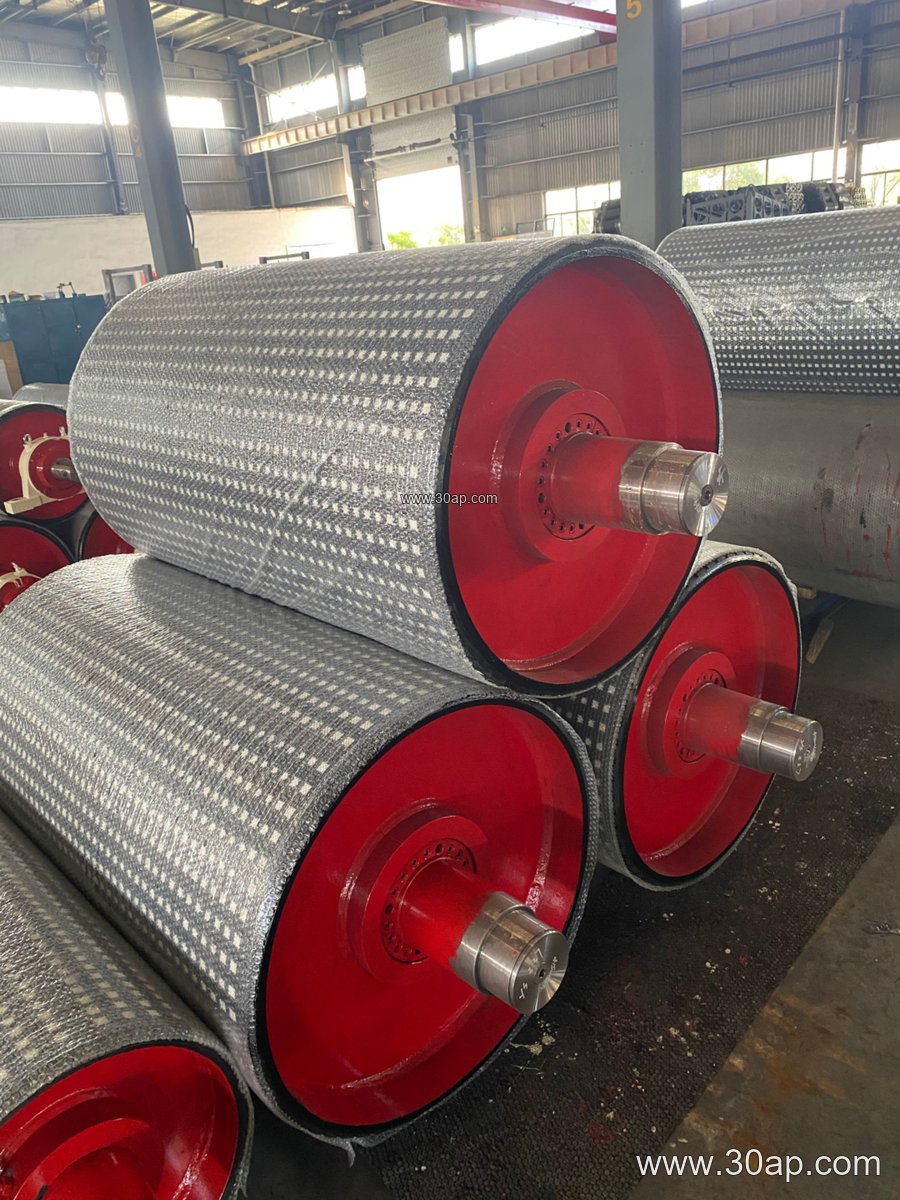
Where the Drum Fits in Bulk Handling
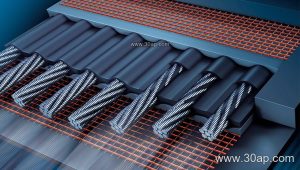
In a limestone quarry feeding a crusher, the head drum must handle coarse rock and constant shock. In a coal washing plant, wet fines demand good friction and flame safety awareness across the whole belt line, where a flame retardant conveyor belt is often specified. In a port ship loader, a large lagged drum pairs with a steel cord conveyor belt to move heavy bulk cargo over long distances. In a cement plant, clinker dust and heat mean the drum covering should resist both abrasion and elevated temperature.
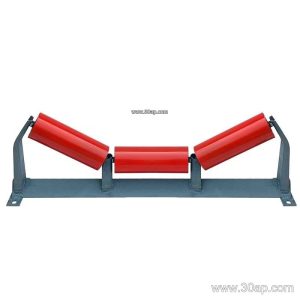
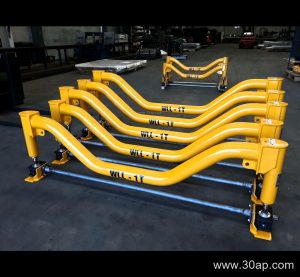
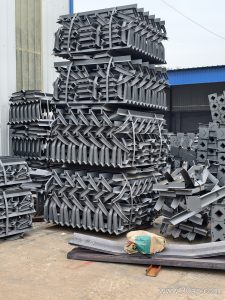
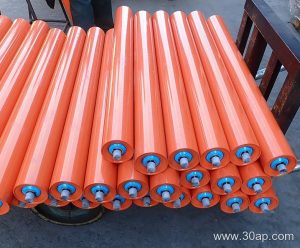
The drum never works alone. It runs with a conveyor belt, conveyor idler rollers and conveyor brackets, so alignment and tension affect lagging life as much as the rubber itself.
Buyer Checklist Before Ordering
- Confirm the drum position: head, tail, tension or bend, and state it clearly.
- Give belt width, belt type and belt tension so the shaft and shell can be calculated.
- Specify lagging material, pattern and thickness, for example 12 mm diamond rubber.
- State the material carried, moisture, temperature and dust level.
- Ask for machining tolerance and balancing details for high-speed drives.
- Plan a spare lagged drum for critical lines to cut downtime.
Maintenance matters too. Check lagging wear at each shutdown, watch for belt tracking drift and re-tension the belt when slip appears. A worn cover can be re-lagged instead of replacing the whole drum, which is often the fastest route back to production. Matching the pulley to the belt family, whether EP conveyor belt, NN conveyor belt or a heavy-duty mining conveyor belt, keeps the whole system efficient and predictable.