What a Parallel Idler Bracket Does on a Conveyor
A parallel idler bracket is the support frame that holds the carrying idlers in a flat or slightly troughed position along the load-carrying side of a conveyor. In many plants the same component is simply called a flat idler bracket or a parallel roller bracket, because the idlers sit parallel to the belt surface rather than being forced into a deep trough. It bolts to the main conveyor stringer or cross beam and keeps the idler roller at a fixed height and angle, so the conveyor belt runs on a stable, level line.
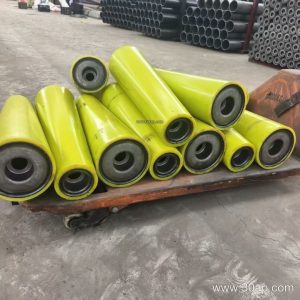
The bracket is a small item, but it decides how evenly the belt is supported, how freely the idler roller turns, and how quickly a worn roller can be swapped out. On a long overland line feeding a cement plant, a quarry conveyor, or a power plant coal yard, parallel support is often used where the belt is flat, where material is loaded gently, or where a transition section needs a simple, sturdy frame.
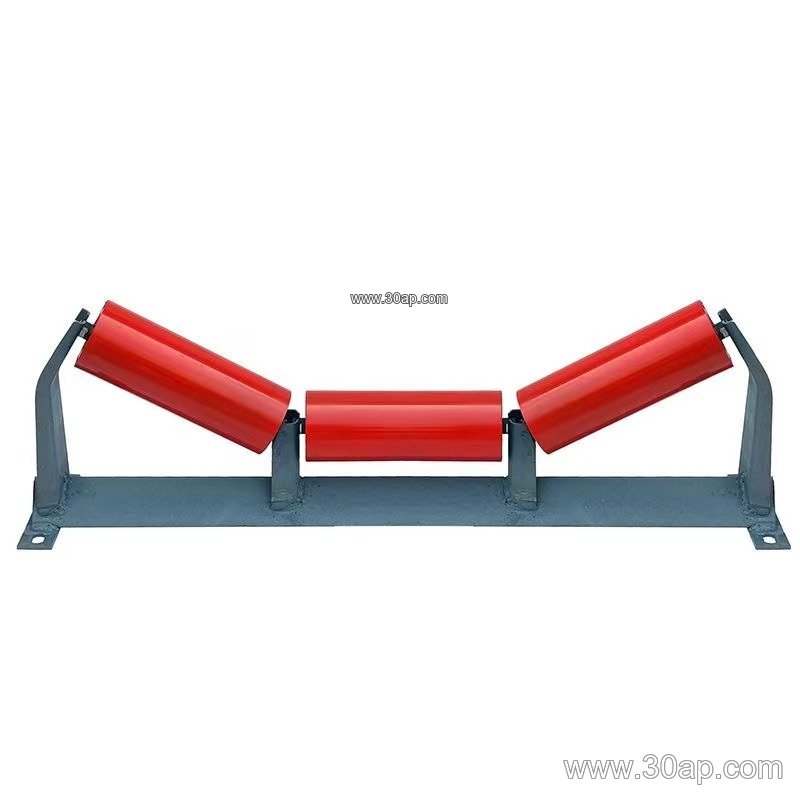
How the Bracket Is Built
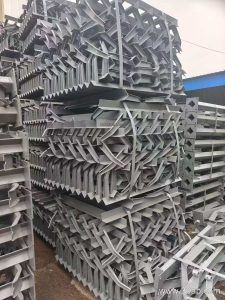
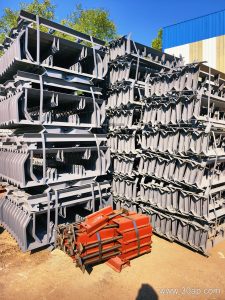
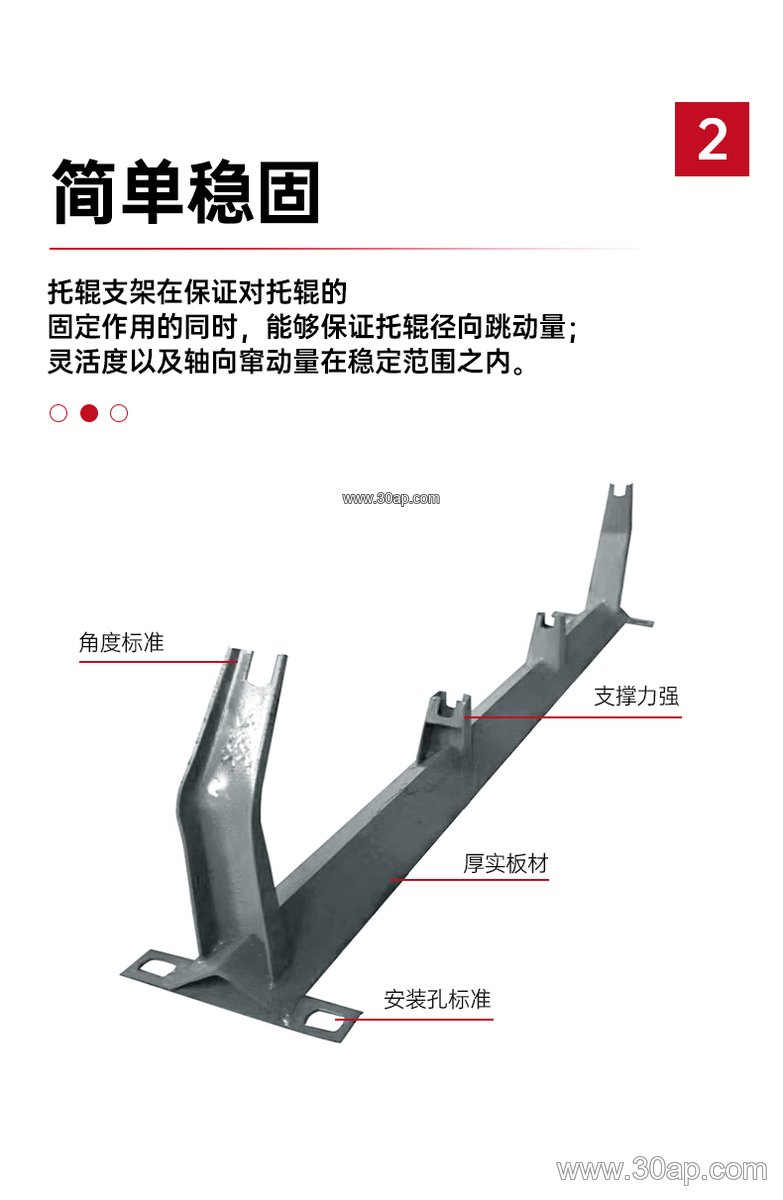
Most parallel idler brackets are fabricated from angle steel, channel steel, or folded steel plate. The two arms are welded or bolted to a base plate, and the base plate carries slotted or drilled mounting holes so the frame can be aligned on site. A typical design has a pair of vertical or inclined side plates with U-shaped notches or hook slots that accept the idler shaft ends. Some versions use a clamp bolt to lock the shaft, which makes roller changes faster during maintenance.
- Frame material: angle steel, channel steel, or bent steel plate
- Finish: painted, galvanized, or powder coated according to site conditions
- Mounting: bolt-on base plate with slotted holes for adjustment
- Idler fixing: hook slot, U-notch, or clamp plate
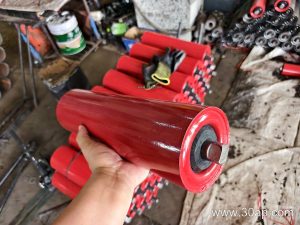
Because the bracket is matched to the idler, the notch width and shaft opening should agree with the roller shaft diameter. This is a practical point for buyers: a bracket that is too loose lets the idler roller vibrate, while one that is too tight slows down replacement.
Where Parallel Support Fits in a Conveyor Line
Parallel idler brackets are common on the flat carrying run of a belt, on the return side when a simple flat return frame is used, and in transition zones where the belt changes from flat to troughed. In a sand and gravel line, they may sit under the loading point after a crusher, where a flat belt receives a wide, even stream. In a limestone quarry or an iron ore plant, the same bracket type can be used on short transfer conveyors and on the tail area of a longer conveyor.
The bracket works together with the idler roller, the conveyor pulley, and the conveyor belt. It does not replace a troughed bracket, a V-return bracket, or a self-aligning bracket; each has its own job. A parallel frame is chosen when the belt profile is flat or when a simple, low-maintenance support is preferred. Where the belt needs a 20, 30, 35, or 45 degree trough, a troughed idler bracket is the right component instead.
Common Sizes and Matching Points
Bracket dimensions follow the belt width, the idler diameter, and the frame layout. The table below shows typical reference combinations, not fixed rules. A B800 belt, for example, may run with different idler diameters and different bracket lengths depending on the conveyor design.
| Belt width | Typical idler diameter | Typical bracket note |
|---|---|---|
| B500 | Ø89 | Compact frame, short cross beam |
| B650 | Ø89 or Ø108 | Hole spacing set by frame design |
| B800 | Ø108 | Common flat carrying position |
| B1000 | Ø108 or Ø133 | Heavier arm plate often used |
| B1200 | Ø133 | Wider base plate for stable alignment |
| B1400 | Ø133 or Ø159 | Reinforced frame for bulk material |
| B1600 | Ø159 | Longer cross beam, heavier section |
| B1800 | Ø159 or Ø194 | Heavy-duty support recommended |
| B2000 | Ø194 | Wide frame, check shaft opening |
| B2200 | Ø194 | Custom frame length usually needed |
Installation hole spacing and beam length change with belt width and frame style, so these values should be confirmed against the conveyor drawing. Buyers should also check the idler shaft diameter, the mounting height, and the available space between stringers before ordering.
Buying Advice for Plant and Maintenance Teams
Start with the belt width and the idler roller size, then confirm the shaft opening and the bolt pattern. Ask whether the frame will be welded to the stringer or bolted through a base plate, and whether the site needs a galvanized finish for wet or dusty conditions. In a coal preparation plant or a port terminal, corrosion and dust build-up are common, so drainage slots and a finish suited to the environment matter.
Pair the bracket with a suitable belt for the duty. A heavy-duty mining conveyor belt, an abrasion resistant conveyor belt, or a flame retardant conveyor belt may be used in the same line, and the support frame should be strong enough for the belt and material load. For long-distance lines, an EP conveyor belt or a steel cord conveyor belt may be part of the design, while a fabric core conveyor belt is common on shorter runs. The bracket itself is a mechanical part, so its job is to keep the idler roller steady and the belt supported, not to change the belt specification.
Keep a small stock of spare brackets and check them during routine idler inspection. Loose bolts, bent arms, and worn notches are easy to spot and cheap to correct before they damage the conveyor belt or the pulley. For more conveyor support components, visit mysite.com/conveyor-bracket and mysite.com/idler-roller to compare frame styles and roller sizes.