What a Mining Trough Idler Does on the Line
A mining trough idler is the carrying roller assembly that supports the loaded side of a conveyor belt and shapes it into a trough. The three-roll arrangement lifts the belt edges so bulk material sits in a pocket instead of spilling over the sides. In a quarry, limestone mine, iron ore plant or crushing and screening circuit, this seemingly simple component carries a large share of the operating load. Its condition directly affects belt tracking, spillage, energy draw and the working life of the conveyor belt itself.
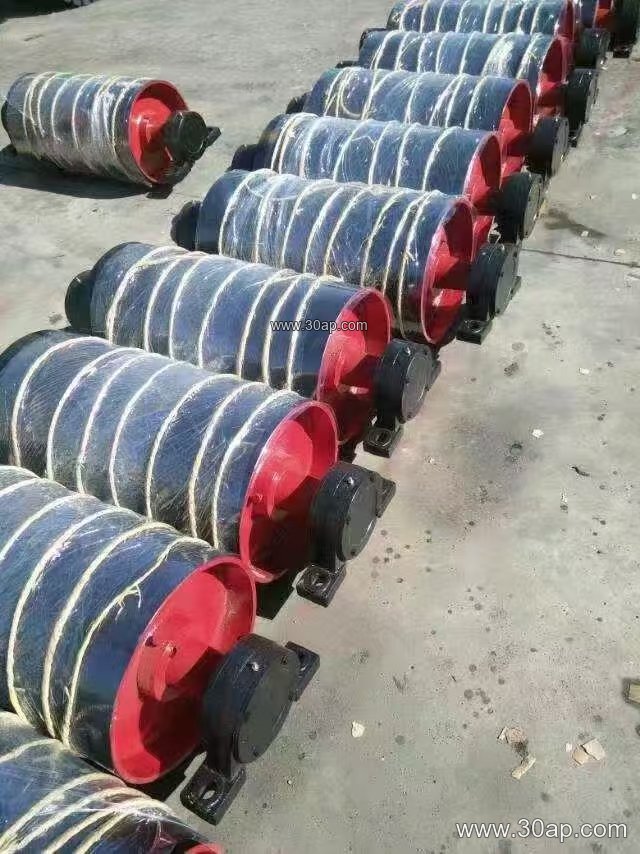
The trough idler is not a pulley and is not interchangeable with one. Drive pulleys, tail pulleys and bend pulleys transmit or redirect belt tension, while trough idlers only support the belt and material. Buyers sometimes mix these terms in enquiries, which leads to wrong quotations. Keep the two categories separate when specifying spare parts for any bulk material conveyor system.
How the Assembly Is Built
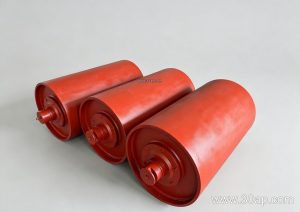
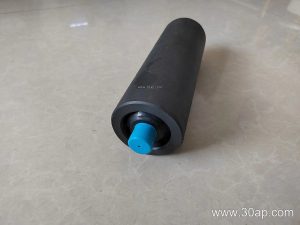
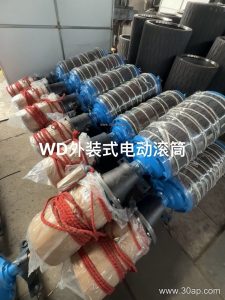
A typical unit consists of steel rollers mounted in a frame that holds them at a fixed trough angle. Each roller has a shell, shaft, bearing housing and sealing arrangement. Roll surfaces may be plain steel, nylon, ceramic or rubber rings depending on the duty. Rubber rings are common where impact and abrasion are heavy, such as under a crusher discharge or at a transfer point.
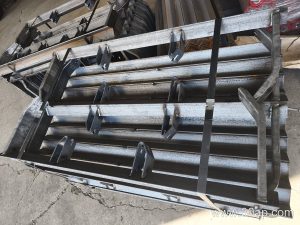
The frame is bolted or hooked to the conveyor bracket or stringer. Three-roll trough sets are the most common form for high-capacity lines, while two-roll and single-roll sets appear on narrower or special belts. Common roller diameters include Ø89, Ø108, Ø127, Ø133, Ø159 and Ø178 mm, with larger sizes used on heavy-duty mining conveyors. Bearings such as 6205, 6305, 6306 and 6308 are often fitted, but the correct bearing depends on load, speed and shaft design rather than roller diameter alone.
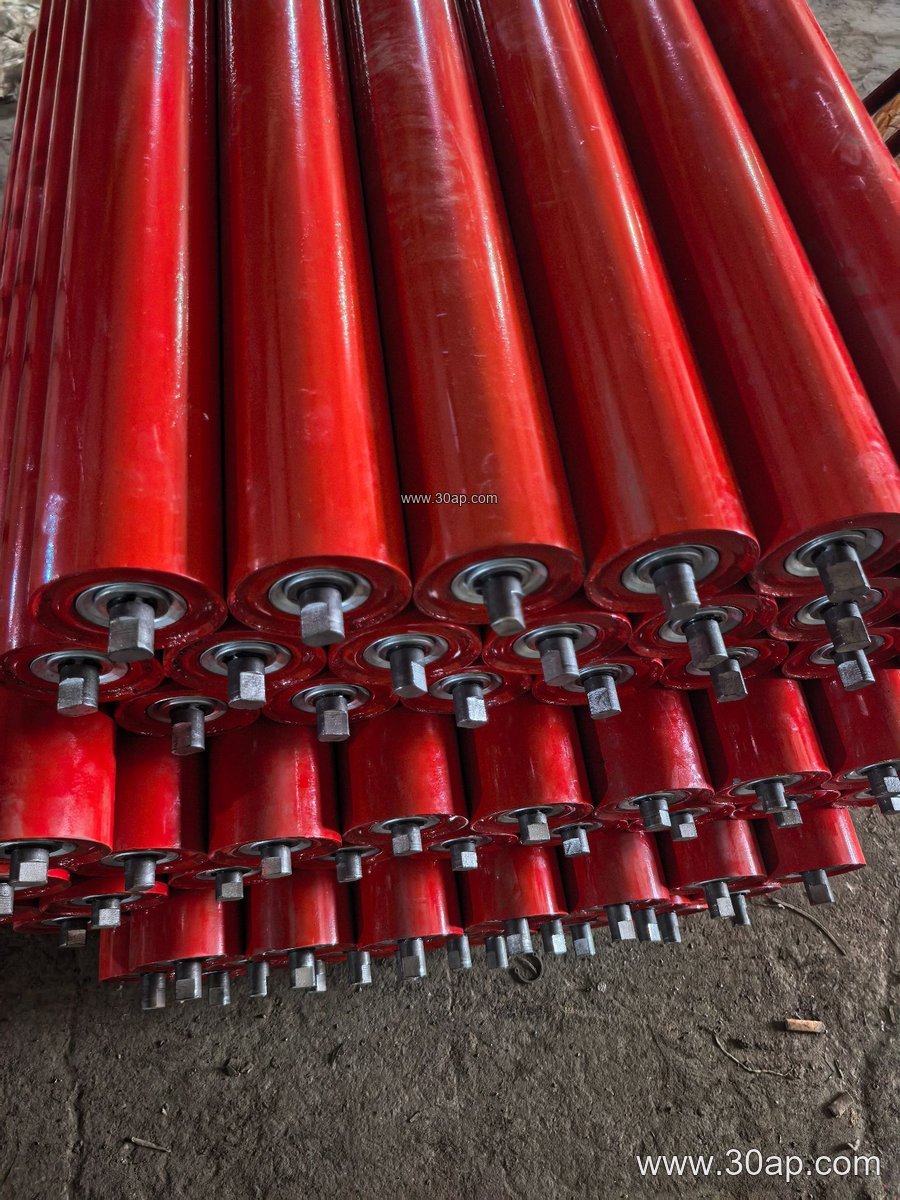
- Shell material selected for abrasion and corrosion resistance
- Bearing and seal package matched to dust and water exposure
- Trough angle chosen to suit material flow and belt stiffness
- Mounting dimensions matched to the existing bracket spacing
Trough Angle, Roll Length and Belt Width
Trough angles of 20, 30, 35 and 45 degrees are widely used. A deeper trough holds more material and reduces spillage on inclined sections, but it also increases belt bending stress at the edges. Roll length changes with belt width, trough angle and the number of rolls in the set. For reference, a three-roll set on a B800 belt often uses rolls around 315 mm long, while a B1200 line may use rolls near 465 mm. These are typical examples only; side rolls and centre rolls can differ, and final dimensions should follow the conveyor design.
| Belt width | Common roll length, three-roll set | Typical roller diameter range |
|---|---|---|
| B500 | approx. 200 mm | Ø63 to Ø89 mm |
| B650 | approx. 250 mm | Ø76 to Ø108 mm |
| B800 | approx. 315 mm | Ø89 to Ø127 mm |
| B1000 | approx. 380 mm | Ø108 to Ø133 mm |
| B1200 | approx. 465 mm | Ø108 to Ø159 mm |
| B1400 | approx. 530 mm | Ø127 to Ø159 mm |
| B1600 | approx. 600 mm | Ø133 to Ø178 mm |
| B1800 | approx. 670 mm | Ø159 to Ø194 mm |
No single belt width is tied to one pulley diameter, and roller length should never be guessed from belt width alone. Always confirm the mounting frame, trough angle and roller end configuration before ordering.
Where Trough Idlers Are Used
These carrying rollers appear wherever a belt moves bulk material. In a coal preparation plant or power station coal yard, they support a flame retardant conveyor belt or a coal mining conveyor belt on the main haulage. In a cement plant they carry clinker and raw meal on heat resistant conveyor belt sections. In a sand and gravel line they sit under an aggregate conveyor belt or crusher conveyor belt, often in dusty, wet and abrasive conditions.
At a port or ship loading facility, long overland conveyors may use a steel cord conveyor belt or an EP conveyor belt, and the trough idler spacing must suit the belt stiffness and load. Underground coal mining conveyor belt installations often require anti-static and fire resistant belt grades, and the idler seals must cope with moisture and fine dust. A pipe conveyor belt and corrugated sidewall conveyor belt need different support arrangements, so the trough idler design should follow the belt type rather than a generic pattern.
What Buyers Should Check Before Ordering
Start with the belt width, trough angle and existing bracket dimensions. Then confirm the roller diameter, shell thickness and bearing size. Ask how the seal is constructed, because dust ingress is the main cause of early idler failure in mining and quarry service. Check the shaft end fixing: some frames use flat ends, others use a machined shaft with a locking pin. A mismatched end will not fit the conveyor bracket even if the roller length is correct.
Consider the environment. A high abrasion resistant conveyor belt may be paired with rubber-ring impact idlers at the load point, while plain steel rollers suit the carrying run further along. In a fertiliser or chemical plant, corrosion resistance matters more than impact strength. In a cold climate, low-temperature belt grades and suitable bearing grease should be discussed with the supplier.
Finally, plan maintenance. Spare trough idlers should match the installed set so that a single failed roller can be replaced without changing the whole frame. Keep records of roller diameter, length, bearing number and trough angle for each conveyor. For related components such as the conveyor pulley, idler roller and conveyor bracket, order from the same dimensional reference to avoid fit problems on site.