What a Driving Pulley Does
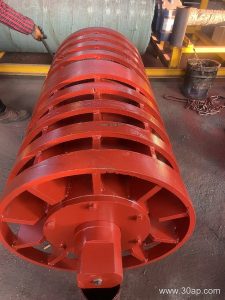
A driving pulley is the powered drum at the head end of a belt conveyor. It grips the conveyor belt and turns it, pulling the loaded strand forward while the return strand comes back underneath. The drum is connected to the gearbox or motor through a shaft coupling, and the friction between the belt and the drum surface is what actually moves the material. Without that grip, the belt slips, the drive motor overheats, and the whole line stalls.
Because the driving pulley transmits the full running tension of the system, its diameter, shaft size and lagging are usually heavier than those of a tail or bend pulley. Those other drums simply guide or redirect the belt; the drive drum has to deliver torque. That difference in duty is why the two are not interchangeable, even when they look similar on a drawing.
Construction and Key Parts
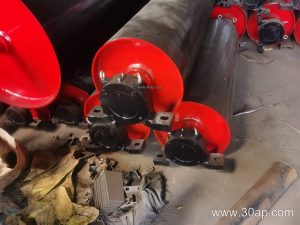
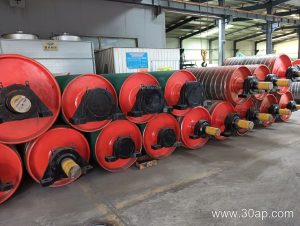
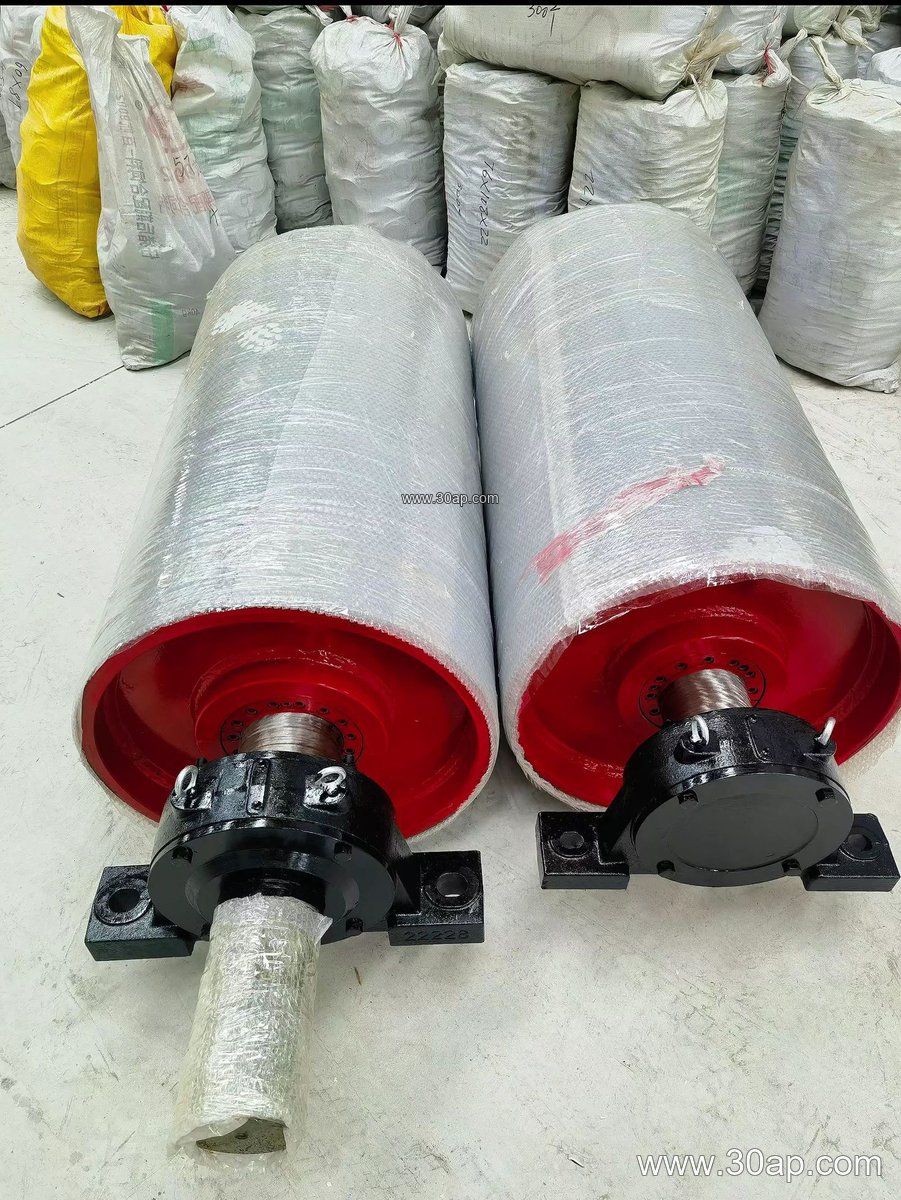
The drum body is normally a welded steel shell with machined end discs, mounted on a through shaft or stub shafts. The shell is covered with rubber or ceramic lagging to raise friction. Common surface forms include plain, cold-bonded rubber, hot-vulcanized rubber, diamond grooved, herringbone grooved and ceramic tile. Lagging thickness is often 8, 10, 12, 15 or 20 mm, chosen according to the required friction and the abrasiveness of the environment.
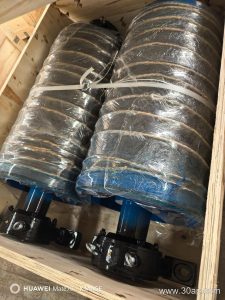
Bearings sit in housings at each end, and the assembly is fixed to the conveyor frame with conveyor brackets. Shaft diameter is determined by torque and load, not by belt width alone, so a B800 drum may use Ø80 or Ø100 shaft depending on the drive design. Common diameters range from Ø200 up to Ø1800 for large head-end installations.
Where It Is Installed
Drive drums appear wherever bulk material has to be lifted or pulled over distance. In a coal mining conveyor, the head drum works with a flame retardant conveyor belt and a set of idler rollers to move raw coal from the face to the surface. In a cement plant, the same drum handles clinker and limestone on an abrasion resistant conveyor belt, often in dusty, high-temperature conditions. Port bulk terminals and power plant coal yards use large-diameter head drums on long overland conveyors.
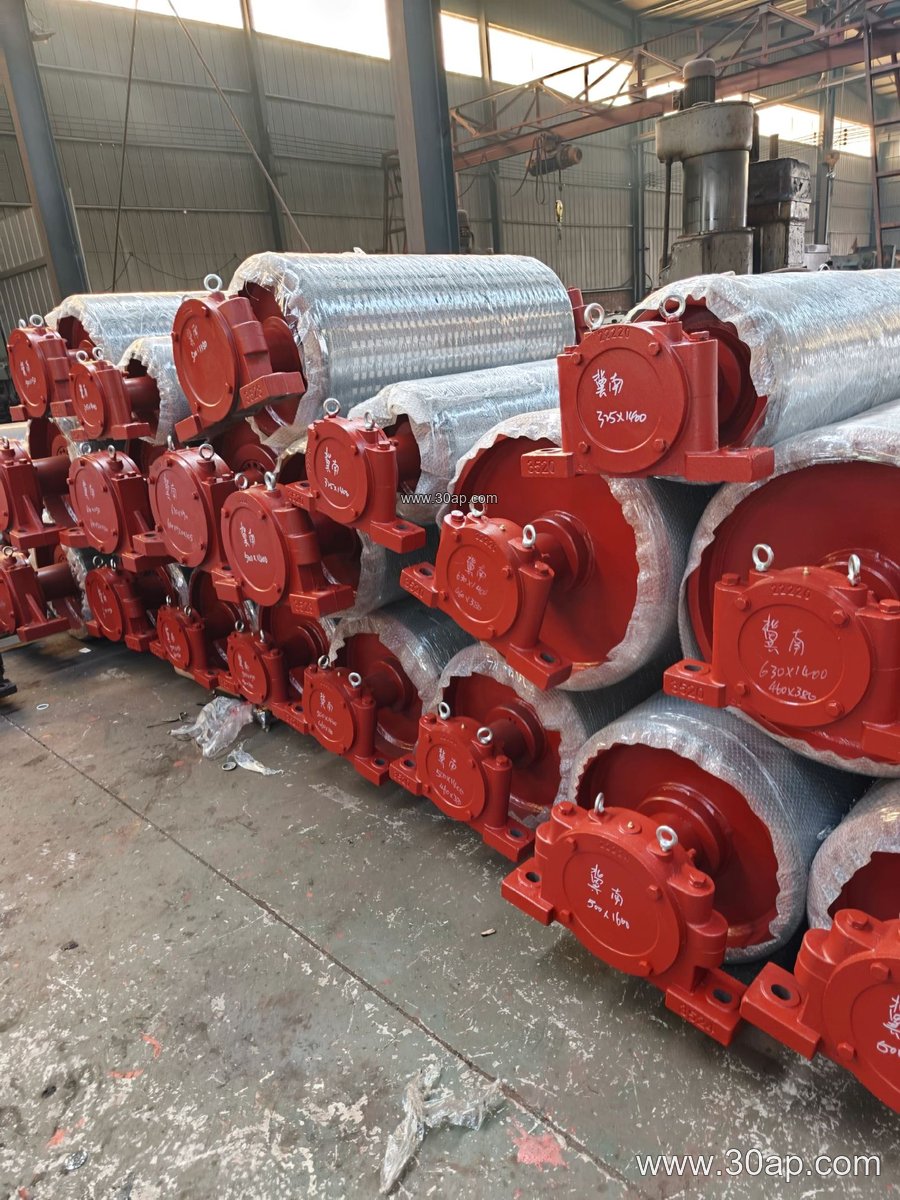
In each case the drum must match the belt tension, the material load and the ambient conditions. A quarry line moving sharp rock needs a different lagging than a grain silo handling soft, dry product.
Sizing the Drum to the Belt
Shell width is normally slightly wider than the belt to keep the belt centred. Typical pairings are shown below; these are reference values, not fixed rules, and final dimensions are confirmed by design.
Typical Shell Width Reference
- B400 belt, shell about 500 mm
- B500 belt, shell about 600 mm
- B650 belt, shell about 750 mm
- B800 belt, shell about 950 mm
- B1000 belt, shell about 1150 mm
- B1200 belt, shell about 1400 mm
- B1400 belt, shell about 1600 mm
- B1600 belt, shell about 1800 mm
A drum can be specified as B1200 × Ø1000, B800 × Ø500 or B1400 × Ø800, but a given belt width does not lock the diameter to one value. Diameter depends on the belt’s minimum pulley requirement, the wrap angle and the space available at the head station.
Parameters to Confirm Before Ordering
- Belt width and belt type, for example EP conveyor belt or steel cord conveyor belt
- Required diameter and shell length
- Shaft diameter and bearing size
- Lagging type and thickness
- Mounting position and bracket dimensions
The belt manufacturer’s minimum pulley diameter should always be respected, especially for high-tension belts such as ST2000 or EP1000 constructions. Undersizing the drum shortens belt life.
Installation and Maintenance Notes
Align the drum squarely with the conveyor centreline. A skewed driving pulley causes the belt to run off and wears the lagging unevenly. Check belt tension at start-up and after the first few shifts, since new belts stretch. Keep the lagging clean; material build-up reduces friction and can lead to slip.
Inspect the rubber or ceramic surface for cracks, glazing or missing tiles. Worn lagging is the most common reason a head drum starts slipping. Replace or re-lag before the slip damages the belt cover. Bearings should be greased on the schedule set by the plant, and shaft couplings checked for wear.
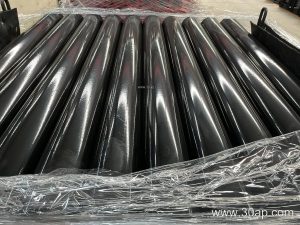
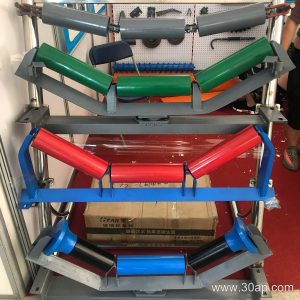
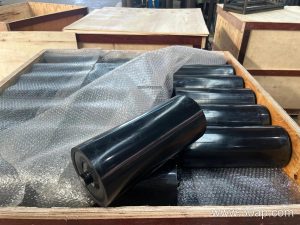
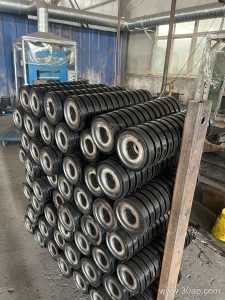
For a complete head station, the drive drum works together with the conveyor belt, the carrying idler roller, the return rollers and the supporting conveyor bracket. Each part affects the others, so a replacement drum should be matched to the whole system rather than selected in isolation.
Buyer Checklist
Before requesting a quotation, gather the belt width, belt type and rated tension, the required drum diameter, the shaft and bearing specifications, the lagging preference and the mounting arrangement. Confirm whether the drum is for a new line or a retrofit, because retrofit dimensions must match the existing frame. Ask for the drawing and material report, and check that the lagging thickness suits the duty. A correctly specified driving pulley keeps the conveyor running smoothly and protects the belt, the gearbox and the motor from unnecessary stress.