What a Conveyor System Pulley Does
A conveyor system pulley is the rotating drum that carries and guides the conveyor belt at the head, tail, take-up, and bend points of a belt conveyor. It transfers drive force to the belt, maintains belt tension, and changes belt direction. In a quarry, limestone mine, or aggregate line, these drums work alongside idler rollers and conveyor brackets to keep material moving from the crusher to the stockpile. A properly specified pulley reduces belt tracking problems and extends the service life of the entire conveyor.
Construction and Main Components
A typical conveyor system pulley consists of a cylindrical shell, end discs, a shaft, bearing housings, and a lagging surface. The shell is usually seamless steel tube or rolled plate, machined for balance. The shaft is sized by torque and radial load rather than belt width alone, with common shaft diameters including Ø50, Ø60, Ø80, Ø100, Ø120, Ø140, and Ø160 mm. Bearings are mounted in pillow blocks or flanged housings, and the assembly is often protected by a conveyor bracket fixed to the conveyor frame.
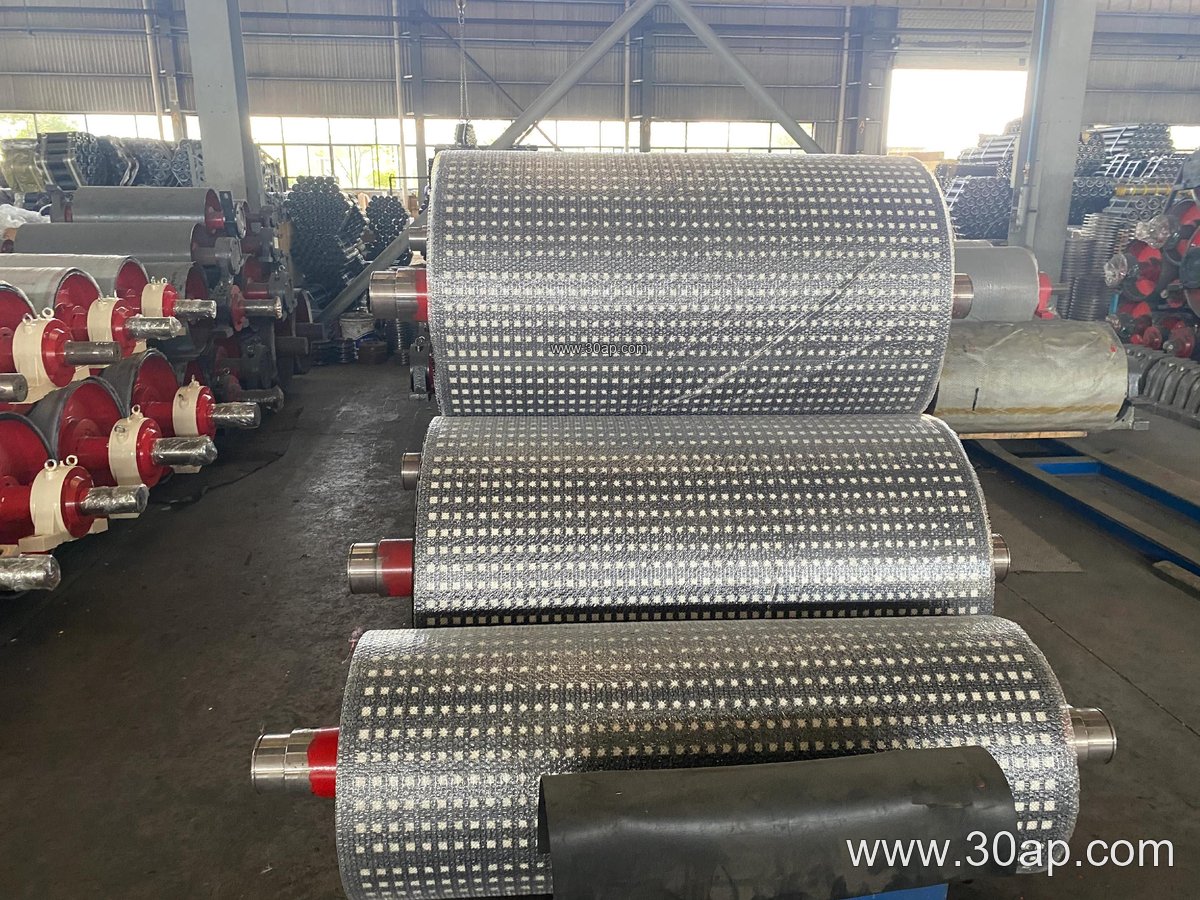
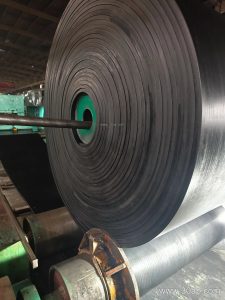
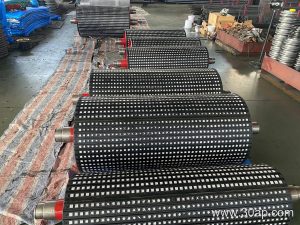
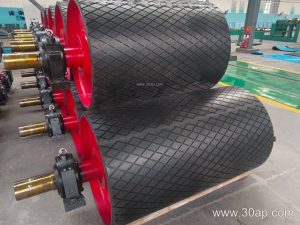
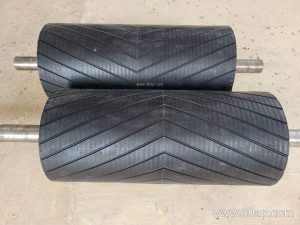
Surface treatment matters for grip and wear. Plain finish is used where friction is not critical. Rubber lagging in 8, 10, 12, 15, or 20 mm thickness improves traction and protects the shell. Diamond and herringbone patterns help shed water and fines, while ceramic lagging suits high-wear duty. These drums must match the belt they carry, whether that is an EP Conveyor Belt, an NN Conveyor Belt, or a heavy-duty Steel Cord Conveyor Belt in a bulk material handling circuit.
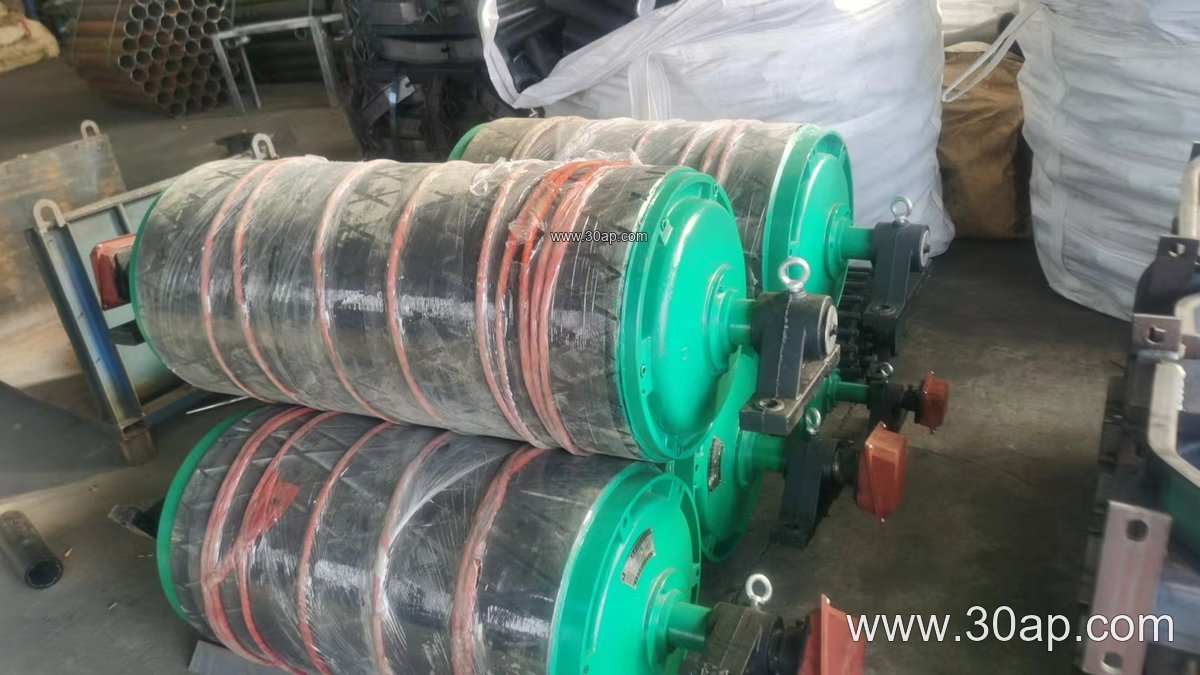
Drive, Tail, and Bend Positions
Position determines the design. A drive pulley transmits motor torque and is often the largest drum in the system, frequently lagged for grip. A tail pulley at the loading end guides the belt and may include a self-cleaning wing design. A bend pulley changes belt direction and carries lower tension. These roles are not interchangeable, so buyers should specify the position clearly rather than treating all drums as a single item.
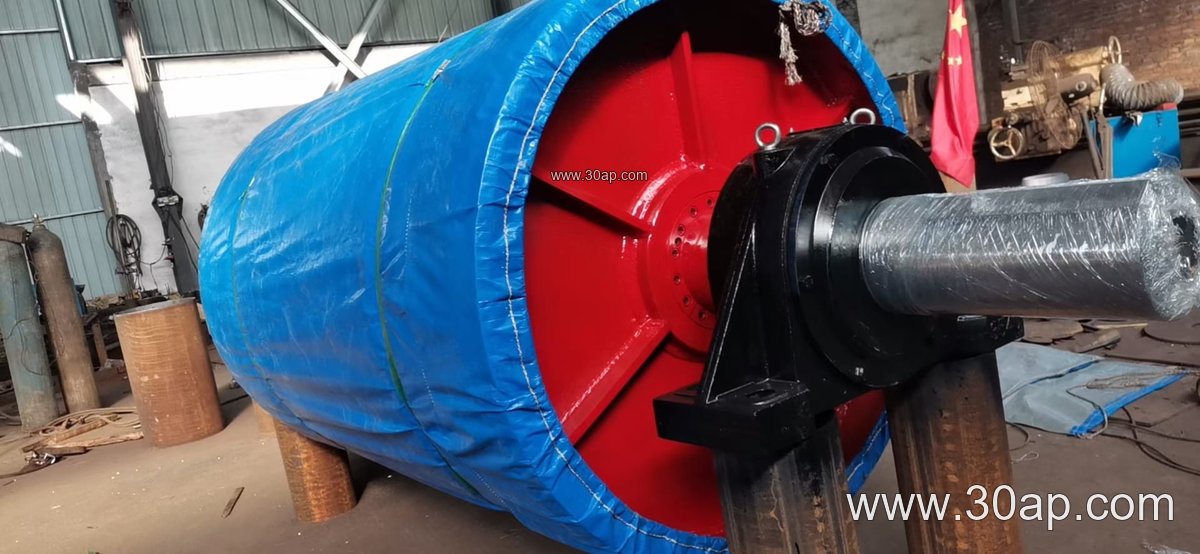
Take-up and snub pulleys also appear in longer conveyors. In a coal mining conveyor or power plant coal handling line, a take-up pulley keeps tension stable as the belt stretches. Correct alignment of each drum with the conveyor belt and the idler roller set prevents edge damage and mistracking.
Typical Sizes and Matching to Belt Width
Shell width is normally a little wider than the belt. Reference values below are common examples, not fixed rules, and final dimensions are determined by design.
- B400 belt — shell about 500 mm, common drum diameter Ø200 to Ø315 mm
- B650 belt — shell about 750 mm, common drum diameter Ø315 to Ø500 mm
- B800 belt — shell about 950 mm, common drum diameter Ø400 to Ø630 mm
- B1000 belt — shell about 1150 mm, common drum diameter Ø500 to Ø800 mm
- B1200 belt — shell about 1400 mm, common drum diameter Ø630 to Ø1000 mm
- B1400 belt — shell about 1600 mm, common drum diameter Ø800 to Ø1250 mm
- B1600 belt — shell about 1800 mm, common drum diameter Ø1000 to Ø1400 mm
Combinations such as B800 × Ø500, B1200 × Ø1000, or B1400 × Ø800 are common in practice, but one belt width can accept several drum diameters depending on belt speed, wrap angle, and tension. Shaft diameter is set by torque and load, not by belt width alone.
Where These Drums Are Used
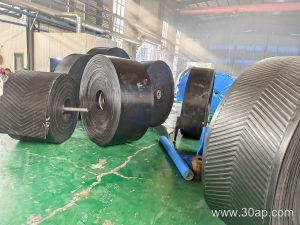
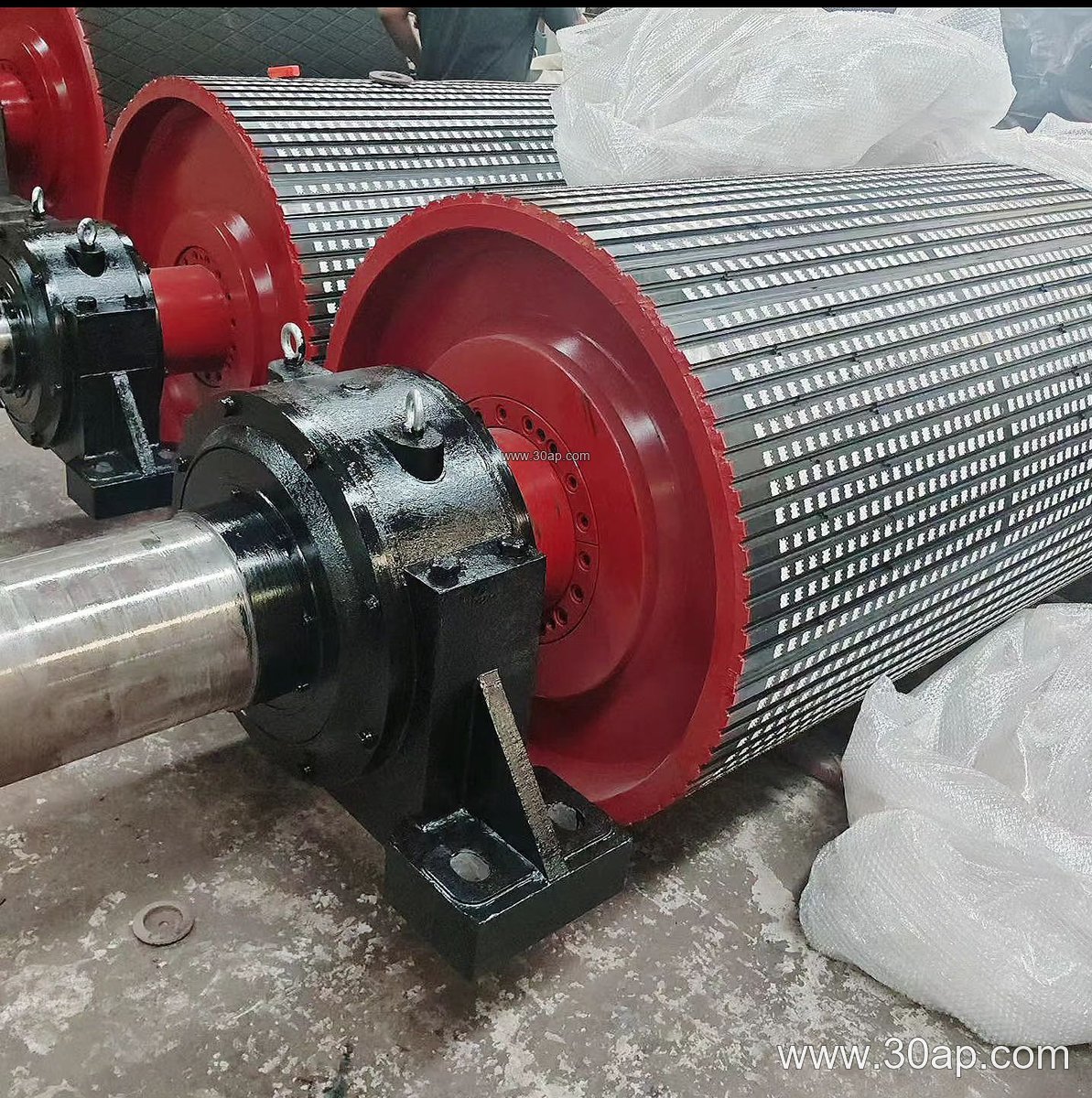
Belt conveyors in a limestone quarry, a cement plant clinker line, a copper ore concentrator, or a port bulk terminal all rely on correctly sized pulleys. In a crushing and screening plant, the head pulley discharges crushed rock onto the next belt, while the tail pulley sits under the hopper. In a steel plant or sinter plant, heat and abrasion demand careful lagging selection. For dusty or wet duty, a Chevron Conveyor Belt or Corrugated Sidewall Conveyor Belt may run on the same frame, so the pulley face and belt profile should be reviewed together.
Buyer Checklist
- Confirm the position: drive, tail, bend, take-up, or snub.
- State belt width, belt type, and belt speed so the drum diameter can be checked.
- Specify lagging type and thickness, for example 10 mm diamond rubber or ceramic.
- Provide shaft diameter, bearing type, and mounting bracket details.
- Check that the pulley face width clears the belt and that the drum is balanced.
Maintenance is straightforward: inspect lagging wear, check bearing temperature, verify alignment, and keep the belt and idler roller free of buildup. A well-matched conveyor system pulley keeps tension stable and protects the conveyor belt, whether the line moves coal, clinker, ore, or aggregate. For more on belt and roller matching, see cdtxrubber.com conveyor pulley notes.