What a Belt Conveyor Return Idler Does
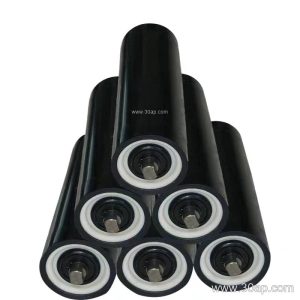
The belt conveyor return idler is the roller that supports the empty, returning strand of the conveyor belt. While the carrying side does the heavy lifting, the return side keeps the belt aligned, reduces sag, and protects the belt from dragging on structure. In quarry, cement, and coal mining operations, this component is often the first to show wear because it runs continuously under dust and fines. A well-chosen return idler roller helps extend belt life and keeps the whole conveyor system stable.
Unlike a drive pulley, tail pulley, or bend pulley, which transmit power or change belt direction, the return idler is a passive support element. It is not interchangeable with those pulleys, and it should not be confused with carrying idlers either. The return idler sits under the belt on the return run, usually as a single flat roller or as a two-roller V-type assembly.
Construction and Common Forms
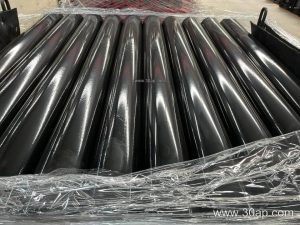
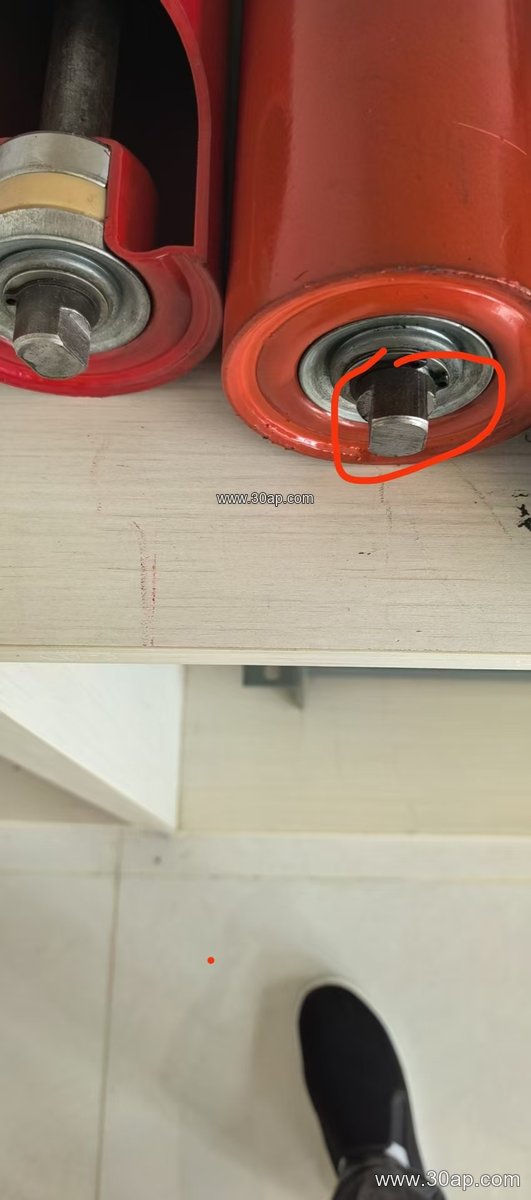
Most belt conveyor return idlers use a steel tube shell with pressed bearing housings at each end. The shaft is fixed, and the shell rotates on sealed ball bearings. Common bearing sizes include 6204, 6205, 6305, 6306, 6308, and 6310, but the bearing choice depends on load and speed, not on a single fixed rule. Roll diameters are often Ø89, Ø102, Ø108, Ø127, Ø133, Ø159, and larger sizes for heavy-duty mining conveyors.
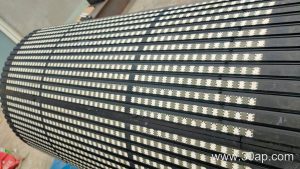
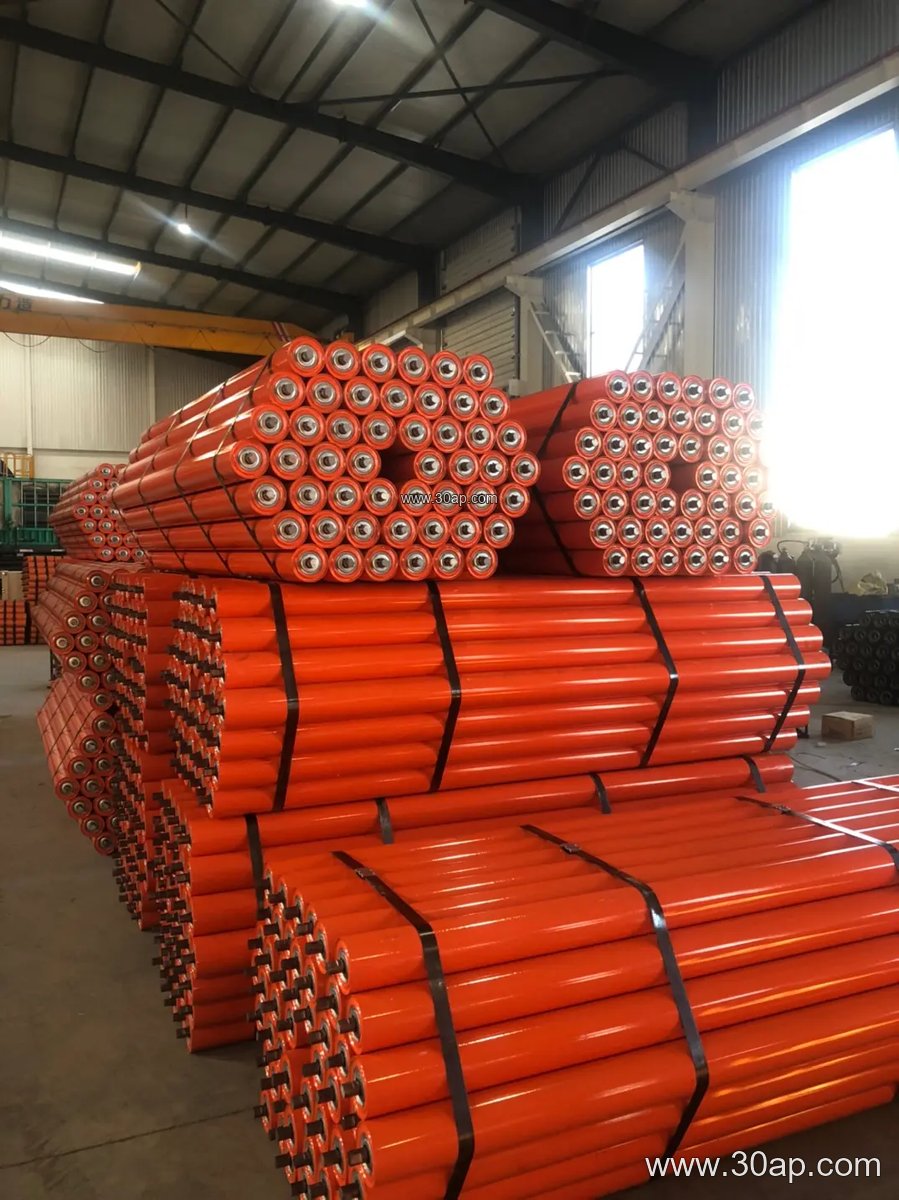
The return idler can be supplied as a plain flat roller or as a V-type return idler set. The V shape helps center the belt on the return run. Rubber discs or spiral rollers are sometimes used for self-cleaning in sticky material. Surface options include steel, nylon, ceramic, and rubber rings, each suited to different wear conditions.
Where It Fits in the Conveyor
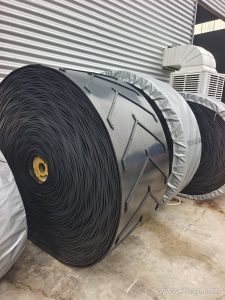
Return idlers are mounted on the return strand, typically every 2.5 to 3.5 meters, though spacing is set by belt width, tension, and load. In a limestone quarry or aggregate conveyor line, they are often mounted on conveyor brackets fixed to the stringer. In a coal mining conveyor or power plant coal handling system, return idlers must cope with fine coal dust and moisture. In a cement plant, they may face abrasive clinker dust. In a port or ship loading conveyor, they support long spans of heavy conveyor belt, often a steel cord or EP conveyor belt running at high tension.
The return idler works together with the conveyor pulley at the head and tail, the conveyor bracket system, and the belt itself. It does not replace any of those parts, but it keeps the return belt from sagging between supports.
Matching Return Idler to Belt Width
Roll length varies with belt width, trough angle, and idler arrangement. For a three-roll carrying set, common roll lengths are around 200 mm for B500, 250 mm for B650, 315 mm for B800, 380 mm for B1000, 465 mm for B1200, 530 mm for B1400, 600 mm for B1600, 670 mm for B1800, and 750 mm for B2000. These are examples, not fixed rules, and side rolls can differ from center rolls. A return idler is usually a single roller that spans the belt width, so its length should match the belt width and the bracket spacing. A B800 conveyor belt does not automatically dictate one specific pulley diameter or shaft size; those are selected by the conveyor designer based on load and speed.
| Belt Width | Typical Return Idler Roll Length (example) | Common Roll Diameter Range |
|---|---|---|
| B500 | ≈ 200 mm (carrying set reference) | Ø63 to Ø89 |
| B650 | ≈ 250 mm | Ø76 to Ø108 |
| B800 | ≈ 315 mm | Ø89 to Ø127 |
| B1000 | ≈ 380 mm | Ø102 to Ø133 |
| B1200 | ≈ 465 mm | Ø108 to Ø159 |
| B1400 | ≈ 530 mm | Ø127 to Ø159 |
| B1600 | ≈ 600 mm | Ø133 to Ø178 |
These values are common references only. Actual return idler dimensions should be confirmed against the conveyor drawing and the belt width used on site.
Buyer Checklist for Return Idlers
- Check the belt width and the return strand layout before ordering. A return idler for a 1200mm wide conveyor belt is not the same as one for a 650mm belt.
- Confirm the roll diameter and bearing size against the load and speed. Do not assume a fixed shaft diameter from belt width alone.
- Choose the surface based on material. Abrasion resistant conveyor belt systems in iron ore or copper ore plants may need reinforced roller shells, while food grade or cold resistant conveyor belt lines may need different sealing.
- Consider the environment. A flame retardant conveyor belt in an underground coal mining conveyor needs return idlers with good dust sealing. A heat resistant conveyor belt in a cement or steel plant may require heat-tolerant bearing grease.
- Check bracket compatibility. The conveyor bracket and frame spacing must match the idler shaft and mounting flats.
Return idlers are simple parts, but they influence belt tracking, energy use, and maintenance intervals. In a sand making plant, a crusher conveyor, or a bulk material conveyor belt system, keeping the return side supported properly reduces spillage and belt edge damage. For heavy-duty mining conveyor belt applications, a thicker shell and better bearing protection often pay off over time.
Maintenance and Selection Notes
Inspect return idlers for seized bearings, worn shells, and material buildup. A squealing idler or a roller that no longer turns freely can wear through the belt back cover. Replace worn return idlers in sets where possible to keep the belt supported evenly. When selecting a replacement, match the roller diameter, shaft end shape, and bearing size to the original conveyor design. If the conveyor uses a pipe conveyor belt or a corrugated sidewall conveyor belt, the return idler arrangement may differ from a standard flat belt system, so confirm with the conveyor manufacturer.
For most industrial conveyors, the belt conveyor return idler is a low-cost component with a high impact on uptime. Buyers should focus on bearing quality, seal design, shell thickness, and correct dimensions rather than on a single size chart. The right return idler roller keeps the belt running straight and reduces wear on the conveyor pulley and belt edges.