What a Heavy-Load Idler Does on a Conveyor
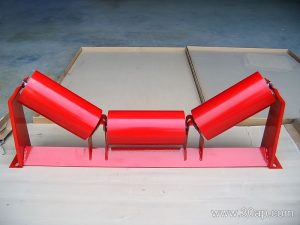
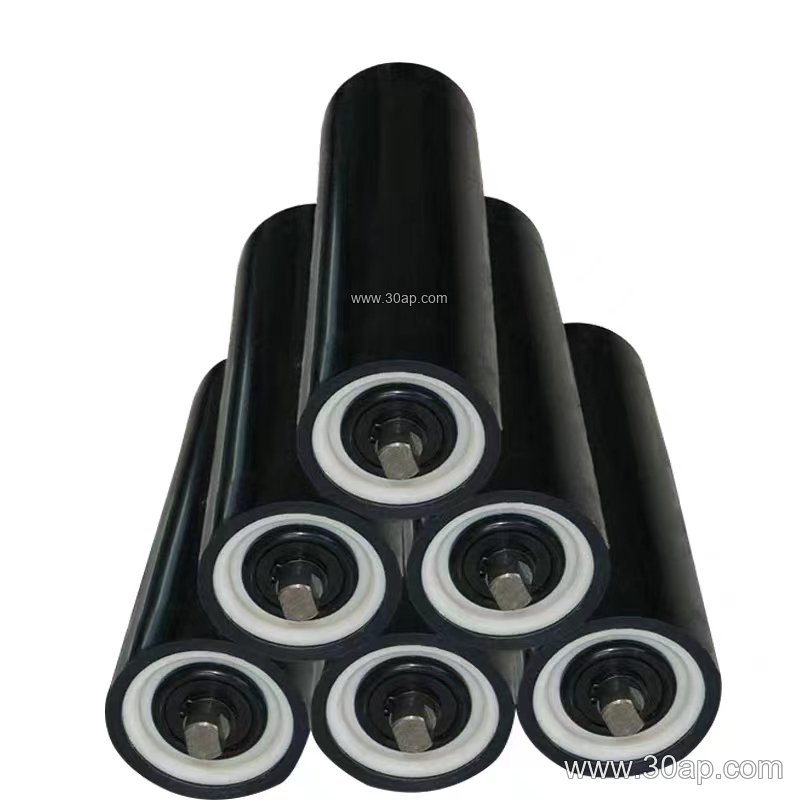
A heavy-load idler is a carrying or return roller built to support conveyor belts that move dense, abrasive, or high-tonnage bulk material. Unlike a light-duty roller used on a short package line, this roller is designed around thicker shells, larger shaft ends, and bearings that can survive continuous shock loading. In a quarry, a limestone mine, or a crushing and screening circuit, the idler roller is often the part that quietly determines whether the belt tracks cleanly or starts to wander under load.
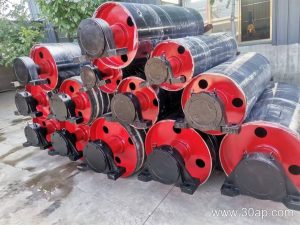
The idler works together with the conveyor belt, the conveyor pulley at the drive and tail ends, and the conveyor bracket that anchors each station. A heavy-load idler does not replace those parts; it carries the belt between them and keeps the trough shape stable so material stays centered.
Construction Details That Matter
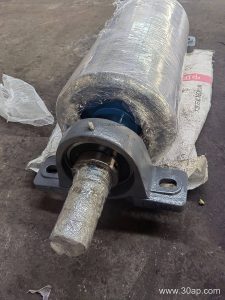
Most heavy-load idlers use a seamless steel tube shell, welded end discs, and a through shaft or stub shaft assembly. Bearing housings are usually sealed on both sides, with grease retention and dust exclusion treated as a primary design goal. Roller surfaces may be plain steel, nylon, ceramic, or rubber ring, and the choice depends on whether the belt is abrasive, wet, or prone to impact at the loading point.
Common roller diameters for this class include Ø108, Ø127, Ø133, Ø159, Ø178, Ø194, and Ø219 mm. Bearing sizes such as 6205, 6305, 6306, 6308, and 6310 appear across the range, but no single bearing is tied to one diameter. Shaft diameter follows the load calculation, not the belt width alone.
Where Heavy-Load Idlers Are Used
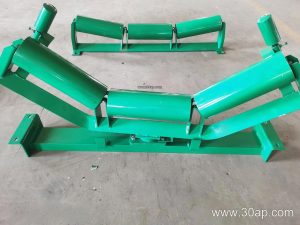
These rollers suit a coal preparation plant, a power station coal yard, an iron ore transfer house, and a cement plant clinker line. In a sand and aggregate plant, the same roller type handles crushed stone after the crusher, where fines and sharp edges shorten the life of lighter rollers. A heavy-duty mining conveyor belt carrying ore at high tonnage is a typical match, and the idler set is often specified as a three-roll troughing station with a 35-degree or 45-degree trough angle.
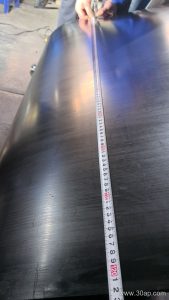
Return side use is equally important. A V-shaped return idler or a flat return roller keeps the belt from sagging between pulleys and reduces spillage along the line. Where the belt is wider, such as a 1200mm or 1500mm conveyor belt, the roller length and the bracket spacing must be matched to the actual belt width and trough geometry.
Common Size Reference
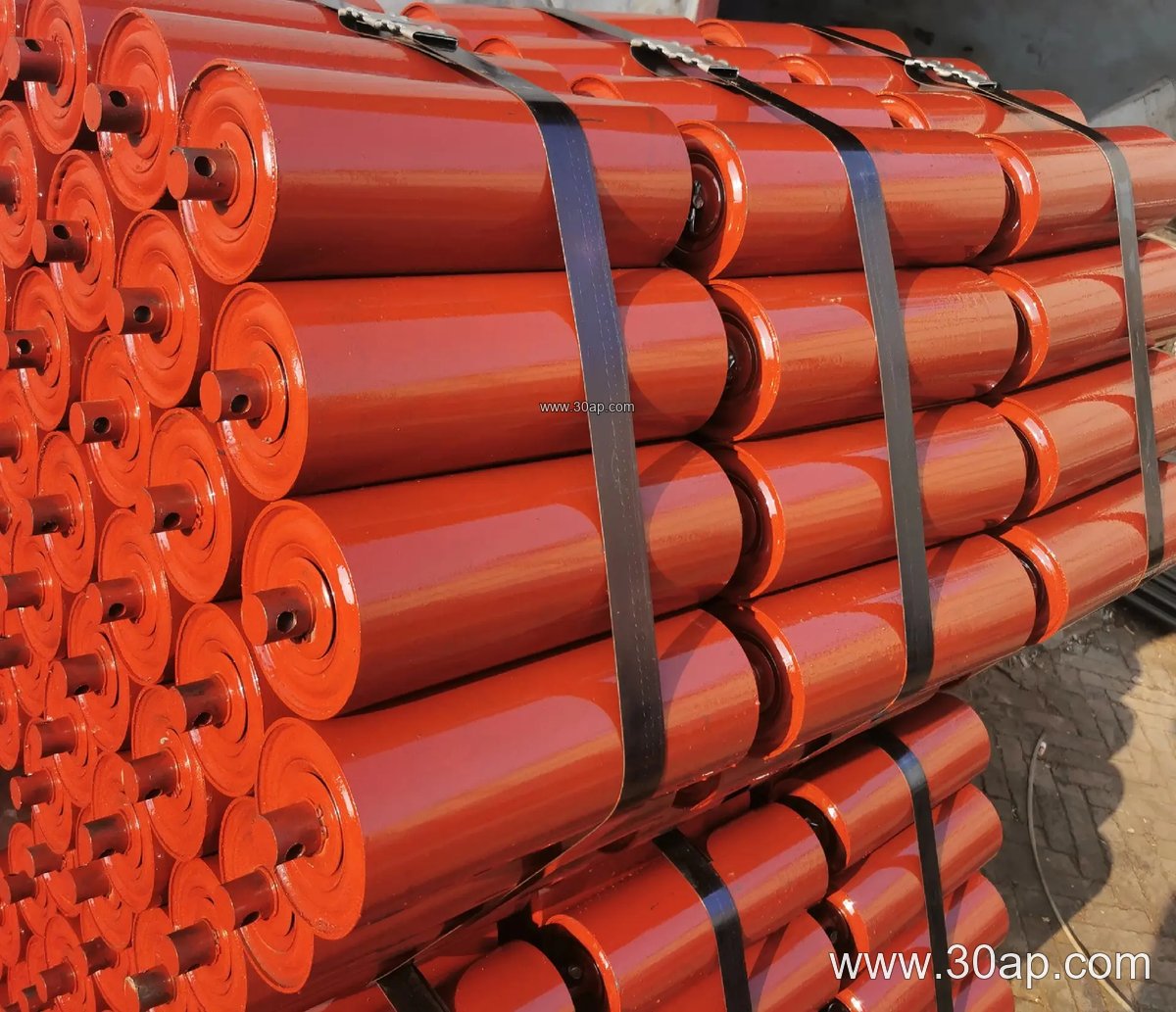
The table below shows typical combinations used in design discussions. These are reference examples, not fixed rules, and final dimensions are confirmed by the conveyor designer.
| Belt width | Typical roller length (three-roll trough) | Common roller diameter |
|---|---|---|
| B500 | About 200 mm | Ø89 to Ø108 |
| B650 | About 250 mm | Ø89 to Ø127 |
| B800 | About 315 mm | Ø108 to Ø133 |
| B1000 | About 380 mm | Ø127 to Ø159 |
| B1200 | About 465 mm | Ø133 to Ø178 |
| B1400 | About 530 mm | Ø159 to Ø194 |
| B1600 | About 600 mm | Ø159 to Ø219 |
| B1800 | About 670 mm | Ø178 to Ø219 |
| B2000 | About 750 mm | Ø194 to Ø219 |
Side rollers and center rollers may differ in length, and the trough angle changes the effective contact line. A 30-degree trough is common in general bulk handling, while a 45-degree trough is used where material must be kept tightly centered.
Buyer Checklist Before Ordering
- Confirm the belt width, trough angle, and whether the station is single-roll, two-roll, or three-roll.
- State the material being carried and whether impact, abrasion, heat, or moisture is present.
- Check the roller diameter against the belt speed and the load per station, not against belt width alone.
- Review the sealing arrangement and bearing size for the actual dust and water conditions.
- Match the idler to the existing conveyor bracket and shaft end dimensions so replacement is straightforward.
For a coal mining conveyor belt or an underground coal mining conveyor belt, flame retardant and anti-static properties are usually specified for the belt itself, and the idler specification should follow the same site safety requirements. In a port or ship loading line, a wide conveyor belt such as 1800mm or 2000mm may call for larger diameter rollers to keep rotation smooth under heavy belt tension.
Maintenance is mostly about rotation. A roller that stops turning will flat-spot the belt and wear the shell quickly. Periodic inspection of bearing temperature, seal condition, and bracket alignment prevents most unplanned stops. When replacing a set, keep the trough angle and roller length consistent with the original design so the belt keeps its trained path. For more on matched conveyor components, see the idler roller and conveyor pulley pages at https://www.yourdomain.com/heavy-load-idler and the belt guidance at https://www.yourdomain.com/conveyor-belt.