What a Three-Roll Idler Bracket Does
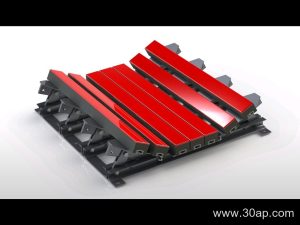
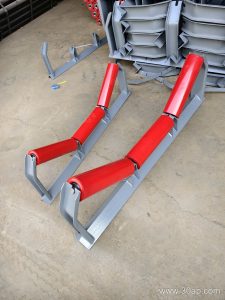
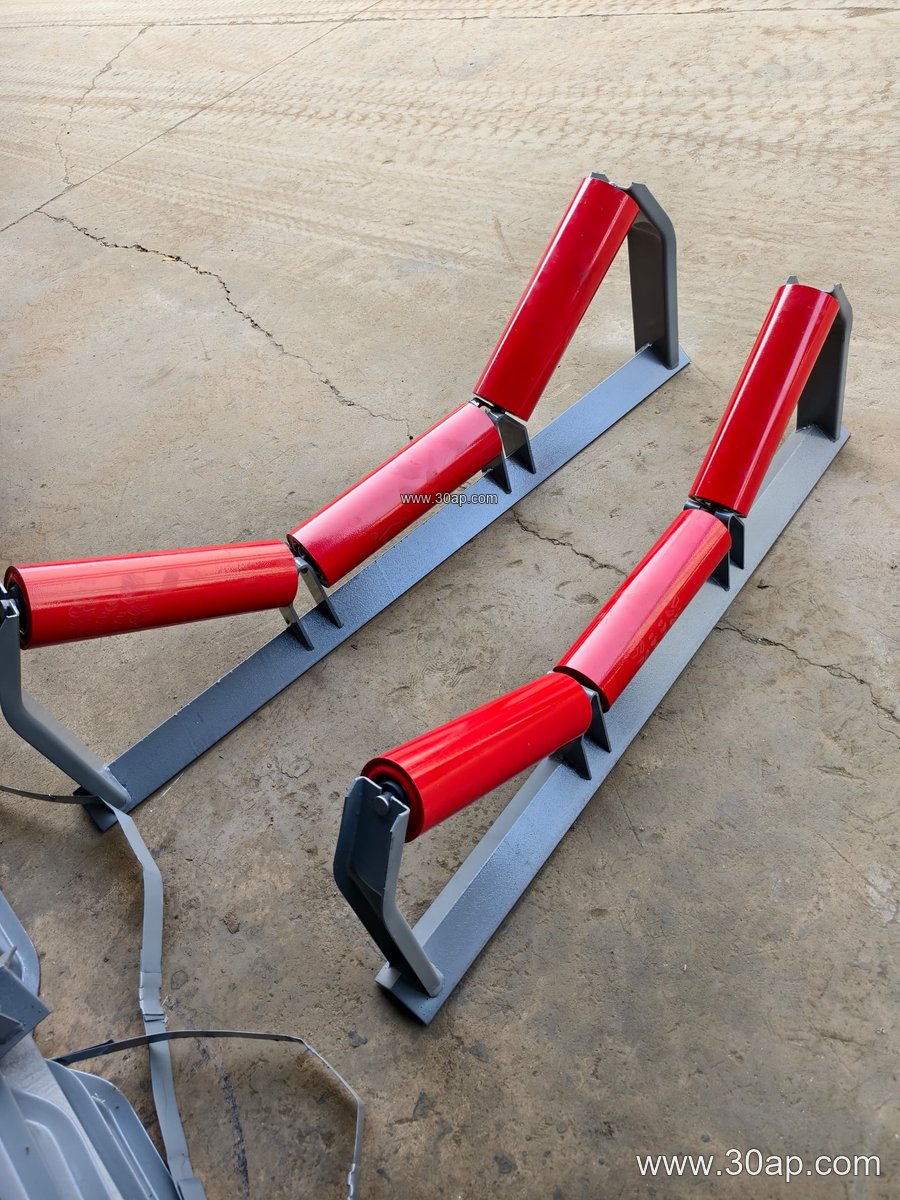
A three-roll idler bracket, often called a troughing idler bracket, is the steel frame that holds three idler rollers in a trough shape under the carrying side of a conveyor belt. It sets the trough angle, keeps the rollers aligned, and transfers the load of bulk material into the conveyor structure. In a quarry or a cement plant, this bracket is one of the quiet parts that decide whether the belt tracks well and whether the idler roller bearings last their full service life.
The same product is also known as a three-roll troughing bracket or three-roller idler support. It is not a drive pulley, a tail pulley, or a bend pulley; those are separate components that transmit or redirect belt tension. The bracket only supports the idlers and the belt.
How the Bracket Is Built
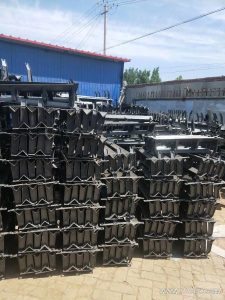
Most three-roll idler brackets are fabricated from angle steel, channel steel, or folded steel plate. The two side arms are set at a fixed or adjustable angle, and the center section holds the middle roller. Slot positions or bolt holes are drilled to match the idler shaft ends. Common materials are carbon steel with a painted or galvanized finish, and heavier sections are used where the conveyor carries abrasive rock or ore.
Build details that matter to a buyer include weld quality, hole alignment, and whether the bracket has a positive stop for the trough angle. A well-built bracket keeps the three rollers in one plane so the belt does not pinch or run off-center.
Common Sizes and Configurations
Three-roll idler brackets are usually selected by belt width, trough angle, and roller diameter. The table below shows common reference ranges; actual mounting hole spacing and beam length are determined by the conveyor design, not by belt width alone.
- Belt width: B500, B650, B800, B1000, B1200, B1400, B1600, B1800, B2000, B2200
- Trough angle: 20 degrees, 30 degrees, 35 degrees, 45 degrees; adjustable brackets can move between these angles
- Roller diameter: Ø89, Ø108, Ø133, Ø159, Ø194
- Forward tilt: often about 1.5 to 2 degrees on leading idler brackets
Example combinations such as B800 with 35 degrees and Ø108, or B1200 with 45 degrees and Ø133, are common in aggregate and coal handling. These are reference examples, not fixed rules. A 650mm belt may run with a 30-degree bracket and Ø89 rollers in a light-duty sand line, while a 1800mm wide belt in an iron ore plant may use a 45-degree bracket with Ø159 rollers.
Where It Fits in the Conveyor
The three-roll idler bracket is installed on the carrying side, between the head and tail of the conveyor. It is used in stone crushing lines, coal washing plants, power plant coal yards, port bulk terminals, and steel plant sinter lines. In a tunnel or underground mine, a compact three-roll bracket helps keep the belt profile low while still supporting a heavy load.
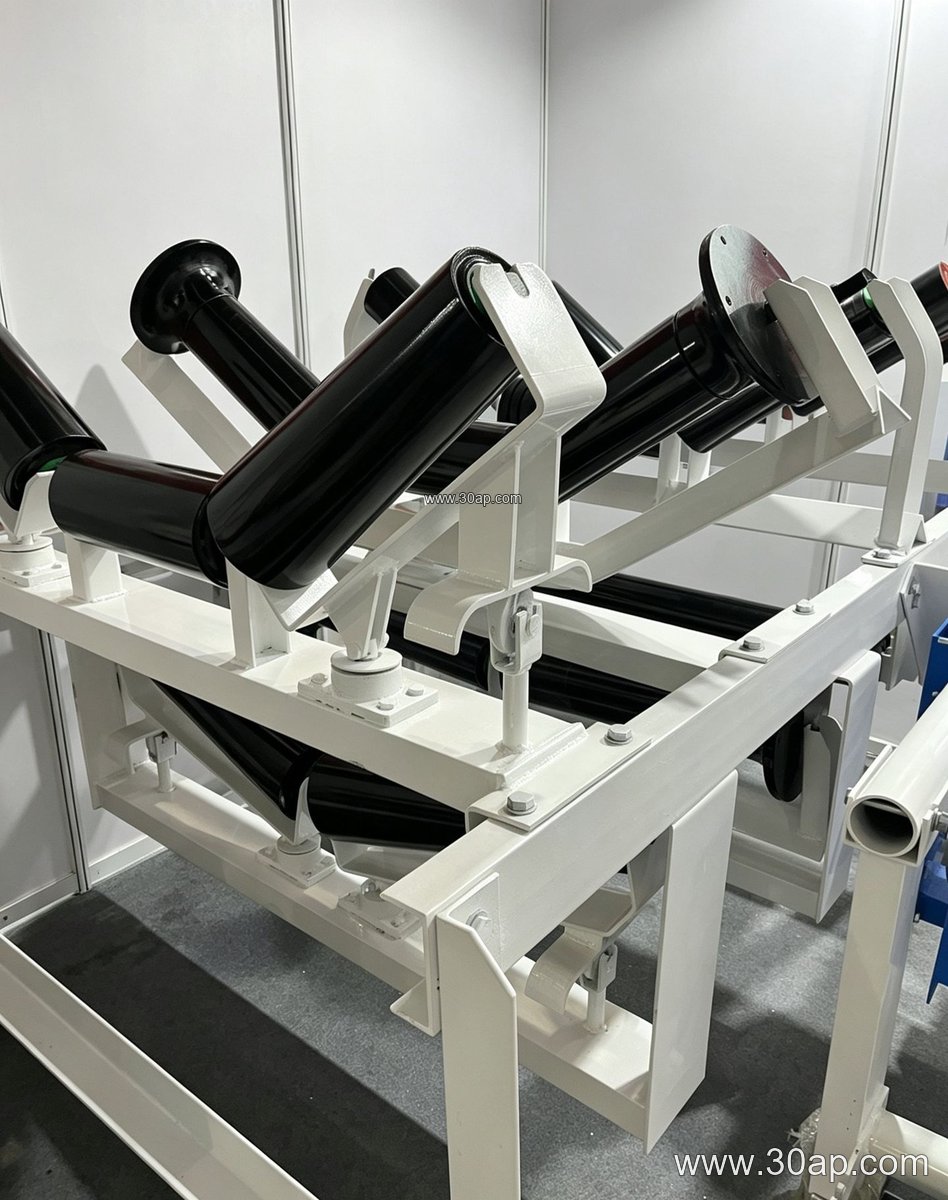
The bracket works together with the conveyor belt, the idler roller, and the conveyor pulley. A misaligned bracket can cause edge wear on a heavy-duty mining conveyor belt or a heat resistant conveyor belt, so installation height and squareness matter as much as the bracket itself.
Adjustable vs Fixed Brackets
Fixed three-roll brackets are welded at one trough angle, usually 30 or 35 degrees, and are common on long overland conveyors where the belt profile does not change. Adjustable brackets allow the side arms to be set at different angles, which helps during commissioning or when a plant handles materials with different flow characteristics. Adjustable types are also useful on short transfer conveyors in a batching plant or a fertilizer warehouse.
Neither type is a substitute for a self-aligning idler bracket or a V-return bracket; those are different subtypes used for belt training and return-side support.
Buyer Checklist
- Confirm belt width, trough angle, and roller diameter before ordering; do not assume one belt width matches only one roller size.
- Check the mounting hole pattern against the idler shaft ends.
- Ask for the beam length and hole spacing based on your conveyor drawing.
- Match the bracket finish to the environment, such as a washdown area or a dusty coal yard.
- Keep spare brackets on hand for wear points near the loading zone, where impact resistant conveyor belts and缓冲 idlers take the most stress.
For more conveyor components, visit www.example.com/conveyor-bracket or www.example.com/three-roll-idler-bracket. Related equipment such as the conveyor pulley and idler roller should be selected together with the bracket to avoid mismatched shaft sizes.