What a Q235 Conveyor Bracket Does on a Conveyor Line
A Q235 conveyor bracket is the steel support that holds idler rollers in the right position under or above a conveyor belt. It is the quiet workhorse of a belt conveyor: the belt carries the material, the rollers carry the belt, and the bracket carries the rollers. In a quarry, a coal washing plant, a cement kiln line, or a power plant coal yard, these brackets keep the belt profile stable so material moves without spillage or excessive wear.
The name refers to the steel grade. Q235 is a common structural carbon steel in Chinese standards, known for good weldability and predictable strength. Brackets are usually formed from angle steel, channel steel, or folded steel plate, then drilled, welded, and coated. Because the bracket is a fabricated part rather than a precision instrument, quality comes down to straightness, hole alignment, weld soundness, and consistent coating thickness.
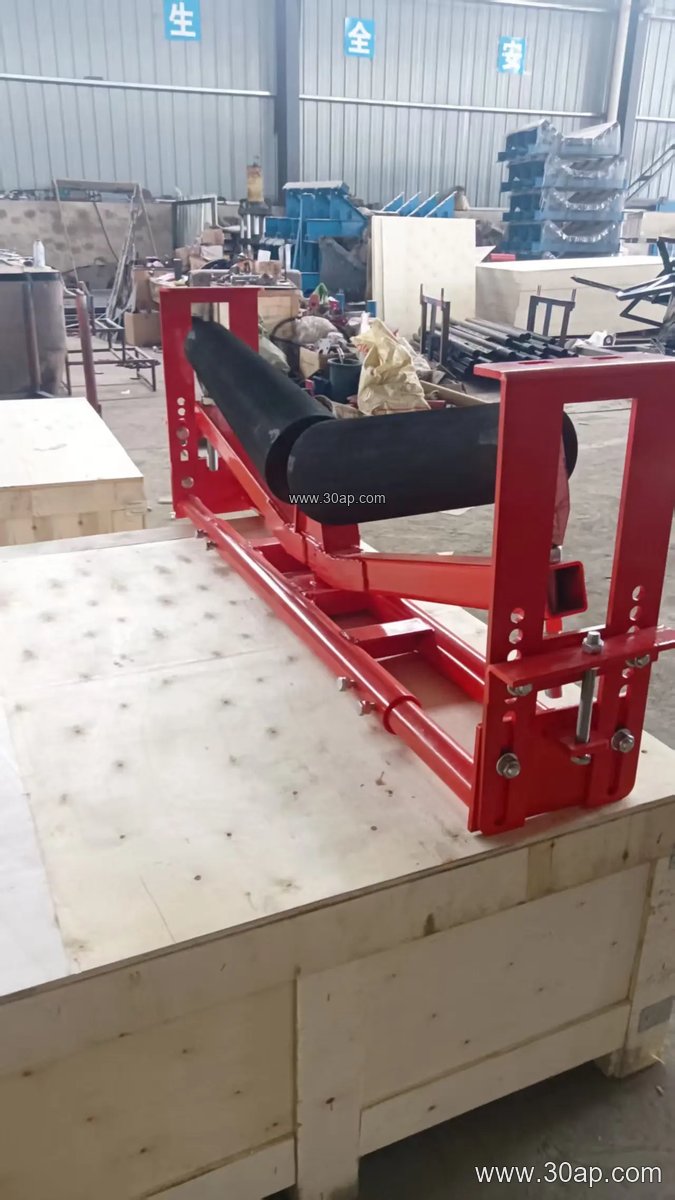
How the Bracket Is Built and Where It Sits
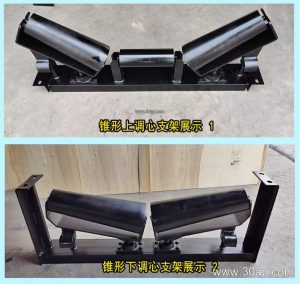
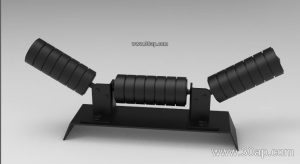
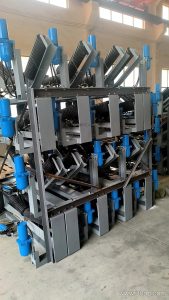
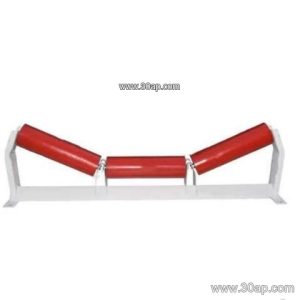
Most troughing brackets use a crossbeam with two or three roller seats. The side seats are angled to form the trough, while the center seat stays flat. The trough angle is a design choice, and common values include 20, 30, 35, and 45 degrees. A fixed bracket locks that angle; an adjustable bracket lets maintenance staff change it within a range to suit the belt and the load.
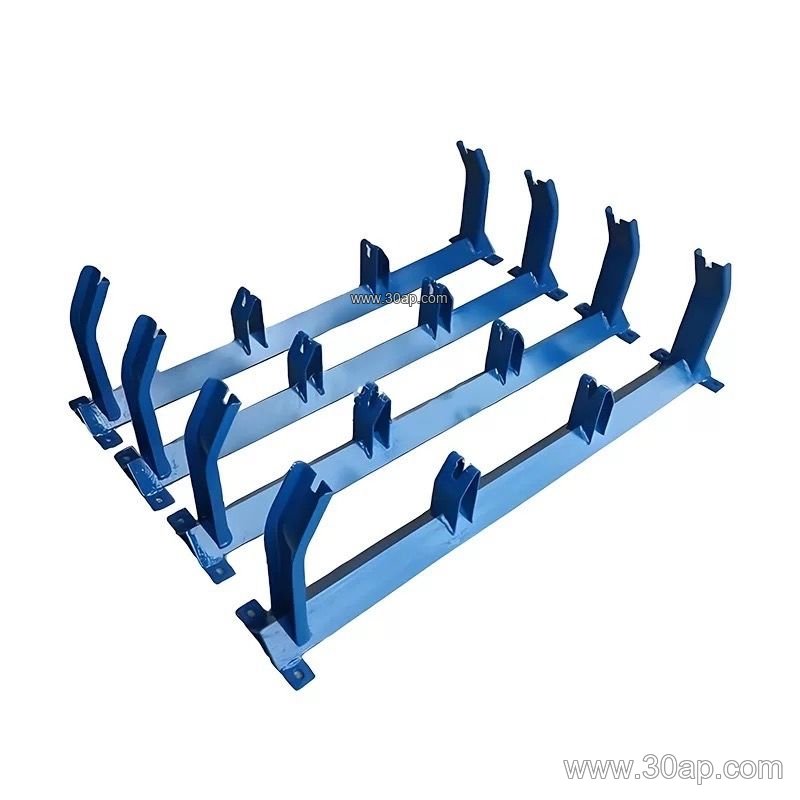
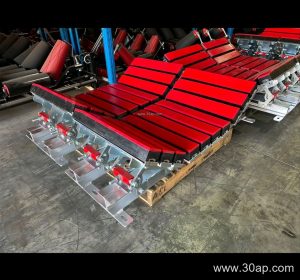
Return brackets sit under the carrying run and support the belt on its way back. A flat return bracket holds a single roller, while a V-shaped return bracket uses two angled rollers to help center the belt. Impact brackets are reinforced and placed below the loading point, where falling material hits the belt. Self-aligning brackets allow slight rotation so the belt can correct its own tracking.
Installation position matters as much as the part itself. The bracket must sit square to the conveyor centerline, with mounting holes aligned to the frame. A bracket that is twisted or loosely bolted will push the belt to one side, and no amount of roller adjustment will fully cure it.
Matching Bracket, Belt Width, and Roller Diameter
Belt width and roller diameter are linked through the bracket geometry, but not in a fixed one-to-one way. A B800 belt may run with 30-degree troughing and Ø108 rollers, while a B1200 line in a heavy-duty application might use 45-degree troughing and Ø133 rollers. A B650 conveyor in a smaller sand plant could use 30-degree troughing and Ø89 rollers. These are common combinations, not rules. The final choice depends on capacity, material lump size, belt speed, and the load the rollers must carry.
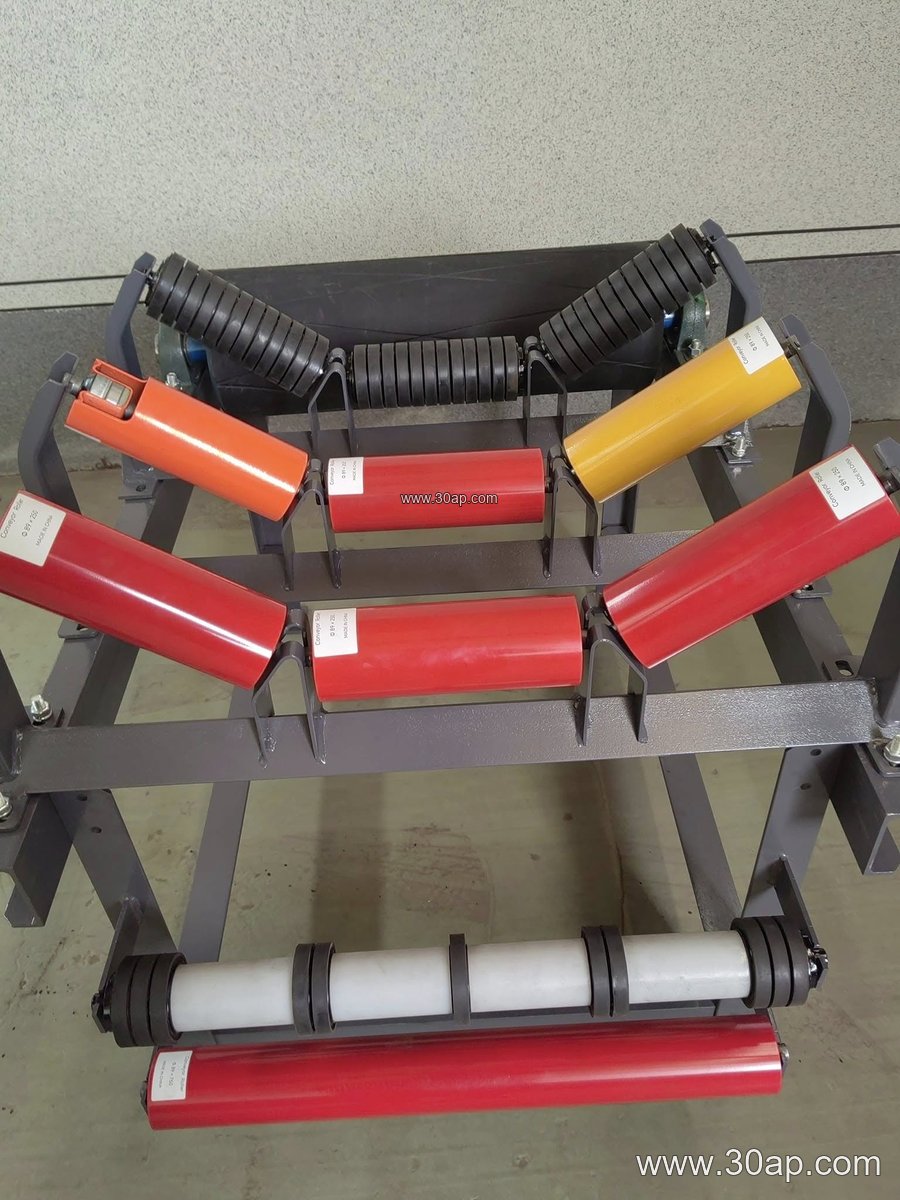
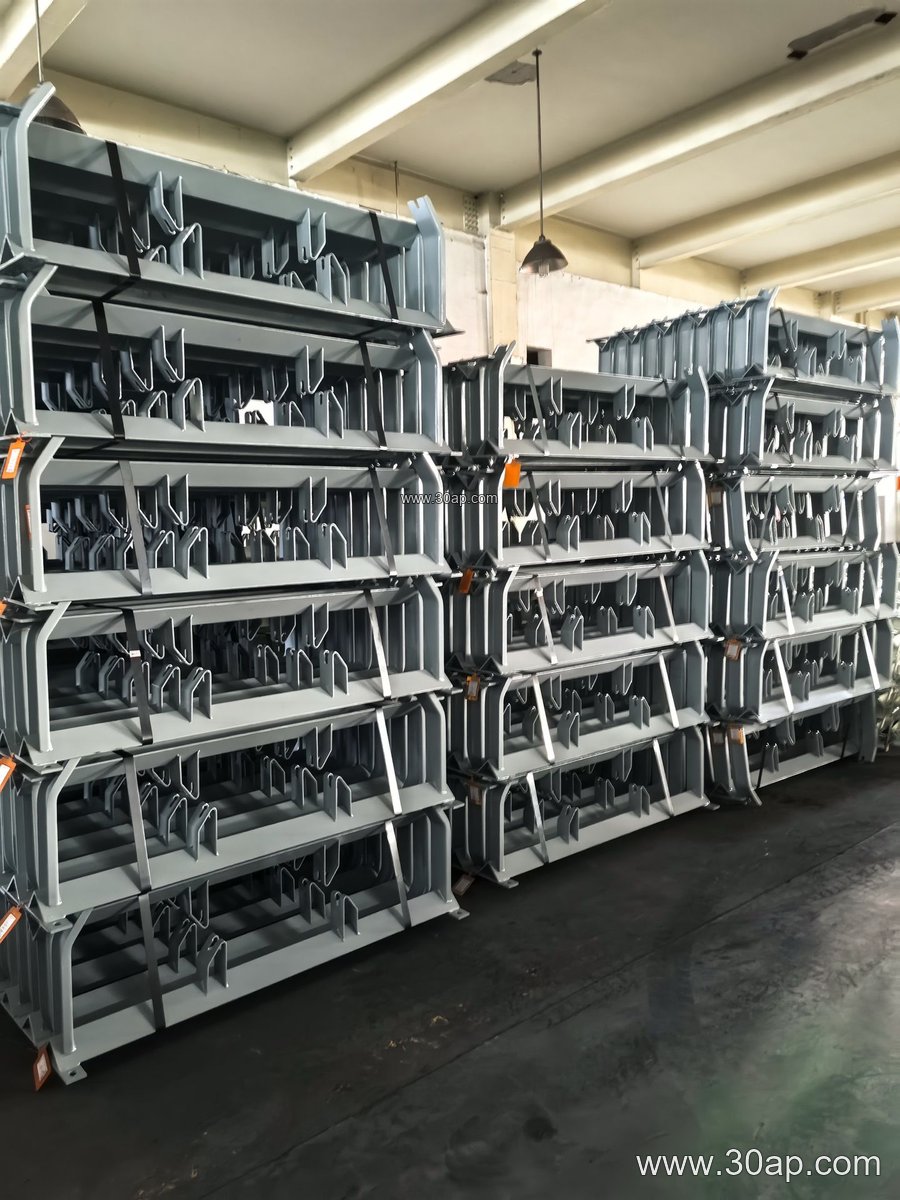
Crossbeam length and mounting hole spacing change with belt width and trough angle, so brackets are not interchangeable between sizes. Buyers should confirm the frame dimensions and hole pattern rather than relying on the belt width alone.
| Reference Item | Common Range |
|---|---|
| Belt width | B500, B650, B800, B1000, B1200, B1400, B1600, B1800, B2000 |
| Trough angle | 20°, 30°, 35°, 45° |
| Roller diameter | Ø89, Ø108, Ø133, Ø159, Ø194 |
| Material | Q235 angle steel, channel steel, folded plate |
| Bracket types | Troughing, transition, return, V-return, impact, self-aligning, suspended, adjustable |
Where These Brackets Earn Their Keep
In a limestone quarry, troughing brackets on the main haulage conveyor handle sharp rock and constant vibration. In a coal washing plant, flame retardant conveyor belt and anti-static properties matter, and the brackets must resist a damp, dusty environment. A cement plant uses brackets along clinker and raw meal lines, where dust builds up and inspection access is limited. Power plant coal yards often run long conveyors with many brackets, so consistent hole spacing speeds up replacement work.
Brackets also appear in aggregate plants, iron ore handling, port ship loading, and tunnel spoil removal. In each case the bracket is selected for the belt width, the roller diameter, and the duty level, not for a single universal size.
Buyer Checklist Before Ordering
- Confirm belt width and the actual frame hole pattern, not just the nominal width.
- State the required trough angle and whether it must be adjustable.
- Match roller diameter to the bracket seat and check that the roller shaft fits.
- Ask about steel thickness, weld quality, and surface treatment for the site conditions.
- For dusty or wet sites, consider how easily the bracket can be cleaned and inspected.
- Order brackets and idler roller sets together so seats and shafts are compatible.
A well-chosen Q235 conveyor bracket is a low-cost part that protects far more expensive components. When the bracket is straight, correctly spaced, and properly bolted, the conveyor belt runs true, the rollers last longer, and downtime drops. Buyers who check dimensions and duty conditions before ordering get far better results than those who match on belt width alone.