What a Ceramic Pulley Is
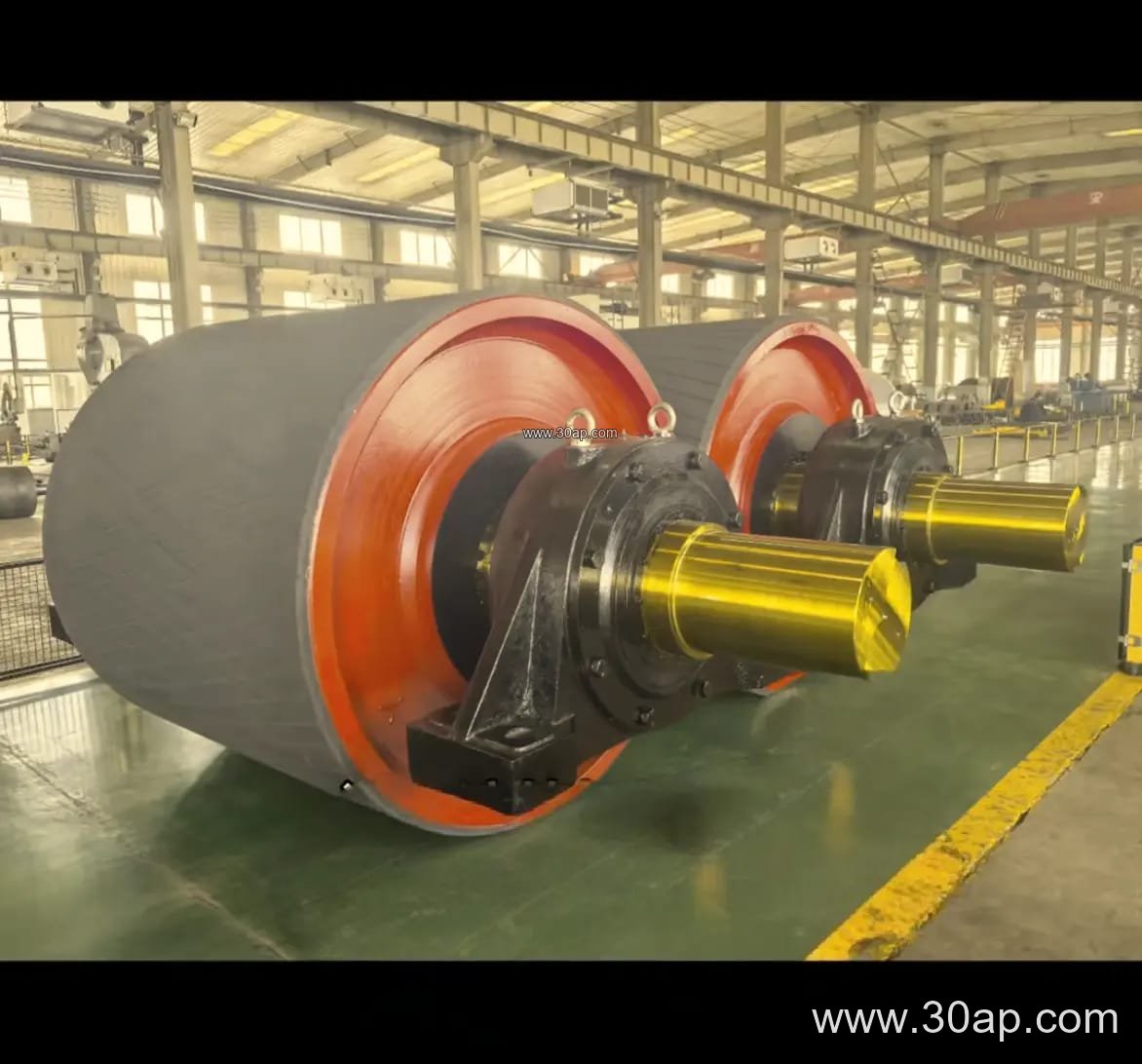
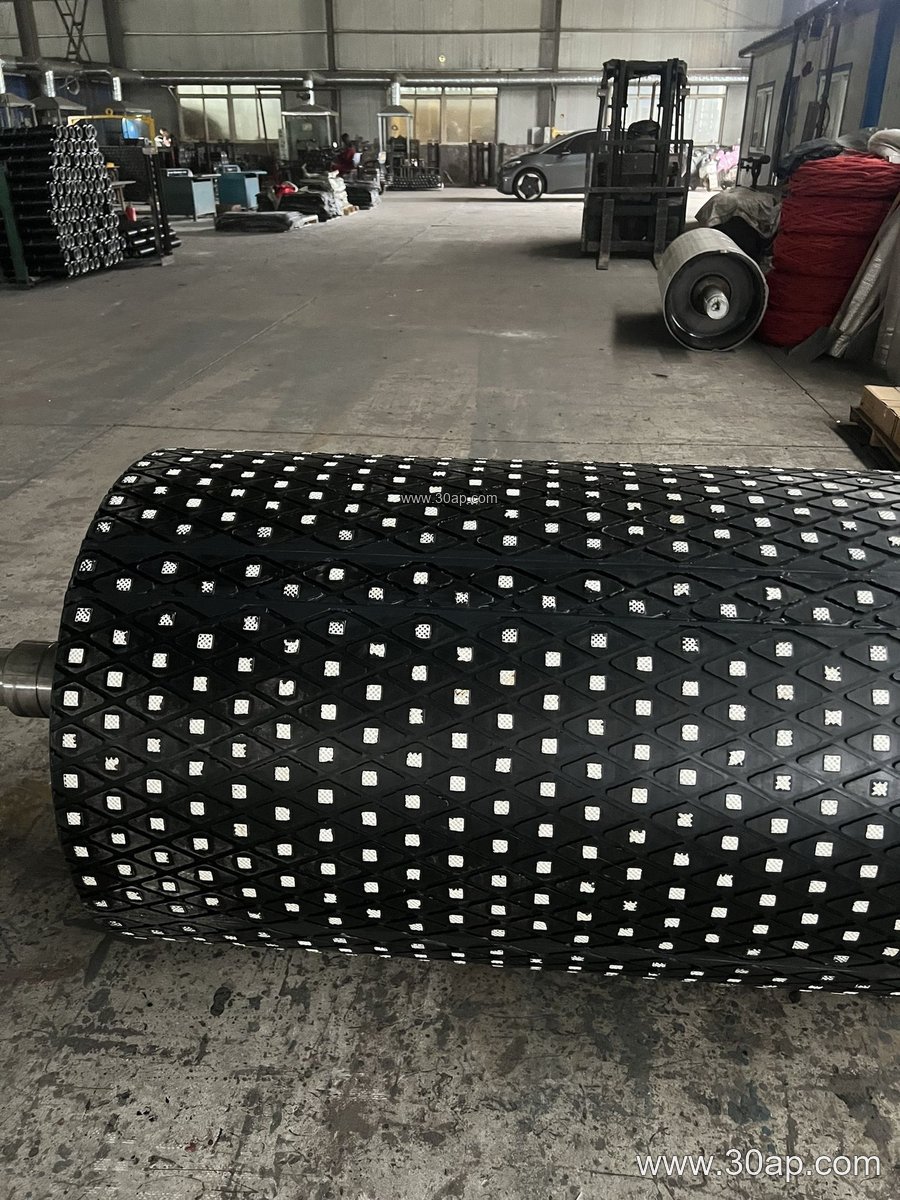
A ceramic pulley is a conveyor pulley whose shell is fitted with ceramic tiles or a ceramic-rubber composite lagging. It is also called a ceramic-lagged pulley or ceramic-coated pulley. The ceramic surface is not a decorative finish; it is a wear-resistant grip layer that helps the pulley hold the conveyor belt under load. In bulk handling lines, this type of lagging is often chosen where slip, abrasion, and moisture combine to shorten the life of plain steel or rubber-covered pulleys.
How It Is Built
The pulley body usually starts as a steel drum with welded end discs and a shaft. The ceramic layer is applied to the shell in one of several ways: vulcanized ceramic tiles embedded in rubber, cold-bonded ceramic pads, or ceramic segments fixed with a high-strength adhesive. The tiles are commonly set in a chevron or diamond pattern, and the exposed ceramic knobs provide friction while the rubber base absorbs shock. The shell face width is normally wider than the belt, for example a B800 belt may run on a pulley with about 950 mm face width, and a B1200 belt on roughly 1400 mm. These are common references, not fixed rules.
Common surface and thickness references
- Ceramic lagging: typical thickness 8, 10, 12, 15, or 20 mm
- Pattern: ceramic tiles in diamond or chevron layout
- Base: rubber or composite backing bonded to the steel shell
Where It Fits in the Conveyor
Ceramic pulleys are most often used as drive pulleys, where torque transfer and belt grip are critical. They can also be applied to bend pulleys and tail pulleys in wet or abrasive service, but the duty differs: a drive pulley needs consistent friction, while a bend pulley mainly needs wear resistance. A tail pulley in a quarry or crusher line may see sharp rock dust, and a ceramic surface can resist polishing better than plain rubber. Do not treat drive, tail, and bend pulleys as interchangeable; each position has its own load and wrap angle.
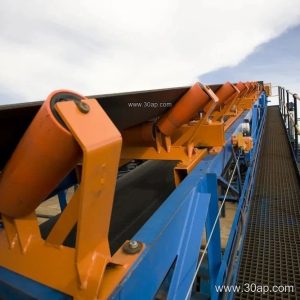
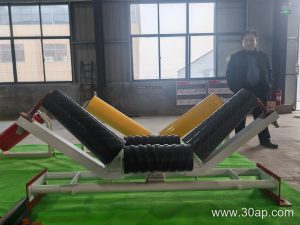
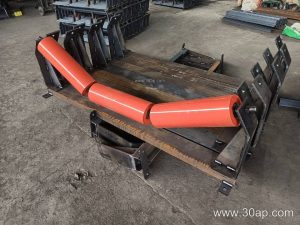
Typical industries include coal mining, cement plants, power plant coal handling, iron ore and copper ore lines, sand and aggregate plants, and port bulk terminals. In these settings, a ceramic pulley often works alongside a heavy-duty conveyor belt, impact idler rollers, and sturdy conveyor brackets. A rubber conveyor belt or an EP conveyor belt may run on the same system, and the pulley lagging should be matched to the belt cover rather than chosen in isolation.
Sizing and Selection Notes
Buyers should look at belt width, pulley diameter, shaft diameter, lagging thickness, and the actual load. Common belt widths in conveyor work include B400, B500, B650, B800, B1000, B1200, B1400, B1600, B1800, B2000, B2200, and B2400. Pulley diameters often range from Ø200 to Ø1800, with larger drives such as B1200 × Ø1000 or B1400 × Ø800 appearing in heavier lines. Shaft diameter is not set by belt width alone; it is determined by torque and load, with common values from Ø50 to Ø200. A ceramic pulley for a 1200mm wide conveyor belt does not automatically take one shaft size.
Reference table for common pulley combinations
| Belt width | Typical pulley face width | Example diameter range |
|---|---|---|
| B500 | about 600 mm | Ø250 to Ø500 |
| B800 | about 950 mm | Ø400 to Ø800 |
| B1000 | about 1150 mm | Ø500 to Ø1000 |
| B1200 | about 1400 mm | Ø630 to Ø1250 |
| B1400 | about 1600 mm | Ø800 to Ø1400 |
These values are reference data for discussion, not verified universal specifications. The final combination depends on conveyor design, belt tension, and the pulley position.
What a Buyer Should Check
First, confirm the pulley role: drive, tail, bend, or take-up. Second, match the lagging to the belt. A flame retardant conveyor belt in an underground coal mine may require a pulley surface that does not compromise safety, while a heat resistant conveyor belt in a cement plant needs attention to rubber compound selection. Third, check the ceramic bond quality; poorly bonded tiles can detach and damage the belt. Fourth, review the shaft and bearing assembly together with the conveyor bracket and idler roller layout. Finally, ask for the actual face width, lagging thickness, and balance grade rather than assuming a standard size.
For more conveyor component references, visit example.com/conveyor-pulley or example.com/ceramic-pulley. Related equipment such as the conveyor belt, idler roller, and conveyor bracket should be specified as a system, because a ceramic pulley performs best when the whole conveyor is matched to the duty.