What a Port Belt Conveyor Pulley Does
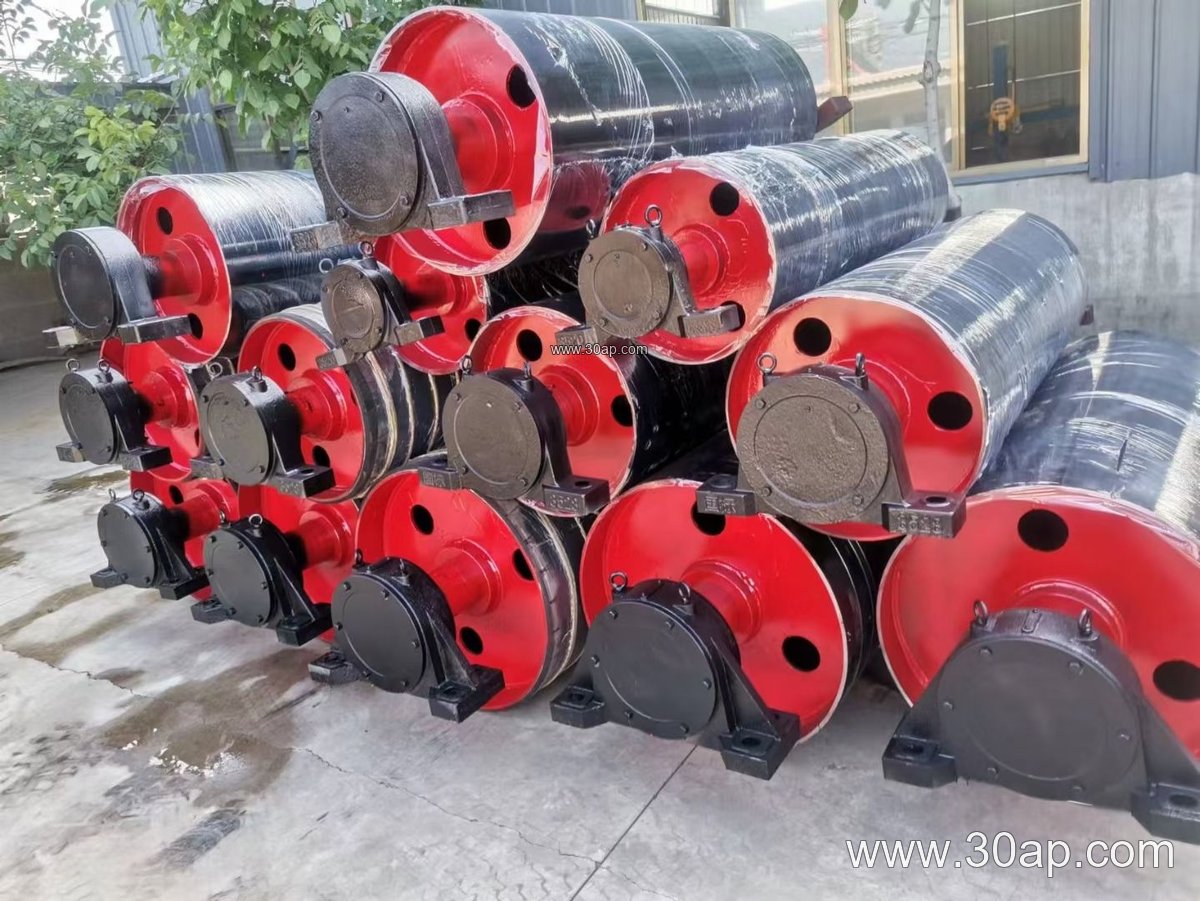
A port belt conveyor pulley is the cylindrical rotating component that drives, tensions, or redirects the conveyor belt in bulk material handling systems. Unlike a simple idler roller that only supports the belt, a pulley transmits torque, controls belt tracking, and carries the full tension load of the system. In port environments, these pulleys handle continuous ship loading and unloading of coal, iron ore, fertilizer, grain, and other bulk cargoes, often operating in corrosive salt-air conditions that demand careful material selection.
The same product is also called a conveyor drum or conveyor pulley. These names describe the same assembly, but subtypes such as drive, tail, and bend pulleys serve distinct functions and are not interchangeable in design or application.
Construction and Key Components
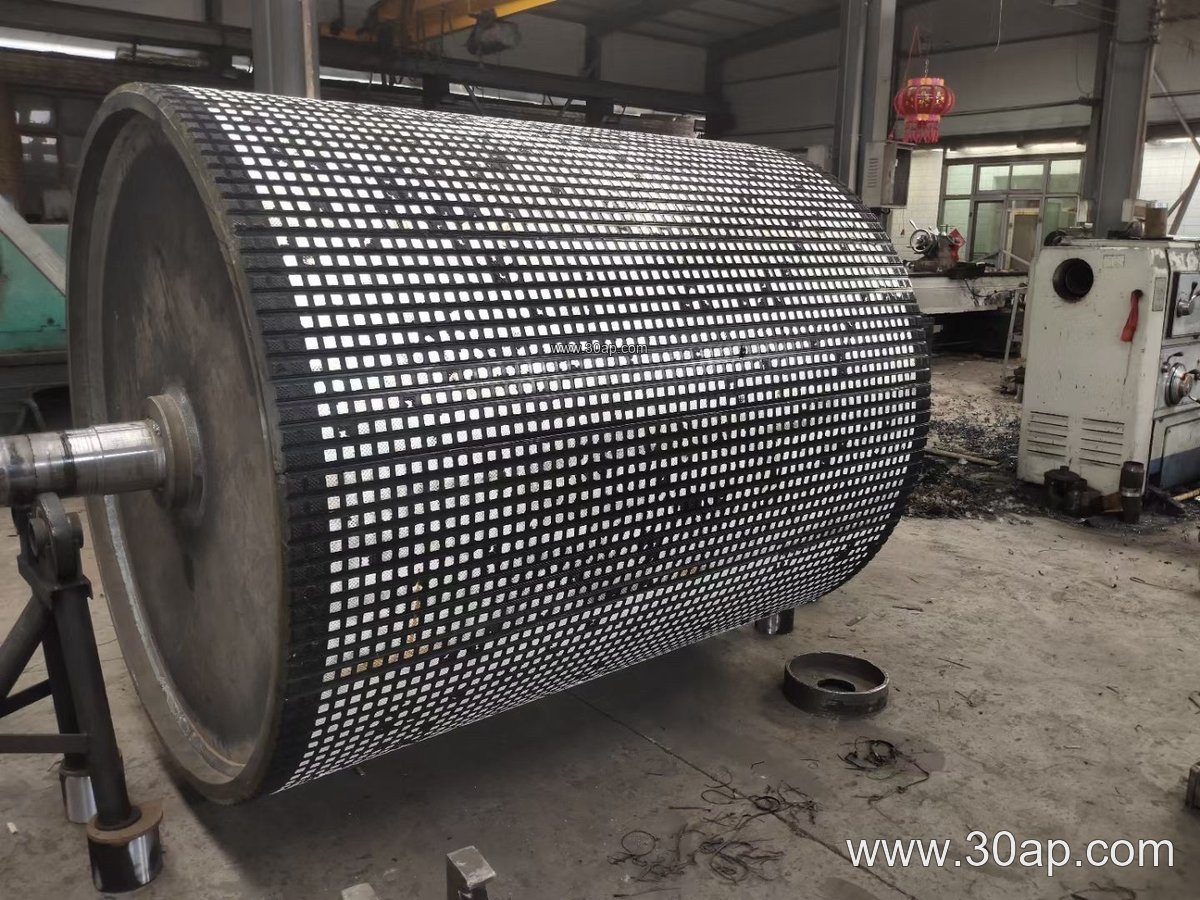
Each unit consists of a cylindrical shell, shaft, end discs, and bearing housings. The shell is usually rolled from steel plate and welded to the shaft through hubs or discs. Surface treatment with rubber lagging improves grip and protects the shell from abrasive wear. Common lagging forms include plain rubber, diamond grooved, herringbone, and ceramic lagging, with thicknesses typically ranging from 8 mm to 20 mm depending on duty.
Bearing selection and shaft diameter are determined by torque and radial load, not by belt width alone. Shaft diameters commonly fall between Ø50 and Ø200, but final sizing must follow the actual conveyor design. Face width is related to belt width, so a B1200 belt might use a pulley face around 1400 mm, while a B800 unit could use roughly 950 mm. These are reference relationships, not fixed rules.
Drive, Tail, and Bend Pulley Roles
The drive pulley, also called the head or discharge pulley, is the powered unit that pulls the belt and discharges material at the transfer point. It usually carries the highest tension and often uses the thickest lagging. The tail pulley at the loading end redirects the belt and may include a self-cleaning wing design to shed sticky cargo.
A bend pulley changes belt direction without driving, and a take-up pulley maintains tension. These subtypes differ in load, bearing arrangement, and lagging choice, so a bend pulley cannot replace a drive pulley in a port conveyor system.
Common Sizes and Surface Options
The table below shows typical reference combinations. Actual values depend on conveyor design, belt tension, and cargo type.
| Belt Width | Typical Face Width | Common Shell Diameter | Lagging Thickness |
|---|---|---|---|
| B500 | about 600 mm | Ø250 to Ø400 | 8 to 10 mm |
| B800 | about 950 mm | Ø400 to Ø630 | 10 to 12 mm |
| B1000 | about 1150 mm | Ø500 to Ø800 | 12 to 15 mm |
| B1200 | about 1400 mm | Ø630 to Ø1000 | 12 to 15 mm |
| B1400 | about 1600 mm | Ø800 to Ø1250 | 15 to 20 mm |
| B1800 | about 2000 mm | Ø1000 to Ø1400 | 15 to 20 mm |
Surface choice depends on the belt and cargo. Diamond or herringbone lagging improves wet grip at iron ore terminals, while ceramic lagging suits high-abrasion coal and coke operations. A smooth surface may be used on some bend positions where tracking matters more than traction.
Where These Pulleys Are Used
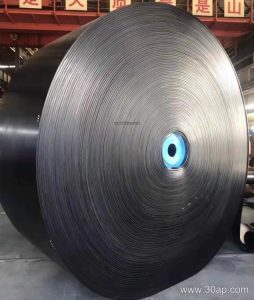
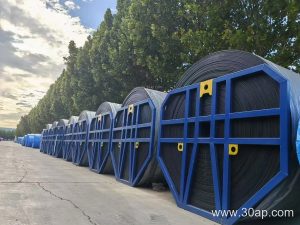
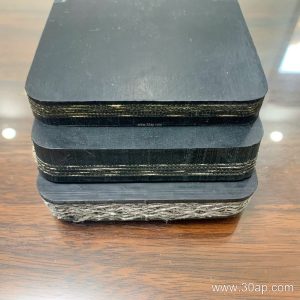
Port bulk terminals are the main setting, but the same equipment appears in power plant coal yards and cement plant clinker handling. In a ship loading line, the drive pulley at the boom tip works together with a heavy-duty conveyor belt such as a Steel Cord Conveyor Belt or an abrasion resistant fabric belt. Matching belt tension to pulley diameter and lagging quality is critical, because a small diameter relative to belt stiffness can shorten belt life.
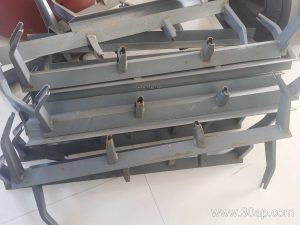
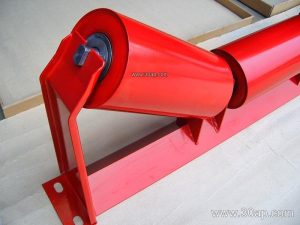
In coal mining and quarry applications, a flame retardant conveyor belt may run over pulleys with anti-static lagging. The pulley must also suit the conveyor bracket and idler roller layout so the belt tracks centrally without edge damage.
What Buyers Should Check
- Confirm the exact position: drive, tail, bend, or take-up, since each has different load demands.
- Provide belt width, belt type, and maximum tension so the supplier can size the shaft and bearings.
- Specify lagging form and thickness based on cargo abrasiveness and moisture.
- Check that face width and diameter suit the belt, but avoid assuming one width fits one diameter only.
- Review bearing housing sealing for salt-air and dust exposure common at port terminals.
For more details on matching pulleys with conveyor components, visit beltconveyorparts.com and review conveyor pulley options for port applications.