What the EP1250 Conveyor Belt Is
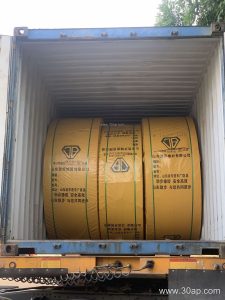
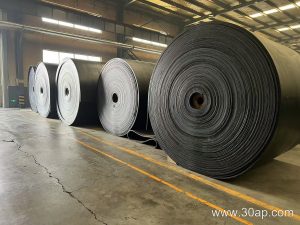
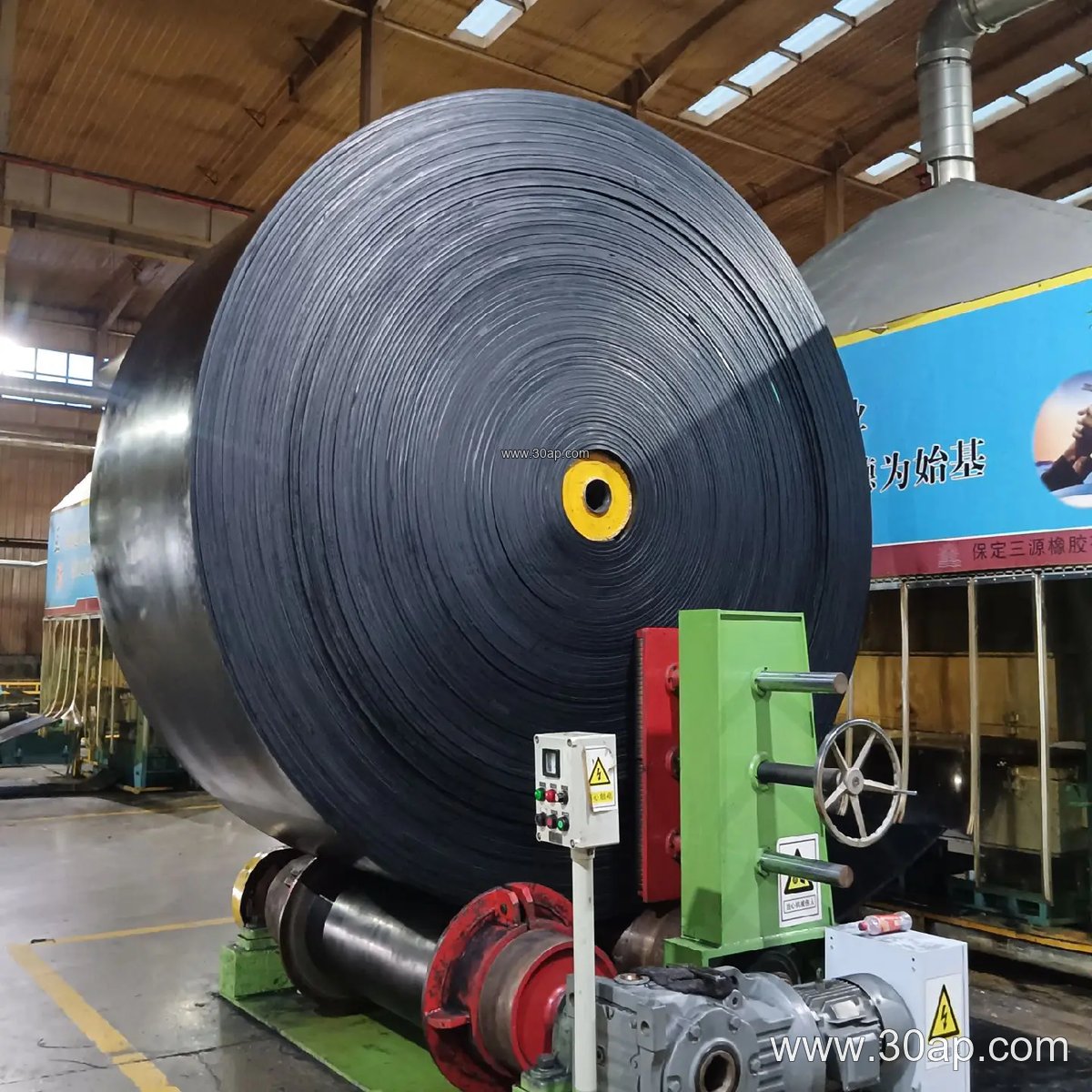
The EP1250 Conveyor Belt is a fabric-core rubber belt built around polyester (E) warp and polyamide (N) weft cords. In the EP strength series, the number refers to the nominal tensile strength per unit width, so an EP1250 belt sits in the upper-middle range, above common EP630 and EP800 constructions and below EP1600 and EP2000. It is an EP Conveyor Belt, also correctly described as an EP Fabric Core Conveyor Belt, and it suits medium-to-heavy duty conveying where moderate elongation and good troughability matter.
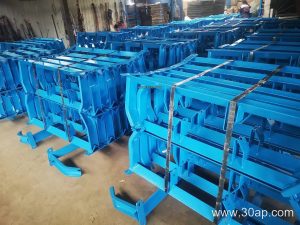
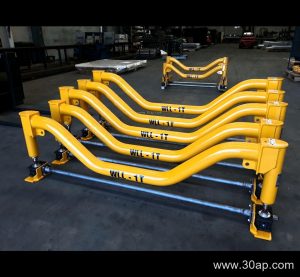
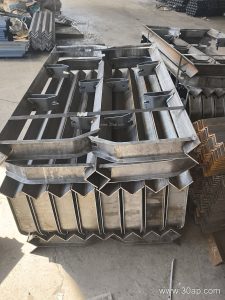
The carcass is usually a Multi-Ply Fabric Core Conveyor Belt with two to six plies, depending on the duty. Rubber covers protect the carcass from abrasion, impact and moisture. Because the belt must match the whole conveyor, not just the drive, the specification should be read together with the pulley arrangement, idler roller spacing and conveyor bracket layout on the actual machine.
Construction and Surface Options
A typical build combines an EP fabric carcass, skim rubber between plies, and top and bottom covers bonded under heat and pressure. Cover thickness is often written as top plus bottom, for example 4+2 mm, 5+2 mm or 6+2 mm. Heavier covers add mass and cost, so the choice should follow the material being carried rather than a habit of ordering the thickest option.
- Carcass: EP fabric, 2 to 6 plies, strength grade EP1250
- Covers: abrasion resistant, heat resistant, oil resistant, flame retardant or anti-static grades
- Edges: cut edge or moulded edge, depending on width and application
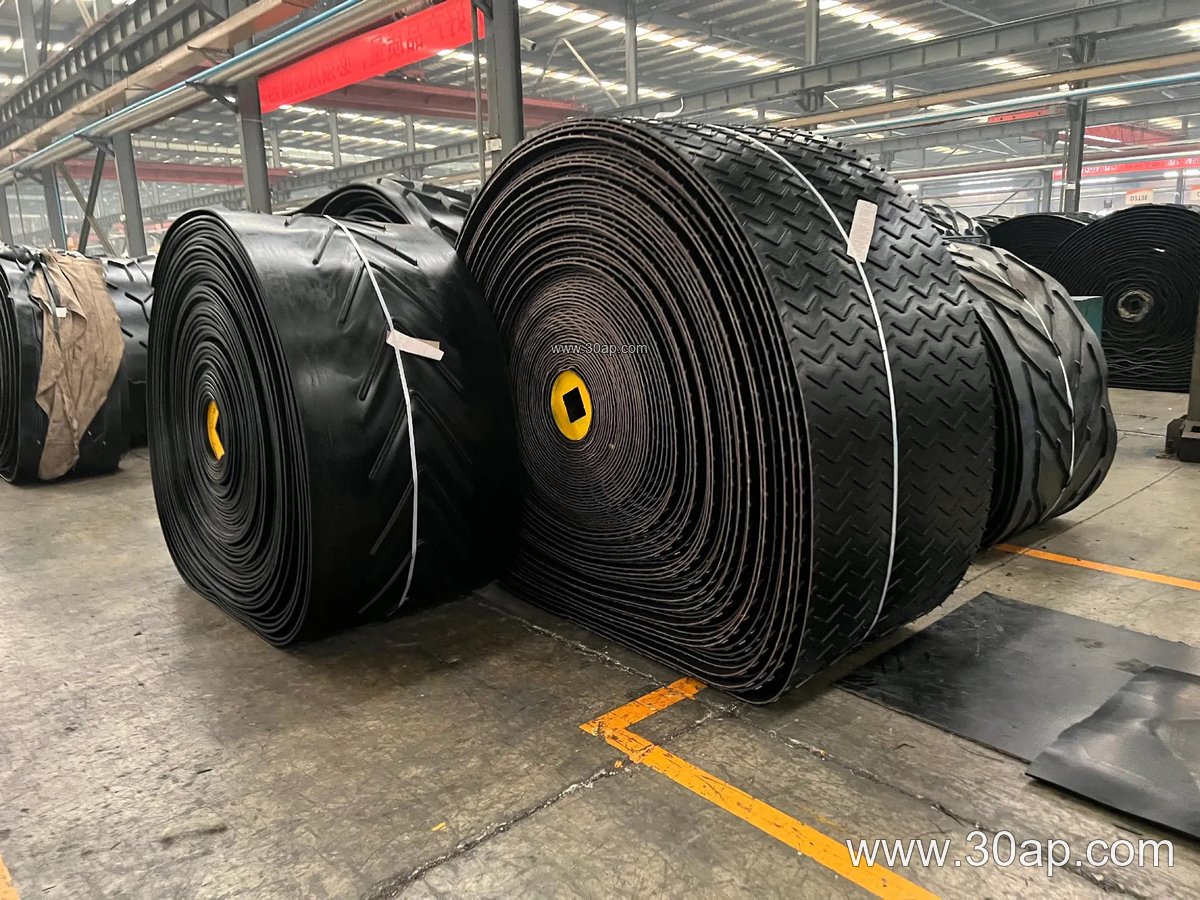
- Surface forms: plain, chevron or other profiled top covers where incline control is needed
For inclined sections, a Chevron Conveyor Belt pattern may be considered as a comparison, but it is a different surface form rather than a replacement for the plain EP1250 belt on a horizontal run. Similarly, a Corrugated Sidewall Conveyor Belt solves steep-incline problems with raised edges, while the EP1250 belt remains the flat carrying element on the main line.
Where It Fits in the Plant
The EP1250 Conveyor Belt is common in mines, coal preparation plants, cement works, power stations, steel plants, quarries, sand and gravel yards, ports and crushing circuits. It handles limestone, clinker, coal, ore, aggregate and similar Bulk Material Conveyor Belt duties. In a crusher circuit it may serve as a Crusher Conveyor Belt; in a quarry it works as a Quarry Conveyor Belt or Aggregate Conveyor Belt. Underground Coal Mining Conveyor Belt installations usually demand flame retardant and anti-static properties, which should be specified explicitly rather than assumed.
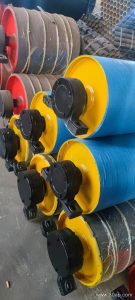
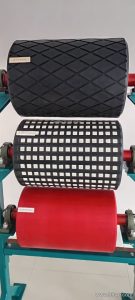
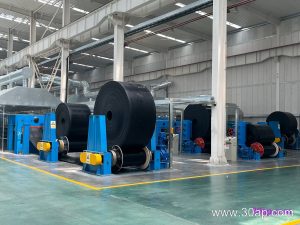
On the conveyor itself, the belt runs over idler roller sets, wraps the head and tail pulleys, and is supported by the conveyor bracket and frame. Drive, tail and bend pulleys have separate roles and are not interchangeable; the belt tension and cover selection should be checked against the pulley diameters and the take-up arrangement. A conveyor pulley with a small diameter relative to belt thickness can shorten belt life, so the pulley data belongs in the enquiry.
Common Reference Specifications
The values below are reference ranges, not fixed combinations. Actual constructions vary between manufacturers and should be confirmed by drawing or datasheet.
| Item | Typical reference |
|---|---|
| Strength grade | EP1250 |
| Belt width | B800, B1000, B1200, B1400, B1600, B1800 |
| Cover thickness | 4+2 mm, 5+2 mm, 6+2 mm, 8+3 mm |
| Number of plies | Usually 3 to 5 |
| Length | By conveyor centre distance and splicing allowance |
Width and strength are independent choices: a 1200 mm or 1800 mm wide belt can be supplied at EP1250, and one belt width does not dictate a single pulley diameter. Shaft size follows the pulley design and load calculation, not the belt width alone.
Selection and Maintenance Notes
Buyers should state the material, lump size, capacity, incline, ambient temperature, and whether the belt needs flame retardant, oil resistant or heat resistant covers. For cold sites, a Cold Resistant Conveyor Belt compound may be required; for wet, sticky loads, cover grade and surface pattern matter more than raw strength. A Rubber Conveyor Belt of the EP type is not automatically the best answer for every line, and comparing it with a Steel Cord Conveyor Belt or NN Conveyor Belt for very long, high-tension routes is normal engineering practice.
During operation, keep idlers turning freely, check pulley lagging and alignment, and monitor edge wear and splice condition. Store spare belts flat and dry, and avoid sharp bends during installation. For buyers sourcing through a belt supplier, requesting a data sheet covering carcass, covers, width, mass per square metre and splice method will prevent mismatches on site.