What a Fabric Core Conveyor Belt Is
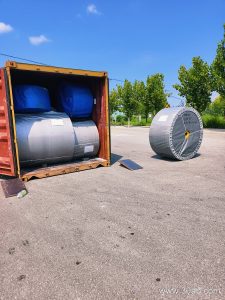
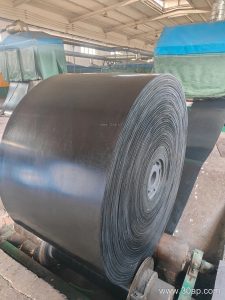
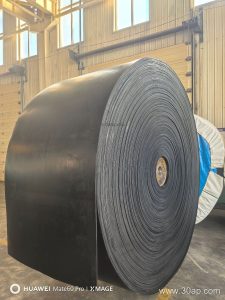
A fabric core conveyor belt is a composite belt in which woven textile plies carry the tension load while rubber or PVC covers protect the carcass and grip the material. The textile plies, usually called fabric layers or plies, are bonded together and to the covers during vulcanization or a similar lamination process. This structure separates it from a steel cord conveyor belt, where steel wires instead of fabric provide tensile strength.
The general product name is a textile carcass conveyor belt. Common trade descriptions include EP conveyor belt (polyester warp, polyamide weft) and NN conveyor belt (polyamide in both directions). Both are fabric core constructions, so the terms overlap; EP and NN differ mainly in the fibre used and in their elongation and moisture behaviour.
How the Belt Is Put Together
A typical build has three elements working together:
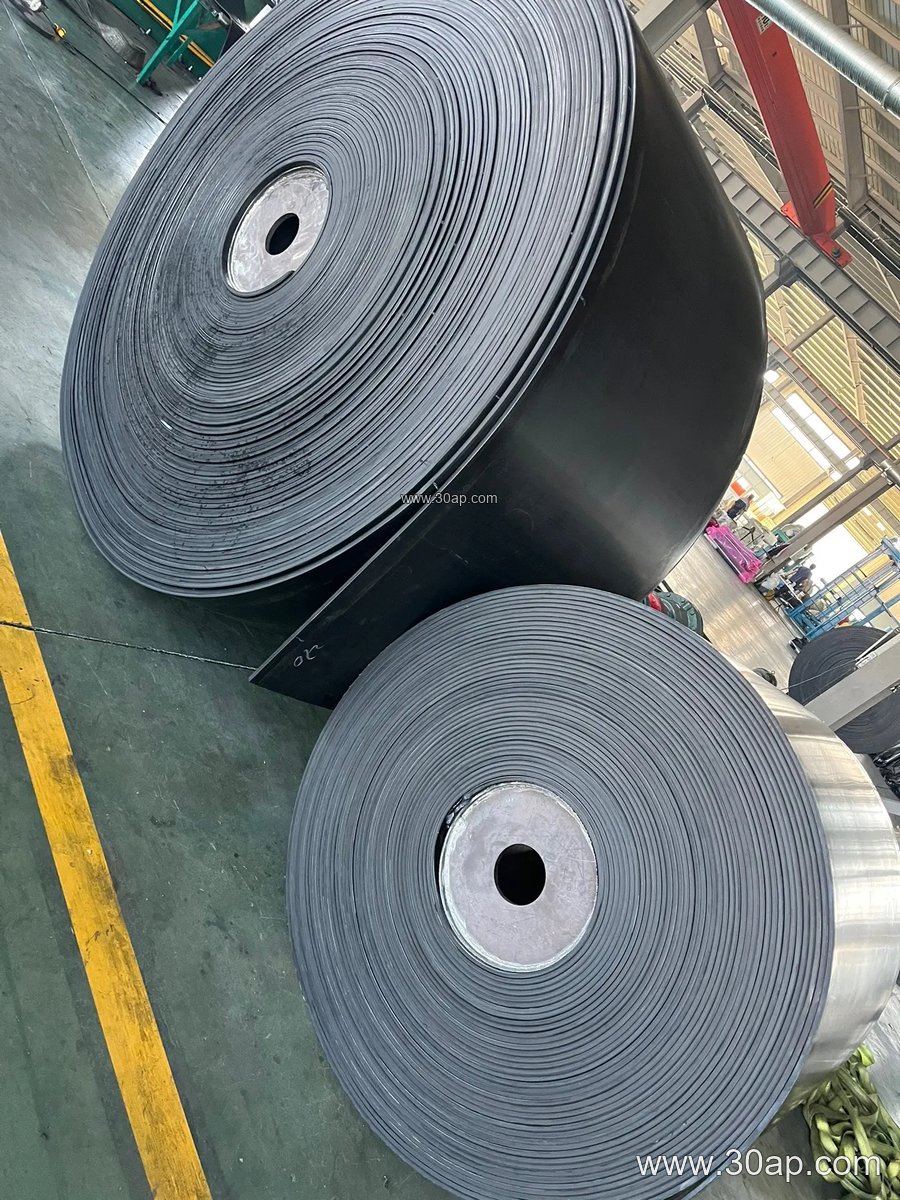
- Carcass: usually 2 to 6 plies, depending on the duty. More plies and higher-grade fabric raise tensile strength and resistance to impact.
- Covers: top and bottom rubber layers. Common combinations include 3+1.5, 4+2, 5+2, 6+2 and 8+3 mm, where the first figure is the carrying cover and the second the pulley cover.
- Edges: cut or moulded edges, sometimes with extra protection where the belt runs on a conveyor pulley or passes a skirted loading point.
The carcass is what a buyer should study first. A multi-ply fabric core conveyor belt with four plies of EP fabric behaves quite differently from a two-ply belt of the same overall thickness, because ply count and fabric grade set the working tension.
Strength Grades and Dimensions
Fabric core belts are commonly ordered by nominal tensile strength per unit width. EP and NN grades such as EP200, EP315, EP400, EP500, EP630, EP800, EP1000, EP1250, EP1600 and EP2000 appear in catalogues, and an EP1000 or EP1250 belt is often chosen for main haulage lines in a quarry or cement plant. These numbers are reference grades, not universal guarantees, and actual allowable working tension should be confirmed with the manufacturer for each construction.
Width and cover thickness are selected separately. Indicative combinations are shown below; they are examples only and do not represent a fixed product range.
| Parameter | Common reference values |
|---|---|
| Belt width | B500, B650, B800, B1000, B1200, B1400, B1600, B1800, B2000 |
| Strength grade | EP200 to EP2000; NN100 to NN400 class fabrics |
| Cover thickness | 3+1.5, 4+2, 5+2, 6+2, 8+3 mm |
| Ply count | 2 to 6 plies, typically |
Width and pulley diameter are matched by conveyor design, not by a single rule. A wider belt does not automatically dictate one shaft size, and a given width may run on different pulley diameters depending on tension, wrap angle and the conveyor layout.
Where It Fits in Real Installations
Fabric core belts are common in mining conveyor belts for secondary haulage, in coal mining conveyor belts where flame retardant conveyor belt grades are required, and in aggregate conveyor belts feeding a crusher conveyor belt or a screen deck. Cement plants use them on clinker and limestone lines, power plants on coal and ash handling, and ports on ship loading conveyors. A quarry conveyor belt or rock conveyor belt often needs a high abrasion resistant conveyor belt cover, while a cement kiln area may call for a heat resistant conveyor belt.
Special covers extend the same carcass into other duties: oil resistant conveyor belt for oily scrap, cold resistant conveyor belt for winter operation, anti-static conveyor belt where static build-up is a concern, and food grade conveyor belt for hygienic lines. Chevron conveyor belt, skirted conveyor belt and corrugated sidewall conveyor belt versions add profile or sidewalls, but the tension-carrying carcass underneath is still fabric based. Pipe conveyor belt and endless conveyor belt constructions are separate design choices rather than direct replacements.
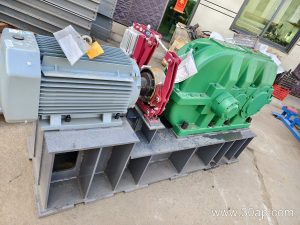
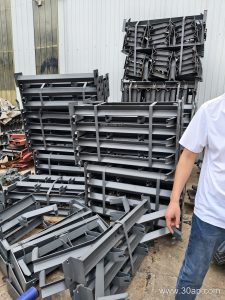
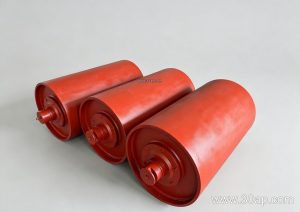
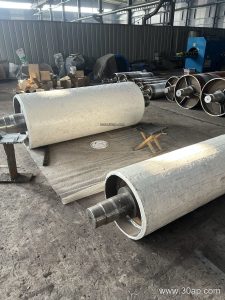
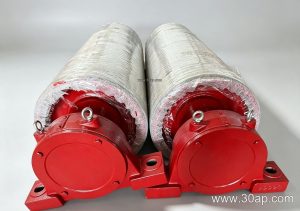
Supporting hardware matters as much as the belt. A well-aligned idler roller set reduces edge wear, a properly sized conveyor pulley protects the splice zone, and a rigid conveyor bracket keeps the frame square so the belt tracks straight.
What to Check Before Ordering
- State the material, lump size, temperature and whether oil or chemicals are present.
- Give the required tensile grade, belt width and cover thickness, and say whether the covers need a flame retardant or anti-static property.
- Describe the conveyor: drive and tail pulley diameters, trough angle, incline, and whether a bend pulley is used.
- Confirm splice type and whether an endless conveyor belt is preferred over a field-vulcanized joint.
- Ask for the manufacturer’s working tension and elongation data for the exact ply and fabric combination.
Used with the right pulley, idler roller and bracket set, a fabric core belt is a practical choice for moderate to high tension bulk conveying in mining, cement, power and aggregate operations.