What a Steel Plant Conveyor Idler Does on the Line
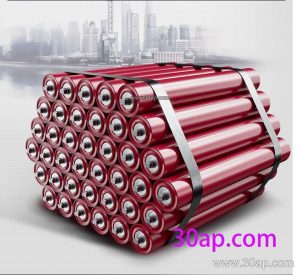
A steel plant conveyor idler is the rotating support that carries the belt between the head and tail ends of a conveyor. In a sinter plant, a coke handling section, or a burden transport gallery, the idler roller keeps the conveyor belt in a stable trough, limits sag between frames, and reduces friction as ore, flux, and coke move along the route. Because steelworks duty is heavy and often hot, the choice of idler type, roll diameter, and bearing protection matters more than the nominal load figure alone.
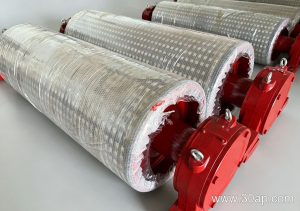
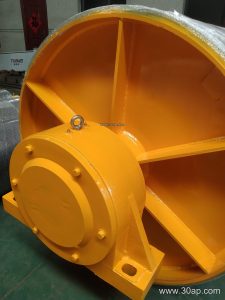
The same component is often called a conveyor idler roller or simply a belt idler. These are accurate equivalent names for the same product. A conveyor pulley at the drive or tail end is a different assembly and should not be confused with the idlers that support the belt along its carrying and return runs.
How the Idler Is Built
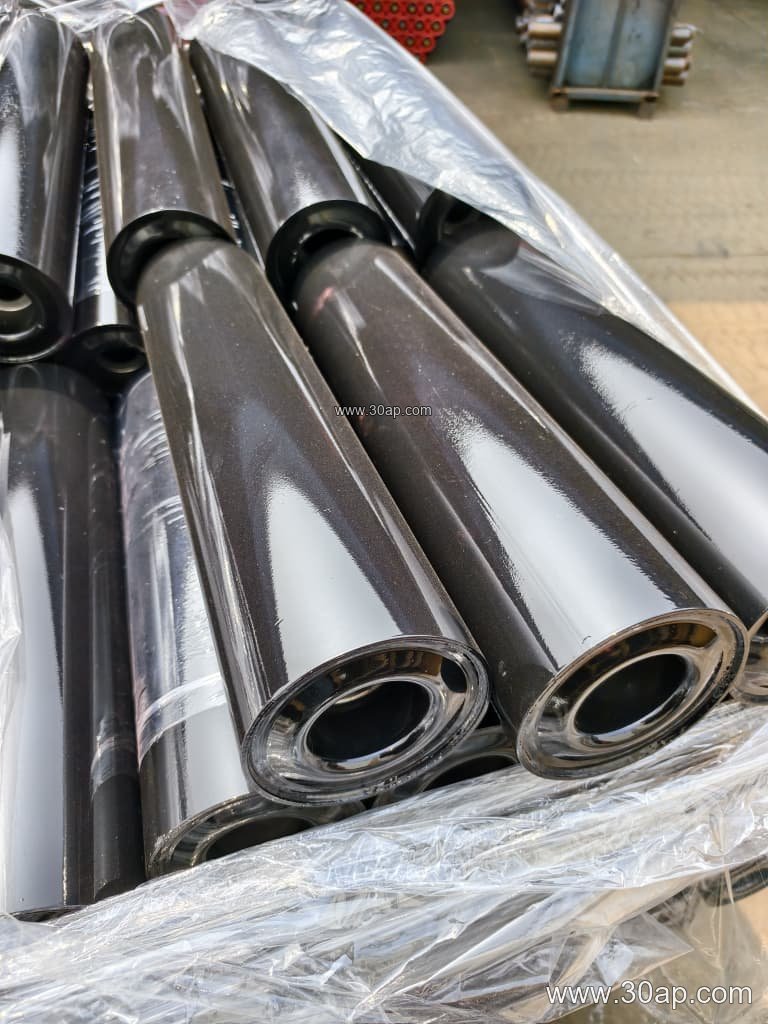
Most steel plant conveyor idlers use a steel tube shell, welded end discs, a through shaft, and sealed ball bearings. Common bearing sizes include 6204, 6205, 6305, 6306, 6308, and 6310, matched to the roll diameter and load rather than fixed by belt width. The shell may be plain steel, nylon-coated, ceramic-covered, or fitted with rubber rings for impact positions.
Sealing is the detail that decides service life in a dusty sinter or coke area. Labyrinth seals, felt retainers, and grease-filled cavities are typical. A well-sealed idler roller keeps fine dust away from the bearing races, which is often more important than a small increase in shell thickness.
Common Types and Where They Sit
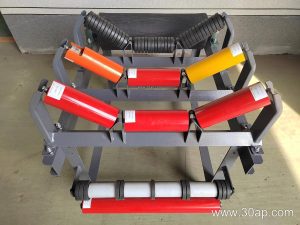
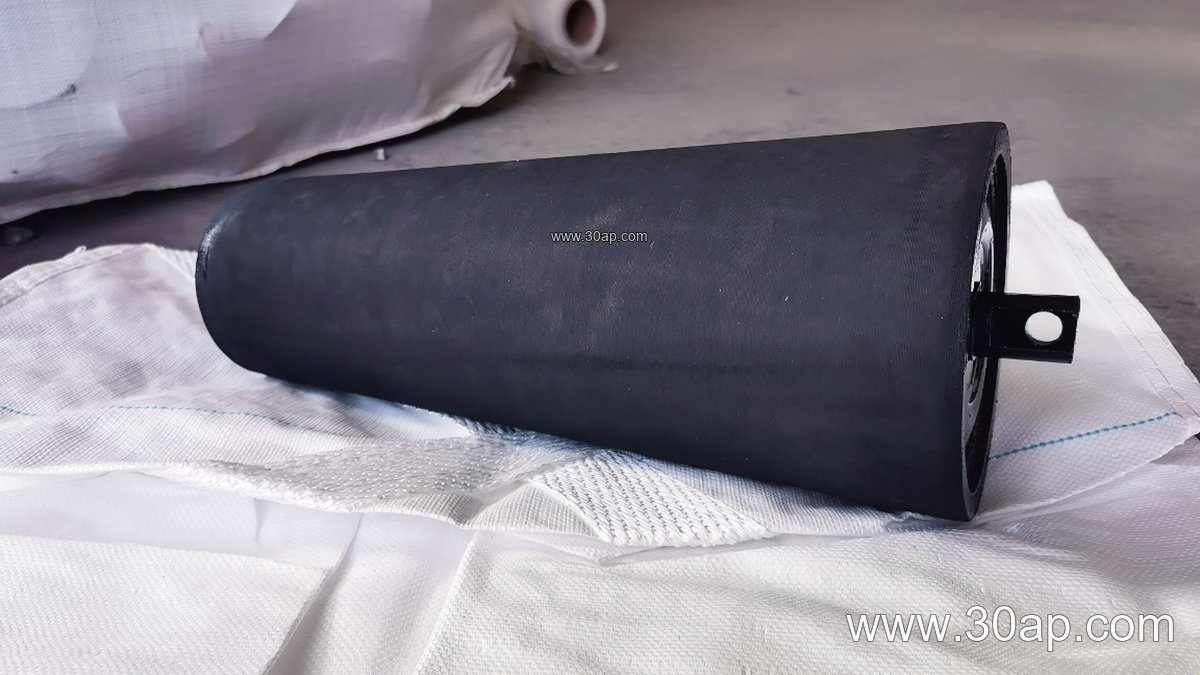
Carrying idlers are usually arranged as a two-roll or three-roll trough set. Return idlers may be flat, V-shaped, or spiral. Transition idlers sit near the head and tail to guide the belt from flat to troughed shape. Impact idlers with rubber rings are placed under loading points where coke or sinter drops onto the belt. Self-aligning idlers, including friction and tapered types, help correct belt drift on long galleries.
- Troughing idler set: three rolls, common trough angles of 20, 30, 35, or 45 degrees
- Return idler: flat or V-type, supporting the empty belt
- Impact idler: rubber-ring roll under the chute
- Training idler: friction or tapered design for belt centering
Roll diameters commonly range from Ø63 and Ø76 up to Ø159, Ø178, Ø194, and Ø219 depending on belt width and load. Belt widths in steel plant galleries often fall between B650 and B2000, with wider belts on main burden lines. Roll length follows belt width, trough angle, and frame form; for example, a three-roll set may use roughly 250 mm rolls at B650 and about 530 mm at B1400, but side and center rolls can differ and these are reference examples only.
Matching the Idler to the Belt and the Duty
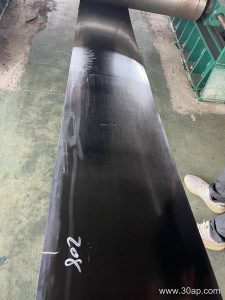
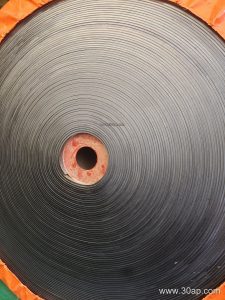
The conveyor belt itself influences idler choice. A heavy Steel Cord Conveyor Belt on a long trunk line needs larger roll diameters and robust frames, while a Multi-Ply Fabric Core Conveyor Belt on a shorter transfer may use smaller rolls. In areas where hot sinter or coke is handled, a Heat Resistant Conveyor Belt is often paired with heat-tolerant idler seals and suitable grease. Where coal or coke dust is present, a Flame Retardant Conveyor Belt and anti-static grounding practice support safer operation.
At loading points, an Impact Resistant Conveyor Belt works with rubber-ring impact idlers to absorb drop energy. On inclined galleries, a Chevron Conveyor Belt or Corrugated Sidewall Conveyor Belt may need closer idler spacing and careful clearance checks. Abrasion from iron ore or limestone makes an Abrasion Resistant Conveyor Belt a sensible match for the carrying run, and the idler shell surface should be selected with the same wear concern in mind.
Buyer Checklist
Before ordering, confirm the belt width, trough angle, roll diameter, shaft end type, and bearing size. Check whether the frame uses a standard conveyor bracket or a custom fixing. Ask about seal design, grease type, and whether the roll is balanced for the intended belt speed. For a steel plant conveyor idler, request the shell thickness and tube material rather than accepting a generic description.
Spacing also deserves attention. Carrying idlers are usually closer together than return idlers, and impact zones need tighter spacing than ordinary runs. There is no single roll diameter that suits every belt width, so selection should follow the actual load, belt tension, and environment. Keeping a small stock of common sizes plus a few spare bearing cartridges helps reduce downtime in a sinter or coke conveyor gallery.