What a Rubber-Lined Pulley Is
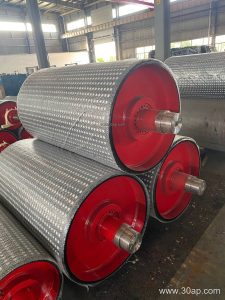
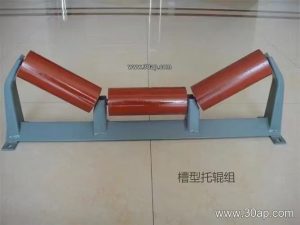
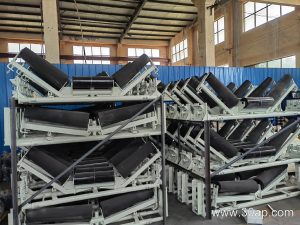
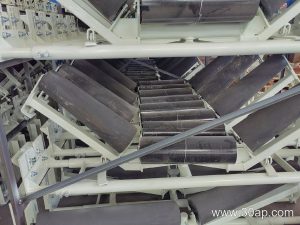
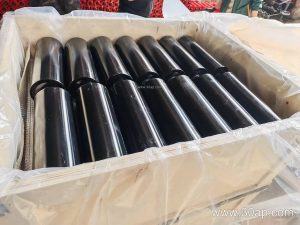
A rubber-lined pulley is a conveyor pulley whose shell is covered with a rubber layer, usually applied by hot vulcanization or cold bonding. The rubber lining raises friction between the pulley face and the conveyor belt, which reduces slip under load and helps keep the belt tracking steadily. It also shields the steel shell from abrasive dust, moisture, and fine particles that would otherwise wear the surface. In a conveying system, this component works together with the conveyor belt, idler rollers, and conveyor brackets to keep material moving reliably.
The lining is not a cosmetic add-on. It changes how the pulley grips the belt, how it sheds material, and how long the shell lasts in dusty service.
How the Lining Is Built
Most rubber-lined pulleys start as a welded steel drum with machined end discs and a shaft. The rubber is then applied to the shell in one of several forms. Plain rubber sheet gives uniform grip; diamond pattern lining improves water and fines shedding; herringbone pattern lining adds lateral grip for higher-torque drives. Thickness commonly ranges from 8 mm to 20 mm, and the choice depends on belt tension, pulley position, and the abrasiveness of the material being handled.
- Hot vulcanized lining: bonded under heat and pressure for a strong shell-to-rubber joint
- Cold bonded lining: applied with adhesive, often used for field replacement
- Patterned surfaces: diamond or herringbone for wet, muddy, or high-torque conditions
A well-bonded lining should be free of voids and should be checked at the edges, where lifting often begins.
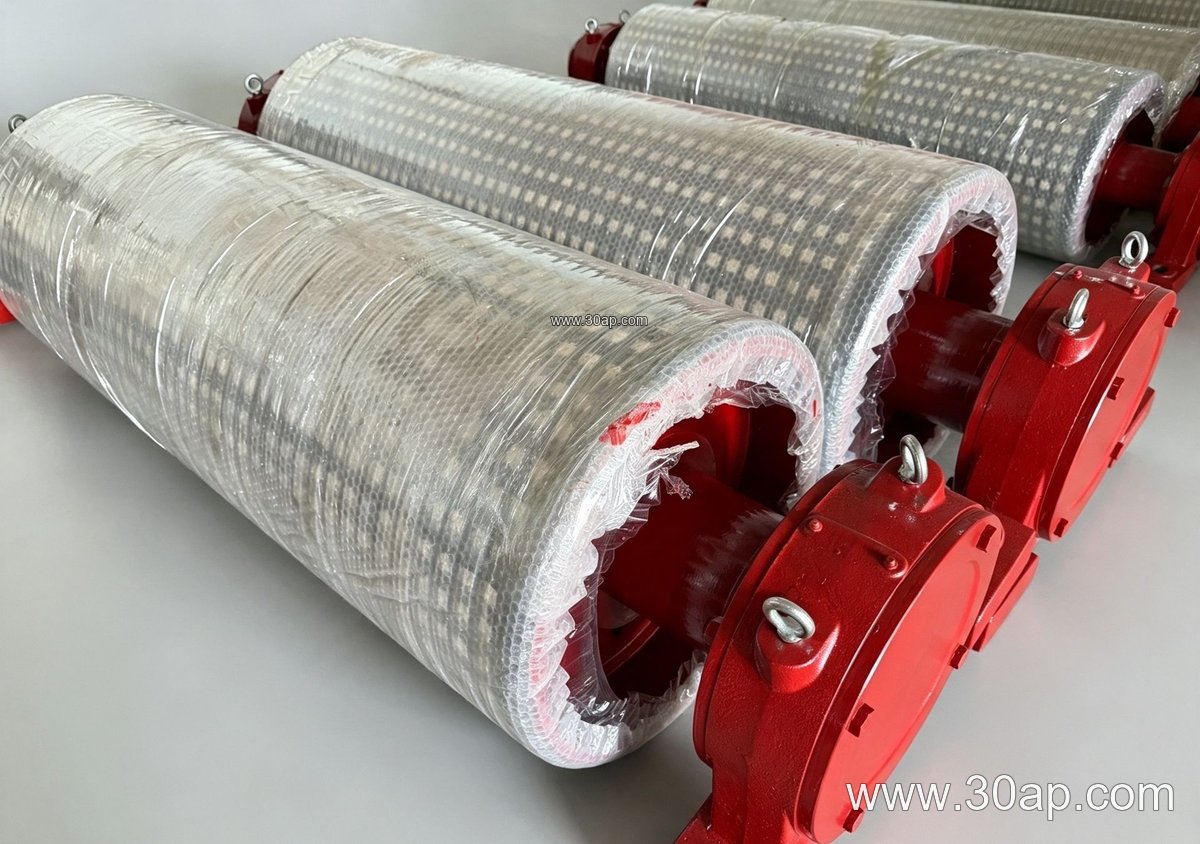
Where It Sits on the Conveyor
The same rubber-covered drum can serve different duties. In a drive position, it transmits power to the belt; in a tail position, it supports the return side and helps guide the belt; in a bend or snub position, it changes belt direction. These positions are not interchangeable, and the lining specification should match the duty. A drive pulley usually needs higher friction and a heavier lining, while a bend pulley may use a thinner plain lining mainly for wear protection.
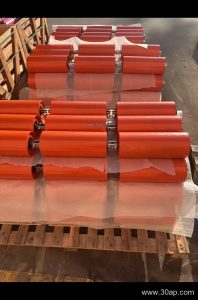
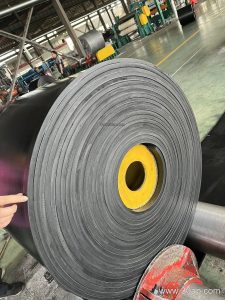
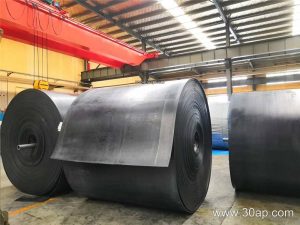
Typical service locations include quarry and aggregate lines, limestone mines, iron ore and copper ore operations, coal washing plants, cement clinker lines, power plant coal handling, port bulk terminals, and steel plant sintering areas. In these environments, a rubber-covered drum often runs alongside a heavy-duty conveyor belt, such as an abrasion resistant conveyor belt or a flame retardant conveyor belt for underground coal mining conveyors.
Matching the Pulley to the Belt
Belt width and pulley diameter are related but not locked together. A B800 belt may run on a pulley around Ø500, while a B1200 belt may use Ø1000 or another diameter chosen by the conveyor designer. Face width is usually slightly wider than the belt, for example B650 with a face near 750 mm or B1000 with a face near 1150 mm. Shaft diameter is set by torque and load, not by belt width alone, so a Ø100 shaft on one conveyor may not suit another with the same belt size.
| Belt width (common) | Approximate face width | Example pulley combination |
|---|---|---|
| B400 | 500 mm | B400 × Ø250 |
| B800 | 950 mm | B800 × Ø500 |
| B1200 | 1400 mm | B1200 × Ø1000 |
| B1400 | 1600 mm | B1400 × Ø800 |
| B1800 | 2000 mm | B1800 × Ø1250 |
These figures are reference examples, not fixed rules. Final dimensions should follow the conveyor design and the belt manufacturer’s recommendations.
Buyer Checklist
Before ordering, confirm the pulley position and the belt type it will run with. A fabric core conveyor belt and a steel cord conveyor belt place different demands on the drum, and a pipe conveyor belt or corrugated sidewall conveyor belt may need special edge clearance. Ask for the lining thickness, rubber grade, surface pattern, and bonding method. Check the shaft diameter, bearing size, and keyway against the drive calculation. For abrasive service, consider a high abrasion resistant conveyor belt in combination with a properly lined drum.
Inspection points after delivery include lining thickness, bond integrity, face width, and shaft runout. During operation, watch for belt slip, lining wear, and material buildup. Replacing worn lining early is usually cheaper than replacing the whole pulley.
For more conveyor components, including idler roller and conveyor bracket options, visit our site at conveyoridler.com and review the pulley and belt range at rubberconveyorbelt.com.