What a Loading Point Impact Idler Does
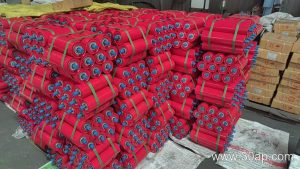
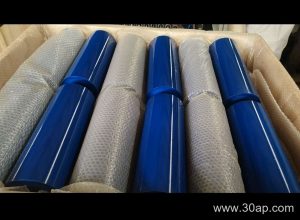
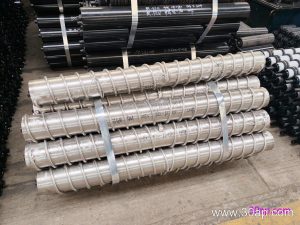
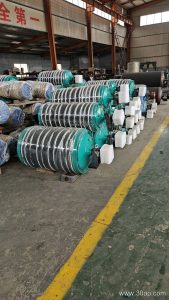
A loading point impact idler is the shock-absorbing roller station placed directly under the chute or transfer point where material first lands on the conveyor belt. Instead of a rigid steel shell taking the full force of falling rock, ore, or aggregate, this idler uses rubber rings or a rubber-disc surface to cushion the strike. The result is less belt damage, quieter operation, and fewer stoppages on a busy transfer section. You will also see it called an impact roller, buffer idler, or rubber ring impact idler, and these names describe the same product.
The working principle is simple. Every tonne of stone dropping from a chute carries kinetic energy that must be absorbed. A standard troughing idler passes that energy straight into the belt carcass and the roller bearings. An impact idler spreads the load over several rubber rings, which compress and recover, softening the peak force. This is why transfer points on a crusher conveyor belt or a high-drop ore conveyor belt benefit most from this design.
Construction and Typical Build
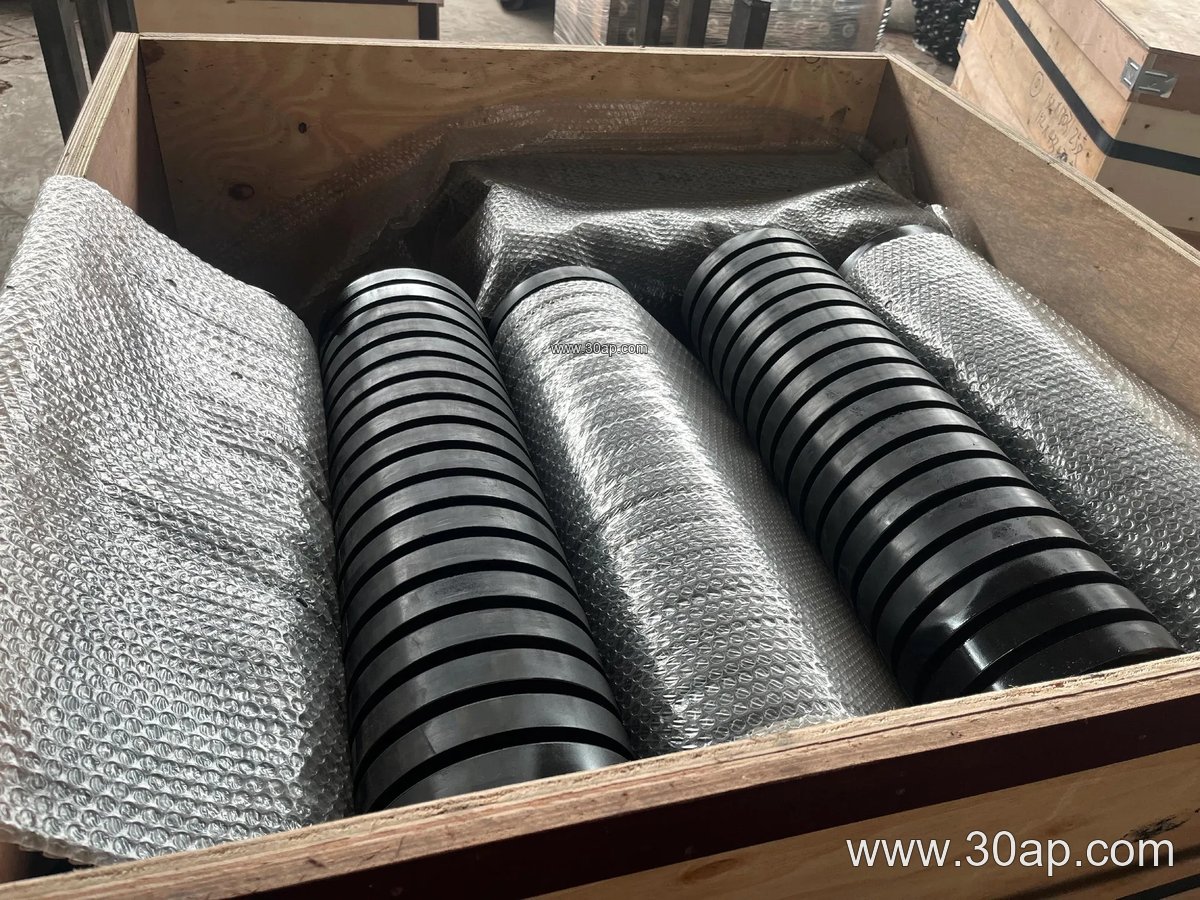
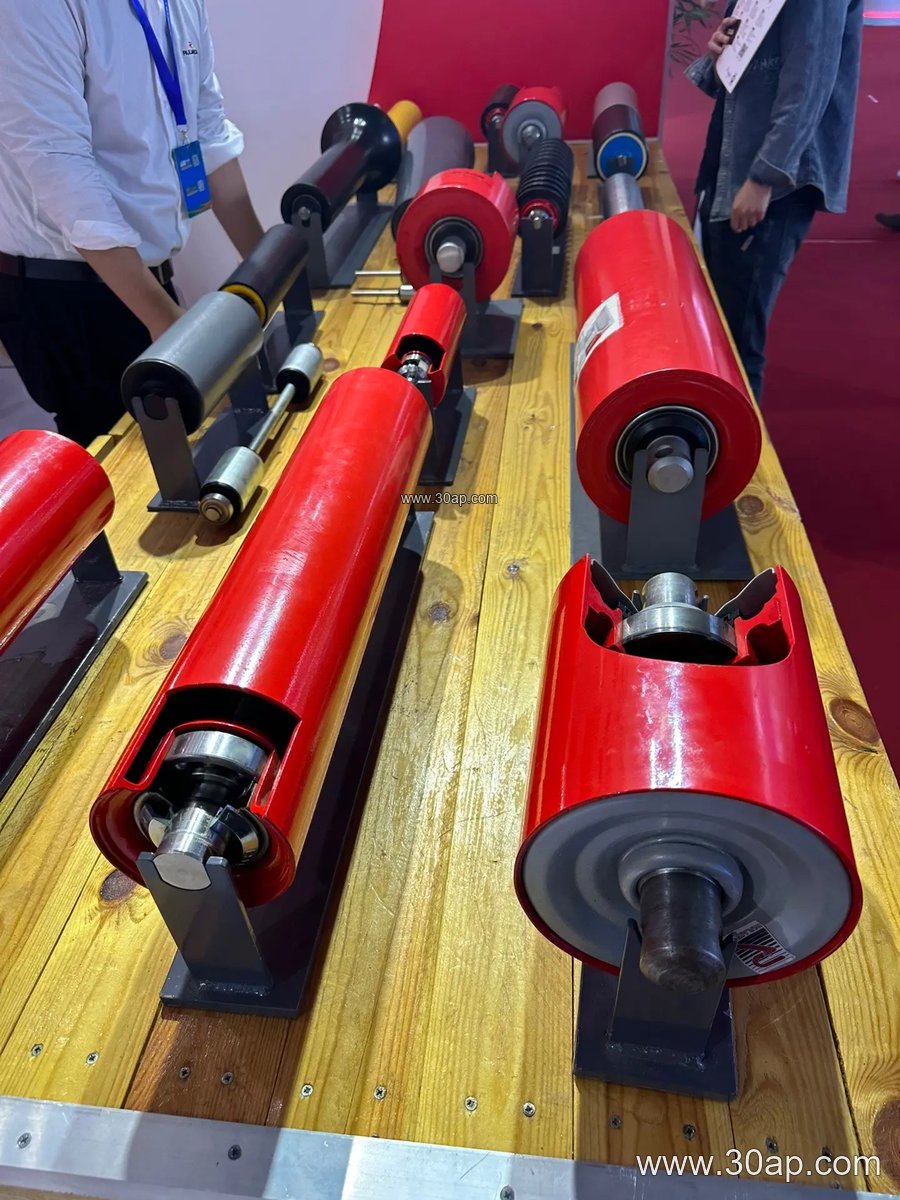
The core is usually a steel tube fitted with a series of rubber rings or rubber discs, mounted on a shaft with sealed bearings. The rubber grade matters: too hard and the cushioning effect fades, too soft and the rings wear quickly. Common roller diameters for buffer stations include Ø89, Ø102, Ø108, Ø127, Ø133, and Ø159 mm, while larger transfer points may use Ø178 or Ø194 mm. Bearing sizes such as 6205, 6305, 6306, and 6308 are frequently fitted, but the bearing should always be matched to the actual load and shaft design rather than assumed from belt width.
Roll length follows belt width and trough angle. For a three-roll troughing set, common side-roll lengths are roughly 200 mm at B500, 250 mm at B650, 315 mm at B800, 380 mm at B1000, 465 mm at B1200, 530 mm at B1400, and 600 mm at B1600. These are reference figures only; the centre roll and side rolls often differ, and the final length is set by the conveyor designer.
| Parameter | Common Reference Range |
|---|---|
| Roller diameter | Ø89 to Ø194 mm |
| Belt width | B500 to B2000 mm |
| Trough angle | 20°, 30°, 35°, 45° |
| Roll surface | Rubber rings or rubber discs |
| Bearing | 6205, 6305, 6306, 6308 (by design) |
Where It Fits on the Conveyor
The impact station sits at the feed zone, often just downstream of the skirt rubber and before the first standard troughing idler. In a quarry or sand and gravel line, it protects the belt under a primary crusher discharge. In a coal handling plant or power station coal yard, it absorbs the drop from a transfer chute onto a flame retardant conveyor belt. Cement plants use it beneath clinker and limestone chutes, while iron ore and copper ore terminals rely on it where heavy lumps hit at speed. A single transfer point may need two or three impact idler frames in sequence so the belt settles gradually.
It is worth noting that impact idlers are not a substitute for a bend pulley or a drive pulley; those components redirect and power the belt, while the idler only supports it. Likewise, a training idler corrects belt misalignment, which is a different job from absorbing impact.
Selection Points for Buyers
- Match rubber hardness and ring thickness to lump size and drop height, not just belt width.
- Confirm the frame fits the existing conveyor bracket and trough angle.
- Check sealing quality; dust and fines at a transfer point attack bearings quickly.
- Consider abrasion resistant conveyor belt grades alongside the idler choice, since the two work as a system.
- Ask for the shaft and bearing calculation rather than accepting a fixed pairing of belt width and shaft diameter.
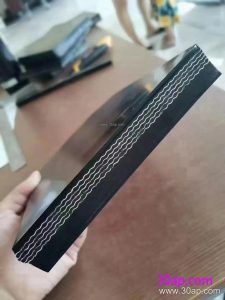
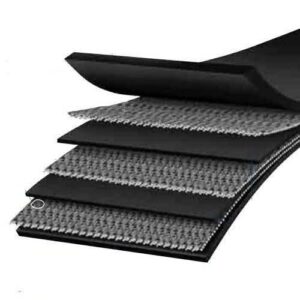
For a heavy-duty mining conveyor belt carrying sharp rock, a rubber-ring impact idler with a robust seal is usually the practical choice. On a port or ship loading conveyor belt with moderate drop heights, a lighter buffer roller may be enough. Buyers should also review the belt specification, whether EP conveyor belt, NN conveyor belt, or steel cord conveyor belt, because a stiffer carcass tolerates impact differently from a flexible fabric core.
Maintenance and Long-Term Care
Inspect rubber rings for cracking, chunking, or flattening, and check that all rolls turn freely by hand. Worn rings reduce the cushion and transfer shock back to the belt, so replacement before failure is cheaper than a belt splice. Keep the chute centred so material lands on the middle of the station rather than one side, and clean buildup from the frame so the rolls are not held stationary. On a coal mining conveyor belt or underground mining conveyor belt, flame retardant and anti-static properties of nearby components deserve attention, though the idler itself is selected mainly for load and wear resistance.
Used well, a loading point impact idler is a low-cost guard for the most abused metre of any conveyor.