What a Trough Idler Bracket Set Does on a Conveyor
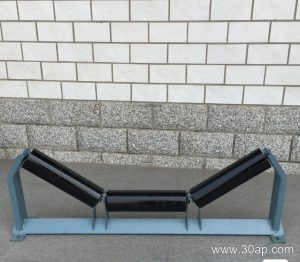
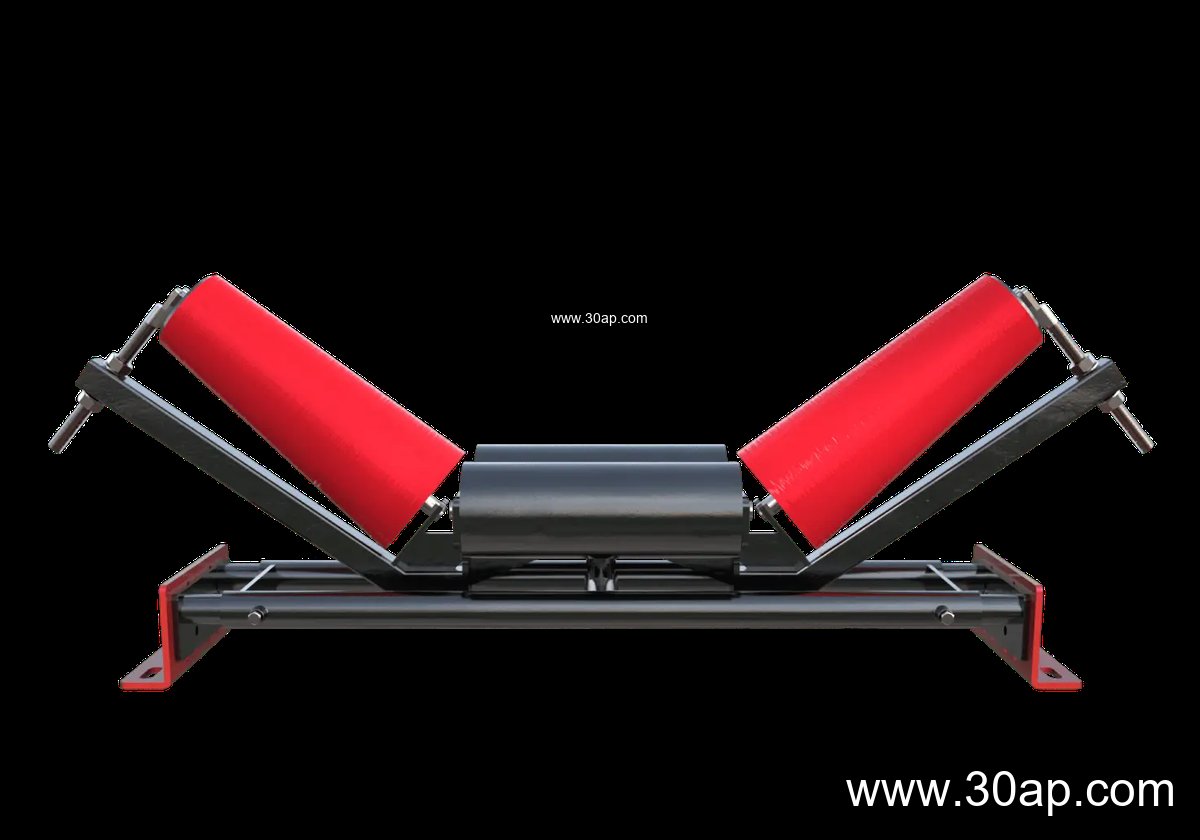
A trough idler bracket set is the steel framework that holds the three-roll trough idler assembly in place along the carrying side of a conveyor. The set typically consists of two side brackets and a center support, bolted or welded onto the conveyor stringer. Its job is simple but critical: keep the idler rollers at the correct trough angle so the conveyor belt forms a stable, cupped profile that contains bulk material during transport. Without a properly aligned bracket set, even a well-made idler roller will drift, the belt will mistrack, and spillage will increase.
The bracket set is often called a troughing idler bracket set or troughing frame set. These are accurate equivalents for the same product. It should not be confused with a return bracket or a transition bracket, which serve different positions on the conveyor structure.
Construction and Common Materials
Most trough idler bracket sets are fabricated from angle steel, channel steel, or folded steel plate. The material choice depends on load, belt width, and environmental conditions. In dusty or corrosive sites such as a cement plant or a coal washing plant, galvanized or painted finishes are common. The bracket set includes mounting slots or holes that allow fine adjustment of idler position, and the crossbeam length is determined by belt width and trough angle rather than a single fixed value.
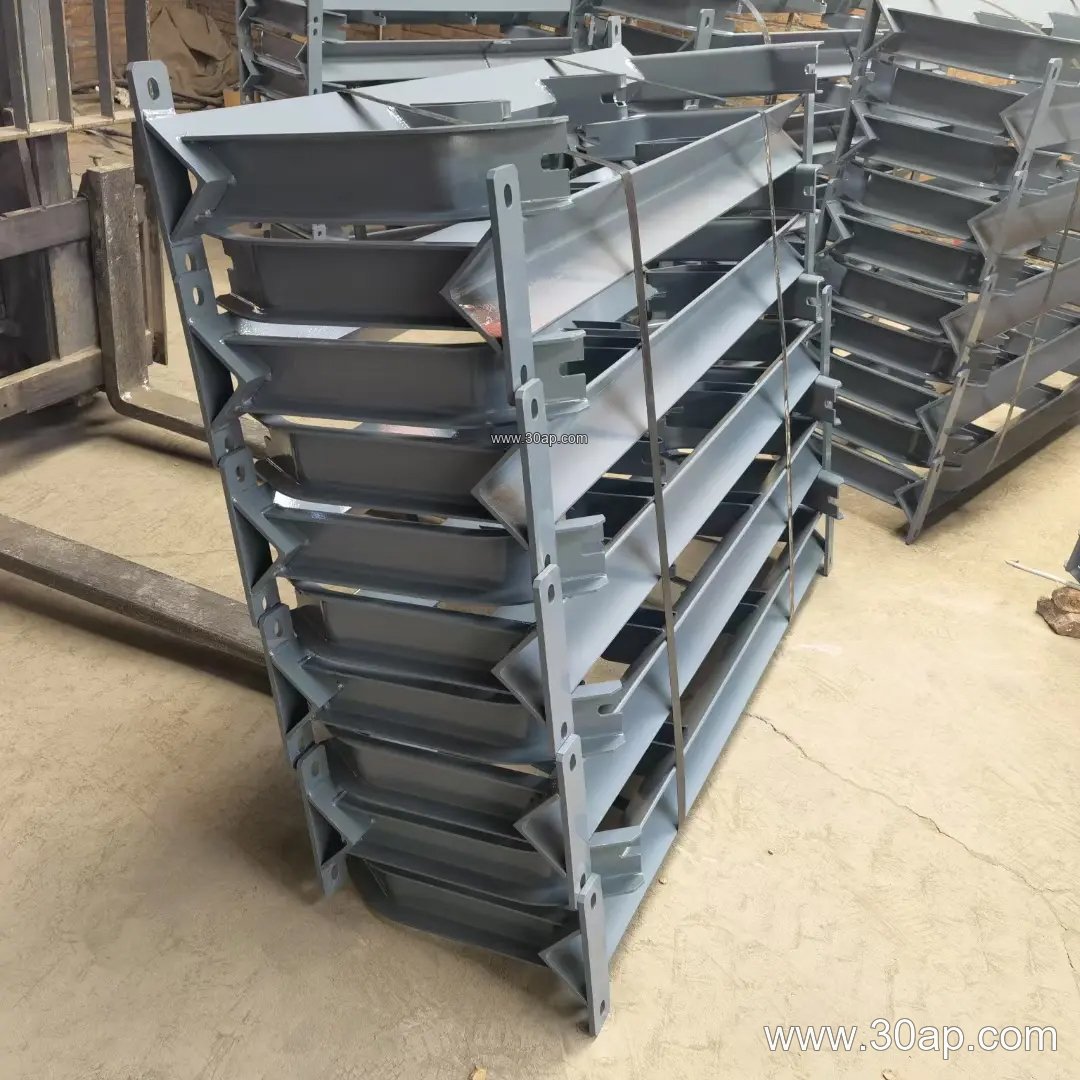
- Angle steel frames for light to medium duty
- Channel steel frames for heavier loads and wider belts
- Folded plate brackets for compact designs and smoother edges
Where Trough Idler Bracket Sets Are Used
These bracket sets appear wherever a conveyor carries loose material on the loading side. In a limestone quarry or a sand and gravel line, the trough idler bracket set supports the belt through the crushing and screening circuit. In a power plant coal yard, the same bracket set keeps the coal conveyor belt centered as it feeds the boiler bunkers. Other common locations include iron ore handling, fertilizer granulation lines, and grain silos.
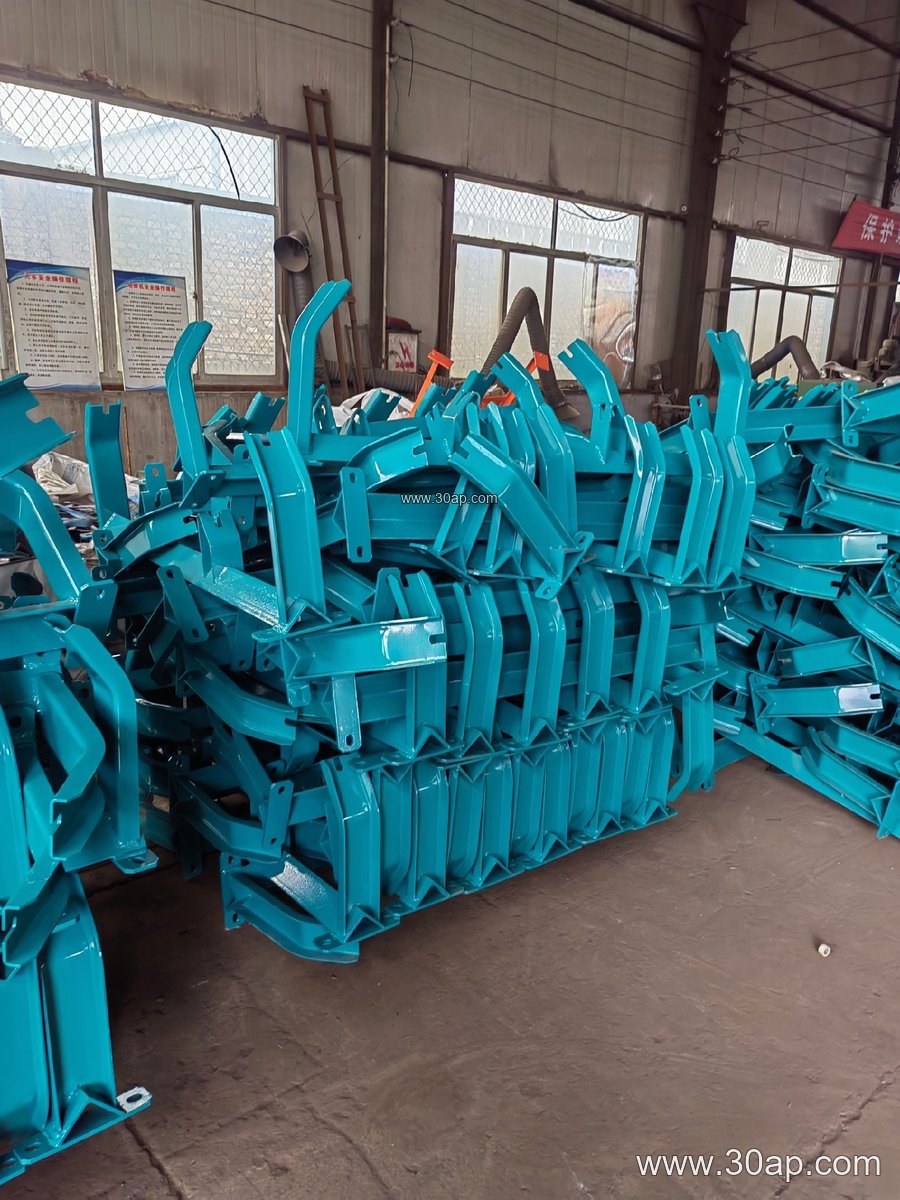
The bracket set works together with the conveyor belt and the idler roller. A heavy-duty mining conveyor belt or an abrasion resistant conveyor belt may demand a stronger frame, while a flame retardant conveyor belt used in underground coal mining needs brackets that fit the restricted space of the roadway. Matching the bracket set to the belt and roller is more important than any single specification.
Matching Belt Width, Trough Angle, and Roller Diameter
Buyers often ask which bracket size suits which belt. The answer depends on three variables that should be considered together: belt width, trough angle, and idler roller diameter. Common belt widths range from B500 to B2200, with B800, B1000, B1200, and B1400 being frequent choices in aggregate and mining work. Trough angles are usually 20, 30, 35, or 45 degrees. Adjustable brackets can be set between these angles, while fixed brackets are built for one angle.
The table below shows typical reference combinations. These are examples, not universal rules, and final selection should follow the conveyor design.
| Belt Width | Trough Angle | Typical Roller Diameter | Common Use |
|---|---|---|---|
| B650 | 30 degrees | Ø89 | Small aggregate lines |
| B800 | 35 degrees | Ø108 | Sand and gravel plants |
| B1000 | 35 degrees | Ø133 | Cement and power plants |
| B1200 | 45 degrees | Ø133 | Iron ore and coal handling |
| B1400 | 35 degrees | Ø159 | Heavy bulk material |
| B1600 | 45 degrees | Ø159 or Ø194 | Large mining conveyors |
One belt width can work with more than one trough angle or roller diameter. A B1000 belt may run at 30 or 35 degrees depending on the material and the conveyor pulley layout. The bracket set must be ordered with the correct mounting hole spacing and crossbeam length for the chosen combination.
Fixed versus Adjustable Bracket Sets
Fixed trough idler bracket sets hold the rollers at a set angle and are simple and rigid. Adjustable bracket sets let maintenance teams change the trough angle within a range, which helps when material characteristics change or when a belt needs better center loading. Forward-tilted brackets, usually around 1.5 to 2 degrees, are sometimes used to encourage belt tracking, but they are a separate design feature and not a replacement for proper alignment.
Buyer Checklist
- Confirm belt width and required trough angle before ordering.
- Match the bracket set to the idler roller diameter, such as Ø108 or Ø133.
- Check mounting hole spacing and crossbeam length against the conveyor stringer.
- Choose the steel section and finish for the site environment.
- Keep spare bracket sets for high-wear transfer points to reduce downtime.
For buyers sourcing conveyor components, a well-chosen trough idler bracket set is a small investment that protects the conveyor belt, the idler roller, and the conveyor pulley from misalignment damage. Whether the site is a quarry, a coal preparation plant, or a port terminal, the bracket set should be selected as part of the whole conveyor system rather than as an isolated part.