What a Conveyor Take-Up Pulley Does
A conveyor take-up pulley is the drum that maintains working tension in a conveyor belt. Mounted in a take-up station, usually near the tail end or on a dedicated tension carriage, it moves along a guided travel path so the belt keeps enough wrap on the drive pulley and does not sag between idlers. Without this tensioning drum, a loaded belt can slip on the drive, mistrack, or spill material at transfer points.
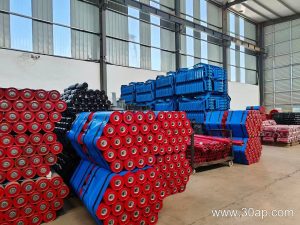
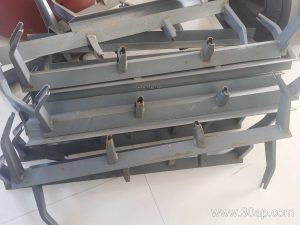
In practice, the take-up pulley works together with a conveyor pulley at the head, a tail pulley, and a set of conveyor brackets that carry the sliding frame. The belt itself may be a heavy-duty mining conveyor belt, a flame retardant conveyor belt for underground coal mining, or an abrasion resistant conveyor belt in a stone crushing line. Each of these demands a different tension range, which directly affects the take-up design.
Construction and Typical Arrangement
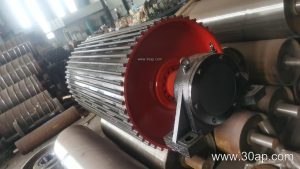
The drum usually consists of a steel shell, end discs, a shaft, and bearing housings. The shell face may be plain or lagged. Lagging options include cold-bonded rubber, hot-vulcanized rubber, diamond grooving, and ceramic tiles, with common lagging thicknesses of 8, 10, 12, 15, or 20 mm. Because the take-up drum rotates slowly and mainly guides the belt, a plain or lightly lagged face is often enough; grooved lagging is chosen when water, dust, or fines make the belt surface slippery.
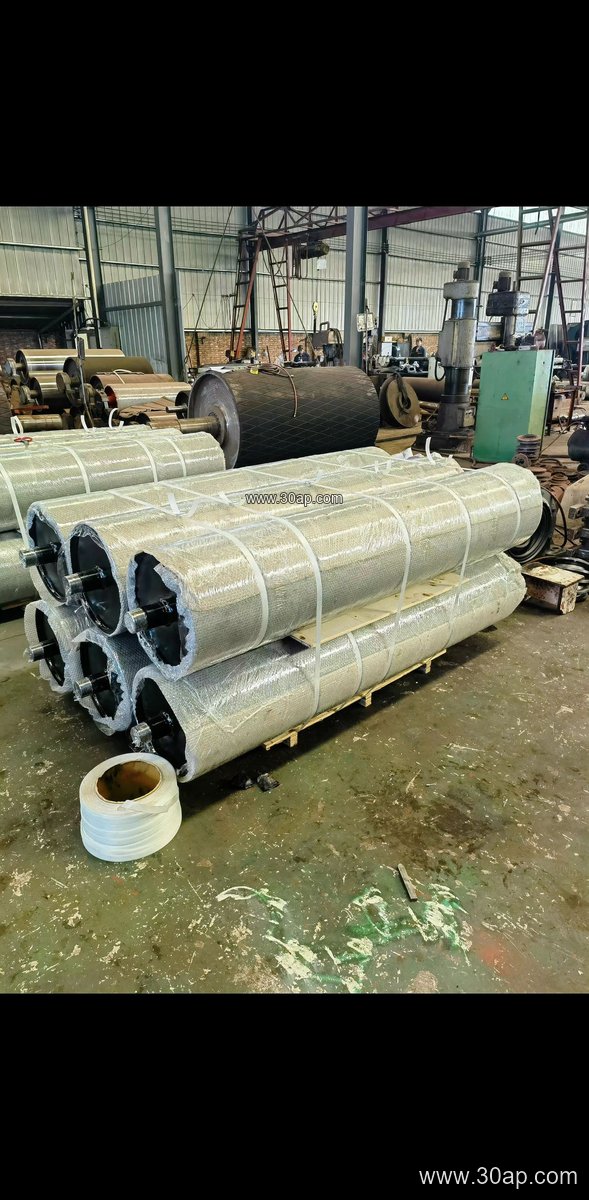
Travel is provided by one of several methods: a gravity tower with counterweight, a screw-type frame, a hydraulic cylinder, or a winch-driven carriage. Gravity take-up is common on long overland and port conveyor systems, while screw take-up suits shorter lines in a concrete batching plant or a fertilizer warehouse.
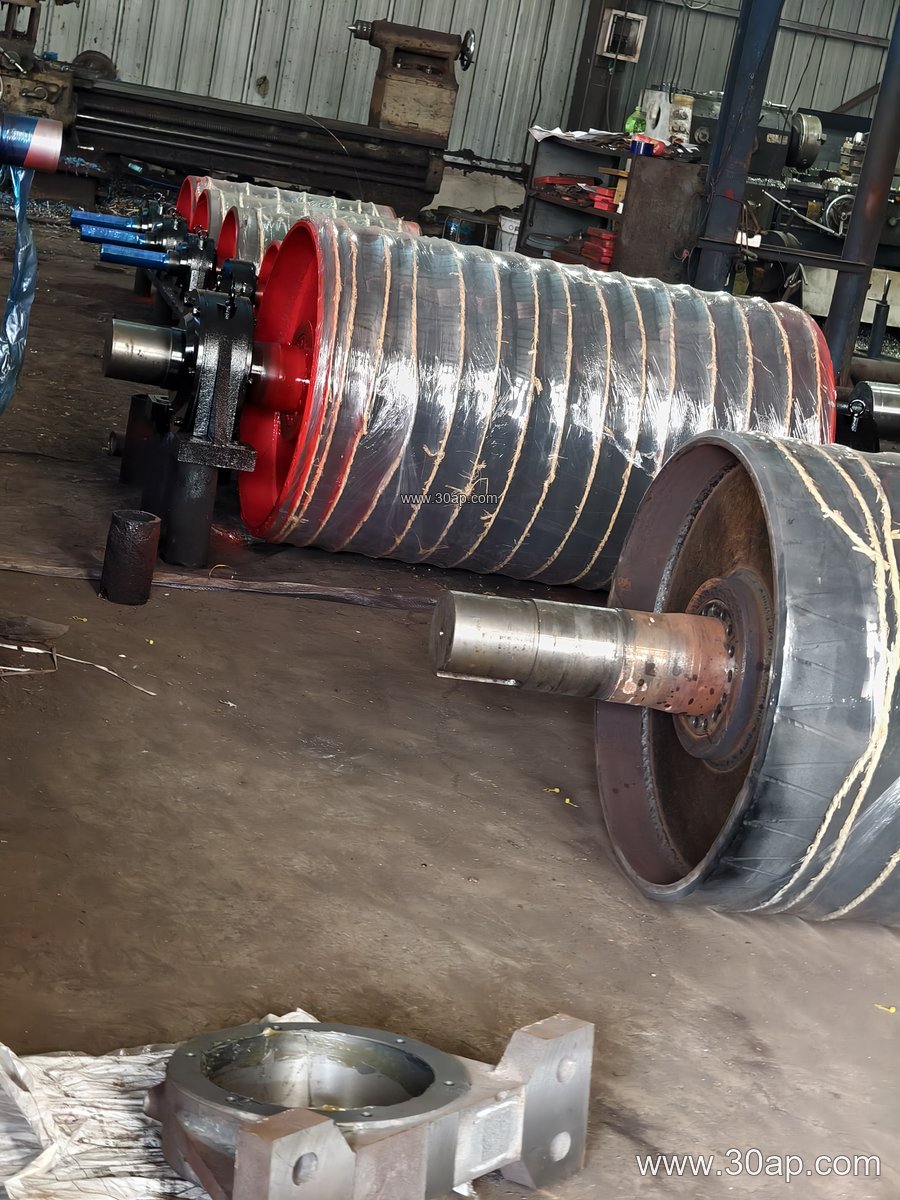
Common reference dimensions
The table below shows indicative combinations only. Final sizes depend on belt tension, shaft torque, and bearing load, so shaft diameter should never be fixed from belt width alone.
- B500 with Ø315 or Ø400 drum, shell width about 600 mm
- B800 with Ø500 or Ø630 drum, shell width about 950 mm
- B1000 with Ø630 or Ø800 drum, shell width about 1150 mm
- B1200 with Ø800 or Ø1000 drum, shell width about 1400 mm
- B1400 with Ø1000 or Ø1250 drum, shell width about 1600 mm
- B1600 with Ø1250 or Ø1400 drum, shell width about 1800 mm
Shaft diameters in the range of Ø80 to Ø200 are typical for these sizes, selected by calculation rather than by rule of thumb.
Where It Fits in the Plant
In a limestone quarry or aggregate conveyor line, the take-up drum is often placed behind the tail pulley on a horizontal slide frame. In a coal washing plant or a power plant coal handling system, gravity towers keep tension stable as the belt stretches under constant load. In a copper ore or iron ore concentrator, a hydraulic take-up allows operators to adjust tension while the line is running.
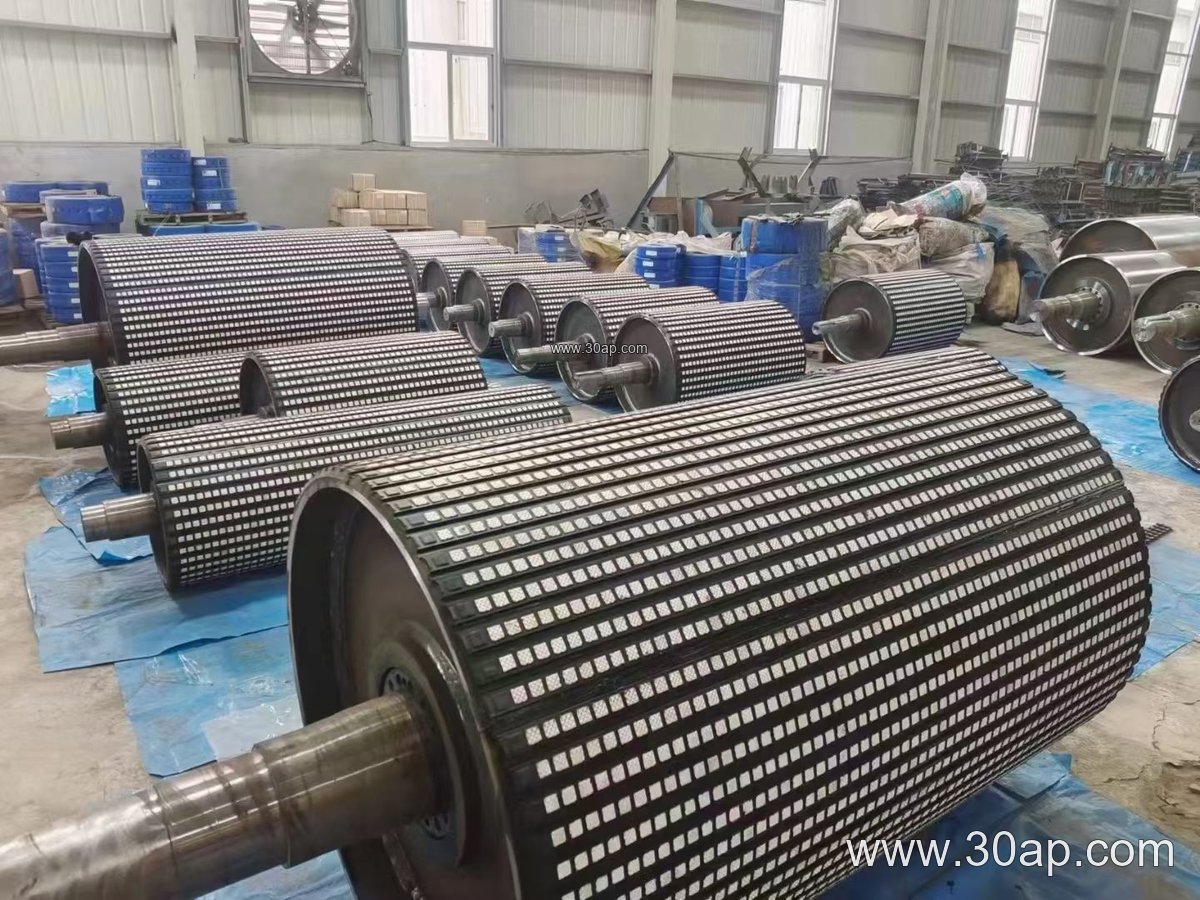
The drum also has to match the belt. A steel cord conveyor belt stretches less than a multi-ply fabric core belt, so the take-up travel length differs. A pipe conveyor belt needs a carefully controlled tension to keep the tube formed, and a corrugated sidewall belt requires enough tension to hold the cleats upright without crushing them. For any of these, the take-up pulley is a tuning point, not just a support roller.
Buyer Checklist
When specifying a take-up pulley, confirm the belt width, the expected maximum tension, the travel distance required, and the mounting style of the frame. Ask for the lagging type and thickness, the bearing type and sealing arrangement, and the shaft material. Dusty sites such as a cement plant clinker line benefit from good bearing protection, while a tunnel muck removal system may need a corrosion-resistant finish.
Also check that the pulley is balanced for the intended belt speed and that the shell width exceeds the belt width by a suitable margin. Keep spare lagging sheets and bearings on hand, and inspect the slide guides for wear at each shutdown. A well-chosen tensioning drum extends the life of the whole conveyor, from the idler roller set to the drive pulley, and keeps production steady in demanding industries such as mining, steel plants, and port bulk handling.