What a Self-Aligning Idler Does on a Conveyor
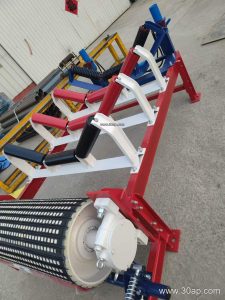
A belt conveyor self-aligning idler is a carrying or return idler assembly designed to correct belt misalignment while the conveyor is running. Instead of sitting square to the frame like a standard troughing idler, the self-aligning unit is mounted so that it can pivot slightly around a vertical axis. When the conveyor belt drifts to one side, it contacts the idler at an angle, and the resulting friction turns the assembly toward the drift. The skewed rollers then steer the belt back toward the center line.
This correction happens continuously and passively, without sensors or actuators. That is why these units are often chosen for long overland conveyors, transfer points, and any section where the belt is exposed to uneven loading or crosswinds.
Construction and Working Principle
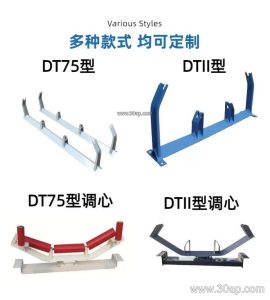
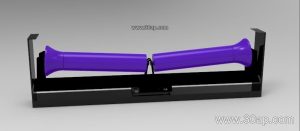
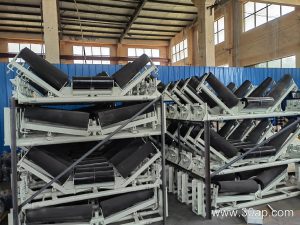
A typical self-aligning idler, also called a training idler, is built around a pivot base or bracket that allows the roller frame to rotate. The roller set itself can be a two-roller V configuration or a three-roller troughing arrangement, depending on whether it is installed on the carrying side or the return side. On the return run, a V-type self-aligning idler is common because it also helps shed spilled material.
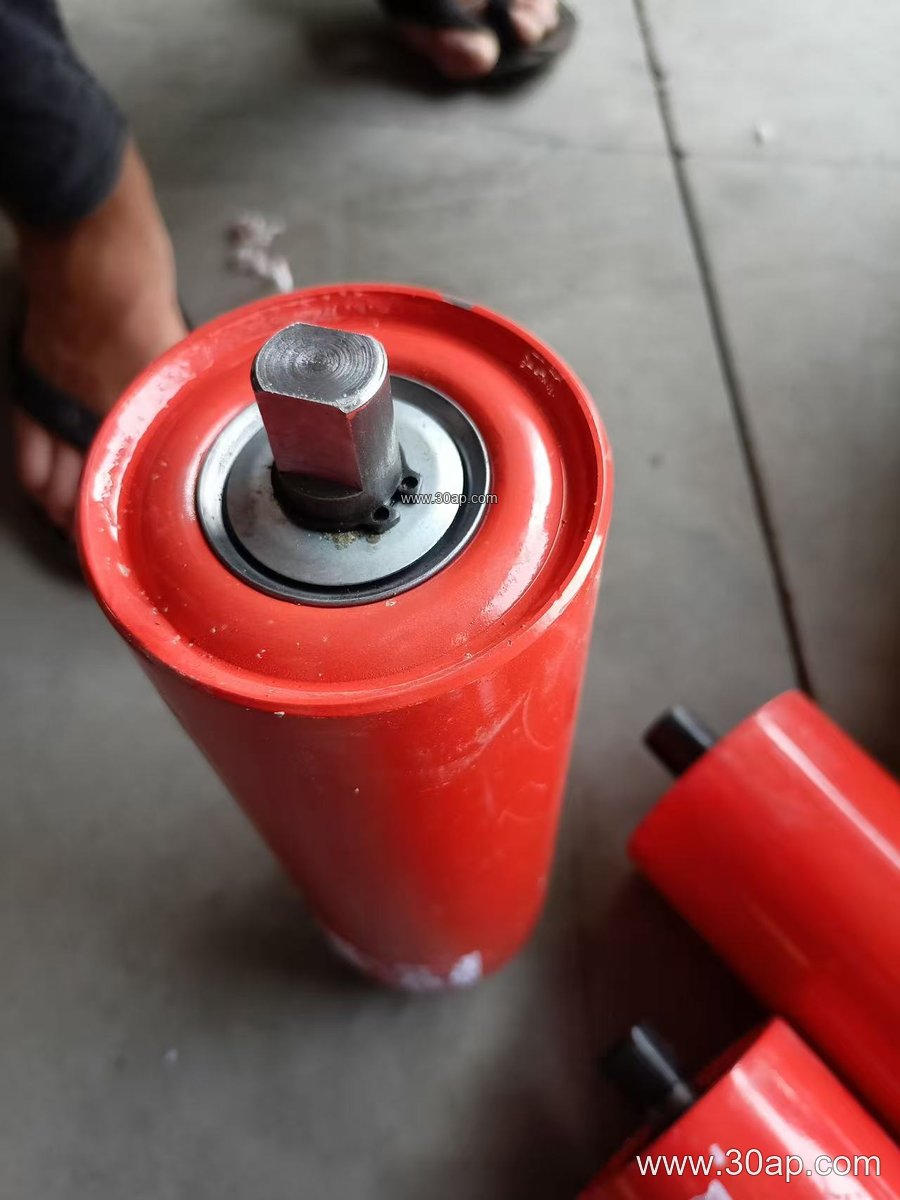
Key components usually include:
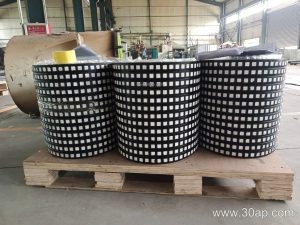
- Heavy-duty roller shells, often steel tube, sometimes with rubber or ceramic lagging
- Sealed ball bearings, commonly 6205, 6305, 6306, or 6308 depending on roller diameter and load
- A pivot shaft and bracket assembly with a defined swing angle
- Friction or contact elements that sense belt drift
Roller diameters for this type of idler commonly range from Ø89 to Ø159 mm, and larger sizes such as Ø178 or Ø194 mm appear on high-capacity installations. The correct diameter is matched to belt speed, load, and the shaft and bearing arrangement, not to belt width alone. A 1200 mm wide conveyor, for example, may use different roller diameters on different sections of the same line.
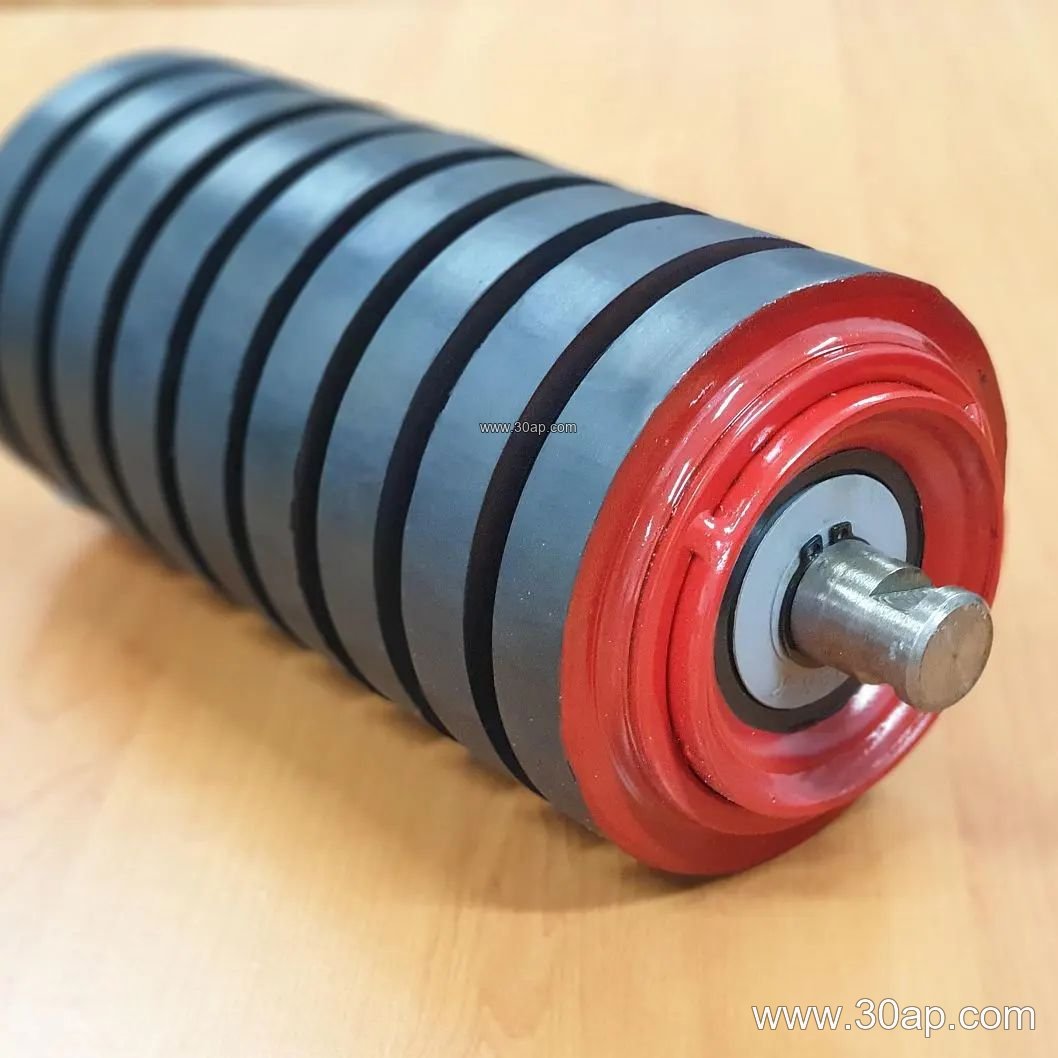
Where Self-Aligning Idlers Are Used
Training idlers are installed at intervals along a conveyor, often just after the loading point, before and after curves, and on the return strand. In a quarry or aggregate line, they help keep a conveyor belt centered when crushed rock is dropped off-center from a crusher. In a coal handling system at a power plant, they reduce edge wear on the belt caused by wandering. Cement plants use them on clinker and limestone conveyors where dust and fines can build up on rollers.
They are also found in iron ore and copper ore handling, port ship loading systems, and tunnel spoil removal conveyors. The common thread is a long belt run with changing tension and load patterns, where a small tracking error can grow into serious edge damage.
Selection Notes for Buyers
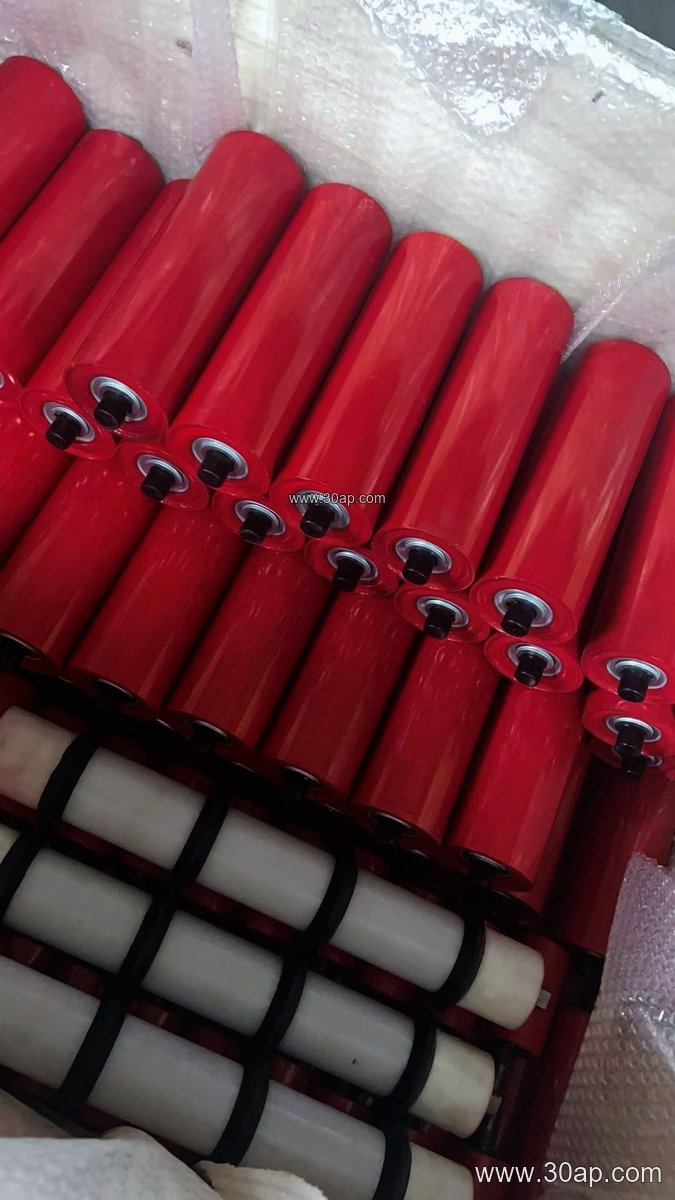
When specifying a belt conveyor self-aligning idler, confirm the belt width, the trough angle, the mounting position, and the roller diameter required by the conveyor design. Common belt widths include B500, B650, B800, B1000, B1200, B1400, B1600, and B1800. Trough angles of 20, 30, 35, and 45 degrees are standard, and the idler frame must match the existing conveyor bracket spacing.
The table below gives typical reference values; actual dimensions should be confirmed against the conveyor drawing.
| Parameter | Common Reference Range |
|---|---|
| Belt width | B500 to B1800 (wider by design) |
| Roller diameter | Ø89, Ø108, Ø127, Ø133, Ø159, Ø178 mm |
| Trough angle | 20°, 30°, 35°, 45° |
| Bearing | 6205, 6305, 6306, 6308, 6310 |
| Roller surface | Steel, rubber ring, ceramic, nylon |
Buyers should also check the sealing arrangement. In dusty environments such as a stone crushing plant or a cement mill, labyrinth seals and grease retention matter more than a small difference in roller price. For belts carrying sticky or wet material, a self-cleaning roller profile can reduce build-up that causes the idler to stop rotating.
Installation and Maintenance Tips
Self-aligning idlers work best when installed in pairs or groups and spaced according to the conveyor length and the severity of the tracking problem. They should not be used to compensate for a badly misaligned pulley or an incorrectly spliced belt. Check that the conveyor pulley, frame, and loading chute are square before relying on training idlers.
Inspect pivot points for seizing, and confirm that rollers turn freely. A worn or seized bearing can make the idler steer the belt the wrong way. On abrasive duty, such as an iron ore or gold mining conveyor, roller shell wear should be checked at each shutdown. Matching the idler to the belt and the duty keeps tracking correction effective over the long run.