What an Anti-Material-Buildup Idler Does
An anti-material-buildup idler is a conveyor roller designed to shed sticky, wet, or fibrous material instead of letting it wrap around the shell. In plants handling damp coal, clay-rich limestone, or sticky aggregate, ordinary rollers can become encrusted with fines. That buildup changes the effective roll diameter, causes belt tracking problems, and can wear through the belt edge. The anti-material-buildup idler — also called an anti-stick idler or self-cleaning idler — addresses this by combining a non-stick surface with a geometry that discourages adhesion.
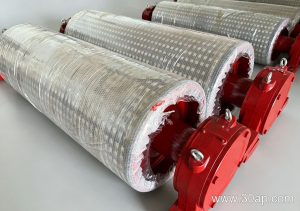
This is not the same role as a drive pulley, tail pulley, or bend pulley. Those are conveyor pulleys that transmit power or change belt direction. The anti-material-buildup idler is a carrying or return roller that supports the conveyor belt along its run. Confusing the two can lead to the wrong specification, because pulley diameters and roller diameters follow different design rules.
Construction and Surface Options
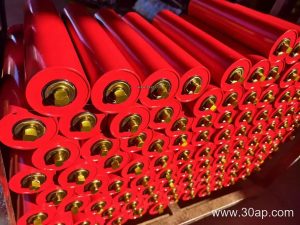
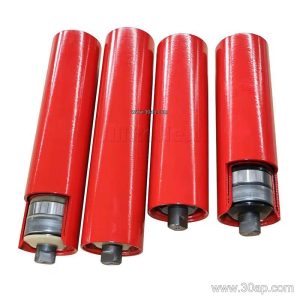
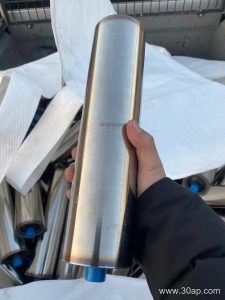
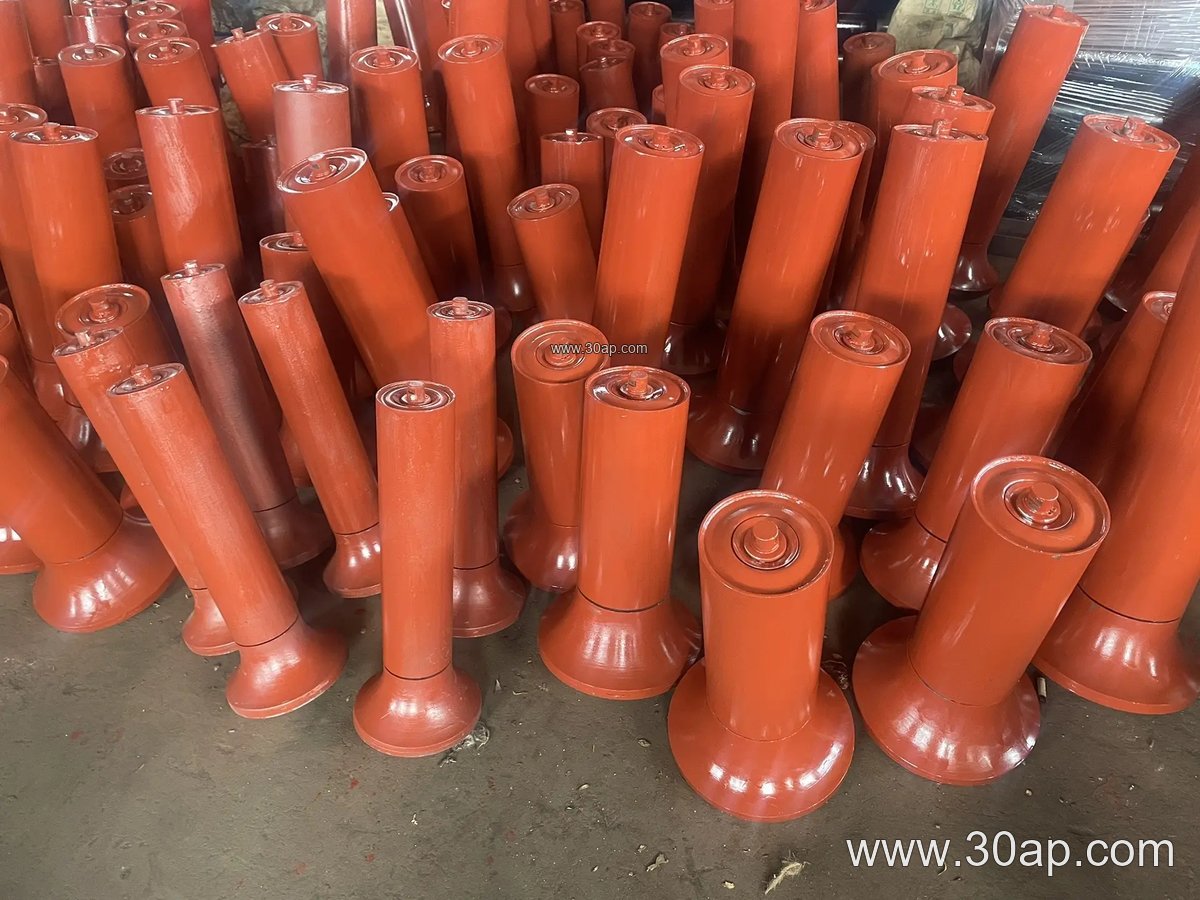
The core of the design is the roller shell. Common surface forms include rubber-covered, ceramic-faced, and spiral or grooved steel rollers. A rubber surface helps release wet fines; a ceramic or grooved surface reduces the contact area where mud can cling. Some designs use a helical rib that pushes material toward the belt edges as the roller turns. The bearing housing and seal arrangement matter just as much, since fine slurry that reaches the bearing will shorten service life.
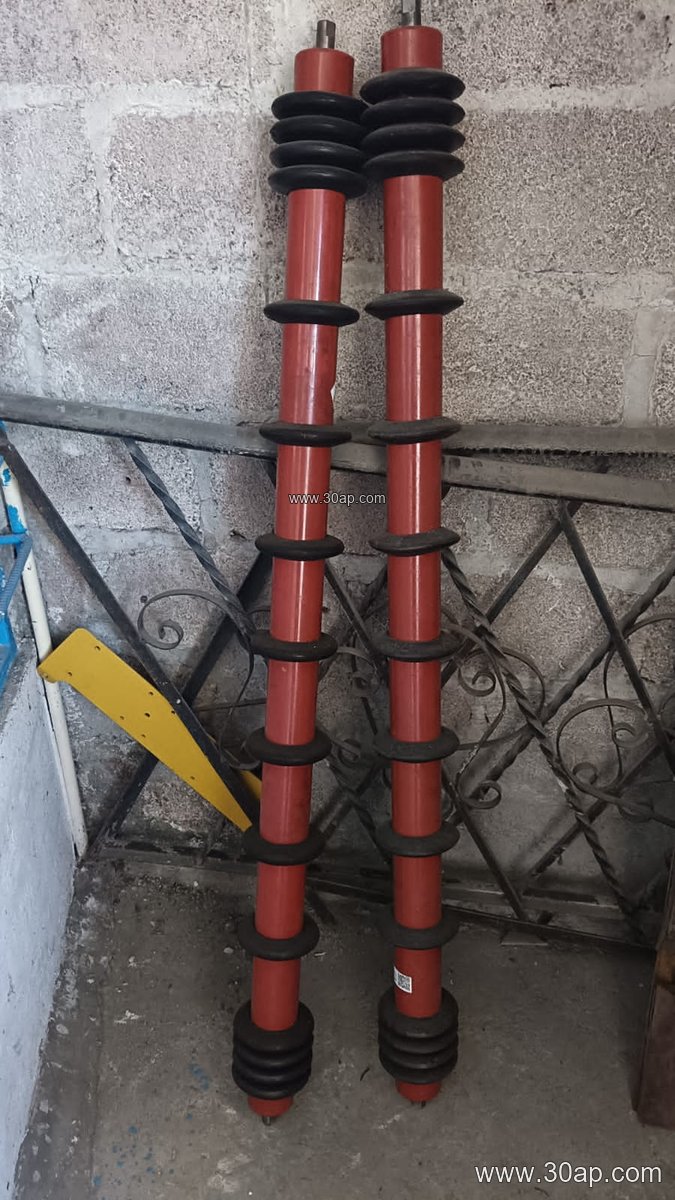
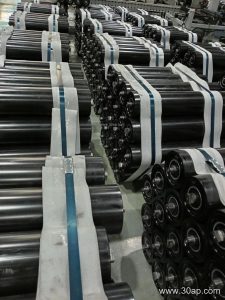
Typical roller diameters for this family follow the general idler range, such as Ø89, Ø102, Ø108, Ø127, Ø133, and Ø159 mm. Bearing sizes commonly include 6204, 6205, 6305, 6306, and 6308, selected according to load and shaft design rather than matched one-to-one with a roller diameter. Roller length is set by belt width, trough angle, and whether the station is a single-roller or three-roller trough set.
Common reference values for idler selection
| Parameter | Common range or example |
|---|---|
| Roller diameter | Ø63 to Ø219 mm |
| Belt width | B400 to B2400 mm |
| Trough angle | 20°, 30°, 35°, 45° |
| Roller surface | Steel tube, nylon, ceramic, rubber ring |
| Bearing | 6204, 6205, 6305, 6306, 6308, 6310 |
| Typical trough roller length | B500 ≈ 200 mm, B800 ≈ 315 mm, B1200 ≈ 465 mm, B1600 ≈ 600 mm |
These are reference values, not fixed combinations. A three-roller trough set may use different lengths for the side rollers and the center roller, and the final choice depends on the conveyor design.
Where Buildup Becomes a Problem
Sticky loads appear in many bulk handling circuits. In a coal washing plant, wet fines and slurry can coat return rollers and cause belt misalignment. In a limestone quarry or aggregate line, rain-soaked stone dust behaves similarly. Cement plants handling moist raw meal, and power plant coal yards in humid weather, also see material cling to roller surfaces. The anti-material-buildup idler is often placed in the return run and at transfer points where spillage is likely.
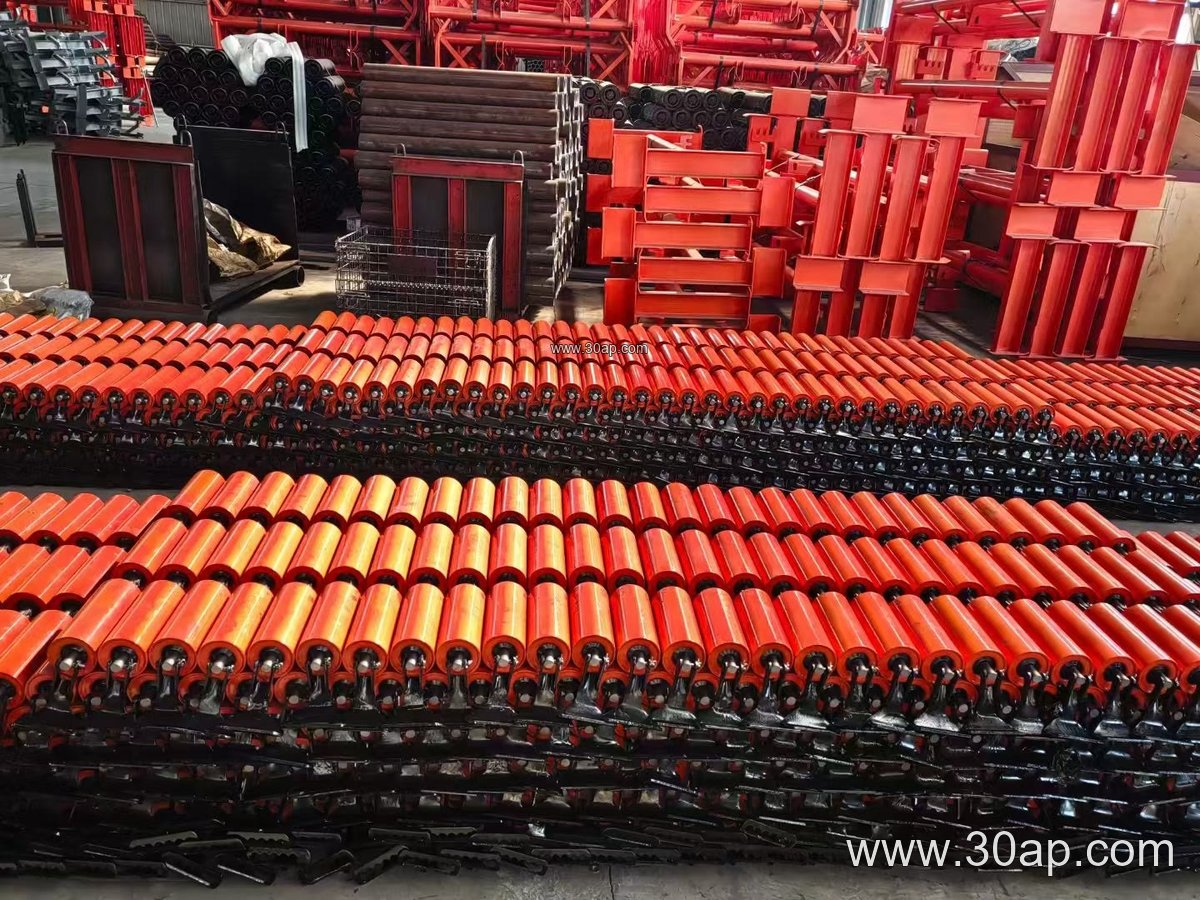
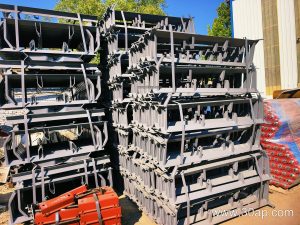
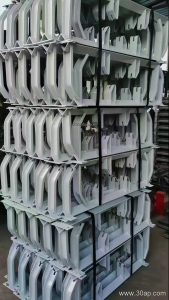
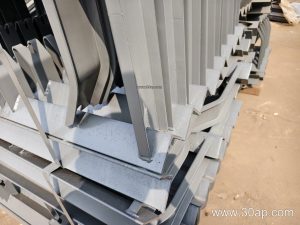
The surrounding equipment still needs attention. A worn conveyor belt with cuts or exposed fabric will trap more material, and a poorly aligned conveyor bracket can tilt the roller and create a low spot where buildup starts. Matching the idler to the belt condition — for example, a heavy-duty mining conveyor belt or an abrasion resistant conveyor belt — helps the whole system run cleaner. In dusty stone crushing lines, a fabric core conveyor belt or EP conveyor belt may carry the same wet fines that attack the rollers.
Buyer Checklist
- Confirm the belt width and trough angle before choosing roller length; do not assume one belt width matches only one roller diameter.
- State the material condition: wet, sticky, fibrous, or abrasive. This guides the choice between rubber, ceramic, and grooved surfaces.
- Check the seal and bearing specification for fine slurry exposure, not just the roller shell.
- Ask whether the roller is for the carrying side or return side, since V-type return and flat return configurations differ.
- Review the conveyor bracket and frame alignment, because buildup often begins where a roller sits out of line.
For plants running chevron conveyor belt or corrugated sidewall conveyor belt profiles, keep in mind that raised cleats and sidewalls can contact rollers differently; the idler spacing and roller surface should be reviewed with the belt profile. A self-cleaning roller reduces maintenance, but it does not replace proper belt cleaning and spillage control. Buyers should request drawings showing roller diameter, length, shaft end, and bearing type so the anti-material-buildup idler fits the existing station without modification. Visit www.bulkconveyorparts.com for idler roller and conveyor bracket reference information.