What a Four-Roll Idler Bracket Does
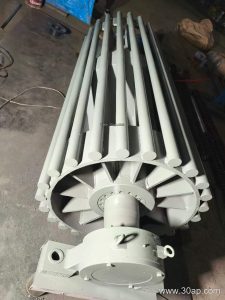
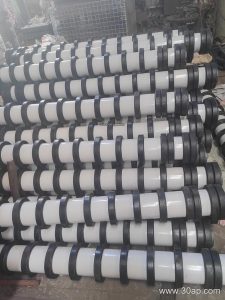
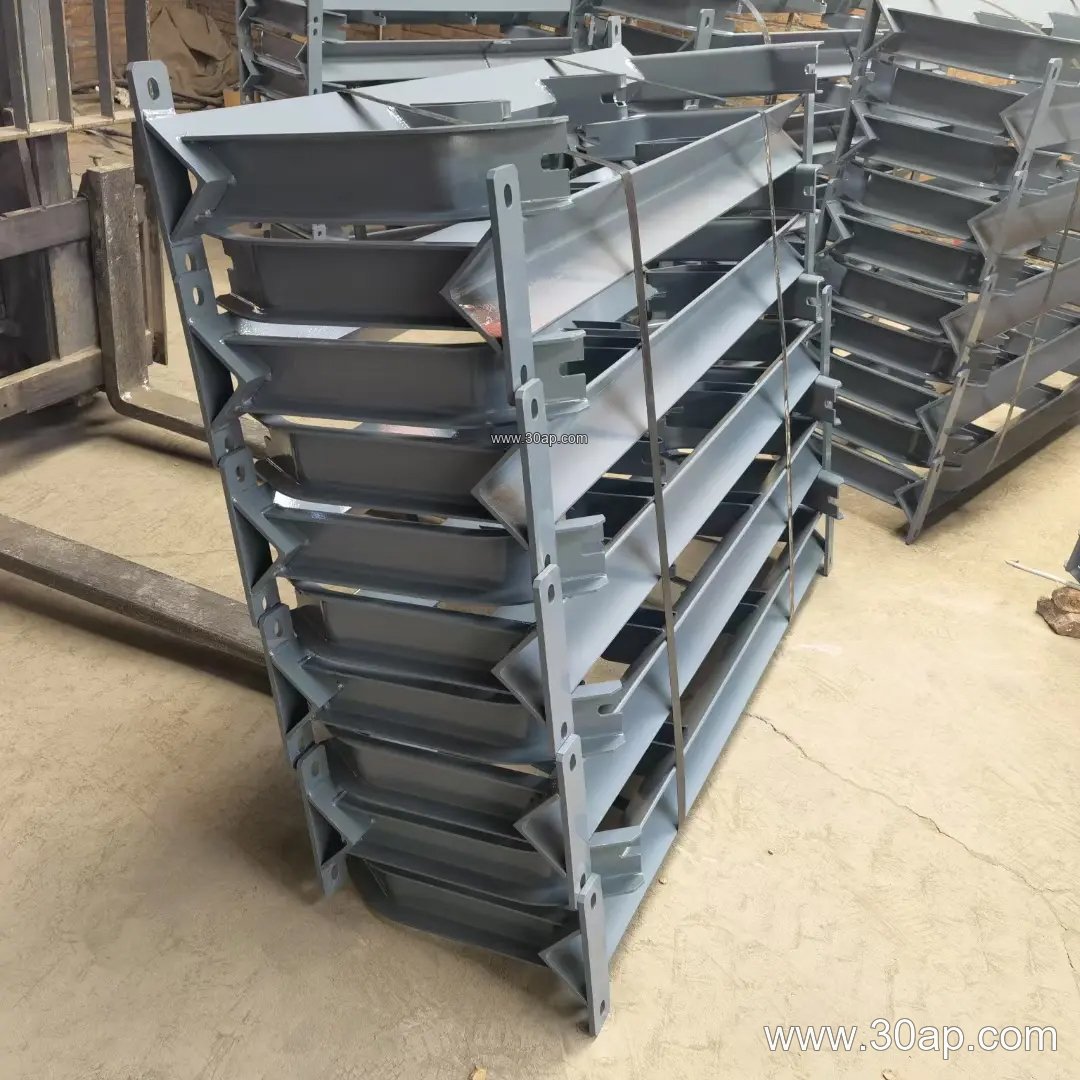
A four-roll idler bracket is the support frame that carries four idler rollers under a loaded conveyor belt, usually arranged as two centre rollers and two outer rollers set at a steeper angle. This arrangement gives the belt a deeper, more rounded trough than a conventional three-roll set, which helps contain material on wide, fast or heavily loaded lines. In a quarry, a limestone mine or a cement plant, the extra roll contact spreads load across more of the belt surface and reduces the chance of spillage at transfer points.
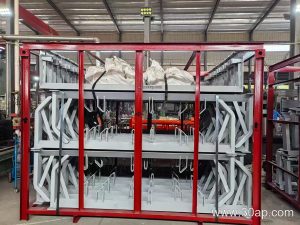
The bracket itself is a fabricated steel part, not a wearing component in the same sense as the rollers. It positions the idler roller shafts, holds the trough angle and transfers the weight of belt and material into the conveyor stringer. A well-built four-roll idler bracket keeps the belt profile stable, so the conveyor belt tracks evenly and the rollers turn freely.
Construction and Mounting Details
Most brackets are made from angle steel, channel steel or folded steel plate, welded into a rigid frame with drilled mounting holes. The wings that hold the outer rolls are often set at a fixed angle, while some designs allow adjustment. Typical slot angles on troughing brackets are 20, 30, 35 and 45 degrees, and an adjustable bracket can be set between these positions during installation. Forward-leaning brackets, with a tilt of about 1.5 to 2 degrees, are a separate tuning option and should not be confused with the four-roll geometry itself.
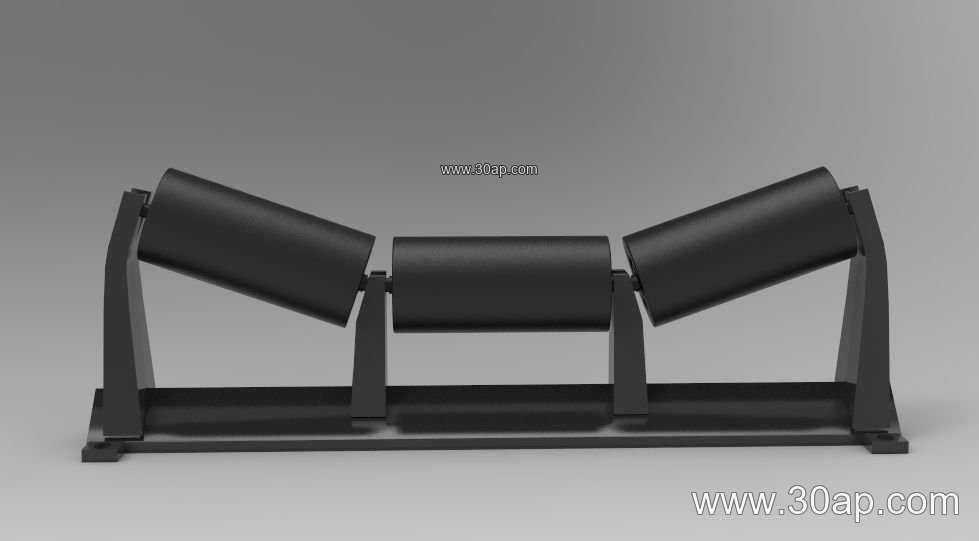
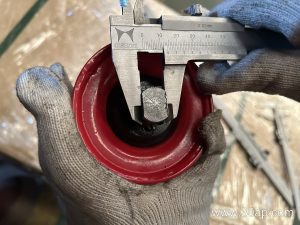
Mounting hole spacing and crossbeam length change with belt width and trough angle, so they are determined by design rather than by a single standard figure. When ordering, the useful combination is belt width, slot angle and roller diameter, for example B800, 35 degrees, Ø108, or B1200, 45 degrees, Ø133. A B650 line with 30 degrees and Ø89 is also common for lighter duty. These are reference combinations, not fixed pairings; a given belt width can be matched with more than one angle or roller size depending on load, speed and material.
Where Four-Roll Frames Fit Best
The four-roll bracket is usually chosen where a three-roll trough cannot hold the belt profile well enough. That includes wide belts carrying abrasive bulk material, high-capacity lines at a port or power plant coal yard, and sections after a crusher where impact and load variation are high. In an iron ore or copper ore operation, the deeper trough helps keep dense material centred. In a sand and gravel line or a crushing and screening plant, it reduces edge spillage on inclined sections.
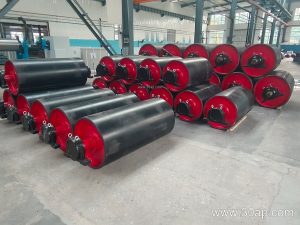
It also works alongside related equipment rather than replacing it. The idler roller set, the conveyor pulley at the drive and tail, and the conveyor bracket that ties the frame to the stringer all need to be coordinated. On lines using a heavy-duty mining conveyor belt or an abrasion resistant conveyor belt, the four-roll frame is often paired with impact-resistant rollers near loading points and standard troughing rollers further along.
Selection Points for Buyers
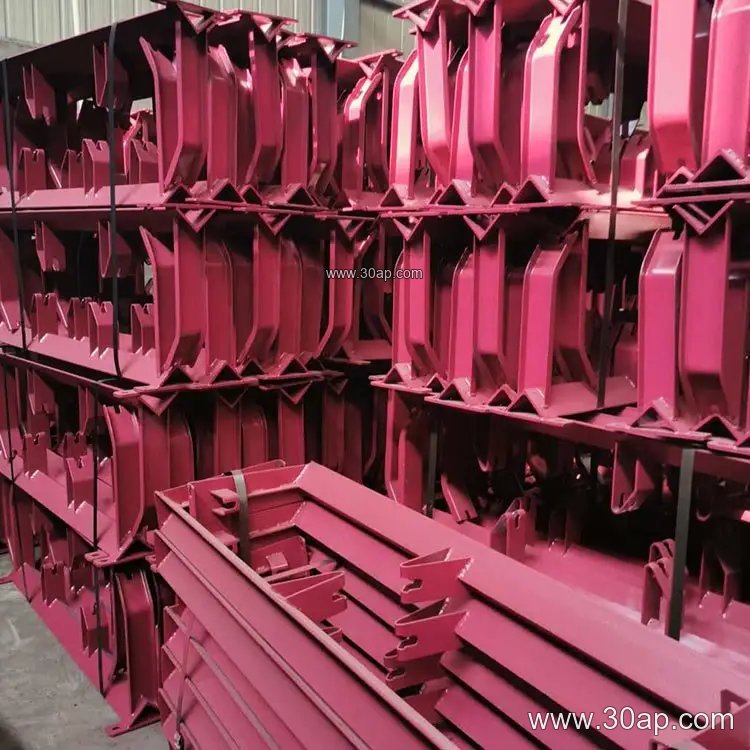
Before choosing a four-roll idler bracket, confirm the belt width, the expected load per metre, the belt speed and the material characteristics. Ask for the bracket drawing with hole centres and overall height, because these must match the existing stringer and roller shafts. Check that the frame material and welding suit the duty: a wash plant or a coastal port may need better corrosion protection than a dry cement silo.
- Confirm belt width and slot angle together, not belt width alone.
- Match roller diameter to the bracket seats and to the load.
- Decide whether fixed or adjustable brackets suit the maintenance plan.
- Allow clearance for belt edge travel and for future roller changes.
- Check that the frame fits the stringer spacing and bolt pattern.
For conveyors carrying hot material, such as clinker or sinter, the bracket should be checked for heat exposure together with a heat resistant conveyor belt. On coal mining conveyor lines, flame retardant conveyor belt and anti-static properties belong to the belt specification, while the bracket must simply hold alignment and survive the environment. In food or grain silo applications, smooth surfaces and easy cleaning matter more than heavy section size.
Installation and Maintenance Notes
Install the four-roll bracket square to the belt centreline and at the same height as neighbouring frames. A misaligned bracket can make the belt run to one side even when the rollers are new. After the first weeks of operation, recheck bolt tightness and look for wear marks where the roller shaft sits in the seat. Replace bent or cracked frames rather than straightening them repeatedly, since alignment is the main job of the part.
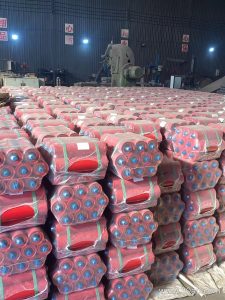
Keep spare brackets in the same size and angle as the installed units so that a damaged frame can be swapped without stopping the line for fabrication. For a wider view of matching belts and rollers, see conveyor belt and idler roller references, and check conveyor pulley alignment whenever the trough section is rebuilt.