What an Aggregate Conveyor Idler Does
In a quarry or sand and gravel plant, an aggregate conveyor idler is the rotating support that carries the belt and the load between the head and tail of the conveyor. It is a simple component by design, but its condition directly affects belt tracking, energy consumption and the cost of keeping a crushing and screening line running. The idler roller is not a drive component; it does not pull the belt. Its job is to reduce friction and hold the belt in a stable trough so that crushed stone, sand and gravel move smoothly from the crusher to the screen deck and on to stockpiles.
When the belt is loaded with abrasive rock, the idler has to cope with dust, fines, moisture and occasional impact from oversized lumps. That is why the specification of the idler, and the way it is installed, matters as much as the belt itself. A well-chosen set of idlers will outlast several belts; a poor selection can cause edge damage, spillage and repeated downtime.
Construction and Common Surface Forms
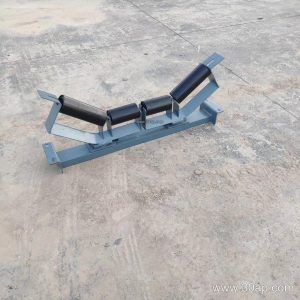
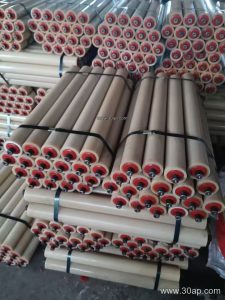
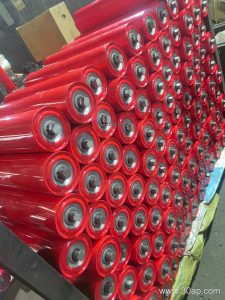
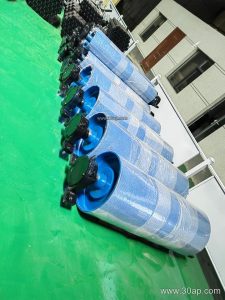
A typical aggregate conveyor idler consists of a steel tube shell, bearing housings at each end, a shaft, and a sealing arrangement. The shell can be plain steel, nylon-coated, ceramic-lined or fitted with rubber rings. The choice of surface depends on the duty: rubber rings help absorb impact at transfer points, while ceramic or nylon surfaces can reduce build-up in wet, sticky material.
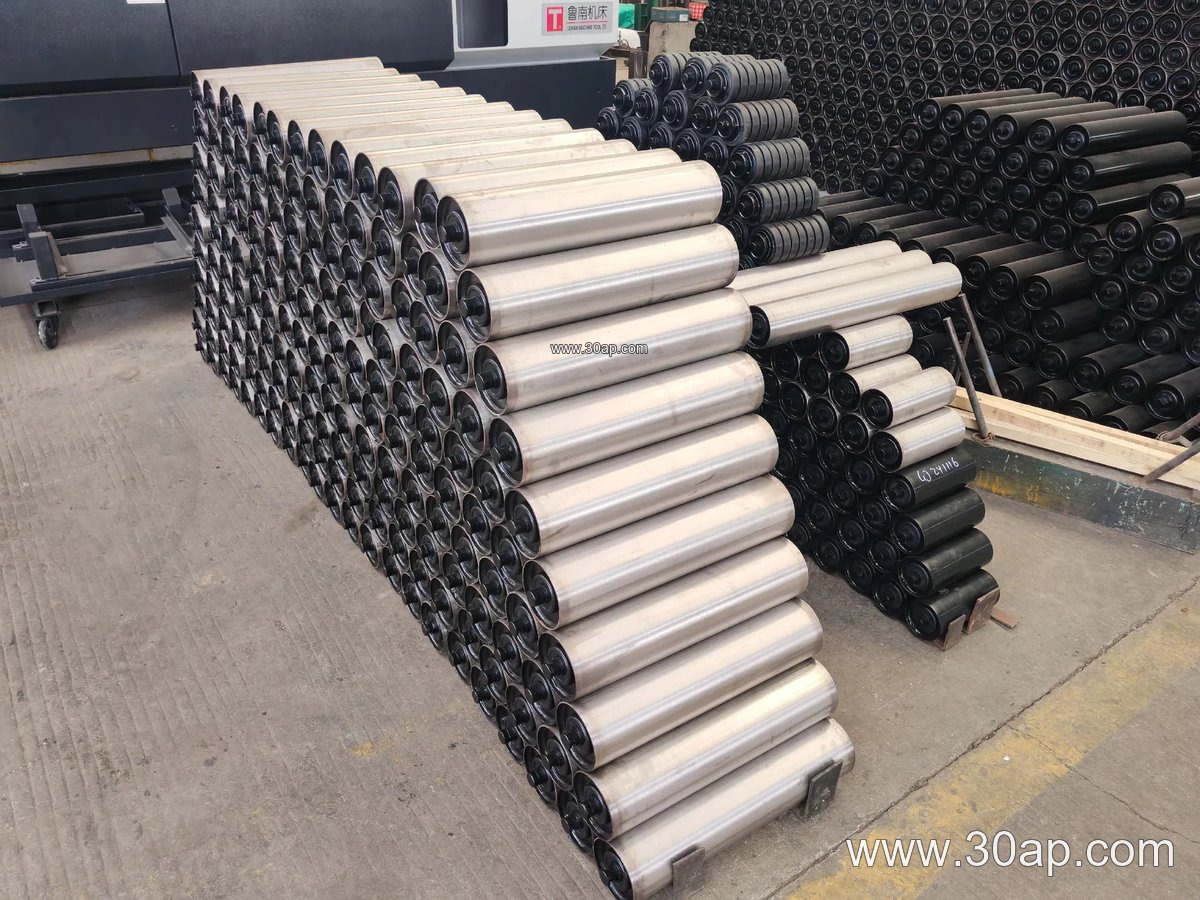
Bearing sizes are usually selected to match the load and speed rather than the belt width alone. Common bearing numbers include 6204, 6205, 6305, 6306, 6308 and 6310. A larger bearing is not automatically better; it must suit the shaft and housing design. Sealing is critical in aggregate plants, where fine dust is everywhere. Labyrinth seals and contact seals are both used, and the quality of the seal often determines service life more than the bearing itself.
Idler diameter is usually chosen from a range such as Ø63, Ø76, Ø89, Ø102, Ø108, Ø127, Ø133, Ø159, Ø178, Ø194 and Ø219 mm. Smaller diameters suit lighter belts and lower loads, while larger diameters are used where belt speed, load or lump size is higher. The roller length depends on belt width, trough angle and the idler set arrangement. For a three-roll troughing set, common roller lengths are approximately 200 mm for B500, 250 mm for B650, 315 mm for B800, 380 mm for B1000, 465 mm for B1200, 530 mm for B1400, 600 mm for B1600, 670 mm for B1800 and 750 mm for B2000. These are examples only; side rollers and centre rollers can differ, and the final length is determined by the conveyor design.
Where Aggregate Conveyor Idlers Are Used
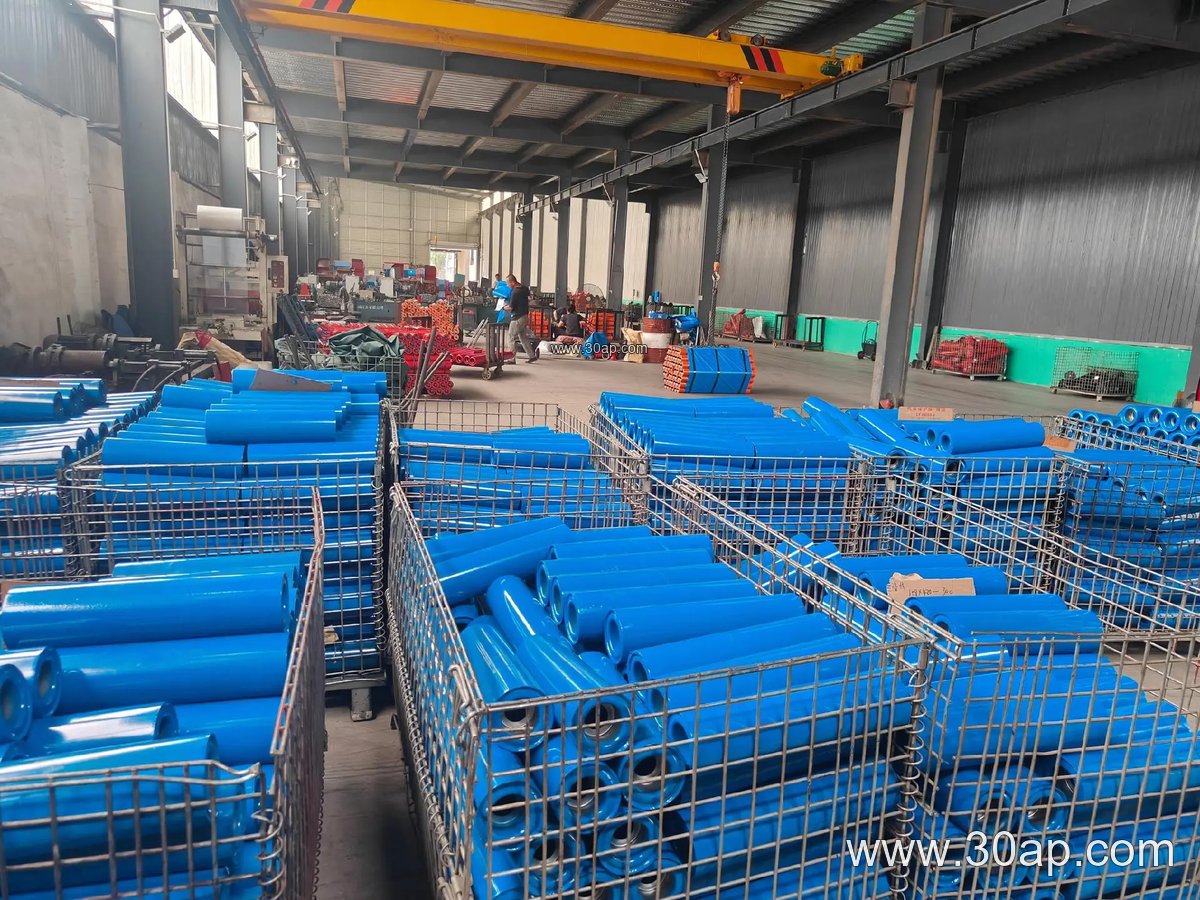
The most common home for this component is a quarry or sand and gravel operation, but the same idler type appears in limestone mines, iron ore plants, copper concentrators and cement plants. In a crushing and screening circuit, troughing idlers support the belt on the carrying side, while return idlers support the empty belt on the return run. Transition idlers are placed near the head and tail pulleys to ease the belt from a flat to a troughed profile. Impact idlers or rubber-ring impact idlers are used under the crusher discharge, where lump size and drop height are greatest.
In a coal washing plant or a power plant coal yard, the idler may be specified with flame retardant and anti-static properties to suit the environment, and the belt may be a flame retardant conveyor belt or a fire resistant conveyor belt. In a cement plant, heat resistant conveyor belt may be needed near the kiln area, while a quarry conveyor belt or aggregate conveyor belt handles the raw rock. The idler itself is usually the same basic product, but the surface form and sealing may change with the duty.
Troughing Angles and Belt Interaction
Troughing angle affects how well the belt contains the load. Common angles are 20, 30, 35 and 45 degrees. A 20-degree trough is gentle and suits wide, flat loads; a 35-degree or 45-degree trough gives better capacity for a given belt width but increases the bending stress at the belt edges. The idler set can be a single roll, two-roll or three-roll troughing arrangement. Three-roll sets are the most common in aggregate plants because they form a stable trough and spread the load across the belt.
Some idlers are mounted with a slight forward tilt of about 1.5 to 2 degrees to help the belt track. This is a tracking aid, not a substitute for proper alignment of the conveyor structure. Self-aligning idlers, including friction and conical types, are used on longer conveyors where the belt tends to wander. They should be installed according to the conveyor designer’s layout, not added at random.
What a Buyer Should Check
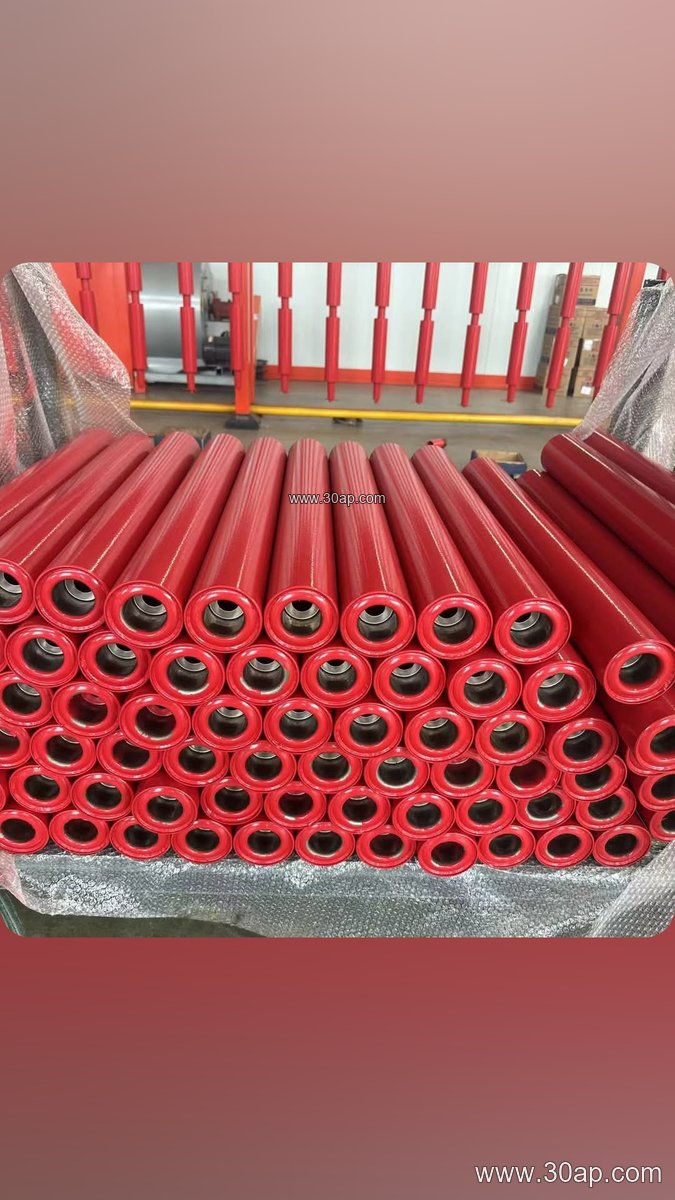
Before ordering, confirm the belt width, the trough angle and the idler set arrangement. Check the shaft diameter and bearing size against the existing brackets and frames, and confirm the roller length and diameter. Ask about the seal type and the surface form, because these determine how the idler performs in dust and moisture. For a new project, the conveyor designer will usually specify the idler class and spacing; for a replacement, matching the original specification is the safest starting point.
Also consider the belt it will support. A heavy-duty mining conveyor belt or a high abrasion resistant conveyor belt may need a more robust idler than a light aggregate belt. In a port or ship loading facility, the same idler may be used with a bulk material conveyor belt, while a recycling line may use a different belt altogether. The idler should be matched to the belt and the load, not chosen in isolation.
Common Reference Parameters
| Parameter | Common reference values |
|---|---|
| Idler diameter | Ø63, Ø76, Ø89, Ø102, Ø108, Ø127, Ø133, Ø159, Ø178, Ø194, Ø219 mm |
| Belt width | B400, B500, B650, B800, B1000, B1200, B1400, B1600, B1800, B2000, B2200, B2400 |
| Trough angle | 20°, 30°, 35°, 45° |
| Bearing | 6204, 6205, 6305, 6306, 6308, 6310 |
| Surface form | Steel tube, nylon, ceramic, rubber ring |
These values are reference data, not a fixed pairing. A given belt width can be used with more than one idler diameter, and the final choice depends on load, speed and conveyor design. For advice on matching an aggregate conveyor idler to your belt and structure, or for related components such as the conveyor pulley, conveyor bracket and idler roller, consult your conveyor supplier with the full duty specification.