What an Iron Ore Conveyor Belt Has to Handle
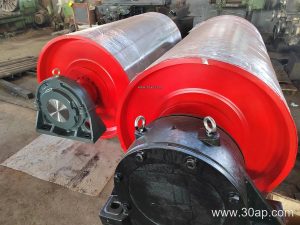
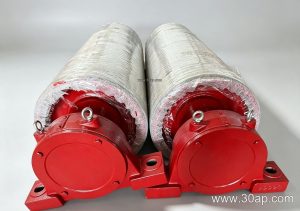
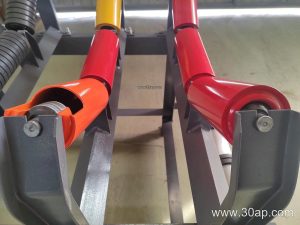
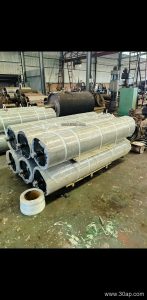
An Iron Ore Conveyor Belt is the load-carrying component on a bulk handling line that moves crushed ore from the pit, stockpile or crusher to the next stage. Iron ore is heavy, sharp-edged and often wet or dusty, so the belt must resist cutting, gouging and abrasion while keeping a steady tracking path over long distances. In a typical mining conveyor system, the belt runs over idler rollers, wraps the head or drive pulley at the discharge end, and returns through a tail pulley and one or more bend pulleys. Each of those components has its own job; a drive pulley, a tail pulley and a bend pulley are not interchangeable, and the belt specification should be matched to the pulley and idler layout rather than to a single number.
The same duty appears in cement plants, power plants, steel works, quarries, sand and gravel yards, port ship loaders and coal mining operations, where an Ore Conveyor Belt or a heavy-duty Mining Conveyor Belt shares many design principles. The ore duty is simply the harshest version of that family.
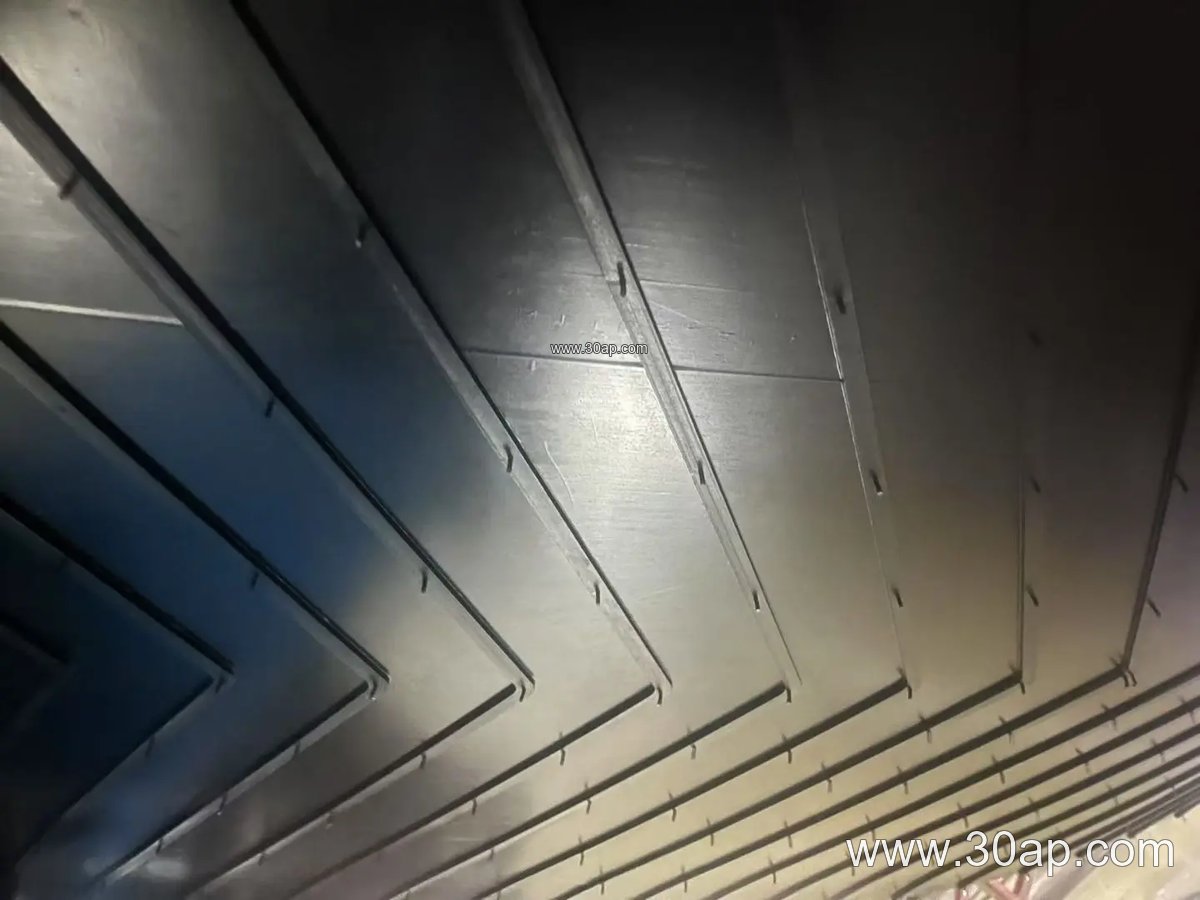
Construction and Common Belt Types
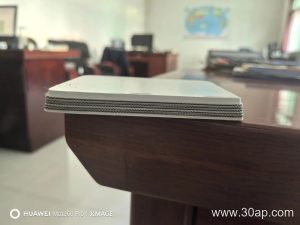
Most iron ore lines use a fabric-cored or steel-cord belt with thick rubber covers. The carcass provides tensile strength and troughability, while the top cover absorbs impact at transfer points and the bottom cover protects the pulley side. Buyers will meet several constructions:
- EP Conveyor Belt (polyester-nylon fabric core) in grades such as EP200, EP400, EP630, EP1000 and EP1250 for general ore conveying.
- NN Conveyor Belt with nylon-nylon plies, valued for impact absorption on short, rough runs.
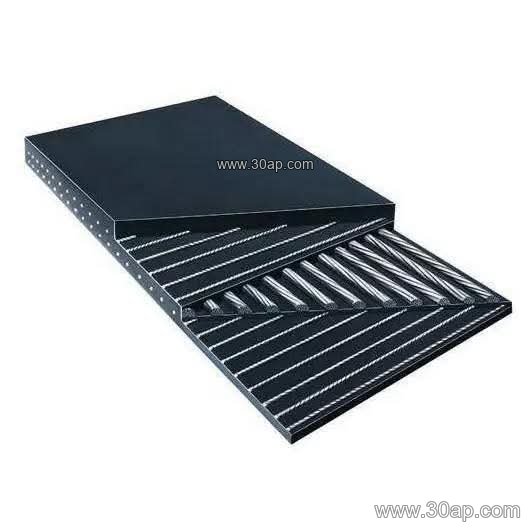
- Steel Cord Conveyor Belt in ST1000, ST1600 or ST2000 classes for very long, high-tension lines.
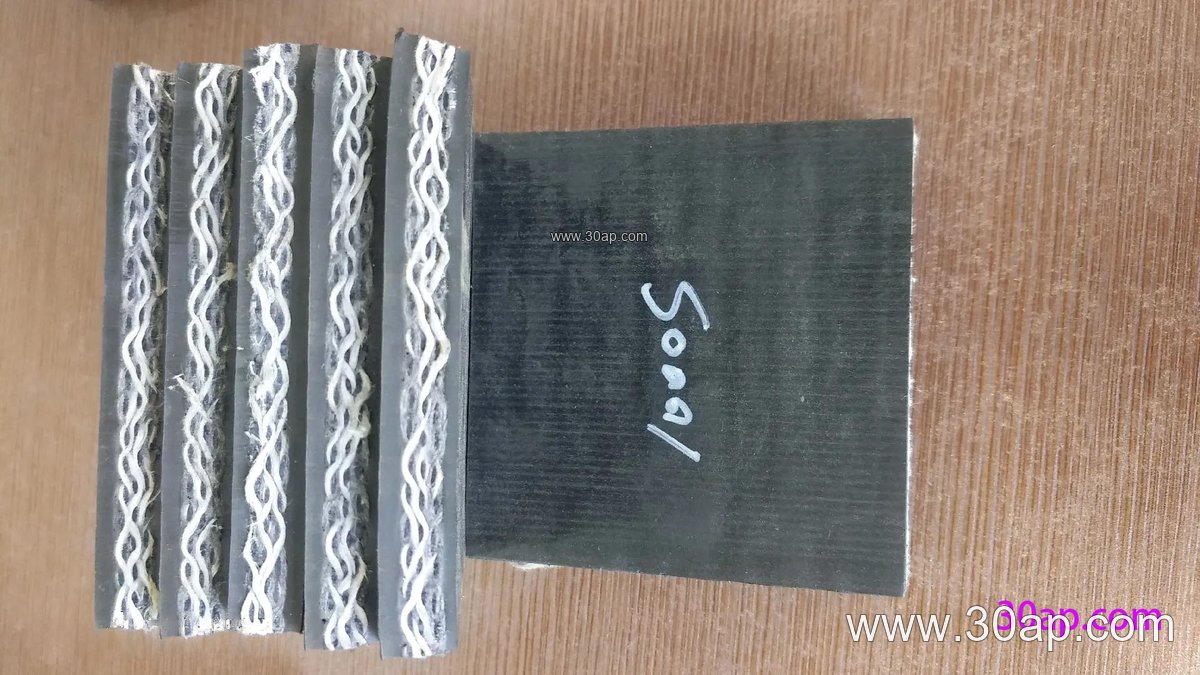
- Multi-Ply Fabric Core Conveyor Belt with two to six plies where a balance of strength and flexibility is needed.
- Abrasion Resistant Conveyor Belt and High Abrasion Resistant Conveyor Belt grades for sharp, dry ore.
- Flame Retardant Conveyor Belt and Fire Resistant Conveyor Belt where regulations or enclosed galleries demand it.
- Chevron Conveyor Belt, Corrugated Sidewall Conveyor Belt or Skirted Conveyor Belt for steep inclines and material containment.
- Pipe Conveyor Belt for dust-tight, curved routes near ports and processing plants.
Cover compounds are usually quoted as top plus bottom thickness, for example 4+2 mm, 6+2 mm or 8+3 mm. A thicker top cover helps at the loading point, but it also adds weight and stiffness, so the choice should follow the drop height, lump size and throughput rather than habit.
Typical Sizes and Reference Data
Belt width and strength class are the first two numbers a buyer exchanges. Widths such as 800mm, 1000mm, 1200mm, 1400mm and 1600mm are common in ore plants, with wider belts used on high-capacity trunk lines. The table below is reference data only; final values follow the conveyor design and the manufacturer’s data sheet.
| Parameter | Typical range |
|---|---|
| Belt width | B500, B650, B800, B1000, B1200, B1400, B1600 |
| Fabric strength class | EP200 to EP2000; NN100 to NN400 |
| Steel cord class | ST1000, ST1250, ST1600, ST2000 |
| Cover thickness | 3+1.5, 4+2, 5+2, 6+2, 8+3 mm |
| Carcass plies | 2 to 6 layers, fabric types |
Width should not be tied to one pulley diameter, and shaft size cannot be read from belt width alone. Those values come from the conveyor engineer’s calculation for the actual tension, speed and load.
Where It Runs and What to Watch
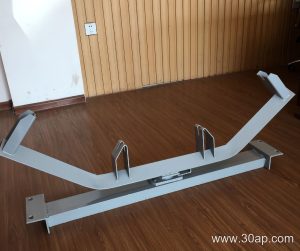
Iron ore duty usually means impact at the crusher discharge, abrasive fines along the run, and sometimes moisture that turns dust into sticky mud. A well-chosen Iron Ore Conveyor Belt is paired with impact idler rollers at the loading zone, self-aligning idlers on the return side, and a properly sized conveyor pulley with lagging for grip. Conveyor brackets and frames should keep the belt centred; misalignment causes edge wear long before the cover is worn out.
In cold regions a Cold Resistant Conveyor Belt may be needed; in oily or chemical environments an Oil Resistant Conveyor Belt or Acid Resistant Conveyor Belt can be considered. Anti-Static Conveyor Belt grades matter in dusty or explosive atmospheres, and an Impact Resistant Conveyor Belt helps where large lumps fall from height.
Buyer Checklist
- Confirm the duty: lump size, moisture, temperature, incline and daily tonnage.
- State the required width, strength class, cover thickness and any flame or fire requirement.
- Share the pulley and idler layout so the belt can be matched to the whole conveyor.
- Ask for the splice method and whether an Endless Conveyor Belt is preferred for the main line.
- Keep spare belt, idler roller and pulley parts consistent with the original specification.
Buyers comparing offers for a Mining Conveyor Belt should look at carcass construction, cover compound and splice quality together, not at width alone. For more on matching belts with pulleys and rollers, see the technical notes at www.example.com/conveyor-belt and www.example.com/iron-ore-conveyor-belt, and check roller details at www.example.com/idler-roller.