What a Mining Conveyor Bracket Does
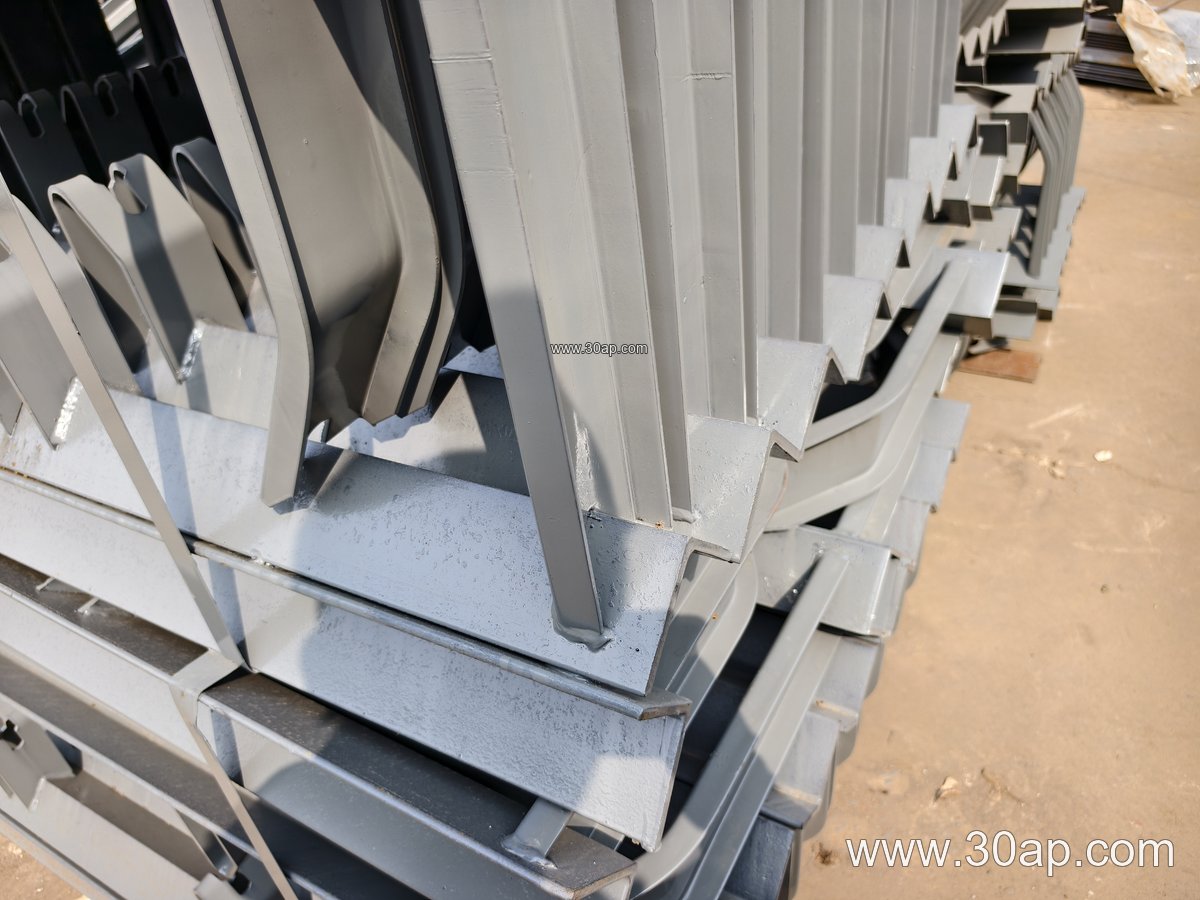
A mining conveyor bracket is the structural support that positions idler rollers at the correct angle and height along a conveyor frame. In a quarry, limestone mine, or crushing and screening line, the bracket carries the weight of the belt and the material, keeps the trough shape stable, and makes roller replacement practical. It is a fabricated steel part rather than a wear item like a conveyor belt, yet its alignment directly affects belt tracking, spillage, and roller life.
Buyers often call this part a conveyor bracket or idler support bracket. The accurate equivalent name is idler bracket. Drive pulleys, tail pulleys, and bend pulleys are separate components with different functions; a bracket never substitutes for any of them.
Construction and Common Forms
Most brackets are made from angle steel, channel steel, or folded steel plate. The design should match the load, belt width, and environment. In dusty or wet conditions, galvanized or painted finishes help, but the exact coating should be agreed with the supplier.
Troughing and Transition Brackets
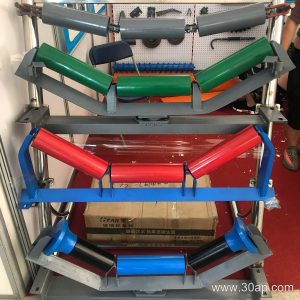
Troughing brackets (also called upper trough brackets) hold three or more idlers in a trough profile. Transition brackets sit near pulleys and gradually change the belt from flat to troughed, reducing edge stress.
Return and Self-Aligning Brackets
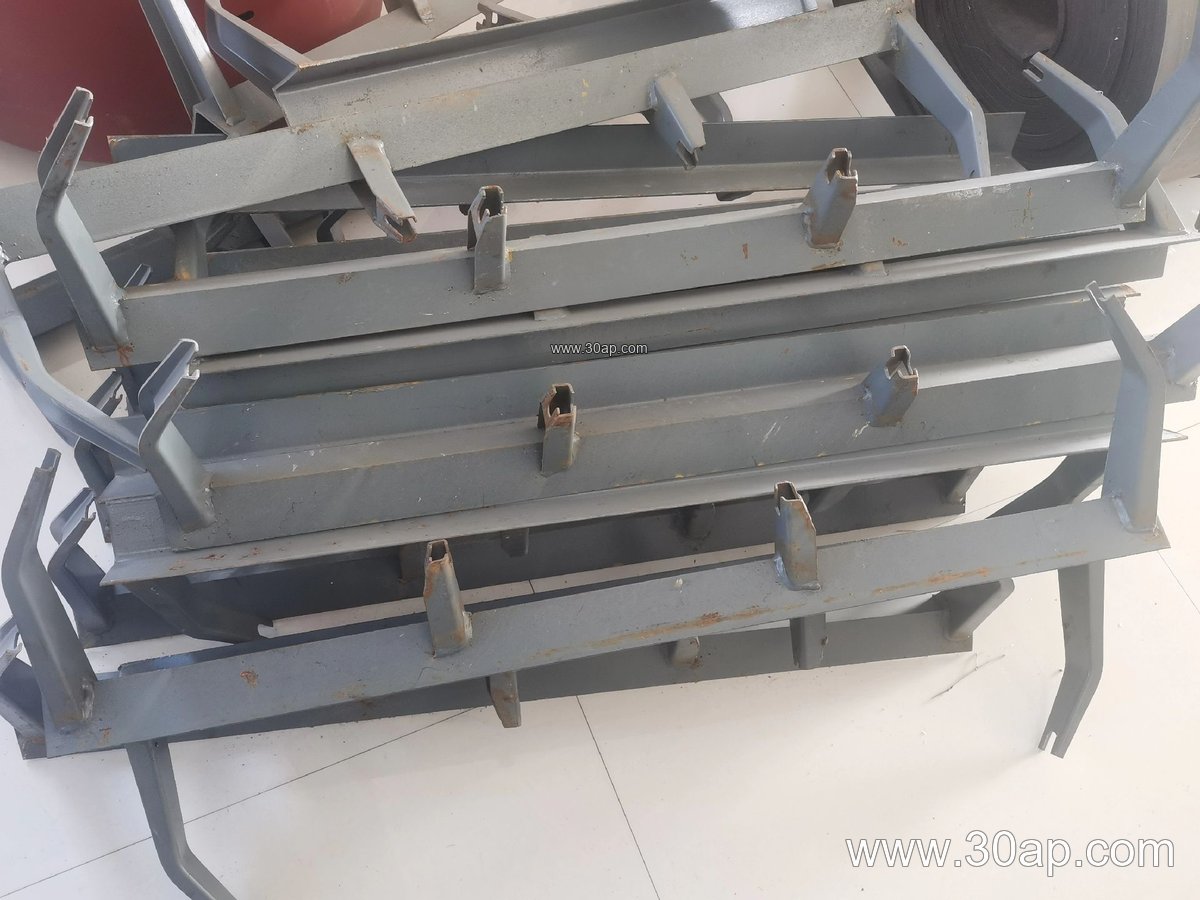
Return brackets support the lower belt run, often with a V-shaped return bracket to help centering. Self-aligning brackets and forward-leaning brackets are used where belt tracking needs correction. A spiral roller bracket is another option in sticky material.
Fixed and Adjustable Brackets
Fixed brackets hold one trough angle. Adjustable brackets allow the trough angle to be changed on site, which is useful during commissioning or when material characteristics change.
Matching Belt Width, Trough Angle, and Roller Diameter
Bracket dimensions follow belt width, trough angle, and roller diameter. Common belt widths include B500, B650, B800, B1000, B1200, B1400, B1600, B1800, B2000, B2200. Trough angles are commonly 20, 30, 35, or 45 degrees. Roller diameters are often Ø89, Ø108, Ø133, Ø159, or Ø194.
These values are reference data, not fixed pairings. A B800 belt may run with 30 or 35 degrees and a Ø108 roller, while a B1200 belt may use 35 or 45 degrees with Ø133. Hole spacing and crossbeam length vary with design, so they should not be treated as universal numbers.
| Belt Width | Typical Trough Angle | Typical Roller Diameter |
|---|---|---|
| B500 | 20-30 degrees | Ø89 |
| B650 | 30 degrees | Ø89-Ø108 |
| B800 | 30-35 degrees | Ø108 |
| B1000 | 35 degrees | Ø108-Ø133 |
| B1200 | 35-45 degrees | Ø133 |
| B1400 | 35-45 degrees | Ø133-Ø159 |
| B1600 | 35-45 degrees | Ø159 |
Where Brackets Are Used
In a coal washing plant, flame retardant and anti-static belt grades are common, and brackets must resist vibration and fine dust. In a cement plant or power plant coal yard, heat resistant or abrasion resistant conveyor belts may run alongside standard EP conveyor belts, and bracket spacing affects roller load. In an iron ore or copper ore operation, heavy-duty mining conveyor belts and steel cord conveyor belts place higher demands on bracket strength.
Brackets also appear in port ship loading, aggregate yards, and tunnel muck removal. The belt type changes, but the bracket’s job stays the same: hold the idler roller, keep the trough, and support the load.
Buyer Checklist
- Confirm belt width, trough angle, and roller diameter before ordering.
- State whether the bracket is fixed or adjustable, and whether it is for the carrying or return side.
- Provide hole spacing and mounting details from the existing frame.
- Match material and finish to dust, moisture, and corrosion exposure.
- Check that brackets work with the selected conveyor pulley and conveyor belt edge condition.
For spare parts planning, keep bracket drawings linked to belt width and roller size. This makes future replacement of an idler roller or conveyor bracket faster and reduces downtime in mining, quarry, and bulk material handling operations.