What a Belt Conveyor Bracket Does
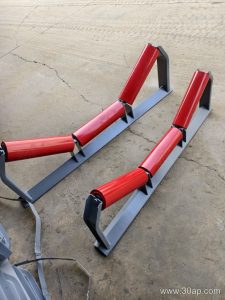
A belt conveyor bracket is the steel support that holds idler rollers in position along the carrying and return runs of a conveyor. It is a structural component rather than a rotating one, but its geometry directly shapes the belt profile, keeps the conveyor belt tracking, and spreads load into the stringer or frame. In a quarry, a cement plant, or a power plant coal yard, the brackets are easy to overlook until a misaligned or sagging roller starts throwing material off the belt.
Brackets are usually fabricated from angle steel, channel steel, or folded steel plate. The same product is also called a conveyor bracket or idler support frame, and the names refer to the same family of parts. The main subject here is the bracket itself; the troughing angle, roller diameter, and belt width are choices that the bracket must accommodate.
Typical Bracket Types and Where They Sit
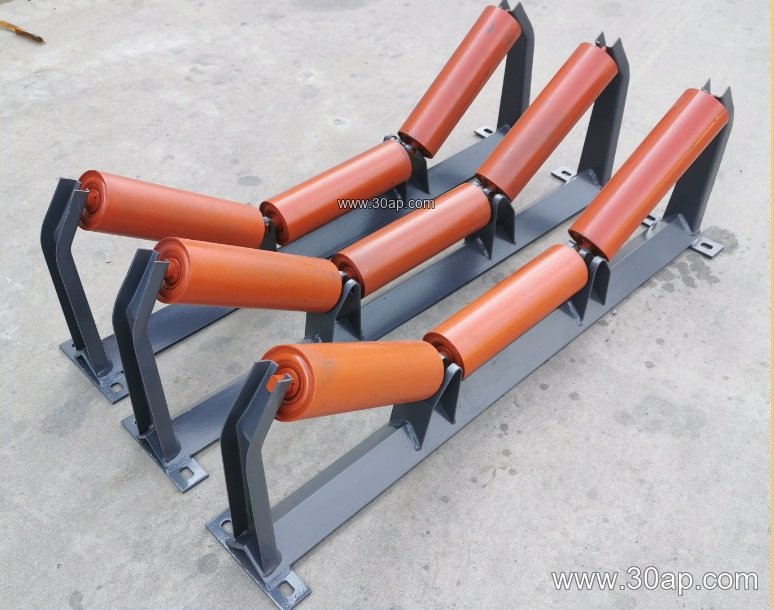
Carrying-side brackets are commonly troughing brackets, sometimes with a forward tilt of about 1.5 to 2 degrees to help center the belt. Return-side brackets include flat return brackets and V-shaped return brackets. Transition brackets sit near pulleys to ease the belt from flat to troughed. Impact brackets are used under loading points, while self-aligning brackets are placed where tracking is a concern.
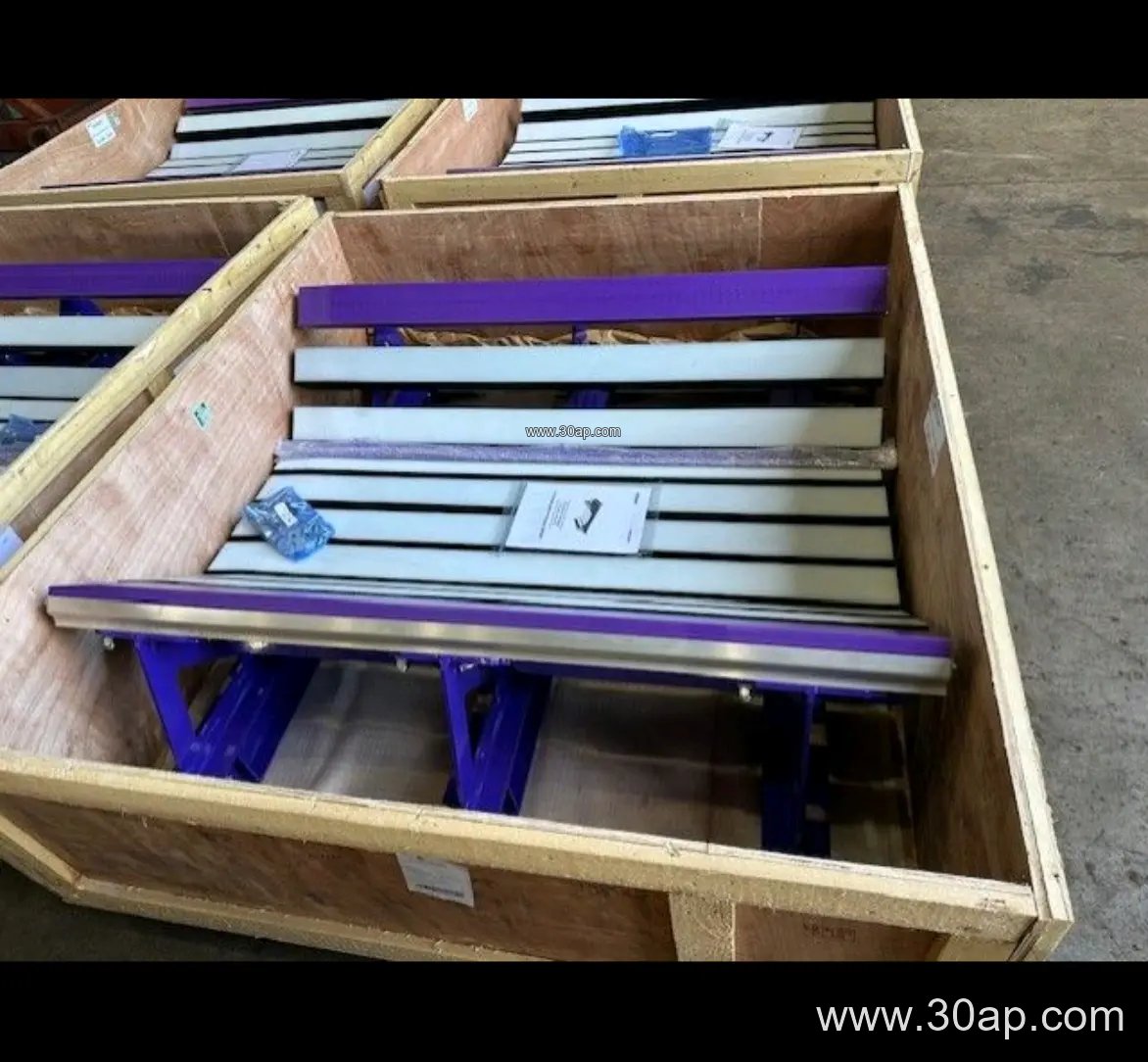
- Troughing bracket: three-roller arrangement on the carrying run
- Transition bracket: gradual trough change near a conveyor pulley
- Flat or V-return bracket: supports the belt on the return side
- Impact bracket: reinforced support under a chute or hopper
- Adjustable bracket: trough angle can be set within a range
Fixed and adjustable brackets are not interchangeable in every layout. A fixed bracket is simple and rigid, while an adjustable one lets maintenance staff fine-tune the trough angle after installation. On a stockyard conveyor handling abrasive aggregate, the fixed version is often preferred for simplicity; on a conveyor that changes duty or needs field adjustment, an adjustable bracket can reduce rework.
Matching Bracket, Belt, and Roller
Bracket selection starts with belt width and roller diameter. Common belt widths include B500, B650, B800, B1000, B1200, B1400, B1600, B1800, B2000, B2200, and roller diameters such as Ø89, Ø108, Ø133, Ø159, Ø194. Trough angles are typically 20, 30, 35, or 45 degrees. These are reference ranges, not fixed pairings: a B800 belt may be used with different trough angles and roller diameters depending on the conveyor design. Mounting hole spacing and crossbeam length usually vary with belt width and trough angle.
| Reference Item | Common Values |
|---|---|
| Belt width | B500, B650, B800, B1000, B1200, B1400, B1600, B1800, B2000, B2200 |
| Trough angle | 20°, 30°, 35°, 45° |
| Roller diameter | Ø89, Ø108, Ø133, Ø159, Ø194 |
| Material | Angle steel, channel steel, folded steel plate |
On heavy-duty mining conveyor belt lines, the bracket and idler roller must match the belt load and the material being carried. A steel cord conveyor belt or a thick abrasion resistant conveyor belt adds weight, so the support frame and its fasteners should be checked against the actual design load. For a coal mining conveyor belt that must be flame retardant, the bracket itself does not control fire rating, but correct alignment helps prevent rubbing and heat buildup.
Installation and Maintenance Notes
Alignment matters more than many buyers expect. Brackets should be set square to the conveyor centerline, with consistent height from stringer to stringer. A bracket that sits low or skewed will tilt the roller, and the belt will run to one side. When replacing a worn bracket, check the mounting holes and the crossbeam for bending, not just the roller.
In a limestone mine or a sand and gravel line, dust and fines build up around brackets and can hide loose bolts. Periodic inspection of fasteners, welds, and roller seats is practical. If the conveyor uses a pipe conveyor belt or a corrugated sidewall conveyor belt, the bracket layout is normally designed around that belt profile, so replacement parts should follow the original drawing rather than a generic frame.
Buyer Checklist
Before ordering, confirm the belt width, the required trough angle, the roller diameter, the mounting hole pattern, and whether the position needs a fixed or adjustable bracket. Ask for the drawing of the stringer connection, because the same nominal bracket can differ in hole spacing. For a food grade conveyor belt or a heat resistant conveyor belt application, mention the environment so the bracket finish and clearances suit the site. A bracket is a small item, but it keeps the conveyor belt, idler roller, and conveyor pulley working as one system.