What a Lower Self-Aligning Idler Does
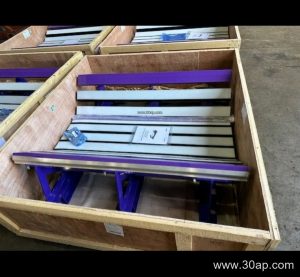
A lower self-aligning idler is a return-side idler roller designed to correct belt tracking automatically. It sits beneath the carrying strand, usually in the section where the conveyor belt has already discharged its load, and uses angled rollers or a pivoting frame to steer a drifting belt back toward the center line. In a quarry, a coal washing plant, or a power plant coal yard, this small correction can prevent edge damage, spillage, and uneven wear across the full length of the belt.
The working principle is simple. When the belt moves off center, it contacts one side of the idler more heavily. The resulting friction turns the idler frame slightly, and the angled rollers push the belt back. No motor, sensor, or operator input is needed, which is why these units are often specified on long overland conveyors and on transfer points where alignment is difficult to control.
Construction and Common Configurations
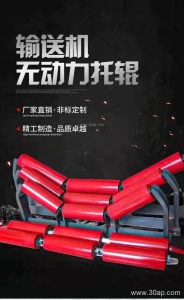
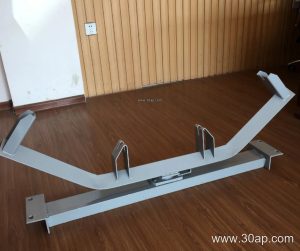
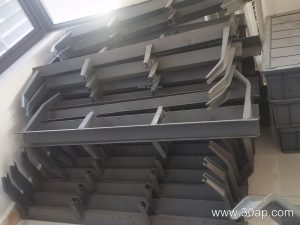
Most designs use a sturdy steel frame that pivots on a central shaft, with two or more rollers mounted at an angle. The roller shell may be plain steel, nylon, or rubber-covered, depending on whether the priority is low friction, quiet running, or grip on a wet return strand. Sealed bearings keep dust out, which matters in cement plants, crushing circuits, and sand and gravel lines where fine particles are everywhere.
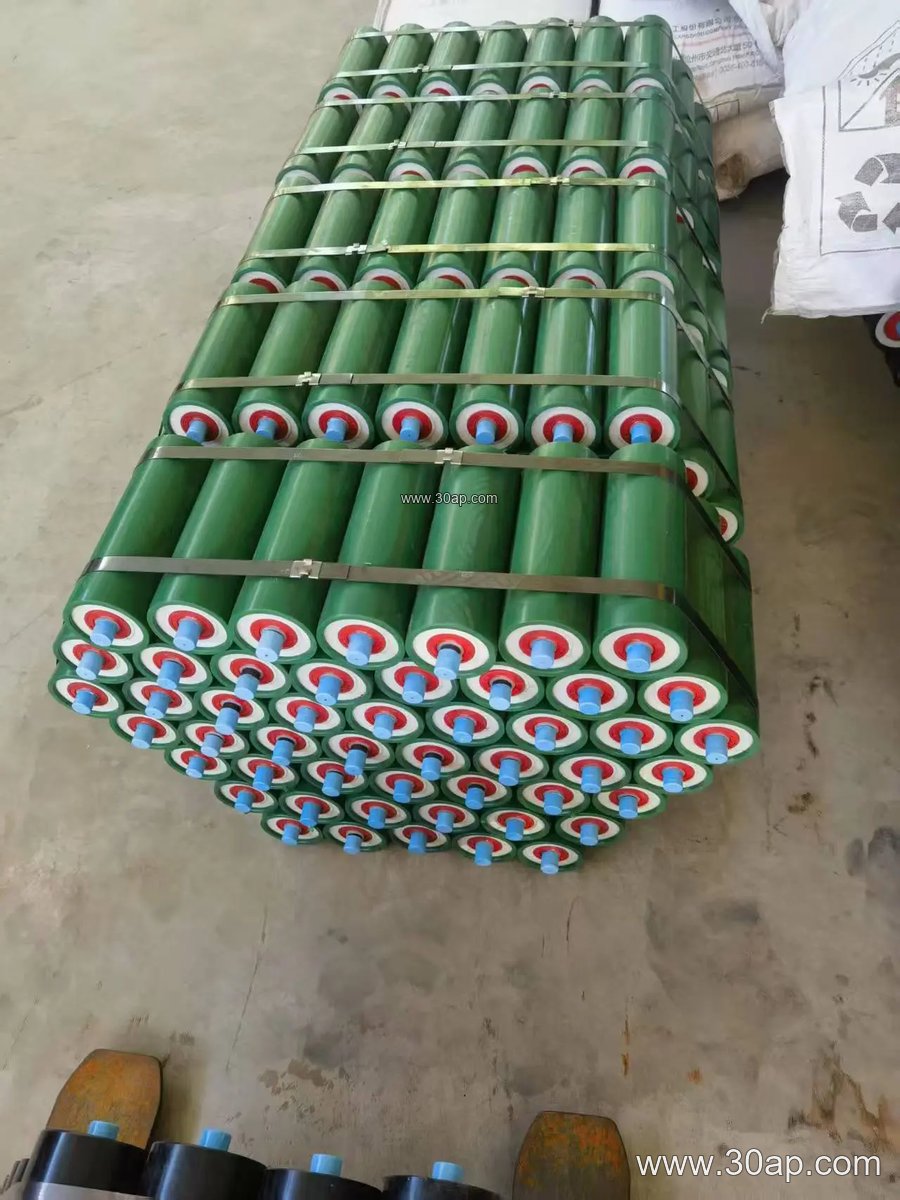
Typical roller diameters include Ø89, Ø108, Ø133, and Ø159 mm, and the frame is matched to the belt width rather than chosen in isolation. Common belt widths run from B500 and B650 up to B1400 and B1600, with larger widths such as B1800 and B2000 available for heavy-duty mining conveyors. Roller length is set by belt width, trough angle, and idler arrangement, so a B800 frame and a B1200 frame will not share the same roller dimensions.
| Parameter | Common Reference Range |
|---|---|
| Roller diameter | Ø89, Ø108, Ø133, Ø159 mm |
| Belt width | B500 to B2000 mm |
| Bearing options | 6204, 6205, 6305, 6306, 6308 |
| Roller surface | Steel, nylon, rubber-covered |
These values are reference examples, not a fixed catalog. Final dimensions should follow the conveyor design and the actual return strand conditions.
Where the Return Side Needs Help
Return-side tracking problems often appear after a curve, at a transition zone, or just behind the tail pulley, where the belt has little tension to hold it straight. A lower self-aligning idler is useful in these spots on aggregate conveyor belts, iron ore conveyors, and cement plant clinker lines. It also helps on pipe conveyor belt systems and on troughed conveyors carrying abrasive bulk material, where a wandering belt quickly wears the edge and the idler roller itself.
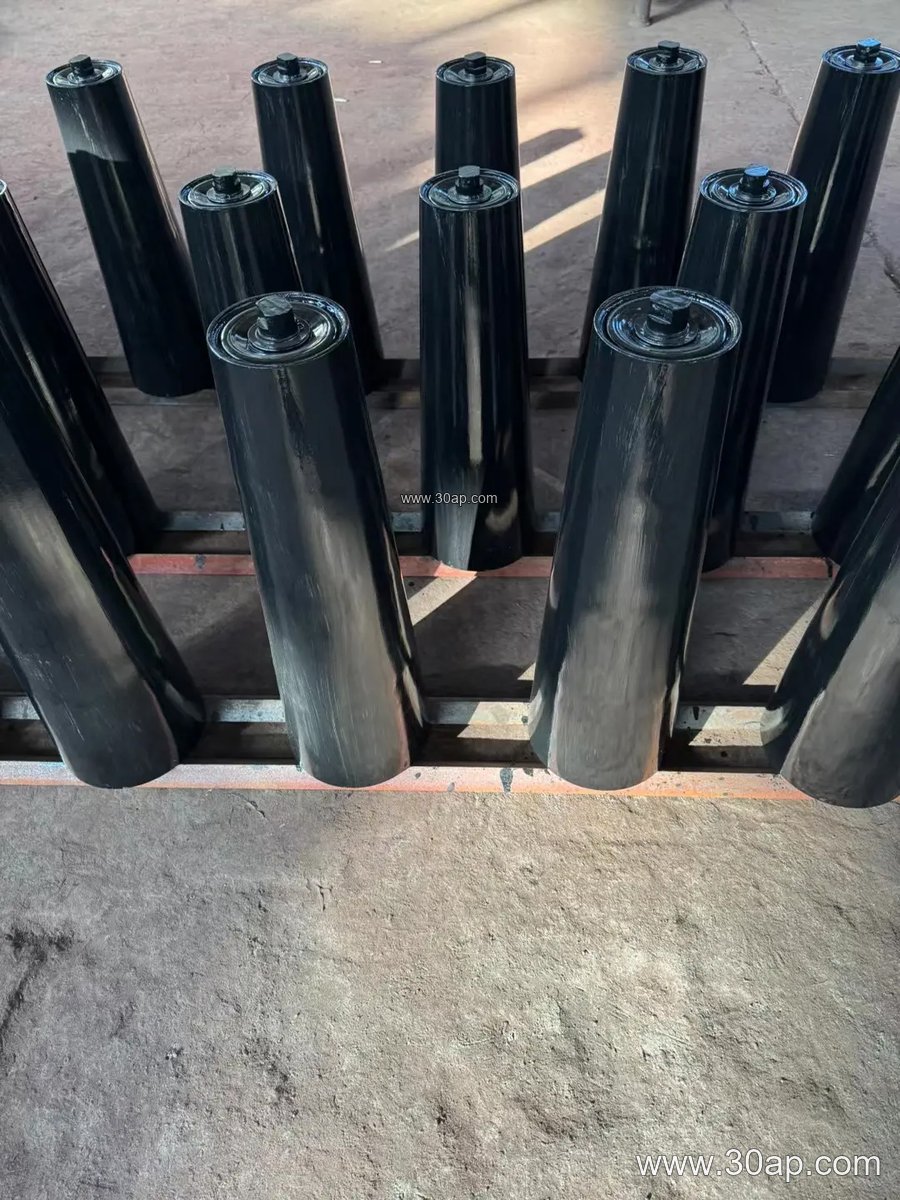
On a coal mining conveyor belt or an underground mining conveyor, flame retardant and anti-static properties are usually required for the belt, and the idler components should suit the same environment. The return idler does not replace a bend pulley or a tail pulley; those components handle direction changes and tension, while the self-aligning idler handles tracking. Drive pulleys, tail pulleys, and bend pulleys are separate parts with separate jobs and should never be treated as interchangeable.
Selection and Maintenance Notes
Buyers should confirm the belt width, the return strand height, the mounting bracket spacing, and the expected loading before choosing a frame. A heavy-duty mining conveyor belt with a thick cover may need a larger roller diameter and stronger bearings than a light aggregate line. In dusty or wet service, sealed bearings and a rubber-covered roller surface often extend service life. Alignment should be checked after installation, because even a well-built self-aligning idler cannot compensate for a badly squared frame or a misaligned conveyor pulley.
Inspection is straightforward: watch the belt path, listen for bearing noise, and check that the frame pivots freely. A stuck pivot turns a self-aligning idler into a plain return roller, and the belt will drift again. Replacing worn rollers early protects the conveyor belt and reduces downtime in stone crushing plants, ports, and steel plant material handling lines.