What a Conveyor Idler Bracket Does on a Belt System
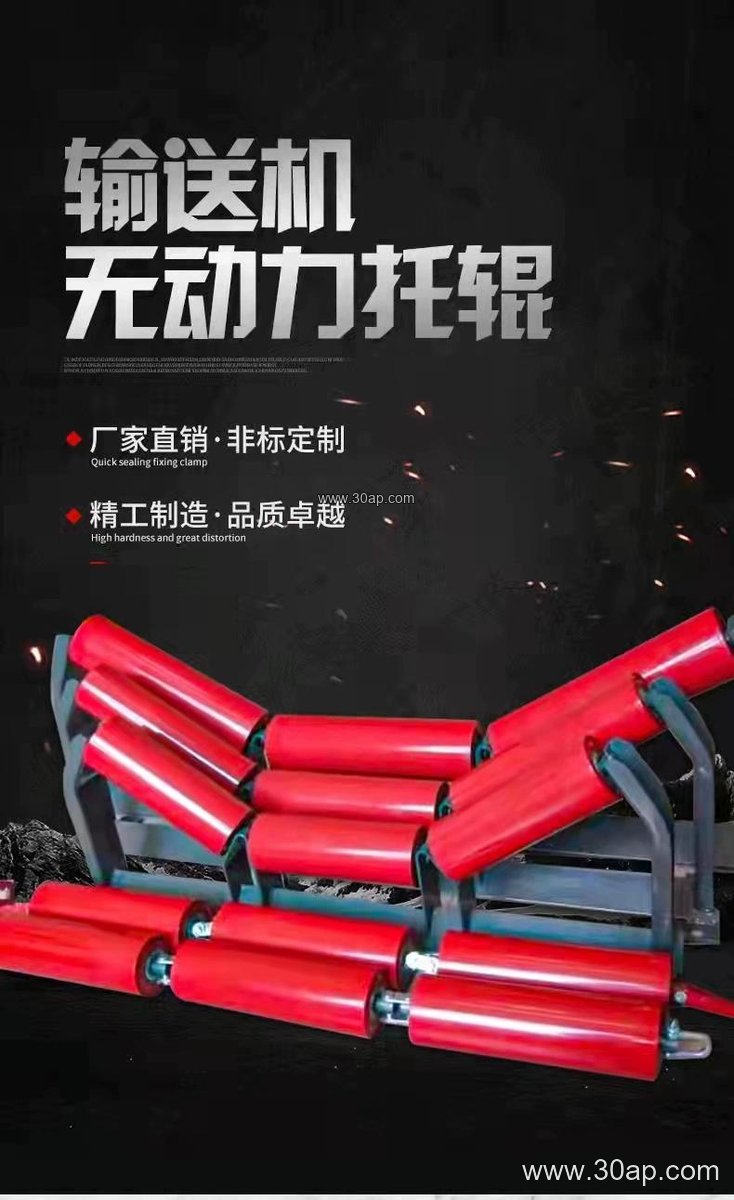
A conveyor idler bracket is the structural component that holds the idler roller in position along the carrying and return sides of a conveyor. It connects the roller shaft to the conveyor frame, sets the trough angle of the belt, and keeps spacing consistent so the conveyor belt runs smoothly under load. In practice, the bracket is a simple steel part, but its geometry directly affects belt tracking, roller life, and the amount of spillage at transfer points.
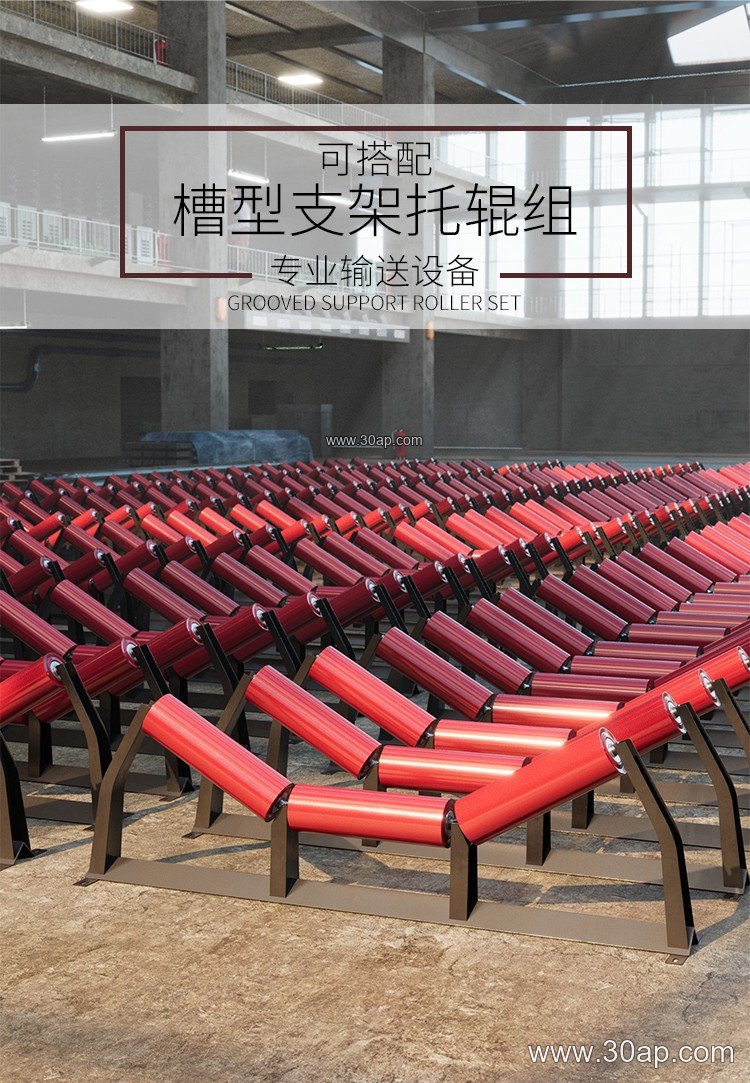
Plants that handle bulk material, from a quarry line to a cement plant or a power plant coal yard, rely on these brackets to keep hundreds of rollers aligned. A small misalignment at one station can wear the belt edge and shorten roller life, so the bracket is never a minor accessory.
Construction and Common Materials
Most brackets are fabricated from angle steel, channel steel, or folded steel plate. The frame is drilled or slotted to accept the roller shaft, and the mounting holes are positioned to match the conveyor frame width. Because hole spacing and crossbeam length change with belt width and trough angle, these dimensions are usually confirmed against the actual frame drawing rather than treated as universal values.
- Angle steel brackets: economical, common on lighter duty frames
- Channel steel brackets: stiffer, used where impact and load are higher
- Folded plate brackets: clean profile, often used on modular frames
Surface treatment matters in wet or dusty conditions. Galvanized or painted finishes are typical, and stainless options appear in food or chemical handling where washdown is routine.
Main Types and Where They Sit
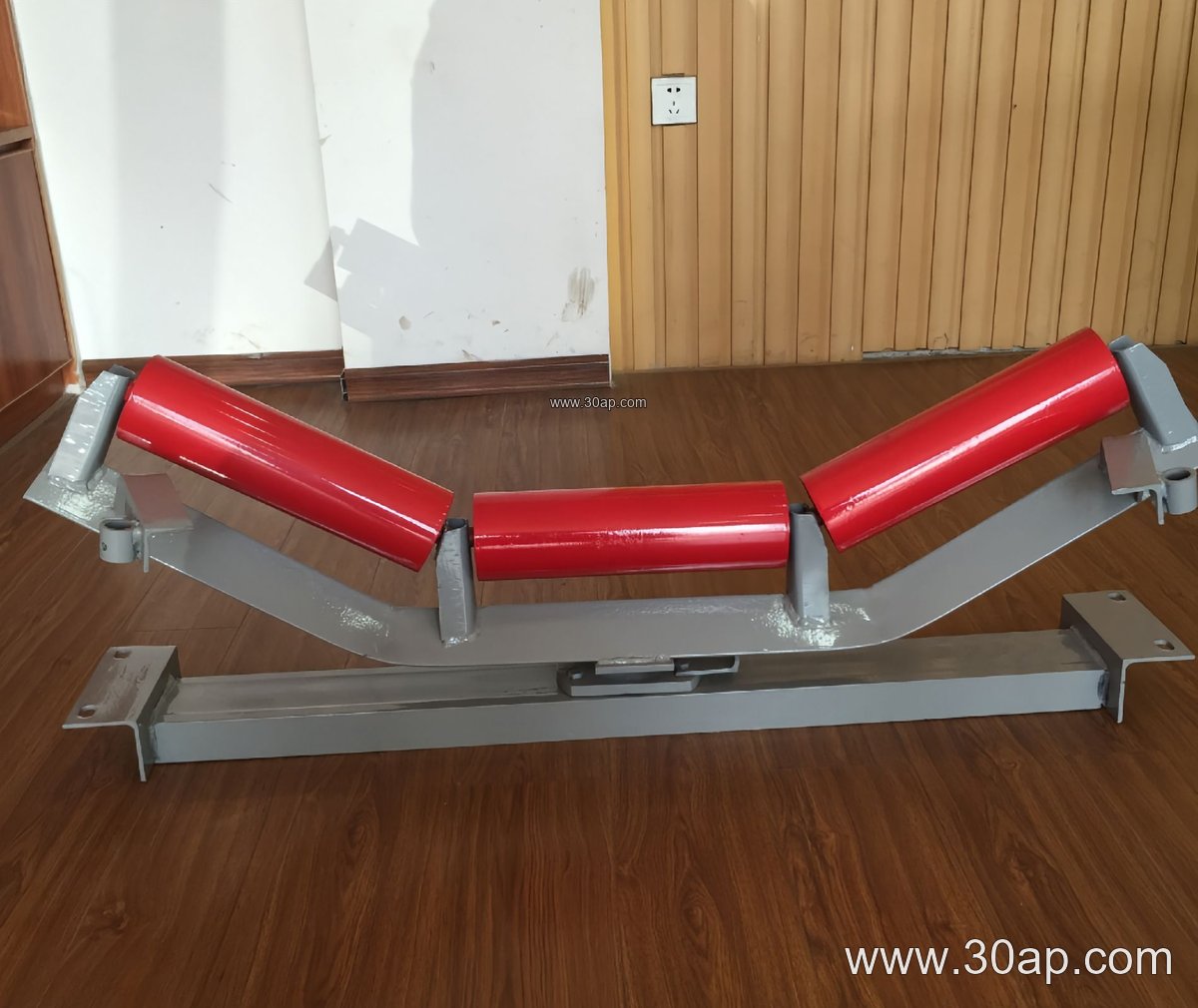
The troughing bracket, also called the carrying bracket, supports the upper run and sets the trough shape. The return bracket supports the lower run, and the V-shaped return bracket helps center the belt on the return side. Impact brackets sit under loading points to absorb shock, while self-aligning brackets correct minor belt drift. Transition brackets ease the belt from flat to troughed profile near pulleys.
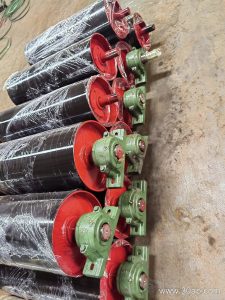
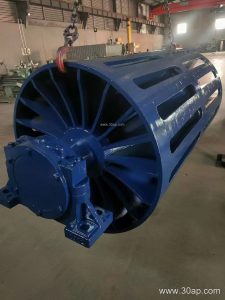
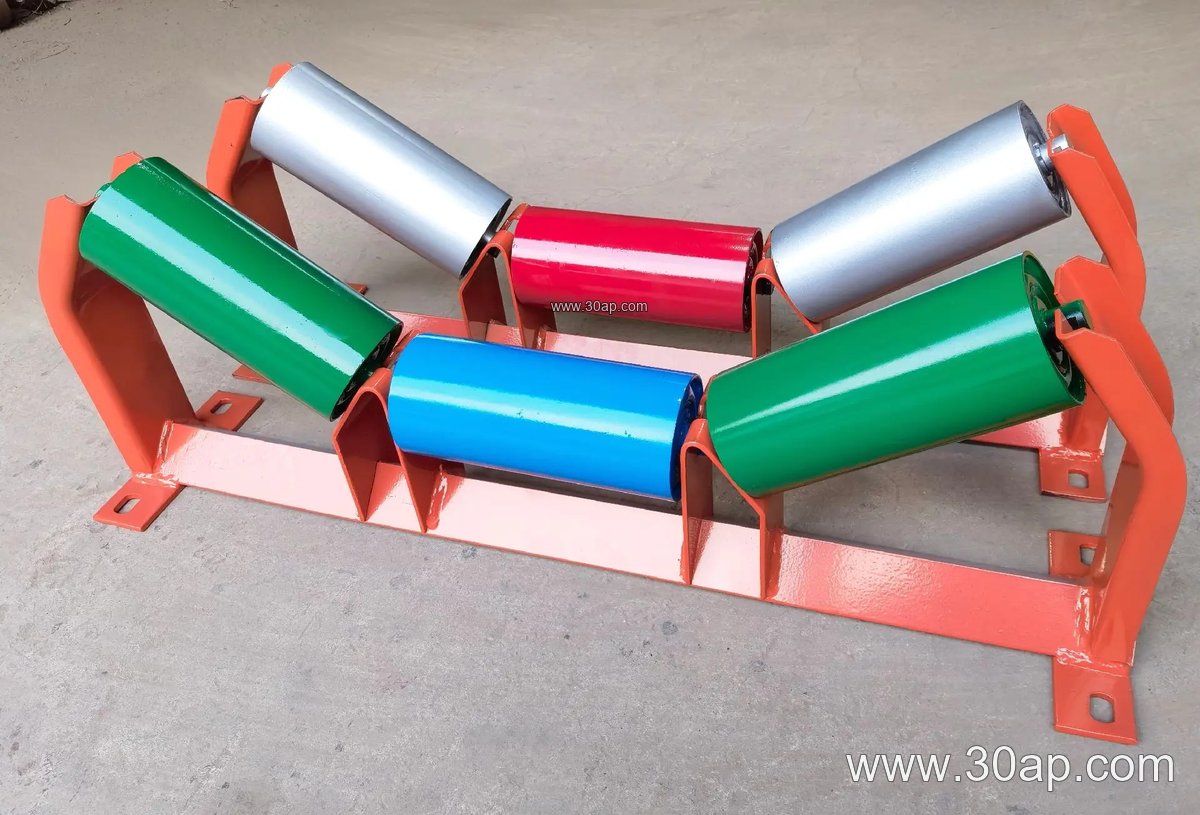
Adjustable brackets allow the trough angle to be changed on site, usually between 20, 30, 35, and 45 degrees. Fixed brackets are welded or bolted at one angle. Forward-leaning brackets, commonly around 1.5 to 2 degrees, are used to encourage self-centering. None of these should be confused with drive, tail, or bend pulleys, which are separate components with different functions.
Matching Brackets to Belt Width and Roller Diameter
Bracket selection starts with belt width and roller diameter. Common combinations include B800 with a 35 degree trough and Ø108 rollers, B1200 with 45 degrees and Ø133, or B650 with 30 degrees and Ø89. These are examples, not fixed rules. A wider belt does not automatically require one specific angle, and shaft diameter should be confirmed from the roller drawing and load calculation.
| Belt width | Typical trough angle | Common roller diameter |
|---|---|---|
| B500 / B650 | 20 to 30 degrees | Ø89 |
| B800 / B1000 | 30 to 35 degrees | Ø108 |
| B1200 / B1400 | 35 to 45 degrees | Ø133 |
| B1600 / B1800 | 35 to 45 degrees | Ø159 |
| B2000 and above | 35 to 45 degrees | Ø194 |
Heavy-duty mining conveyor belt systems often use larger rollers and stiffer brackets, while a small sand making plant conveyor belt line may use lighter angle steel frames. The bracket should match the duty, not just the width.
Where These Brackets Are Used
You will find them in stone crushing plants, aggregate yards, and cement plants, where dust and continuous operation demand sturdy frames. In coal mining and underground mining conveyor belt systems, flame retardant conveyor belt and PVG conveyor belt runs depend on well-aligned brackets to reduce friction and heat. Port terminals handling iron ore conveyor belt or copper ore conveyor belt loads use heavy brackets under high-tonnage transfer points. Power plant coal handling and steel plant sinter lines also use them extensively.
For abrasive cargo, an abrasion resistant conveyor belt paired with correctly set brackets reduces edge wear. For hot material, a heat resistant conveyor belt needs brackets that keep the roller square to the frame so the belt does not rub. Similar logic applies with an oil resistant conveyor belt or a cold resistant conveyor belt in harsh climates.
Buyer Checklist
- Confirm belt width, trough angle, and roller shaft size from the frame drawing
- Check bracket material and finish against the site environment
- Decide between fixed and adjustable brackets based on tracking needs
- Verify mounting hole spacing and crossbeam length rather than assuming a standard
- Match bracket duty to the conveyor belt type and load, not to a single rule of thumb
For related equipment such as idler roller assemblies, conveyor pulley units, and conveyor bracket frames, buyers should request drawings and confirm interchangeability before ordering. For more information on conveyor components, visit beltconveyorpro.com.