What a Self-Cleaning Idler Does
A self-cleaning idler is a carrying or return roller designed so that material which would normally cling to the shell is thrown off or scraped away as the roller turns. On belts moving wet sand, clay, coal dust, or fine ore, ordinary idlers can build up a crust of sticky fines. That crust changes the roller diameter, causes belt tracking problems, and eventually damages the conveyor belt. The self-cleaning idler roller addresses this by combining a rotating shell with a cleaning action, usually a spiral profile, rubber discs, or a segmented surface.
The name is sometimes shortened to self-cleaning roller or self-cleaning return idler. These are accurate equivalents for the same product family. A drive pulley, tail pulley, or bend pulley is a different component and is not a substitute for a self-cleaning idler; those pulleys transmit power or change belt direction, while the idler supports the belt and sheds debris.
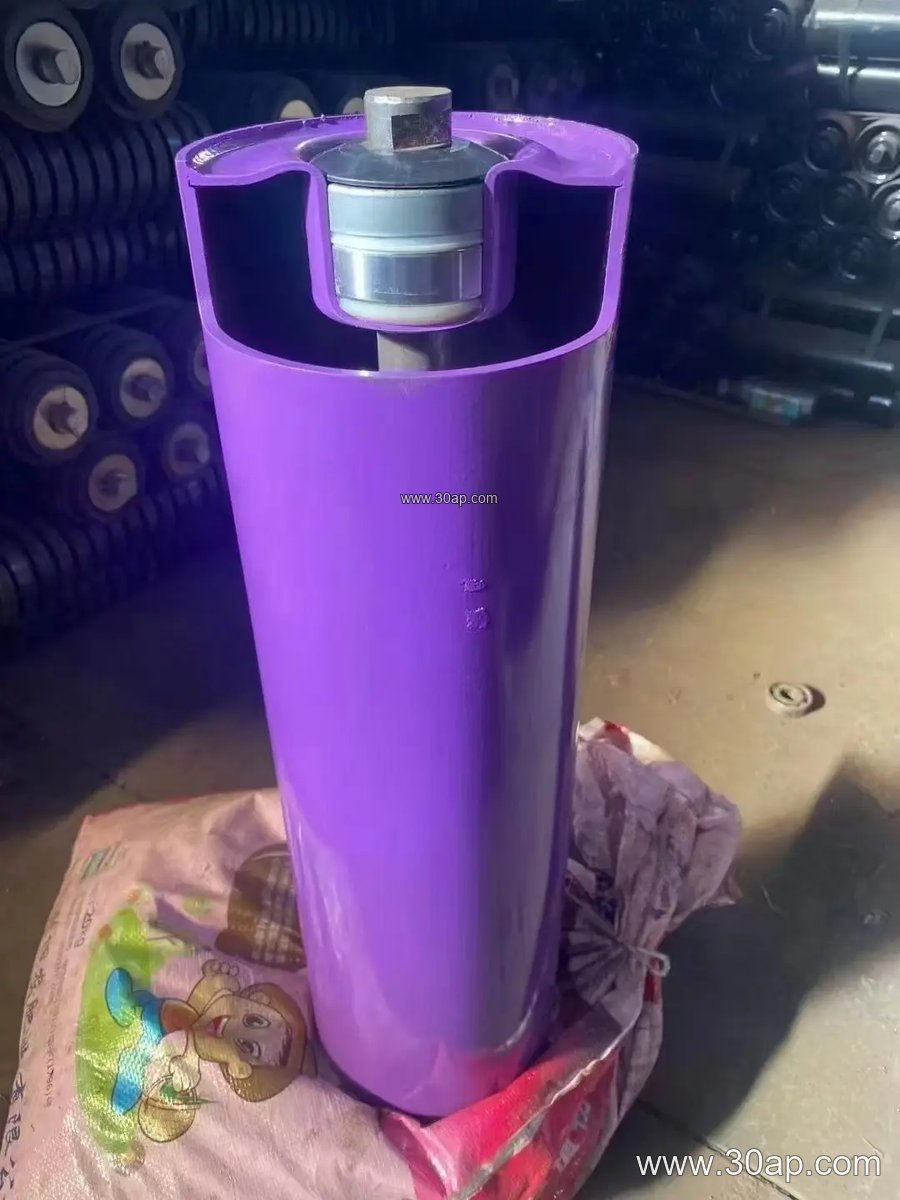
How the Roller Is Built
Most designs start with a steel tube shell, fitted with bearing housings at each end. The bearings are commonly 6204, 6205, 6305, 6306, 6308, or 6310 depending on load and shaft size, and the seal arrangement matters as much as the bearing itself. Dust and water ingress is the main cause of idler failure in a quarry or a wash plant, so a labyrinth seal or a multi-stage lip seal is typical on better units.
The cleaning feature varies by subtype:
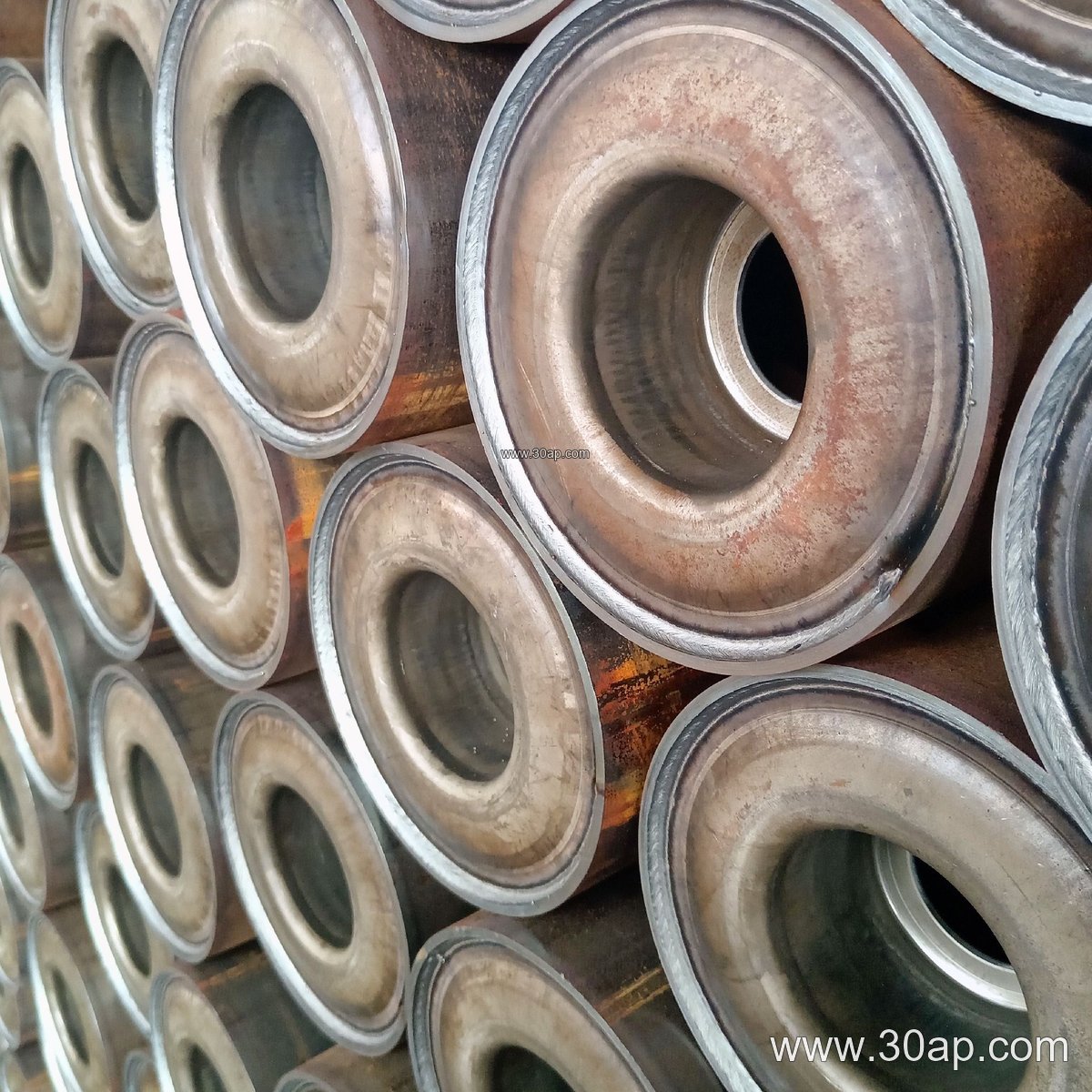
- Spiral idlers carry a helical flight welded to the shell, which pushes fines toward the belt edge and breaks up crust.
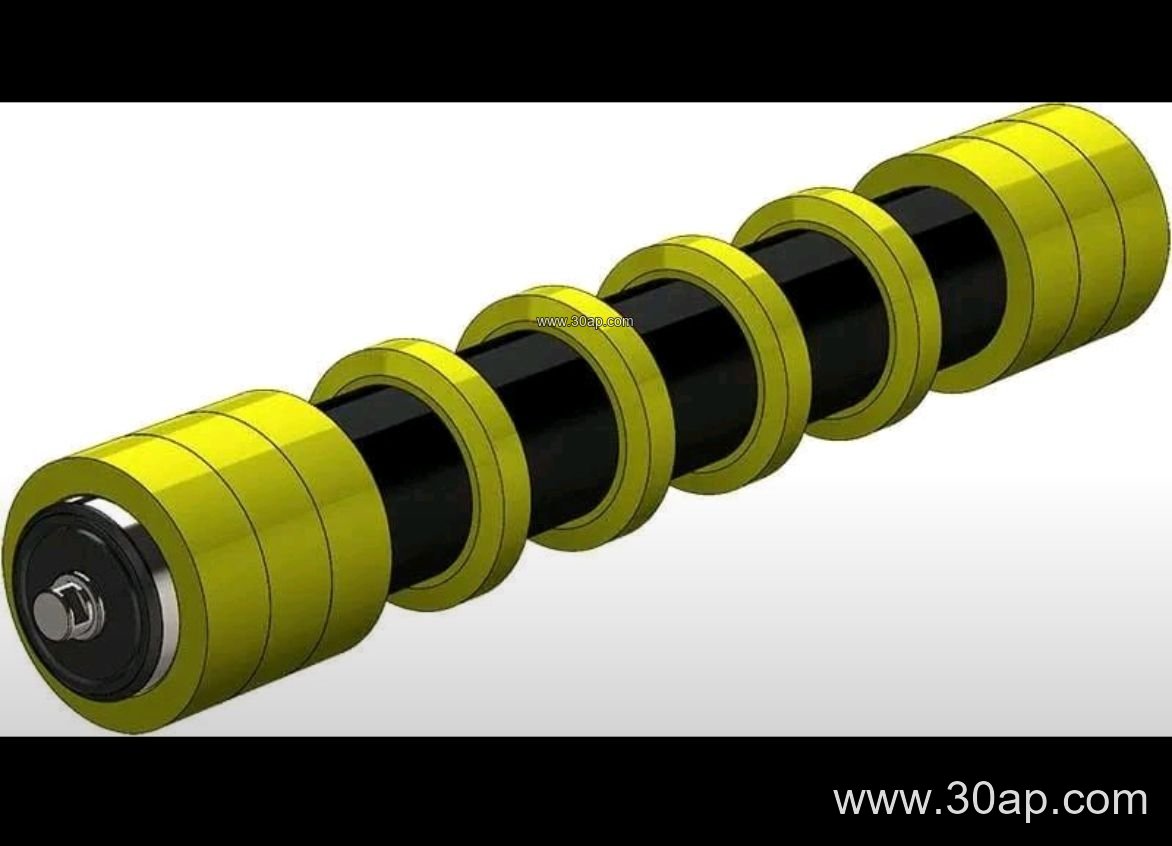
- Rubber-disc idlers use a series of rubber rings spaced along the shaft; the gaps flex and release material as the roller rotates.
- Comb or finger types use segmented discs that scrape against each other, which suits very sticky bulk material.
Shell materials include plain steel, nylon, ceramic-coated, and rubber-covered versions. Ceramic and rubber surfaces are common where abrasive fines would polish a steel shell too quickly.
Where It Fits on the Conveyor
Self-cleaning idlers are usually placed on the return strand, where loose material dropped from the belt is most likely to stick. They can also be used as carrying idlers immediately after a discharge point or a transfer chute, where fines fall onto the belt. In a coal handling plant or a cement mill, a self-cleaning return idler roller often sits just behind the bend pulley at the tail, catching the spillage that the belt carries back.
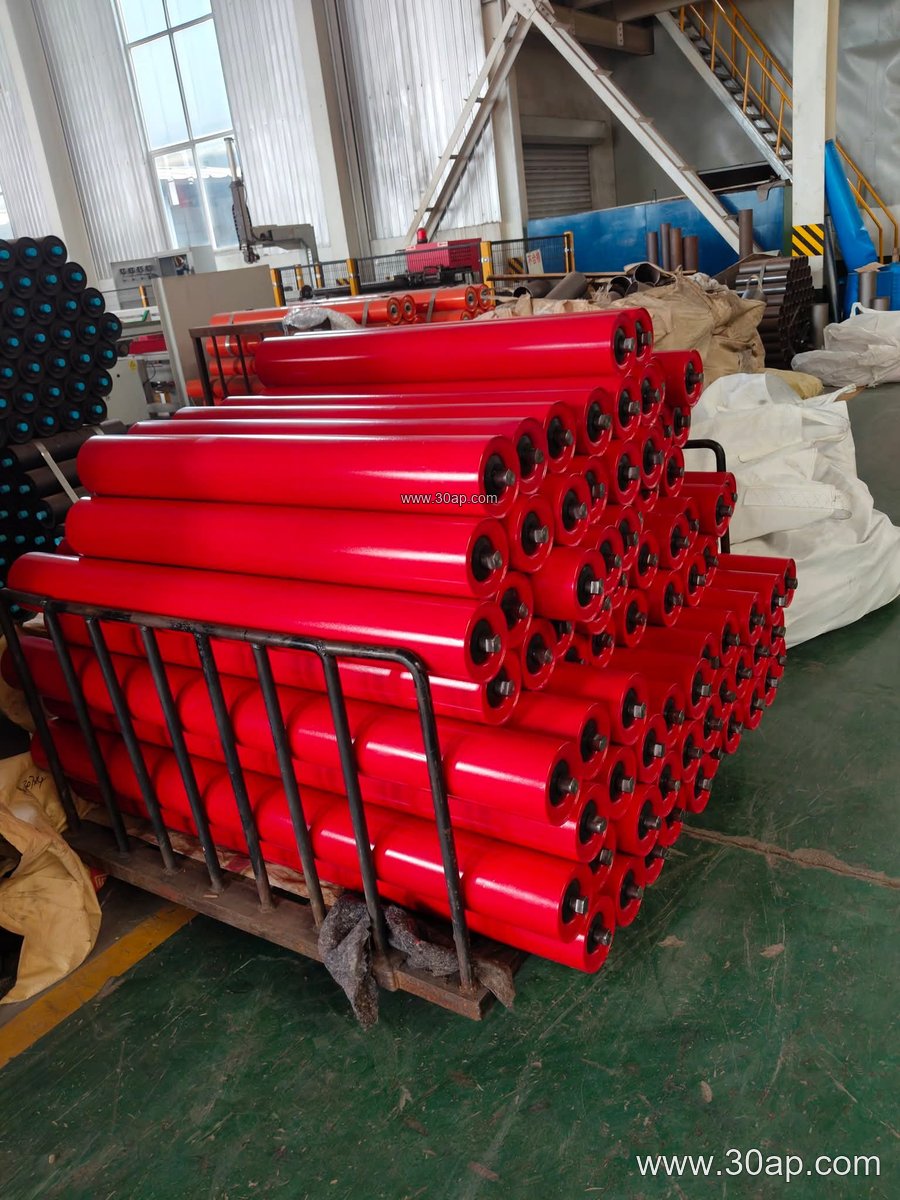
They are not a replacement for a proper belt cleaner. A primary scraper removes most of the carryback, and the self-cleaning idler handles what remains. In a sand and gravel line, the combination of a skirted conveyor belt at the load point and self-cleaning return rollers reduces housekeeping noticeably.
Matching the Idler to Belt and Structure
Roller diameter and belt width must suit the conveyor frame. Common roller diameters include Ø63, Ø76, Ø89, Ø102, Ø108, Ø127, Ø133, Ø159, Ø178, and Ø194 mm, with larger sizes used on heavy-duty mining conveyor belts. Belt widths range widely, from B500 and B650 up to B1800 and B2000, and roller length follows the belt width and trough angle. Trough angles of 20, 30, 35, and 45 degrees are standard, and the roller length for a three-roll set changes with each.
| Belt width | Typical roller length, three-roll trough (mm) | Common trough angle |
|---|---|---|
| B650 | 250 | 30° / 35° |
| B800 | 315 | 30° / 35° |
| B1000 | 380 | 35° / 45° |
| B1200 | 465 | 35° / 45° |
| B1400 | 530 | 35° / 45° |
These figures are common examples, not fixed pairings. Side rollers and centre rollers can differ, and the frame design ultimately decides the correct length. A buyer should confirm the shaft diameter with the conveyor bracket dimensions rather than inferring it from belt width alone.
Buyer Checklist
Before ordering, confirm the belt width, trough angle, roller diameter, shaft size, and bearing type. State the material being conveyed, since a sticky clay behaves very differently from dry aggregate. Check whether the idler will run on the carrying side or the return side, and whether a rubber-covered or ceramic shell is needed for abrasion. Ask about the seal design and the expected grease or sealed-for-life configuration.
For a coal mining conveyor belt or an underground installation, flame retardant and anti-static properties of nearby components matter, and the idler should be specified with the same care. On a long overland system using a steel cord conveyor belt, roller spacing and diameter affect rolling resistance, so the self-cleaning design should not be chosen purely on price. A well-matched self-cleaning idler keeps the belt running true, reduces spillage, and extends the service life of the whole conveyor line.