What a Heavy-Duty Conveyor Bracket Does
A heavy-duty conveyor bracket is the structural component that holds idler rollers, pulleys, and related hardware in the correct position along a conveyor frame. It carries the weight of the belt, the material load, and the dynamic forces of starting, stopping, and tracking. In a quarry or a cement plant, a weak bracket shows up quickly as misalignment, roller wobble, and belt edge wear. The heavy-duty conveyor bracket is built to resist that. It is not a glamorous part, but it is one of the quiet reasons a bulk material conveyor belt line keeps running shift after shift.
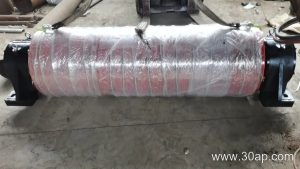
Note that a bracket is not a pulley. Drive pulleys, tail pulleys, and bend pulleys each have their own support and mounting arrangements, and they are not interchangeable with each other or with a standard idler bracket. The heavy-duty conveyor bracket discussed here is the frame-side support that positions rollers and related assemblies.
Construction and Materials
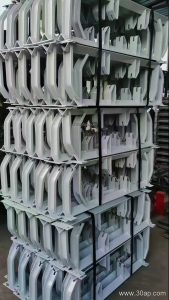
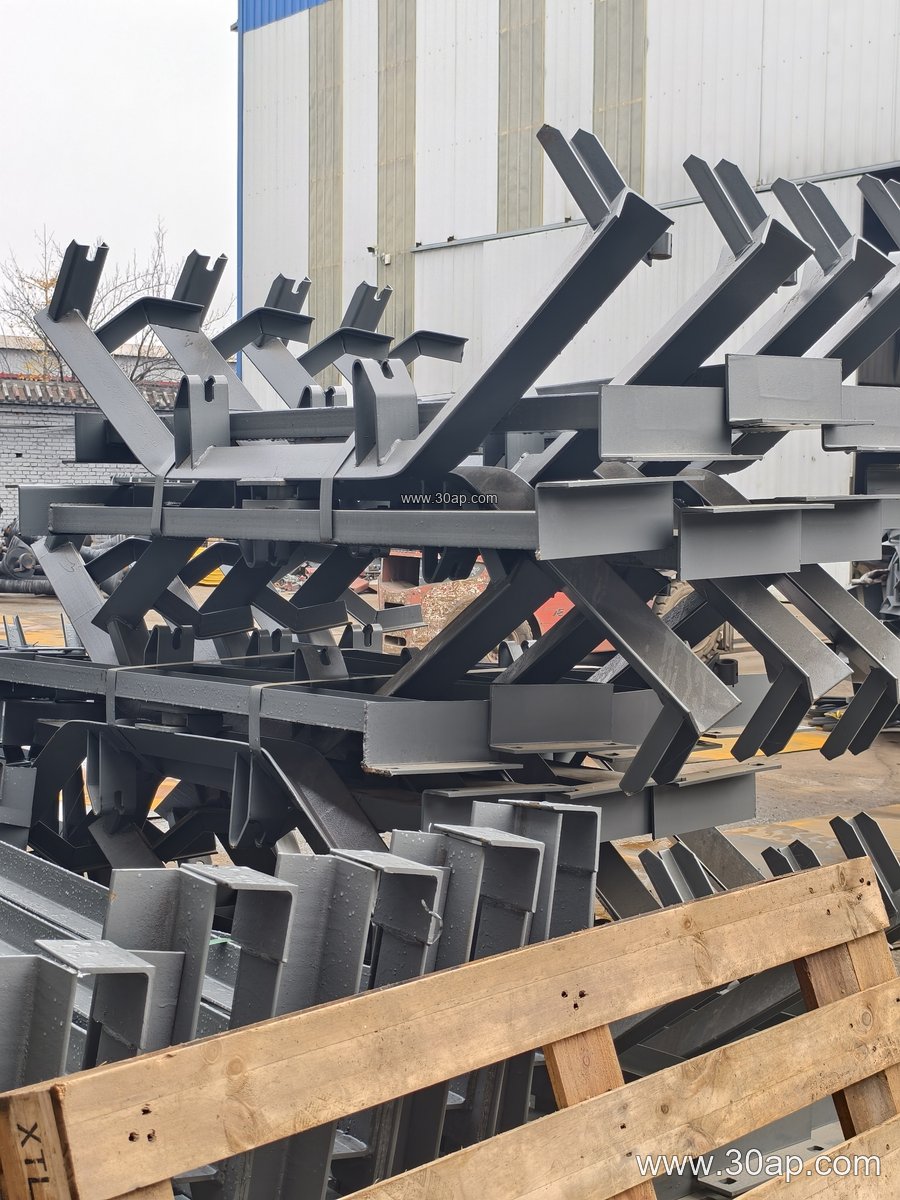
Most heavy-duty conveyor bracket designs are fabricated from angle steel, channel steel, or folded steel plate. Thicker sections and reinforced gussets are common where impact loads are expected, such as under a crusher discharge or at a transfer point. Welds are typically continuous at load-bearing joints, and mounting slots are punched or drilled to suit the frame design.
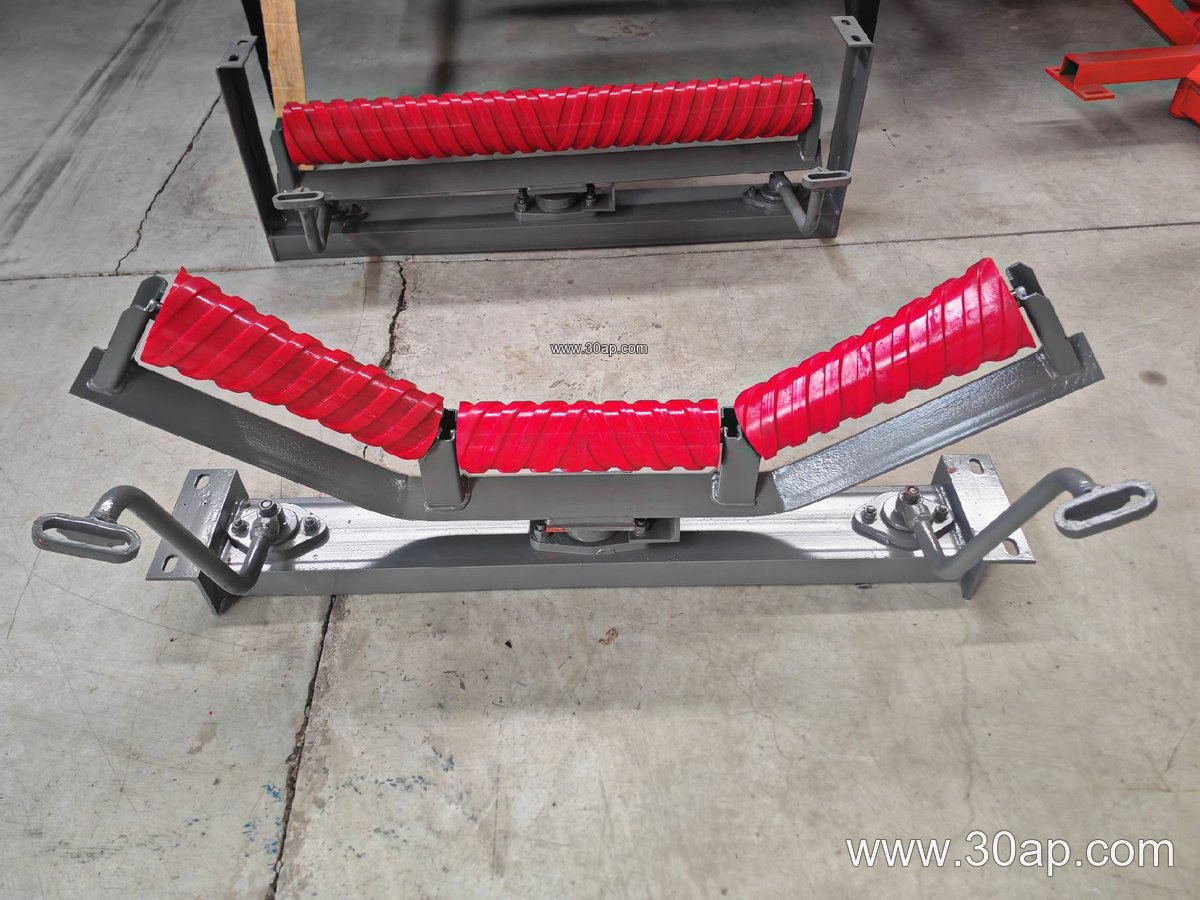
Surface treatment matters in wet or corrosive settings. A wash plant or a port terminal with salt air will shorten the life of a poorly coated bracket. Galvanizing, heavy paint systems, and stainless options are available depending on the environment. Buyers should confirm the coating with the supplier rather than assume it.
Common Types and Where They Fit
The bracket family is broad, and the right type depends on the station it serves. Troughing brackets support the carrying side and set the trough angle. Return brackets hold the belt on the return run, and V-return brackets help with belt training. Impact brackets sit under loading points, while self-aligning brackets correct minor mistracking. Transition brackets ease the belt from flat to troughed. Adjustable brackets allow the trough angle to be changed on site.
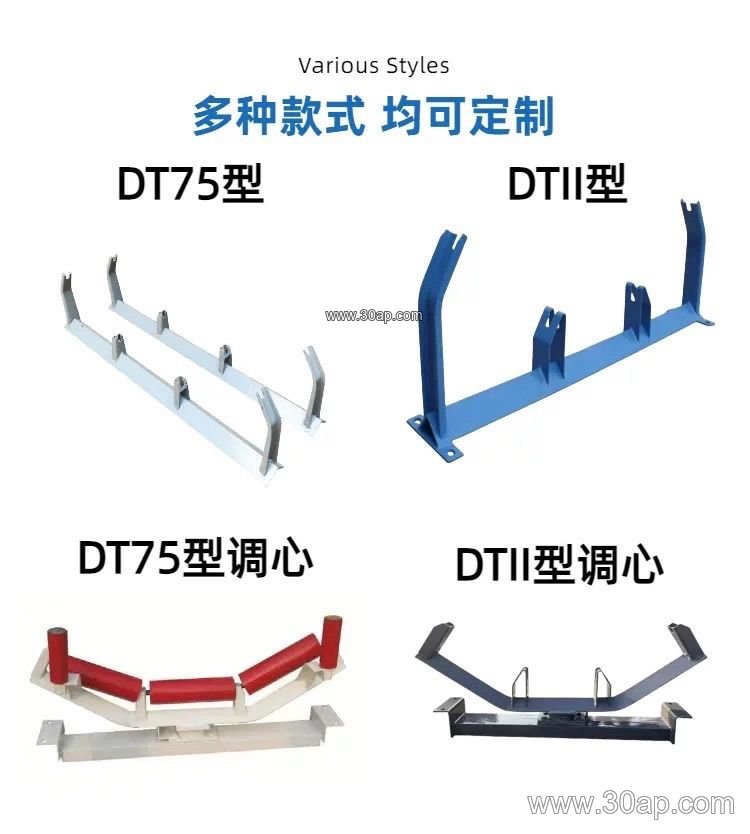
- Troughing and upper brackets for the carrying run
- Return and V-return brackets for the lower run
- Impact brackets at loading and transfer points
- Self-aligning and forward-leaning brackets for tracking
- Adjustable brackets for angle changes
- Hanging brackets for suspended frame designs
Adjustable and fixed brackets are often compared. A fixed bracket is simpler and cheaper, and it holds a set trough angle permanently. An adjustable bracket costs more but lets maintenance staff fine-tune the angle for belt loading and training. Neither is universally better; the choice depends on how much change the operation expects.
Matching Bracket, Belt Width, and Roller Diameter
Bracket selection is tied to belt width, trough angle, and roller diameter, but not in a rigid one-to-one way. A B800 belt might run at 30 or 35 degrees with Ø108 or Ø133 rollers depending on the design. A B1200 line in a coal mining conveyor belt application often uses 35 or 45 degrees with larger rollers. The table below shows typical reference combinations, not mandatory matches.
| Belt Width | Common Trough Angle | Typical Roller Diameter |
|---|---|---|
| B500 | 20–30 degrees | Ø89 |
| B650 | 30 degrees | Ø89–Ø108 |
| B800 | 30–35 degrees | Ø108 |
| B1000 | 35 degrees | Ø108–Ø133 |
| B1200 | 35–45 degrees | Ø133 |
| B1400 | 35–45 degrees | Ø133–Ø159 |
| B1600 | 35–45 degrees | Ø159 |
| B1800–B2000 | 35–45 degrees | Ø159–Ø194 |
Mounting hole spacing and crossbeam length change with belt width and trough angle, so these should be confirmed against the frame drawing. Forward-leaning brackets commonly use about 1.5 to 2 degrees of lead to assist tracking.
Industries and Operating Conditions
Heavy-duty conveyor brackets appear in limestone mines, iron ore operations, coal washing plants, power station coal yards, and aggregate crushing lines. In a sinter plant or a steel mill, heat and dust put extra demand on the bracket and on the belt itself, which may be a heat resistant conveyor belt or a flame retardant conveyor belt. In a fertilizer or grain silo facility, corrosion and cleanliness may matter more than raw strength. The bracket should match the environment, not just the load.
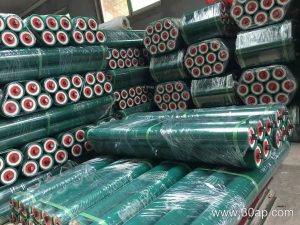
The belt and roller work with the bracket as a system. A heavy-duty mining conveyor belt running on undersized rollers will still track poorly if the brackets flex. Likewise, a rigid bracket cannot compensate for a worn idler roller. Maintenance teams should inspect brackets for cracks, loose bolts, and elongation of mounting slots during routine roller changes.
Buyer Checklist
- Confirm belt width, trough angle, and roller diameter before ordering.
- Ask for the frame drawing to verify hole spacing and beam length.
- State the environment: wet, dusty, hot, or corrosive.
- Decide between fixed and adjustable based on expected changes.
- Check coating and steel thickness for the duty level.
- Order brackets together with rollers and pulleys so fit is verified.
For more conveyor component guidance, visit our site for conveyor belt, idler roller, and conveyor pulley information. A well-chosen heavy-duty conveyor bracket is a small cost against the downtime it prevents.