What a Heavy-Duty Steel Conveyor Bracket Does
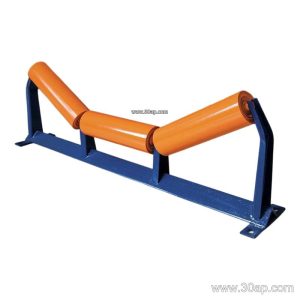
A heavy-duty steel conveyor bracket is the structural element that holds idler rollers in the correct position along a conveyor line. In a quarry or a coal washing plant, these brackets carry the weight of the belt and the material, keep the trough shape stable, and allow rollers to be replaced without cutting the belt. The bracket is often the quiet workhorse behind a smooth-running conveyor belt, and its steel construction determines how well the system handles shock loading, misalignment, and daily wear.
How the Bracket Is Built
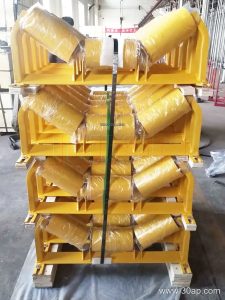
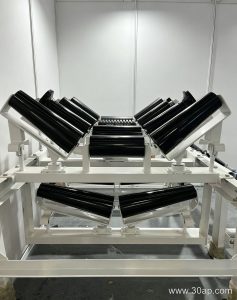
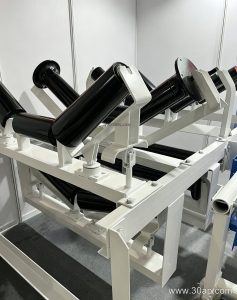
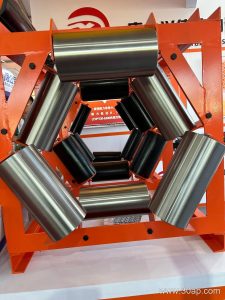
Most heavy-duty steel conveyor brackets are fabricated from angle steel, channel steel, or folded steel plate. The design uses a crossbeam that spans the conveyor frame, with mounting slots or holes for the idler roller shafts. Depending on the application, the bracket may be fixed or adjustable. Adjustable brackets let maintenance teams change the trough angle to suit the material and belt width, while fixed brackets offer a simple, rigid support for constant operating conditions.
Common surface treatments include painting or galvanizing to resist corrosion in wet or dusty environments. The steel grade and plate thickness are usually selected according to the load and the belt width, so a bracket for a B500 system is not built like one for a B2000 conveyor. Installation hole spacing and crossbeam length change with belt width and trough angle, so these dimensions are always confirmed by design rather than treated as universal values.
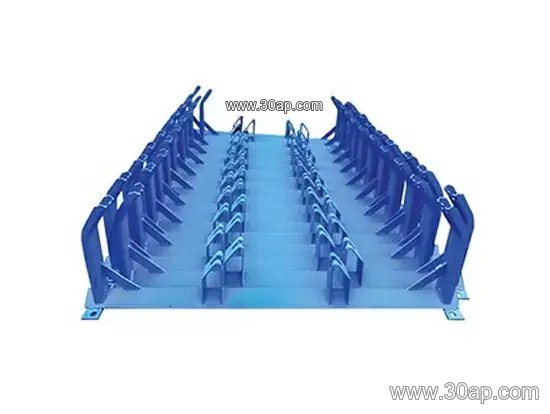
Where It Fits in the Conveyor Line
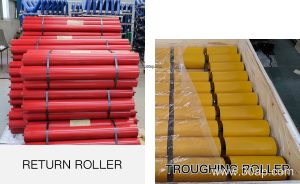
You will find these brackets under the carrying side of the belt, supporting troughing idlers, and on the return side holding flat or V-return rollers. In a sand and gravel line, a heavy-duty steel conveyor bracket keeps the belt profile steady through transfer points and stockpile conveyors. In a cement plant or power plant coal yard, the bracket must tolerate dust, vibration, and continuous operation. The same component also appears in crushing and screening circuits, where an abrasion resistant conveyor belt moves sharp rock and the bracket helps maintain alignment.
For comparison, a bend pulley changes belt direction, while a conveyor bracket supports the idlers that carry the belt. The two are not interchangeable, and each has its own mounting arrangement. Likewise, drive and tail pulleys serve different functions, so the bracket is selected for its support role, not as a substitute for any pulley.
Matching Bracket, Belt, and Roller
A bracket works as part of a system. The belt width, roller diameter, and trough angle should be considered together. Common combinations include B800 with a 35-degree trough and Ø108 rollers, or B1200 with a 45-degree trough and Ø133 rollers. Other lines may use B650 with a 30-degree trough and Ø89 rollers. These are examples, not fixed rules. A wider belt does not automatically dictate one roller diameter, and a given belt width can be paired with different trough angles depending on the material and conveyor design.
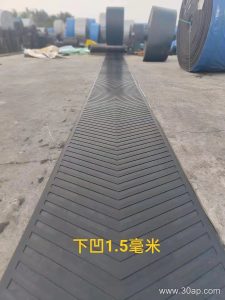
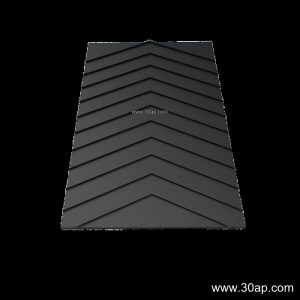
For abrasive bulk material, a high abrasion resistant conveyor belt or a heavy-duty conveyor belt may be used together with reinforced brackets and impact-resistant rollers at loading points. In underground coal mining, flame retardant conveyor belt and anti-static conveyor belt grades are often specified, and the bracket must be compatible with the frame and roller arrangement in that environment.
Selection and Maintenance Notes
Buyers should confirm the belt width, roller diameter, trough angle, and mounting dimensions before ordering. Check whether the bracket is fixed or adjustable, and whether the frame uses angle steel or channel steel. For harsh sites such as an iron ore yard or a limestone quarry, consider corrosion protection and the expected shock load. During operation, inspect brackets for loose bolts, bent crossbeams, and worn mounting slots. Replacing a damaged bracket early helps prevent belt misalignment and extends the life of the conveyor belt and idler roller set.
Related equipment such as the conveyor pulley and conveyor bracket should be reviewed as a group during maintenance planning. A well-matched heavy-duty steel conveyor bracket supports stable belt tracking and reduces downtime in demanding bulk handling operations.