What a Power Plant Conveyor Idler Does
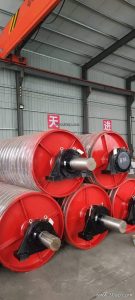
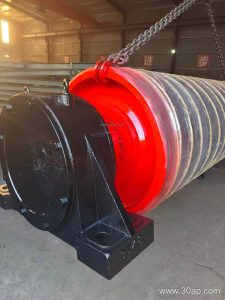
A power plant conveyor idler is the rotating support that carries the conveyor belt along the coal handling route, from the unloading area to the bunkers and then on to the mills. In a typical coal-fired station, the fuel path runs through transfer towers, crusher houses and long inclined galleries, and every metre of that path needs reliable roller support. The idler roller itself is a simple assembly, yet it determines how much friction the drive must overcome, how well the belt tracks, and how quickly worn parts can be replaced during a short maintenance window.
The same component is often called a belt conveyor idler or carrying roller. These names describe the same product, whatever the plant layout looks like.
Construction and Materials
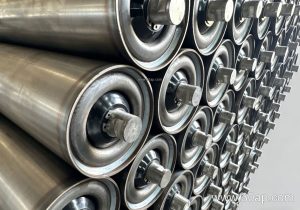
A standard idler roller is built from a steel tube shell, a shaft, bearing housings, seals and a bearing set. The shell may be plain steel, nylon-coated, ceramic-lined or fitted with rubber rings, depending on whether the position calls for abrasion resistance, belt protection or material release. Common bearing sizes include 6204, 6205, 6305, 6306, 6308 and 6310, and the correct bearing is chosen together with the shaft and load rating rather than from belt width alone.
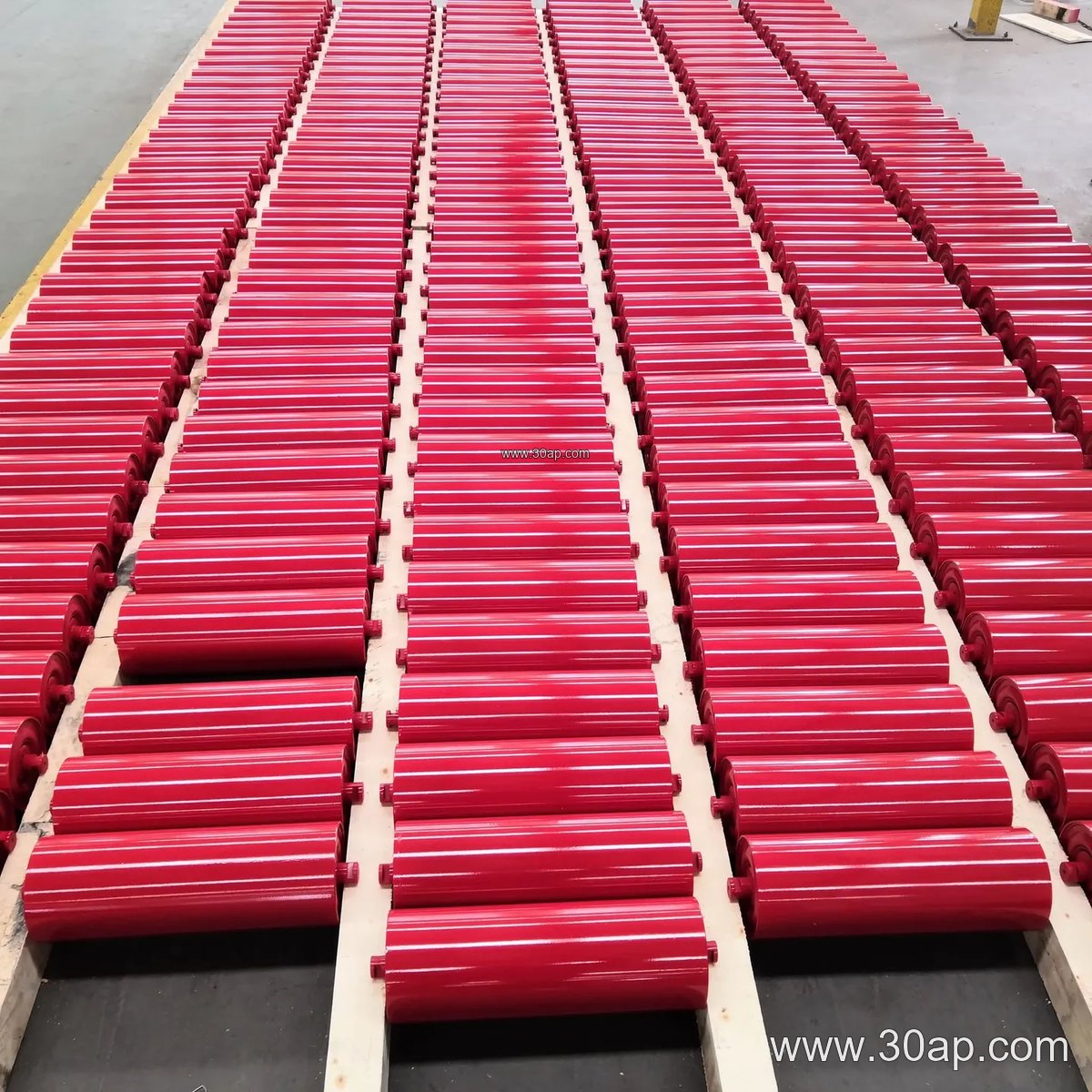
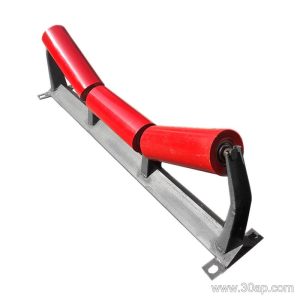
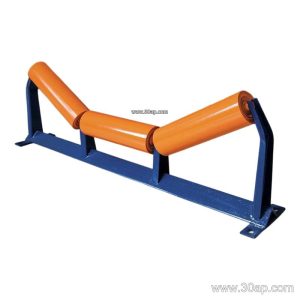
Sealing matters as much as the tube. Coal dust, ash and moisture attack bearings from the outside, so a labyrinth seal with grease retention is usual in power plant service. On the carrying side, three-roll troughing sets are the norm, while the return side may use a single flat roller or a V-shaped return set to keep the belt centred.
Where Idlers Sit in the Coal Path
Carrying idlers support the loaded belt and form the trough that keeps coal from spilling. Impact idlers with rubber rings are placed under the loading point, where lumps drop onto the belt and would otherwise damage the shell or the belt cover. Transition idlers ease the belt from the flat pulley profile into the full trough angle. Return idlers hold up the empty strand, and self-aligning idlers correct small tracking errors before they become edge damage.
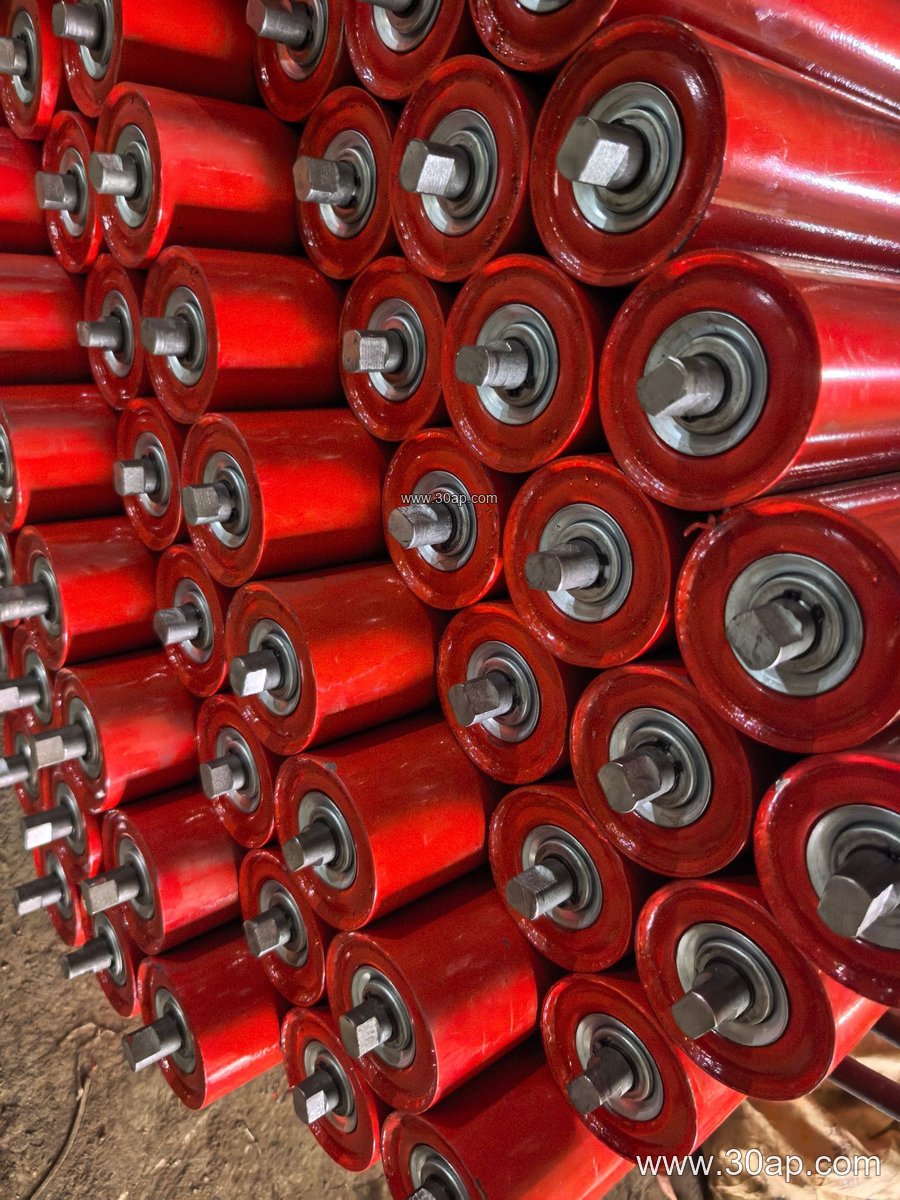
In a coal mining conveyor belt line feeding the stockyard, or in a cement plant conveyor belt moving limestone and clinker, the same logic applies: match the idler type to the duty at each station rather than treating the whole run as one specification.
Common Dimensions and Arrangements
The table below gives typical reference values. They are examples for orientation, not fixed matches, and final dimensions follow the conveyor design.
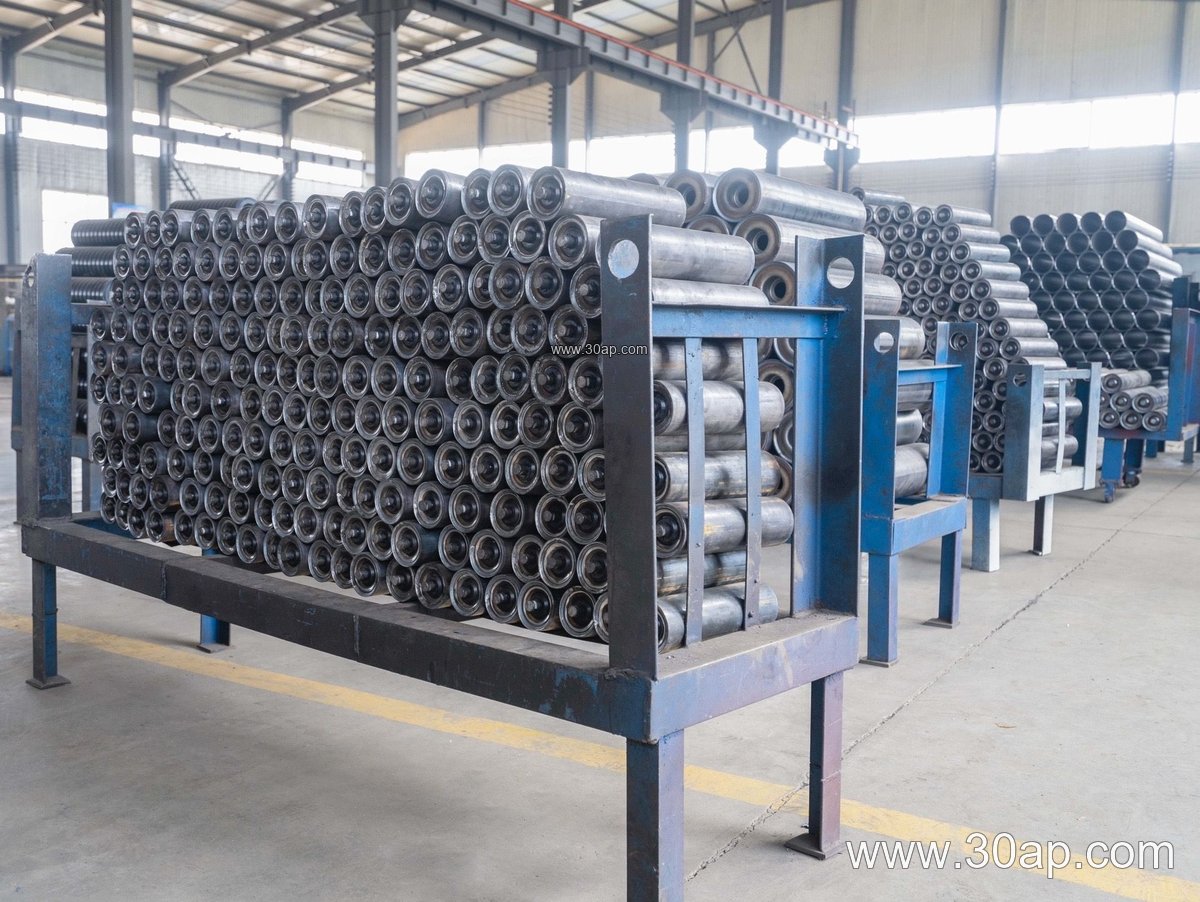
| Item | Typical reference values |
|---|---|
| Idler diameter | Ø63, Ø76, Ø89, Ø102, Ø108, Ø127, Ø133, Ø159, Ø178, Ø194, Ø219 mm |
| Belt width | B400, B500, B650, B800, B1000, B1200, B1400, B1600, B1800, B2000, B2200, B2400 |
| Trough angle | 20°, 30°, 35°, 45° |
| Troughing set | single roll, two roll, three roll |
| Roll surface | steel tube, nylon, ceramic, rubber rings |
| Example roll length, three-roll set | about 200 mm at B500, 250 mm at B650, 315 mm at B800, 380 mm at B1000, 465 mm at B1200, 530 mm at B1400, 600 mm at B1600, 670 mm at B1800, 750 mm at B2000 |
Side rolls and centre rolls can differ in length, and a wider belt does not automatically dictate one specific pulley or shaft size. Forward lean of about 1.5° to 2° is sometimes used on troughing rolls to assist tracking; this is a design choice, not a rule for every conveyor.
Matching the Belt and the Duty
Idler choice should follow the belt it supports. A heavy-duty mining conveyor belt or a steel cord conveyor belt carrying high tonnage needs larger diameter rolls and closer spacing than a light fabric core belt. A flame retardant conveyor belt used in an underground coal mining conveyor belt system calls for idlers that will not generate frictional heat if a roll seizes. Where coal is damp and sticky, rubber-ring or spiral rolls help shed material; where coal is hot after a mill or boiler-related transfer, heat resistant conveyor belt grades work with idlers rated for the same temperature range.
At transfer points, impact resistant conveyor belt covers pair well with rubber-ring impact idlers. On long overland runs, an EP conveyor belt or NN conveyor belt may be combined with troughing idlers spaced according to sag limits. In dusty port and stockyard operations, sealed idlers reduce greasing frequency.
Buyer Checklist
- Confirm the actual belt width, trough angle and roll length from the conveyor drawing, not from a catalogue shortcut.
- State the duty: carrying, impact, transition, return or self-aligning.
- Give the ambient and material temperature, dust level and any washdown practice.
- Specify the bearing size and sealing arrangement you expect, and ask for the shaft and shell thickness.
- Check that the idler frame and conveyor bracket dimensions match the existing structure before ordering spares.
- Ask how the rolls are balanced and tested for rotation, and keep a spare set for the highest-wear stations.
For power plant operators, the aim is a conveyor idler that runs quietly, keeps the belt centred and can be swapped out quickly. Review the full coal path once a year, note which stations wear fastest, and adjust the specification there first. Further reference data on belt and roller combinations can be found at www.xinrui-industry.com, where conveyor idler, conveyor belt and conveyor pulley options are grouped by duty.