What a Guide Idler Bracket Does on a Conveyor
A guide idler bracket is the structural support that holds a guide or training idler in the correct position relative to the moving conveyor belt. It keeps the idler at the right height, angle and alignment so the belt tracks centrally instead of drifting toward one side of the frame. Without a properly mounted guide idler bracket, even a well-built conveyor can develop edge wear, spillage and uneven loading. In a quarry, a cement plant or a power plant coal handling line, this small steel component quietly protects the belt and the structure around it.
The bracket is not a pulley. Drive pulleys, tail pulleys and bend pulleys transmit or redirect belt motion, while the guide idler bracket only positions an idler roller that contacts the belt surface. Keeping that distinction clear helps when ordering spare parts.
Construction and Mounting
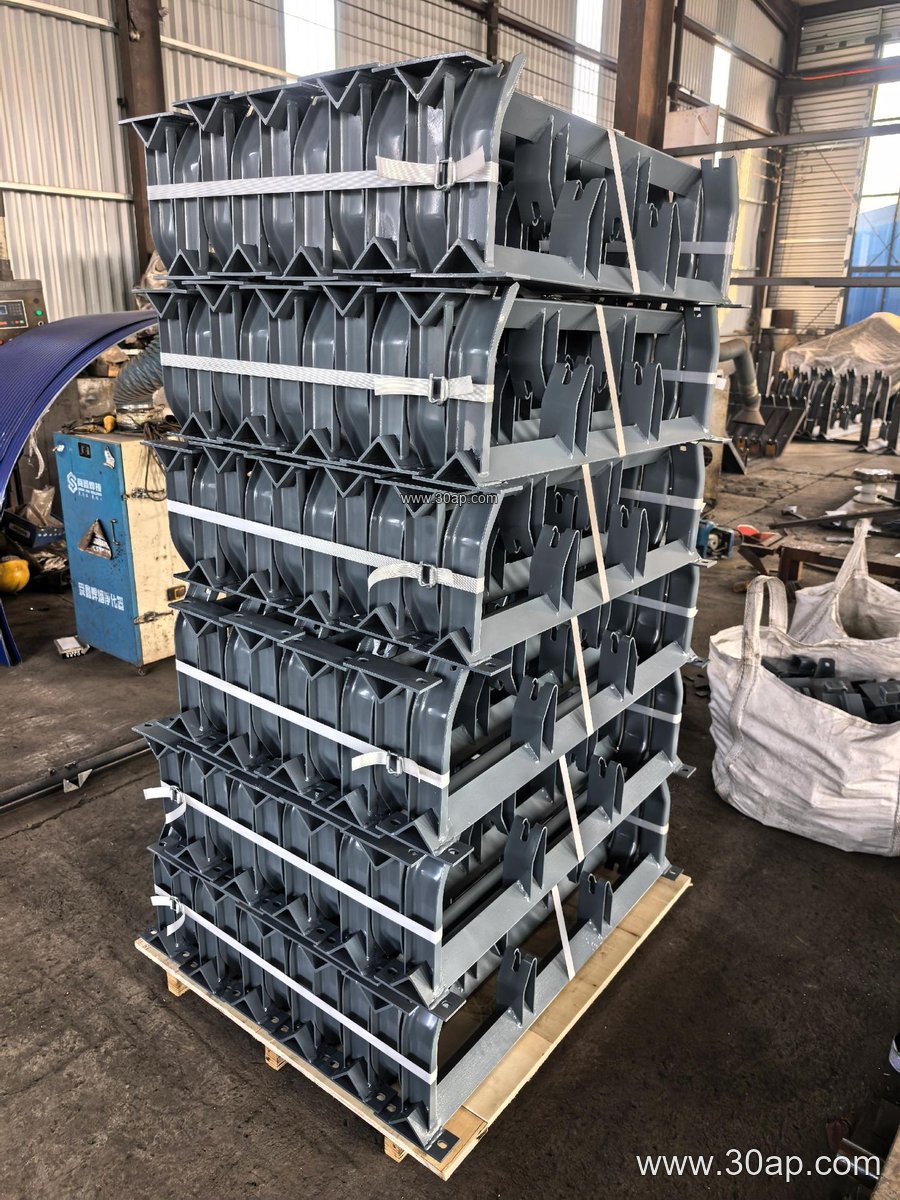
Most guide idler brackets are fabricated from angle steel, channel steel or folded steel plate, then drilled and welded to suit the conveyor frame. Typical builds include:
- A base plate that bolts to the stringer or frame side
- Slotted or multi-hole mounting positions for alignment adjustment
- An angled seat that sets the idler at the required trough angle
- Reinforcing gussets where the load is highest
The bracket usually mounts on the carrying side near loading points or on the return side where belt tracking is critical. On a long overland line, several guide idler brackets may be spaced along the frame to correct small deviations before they grow.
Common Types and How They Differ
Guide idler brackets share the family of conveyor brackets used for troughing, impact and return positions, but they serve a specific tracking role. A fixed bracket holds a set angle, while an adjustable bracket allows the operator to fine-tune the idler position after installation. Adjustable designs are useful where belt tension changes seasonally or where the frame is not perfectly level.
Trough angle is a key selection point. Common trough angles are 20, 30, 35 and 45 degrees. A bracket designed for 35 degrees should not be forced into a 45 degree application without checking the idler seat and frame geometry. Forward-tilted idlers, often set around 1.5 to 2 degrees, may need a bracket with a matching seat angle.
Matching Belt Width, Idler Diameter and Bracket
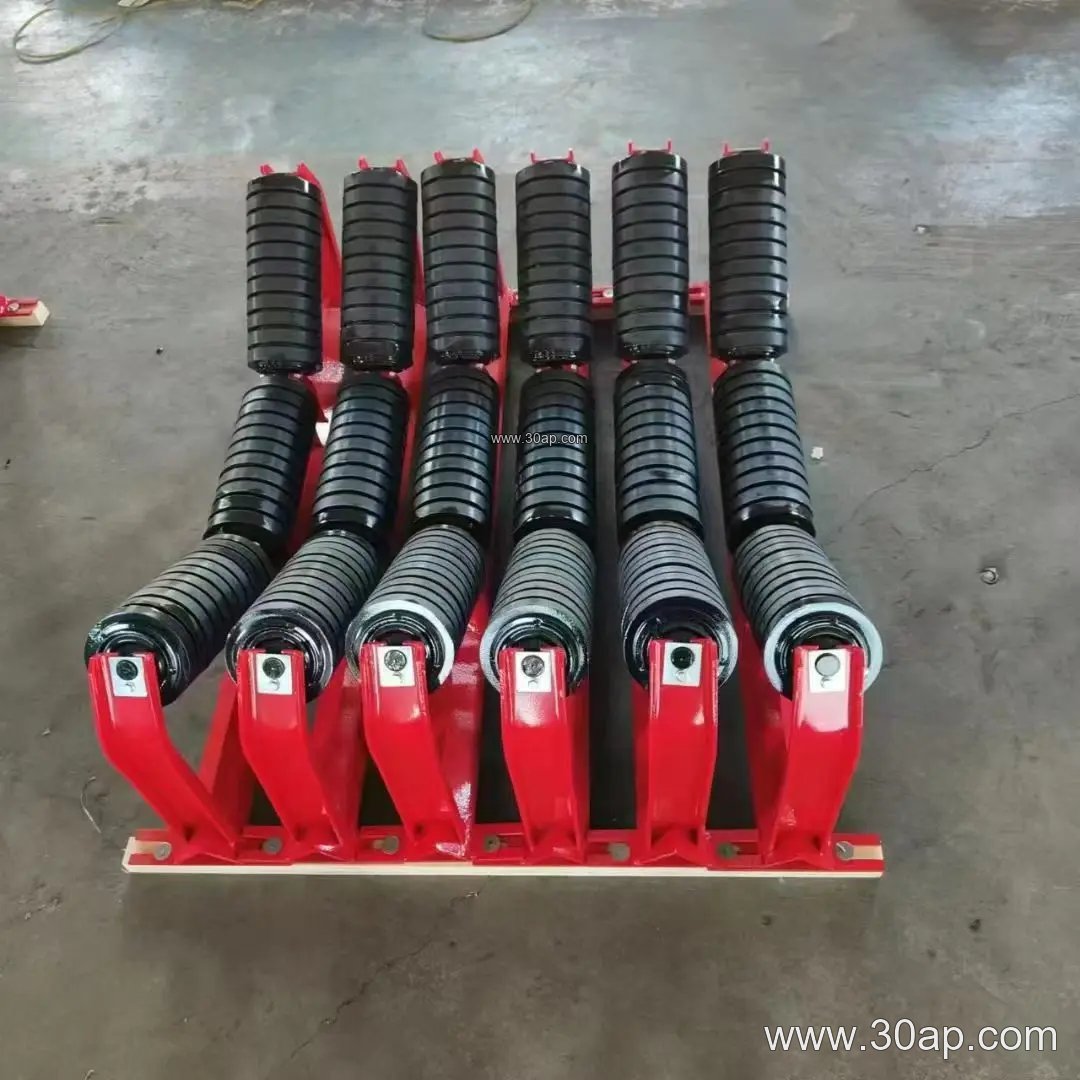
Belt width and idler diameter guide the bracket selection, but they do not form a fixed one-to-one rule. A B800 belt might run with Ø108 or Ø133 idlers depending on load and speed, and a B1200 frame could use Ø133 or Ø159. Mounting hole spacing and crossbeam length change with belt width and trough angle, so the bracket drawing should always be checked against the actual frame.
| Belt Width | Typical Idler Diameter | Typical Trough Angle |
|---|---|---|
| B500 | Ø89 | 20 to 30 degrees |
| B650 | Ø89 to Ø108 | 30 degrees |
| B800 | Ø108 to Ø133 | 35 degrees |
| B1000 | Ø108 to Ø133 | 35 to 45 degrees |
| B1200 | Ø133 to Ø159 | 35 to 45 degrees |
| B1400 | Ø133 to Ø159 | 35 to 45 degrees |
| B1600 | Ø159 to Ø194 | 35 to 45 degrees |
| B1800 | Ø159 to Ø194 | 35 to 45 degrees |
| B2000 | Ø159 to Ø194 | 35 to 45 degrees |
These values are common references, not mandatory pairings. Final sizing should follow the conveyor design and the idler manufacturer’s data.
Where It Is Used
Guide idler brackets appear wherever belt tracking matters. In a limestone quarry or aggregate crushing line, dust and uneven loading push the belt sideways, so brackets are fitted close to the crusher discharge. In a coal-fired power plant, they help keep a wide flame retardant conveyor belt centered on the coal handling frame. A cement plant may use them near the clinker cooler, while a port terminal relies on them along a long ship loading line carrying a heavy-duty EP conveyor belt or a steel cord belt.
The same bracket family also supports idlers on a rubber conveyor belt system in a sand and gravel plant, and on a heat resistant conveyor belt line in a sintering or foundry area. The bracket material and coating should match the environment, since wet washing plants and coastal ports demand better corrosion protection than a dry indoor installation.
Buyer Checklist
- Confirm belt width, idler diameter and trough angle before ordering
- Check mounting hole spacing and crossbeam length against the existing frame
- Decide between fixed and adjustable brackets based on maintenance needs
- Match the steel finish and coating to the site conditions
- Verify that the bracket seats the idler squarely, without binding
A guide idler bracket is a small item, but it directly affects belt life, spillage and downtime. Buyers who compare drawings and site conditions before purchase usually avoid the common mistake of fitting a bracket that looks similar but does not match the frame.