What a Spiral Idler Does on a Conveying Line
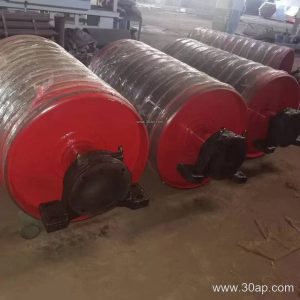
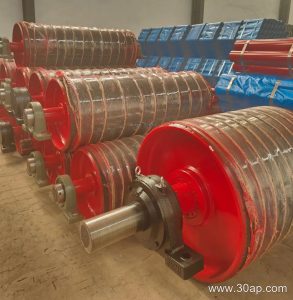
A spiral idler is a return-side roller with a helical strip or flighting wrapped around its shell. As the conveyor belt passes over it, the spiral profile contacts the belt surface and helps shed sticky material, fines, and moisture that would otherwise build up on a plain roller. It is often called a spiral return roller, and that equivalent name refers to the same component. It is not a drive pulley, a tail pulley, or a bend pulley, and it should not be confused with those parts when specifying a conveyor.
In dusty operations such as a cement plant, a lime kiln feed line, or a coal handling system at a power plant, carry-side spillage often ends up on the return strand. A spiral roller gives that material somewhere to go instead of packing into a smooth shell. The result is a return run that stays rounder and tracks better.
How the Roller Is Built
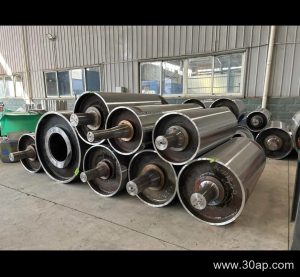
The body usually starts as a steel tube, with a continuous spiral welded or formed around it. Ends are fitted with bearing housings, and the shaft runs through sealed bearings. Common bearing sizes include 6204, 6205, 6305, 6306, 6308, and 6310, matched to the load and shaft design rather than to one fixed roller diameter. Shaft ends can be machined for standard conveyor brackets or for drop-in frames.
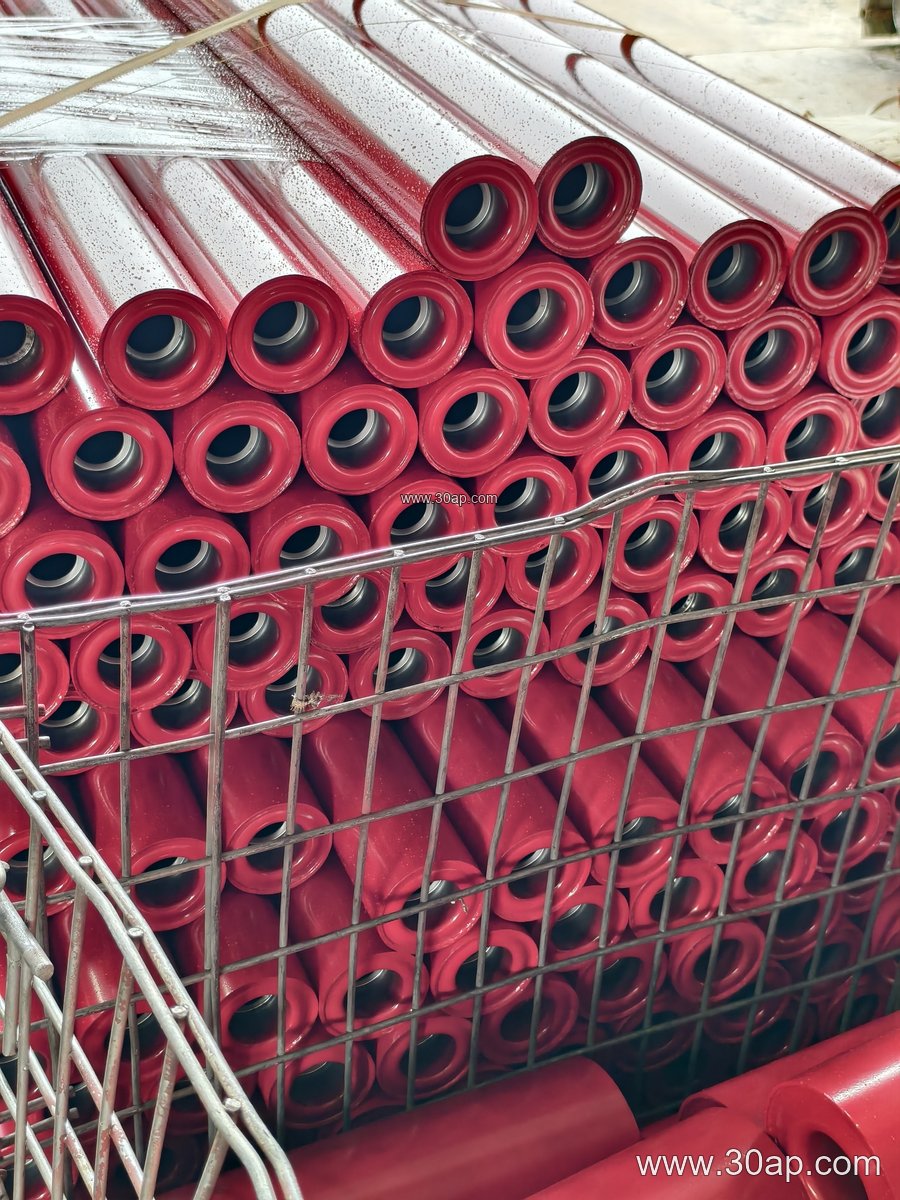
Shell options vary. A plain steel spiral is the most common; rubber-covered or nylon-covered versions reduce wear where the belt is abrasive. The spiral pitch and strip height are chosen so the belt is supported without excessive point loading. Sealing matters as much as the spiral itself, because grit that reaches the bearing shortens service life quickly.
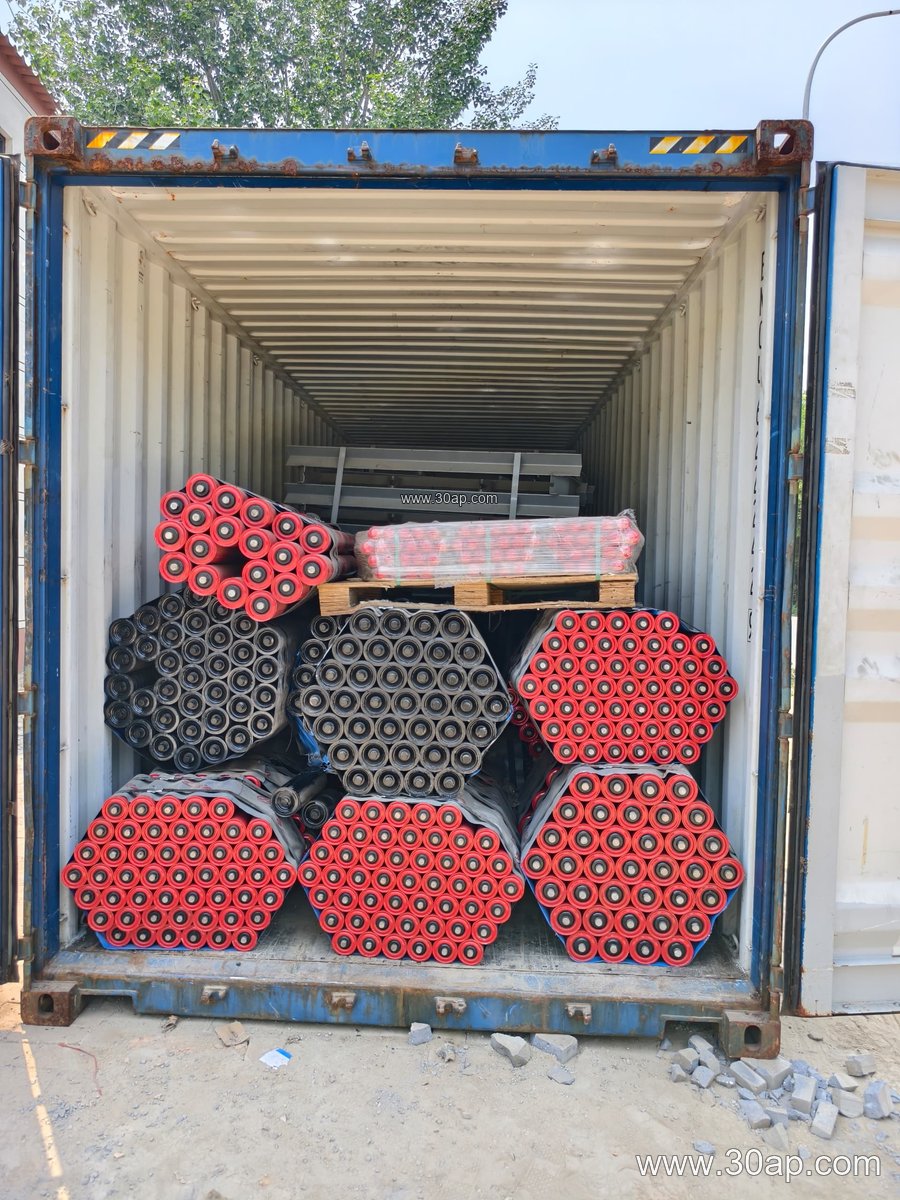
Where It Fits in the Conveyor Layout
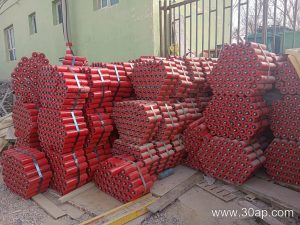
Spiral rollers are normally installed on the return strand, often replacing some plain return rollers in wet or sticky sections. They are less common on the carry side, where troughing idlers, impact idlers, and training idlers do the main work. In a quarry or aggregate line, a spiral roller behind the head pulley can reduce the carryback that would otherwise reach the bend pulley and tail pulley area.
The surrounding hardware still matters. Return rollers sit in conveyor brackets, and the belt profile above them is shaped by troughing sets at 20, 30, 35, or 45 degrees. A belt such as an abrasion resistant conveyor belt or a flame retardant conveyor belt used in underground mining may need a different return arrangement than a smooth EP conveyor belt on a port loading system.
Common Sizes and Reference Data
Roller diameter and belt width are selected together with the conveyor design, not from a single fixed table. The values below are typical reference points, not universal matches.
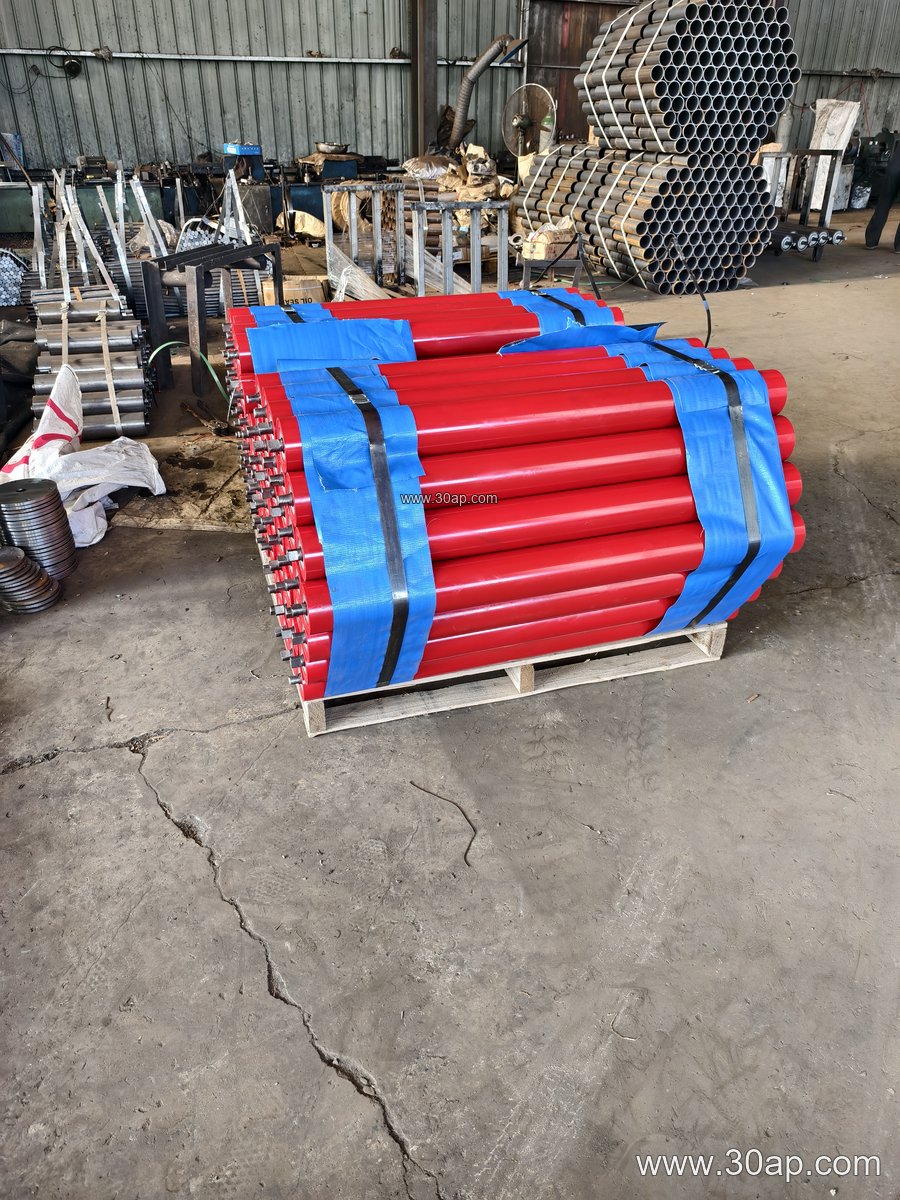
| Item | Common reference values |
|---|---|
| Roller diameter | Ø63, Ø76, Ø89, Ø102, Ø108, Ø127, Ø133, Ø159, Ø178, Ø194, Ø219 mm |
| Belt width | B400, B500, B650, B800, B1000, B1200, B1400, B1600, B1800, B2000, B2200, B2400 |
| Bearing | 6204, 6205, 6305, 6306, 6308, 6310 |
| Shell surface | Steel, nylon, ceramic, rubber ring |
| Typical position | Return strand, after head pulley or before tail pulley |
Roller length follows belt width, trough angle, and frame type. For three-roll troughing sets, common side-roll lengths are roughly 200 mm at B500, 250 mm at B650, 315 mm at B800, 380 mm at B1000, 465 mm at B1200, 530 mm at B1400, 600 mm at B1600, 670 mm at B1800, and 750 mm at B2000. These are examples only; center rolls and side rolls can differ, and a spiral return roller is usually sized to the return frame rather than to a troughing set.
Selection and Maintenance Pointers
- Check the return-strand load and belt speed before choosing a shell thickness and bearing class.
- Match the spiral pitch to the material: fine wet fines need a different profile from coarse rock.
- Confirm shaft ends and mounting dimensions against the existing conveyor bracket.
- Inspect seals and bearing play at each shutdown; a worn spiral still turns, but a dry bearing will not.
- For hot service such as a sinter line or a power plant coal feed, confirm the belt rating and the roller’s temperature limits with the supplier.
Buyers often compare a spiral roller with a rubber-disc impact roller or a V-return roller. Each has a place: the disc type absorbs impact at transfer points, the V type helps center the belt, and the spiral type mainly controls build-up. A spiral roller is not a substitute for a training idler when belt misalignment is the real problem.
On long overland systems carrying iron ore, copper ore, or gold ore, the return strand may include several spiral rollers in the wet zones and plain rollers elsewhere. Matching the roller to the actual duty, rather than to a catalog headline, keeps the whole conveyor running quietly.