What a Long-Distance Conveyor Idler Has to Do
On a short transfer, an idler roller mostly holds the belt up and lets it roll. On a run of several kilometres, the same component becomes a rotating machine that must survive millions of revolutions with minimal attention. A long-distance conveyor idler is therefore built around low friction, stable rotation and protection of the bearing against dust and moisture, because every watt lost at each station multiplies along the route.
The main loads come from the belt itself, the material, and the sag between stations. Because the belt is heavy over long spans, spacing and roll quality matter more than on a compact line. In a quarry, a cement plant or a power station coal yard, the difference between a well-sealed idler and a cheap one usually appears in drive power consumption and in how often maintenance crews have to walk the line.
Construction Details That Matter on Long Runs
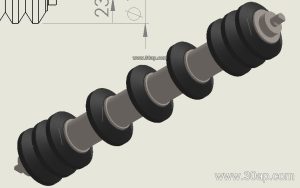
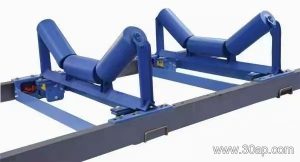
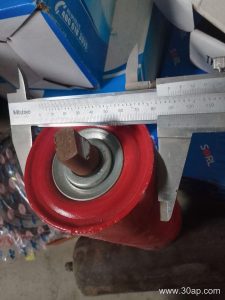
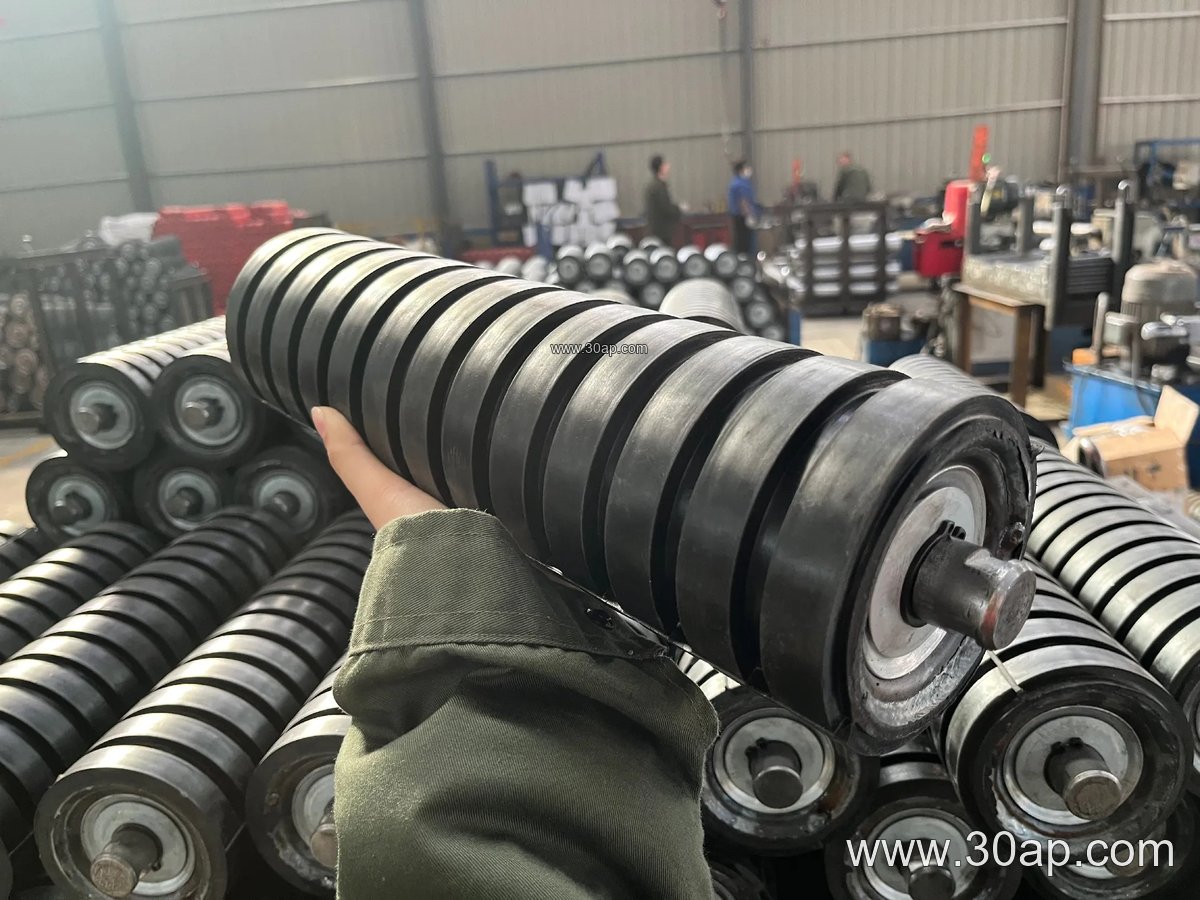
A typical troughing idler uses a steel tube shell, pressed bearing housings, a shaft, and sealed ball bearings. Roll diameter is chosen together with belt width and load, not in isolation. Common shell diameters in long-haul service include Ø127, Ø133, Ø159 and Ø178 mm, and larger shells are used where belt speeds and lump sizes are high. Bearings such as 6205, 6305, 6306 or 6308 appear across this range, and the correct match depends on the calculated load and the housing design, not on a fixed rule.
Seals deserve attention. A labyrinth seal with a grease-filled cavity resists fine dust better than a simple lip seal, which is why long overland lines in dry, abrasive conditions often specify reinforced sealing. Shell surface also varies: plain steel is standard, while rubber discs are used at load points, and ceramic or nylon covers appear where sticking or wear is a problem.
Trough Geometry and Belt Interaction
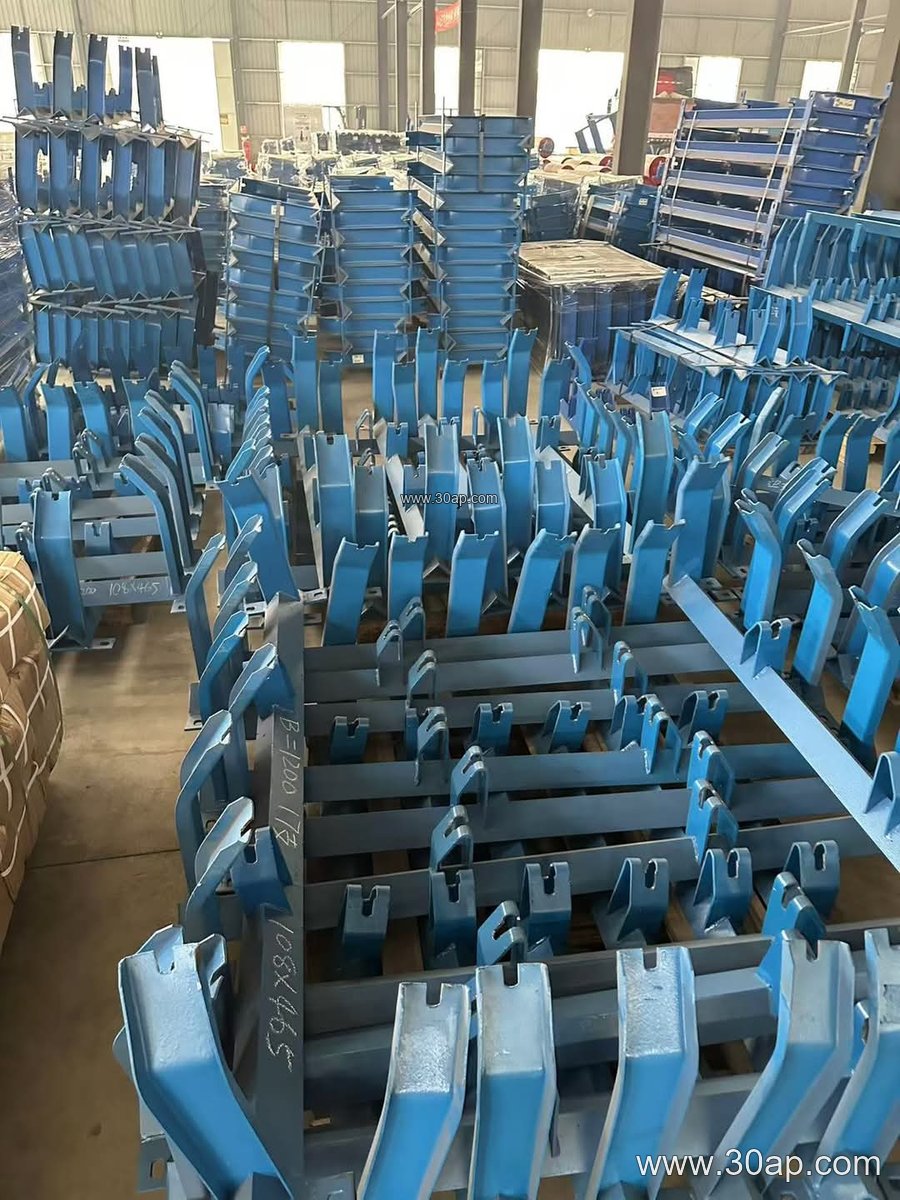
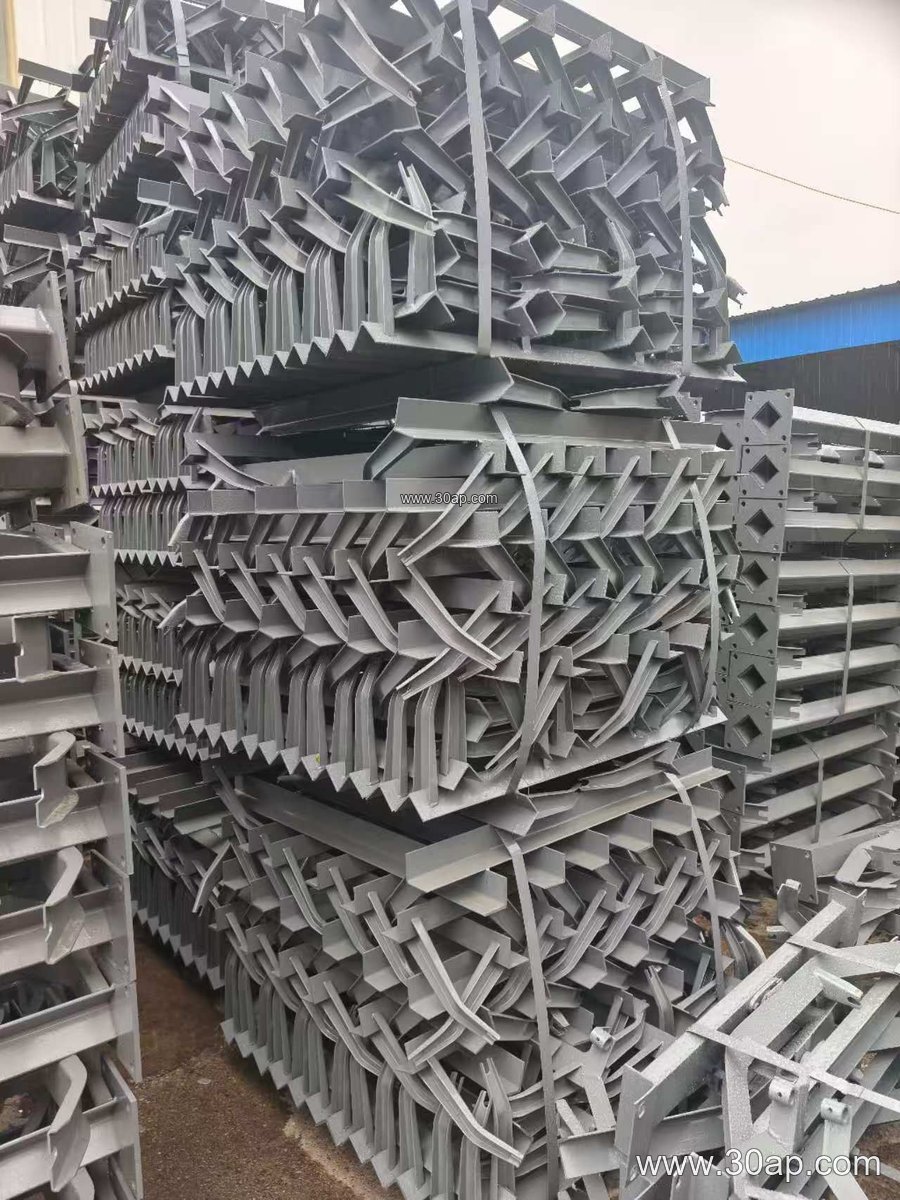
Trough angle shapes the material cross-section and affects how the belt sits on the rolls. Common angles are 20, 30, 35 and 45 degrees, and three-roll sets are the usual arrangement. Roll length changes with belt width and trough angle; as an example, a three-roll troughing set for a B1000 belt commonly uses rolls around 380 mm long, while B1400 may use about 530 mm. These are reference values for orientation only and should be confirmed by the conveyor designer.
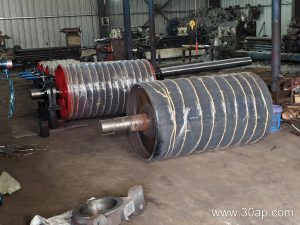
Training is a separate issue. On long lines, slight misalignment accumulates, so self-aligning idlers with tapered or friction-training rolls are sometimes placed at intervals. They are not a substitute for correct pulley alignment at the drive, tail and bend positions, which remain distinct components with their own duties.
Where These Idlers Are Used
Long-distance conveying is common in iron ore and copper ore transport, limestone quarries feeding cement kilns, and coal handling at power plants. Overland lines carrying aggregate from a crushing and screening plant to a stockyard also rely on dependable idlers, often paired with an abrasion resistant conveyor belt or a steel cord conveyor belt where tension is high. Port ship-loading systems and tunnel spoil removal are further examples.
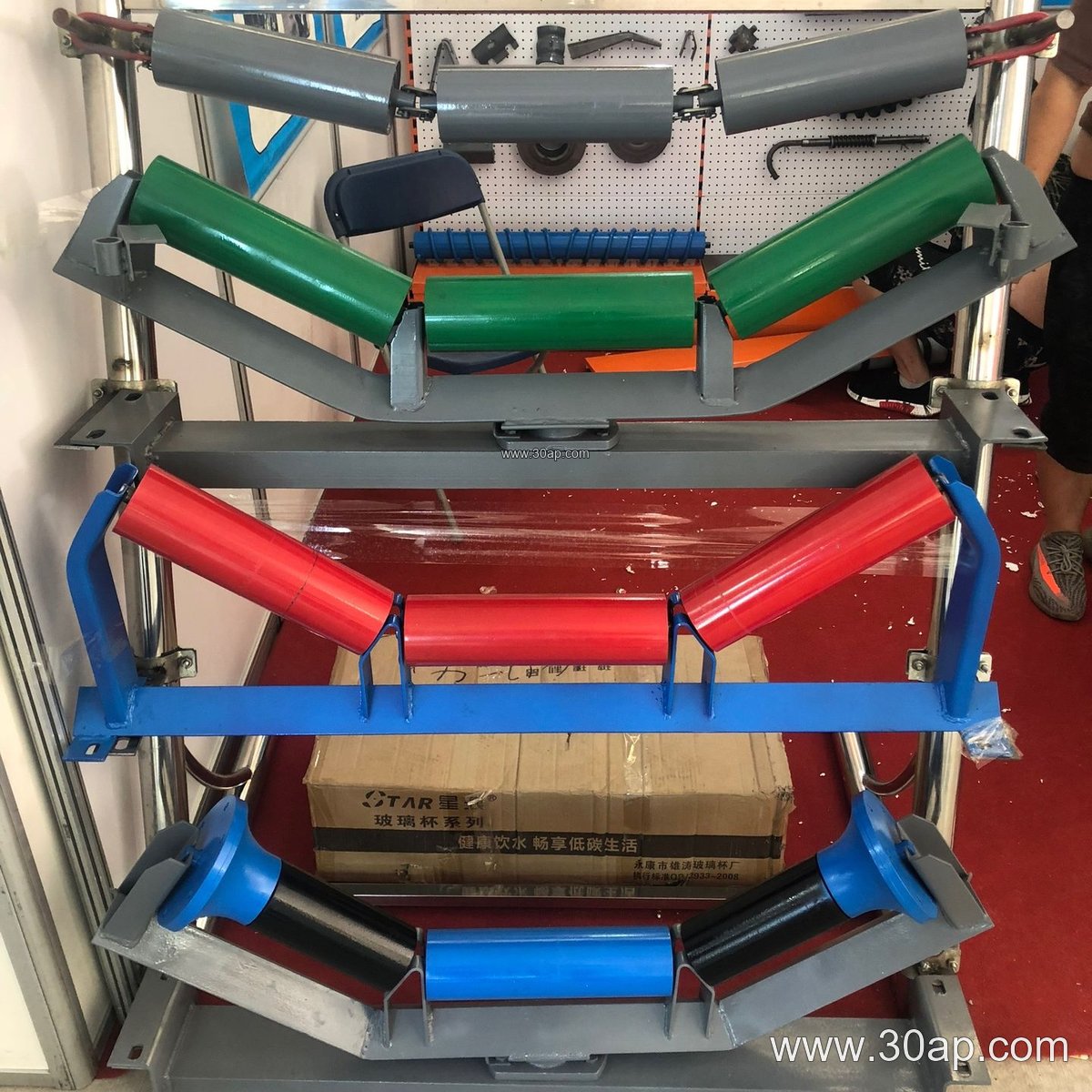
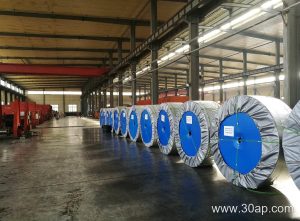
The belt type influences idler choice indirectly. A heavy multi-ply fabric core conveyor belt or a thick steel cord belt needs adequate roll diameter and load capacity, while a chevron conveyor belt or corrugated sidewall belt may require modified roll arrangements at the loading zone. Heat resistant conveyor belt and flame retardant conveyor belt installations add their own requirements for bearing grease and seal materials.
Buyer Checklist
- Confirm shaft diameter and bearing series from the conveyor design, not from belt width alone.
- Check seal type and grease specification for dust, moisture and temperature.
- Ask for roll runout and rotation resistance values if the line is long.
- Review spacing along the route; impact zones need closer spacing and cushion idlers.
- Match shell material and coating to the material being carried.
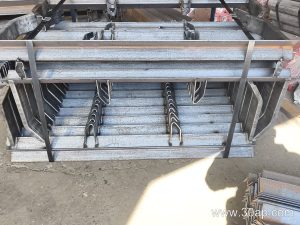
For a complete picture, buyers often compare the idler with the conveyor pulley, conveyor bracket and belt specification together. A well-matched long-distance conveyor idler keeps the whole system efficient, whether the line serves a mine, a cement works or a port terminal.