What a Large Drive Pulley Does
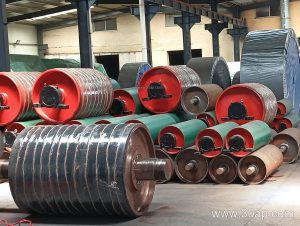
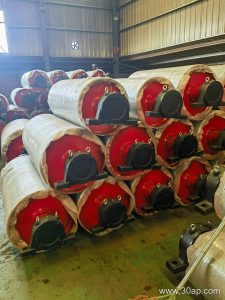
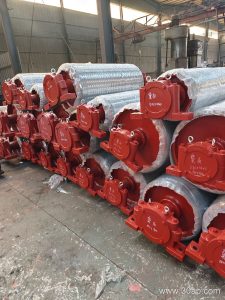
A large drive pulley is the powered drum at the head of a conveyor that transfers torque from the gearbox to the belt. In heavy-duty circuits—iron ore terminals, limestone quarries, coal washing plants, or cement clinker lines—this head drum must handle high tension while maintaining grip. Unlike a tail pulley that merely redirects the belt, the drive pulley is the primary traction component. Its size and surface treatment directly influence belt life and system efficiency.
Construction and Surface Options
These pulleys are built with a welded steel shell, reinforced end discs, and a shaft sized by torque and radial load—not simply by belt width. Common shaft diameters range from Ø50 to Ø200 mm, but the final value is determined by the drive design. Shell diameters often fall between Ø500 and Ø1250 mm for large units, with face widths that exceed the belt width by roughly 100–200 mm. For example, a B1200 belt typically runs on a pulley face around 1400 mm, while a B1800 belt may use a 2000 mm face.
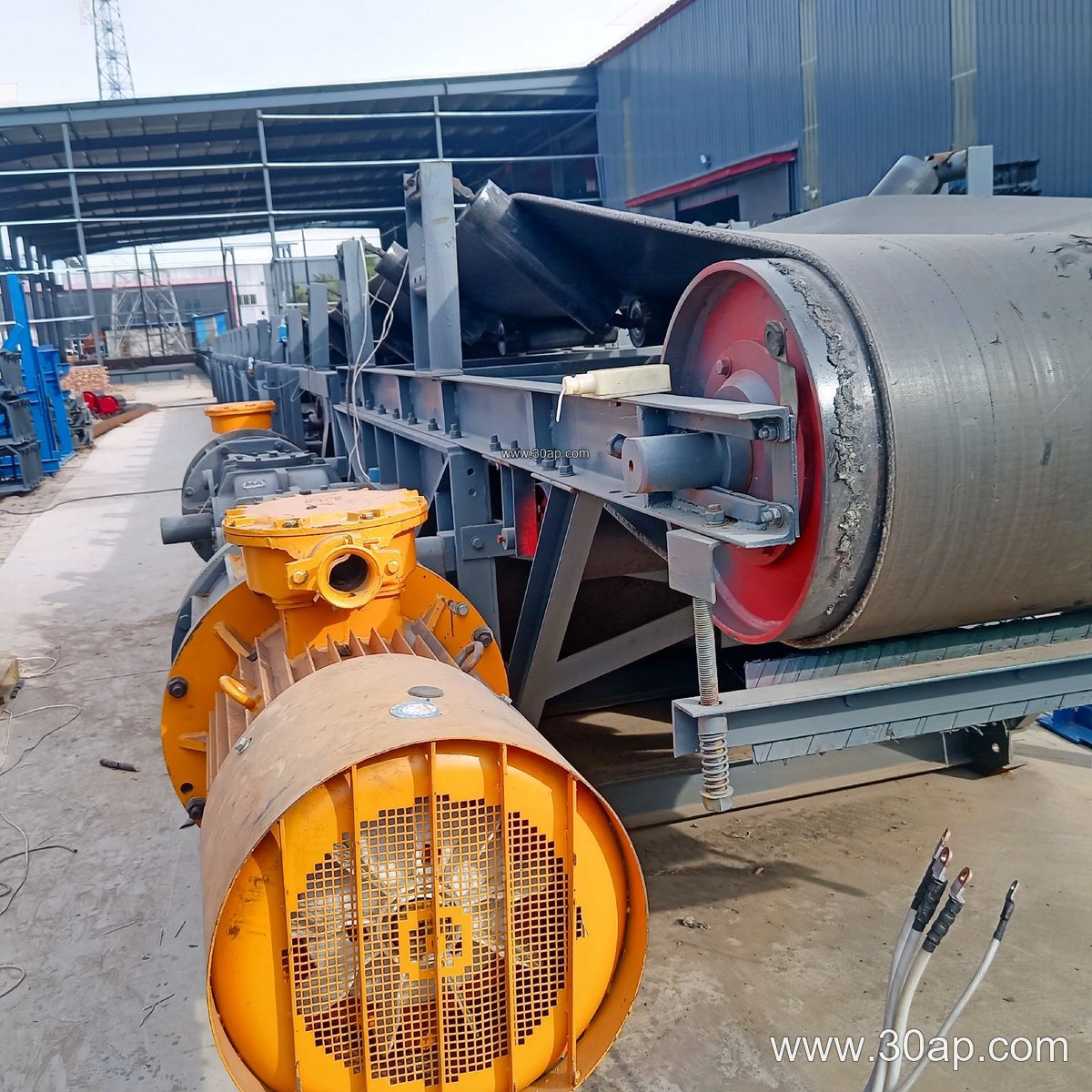
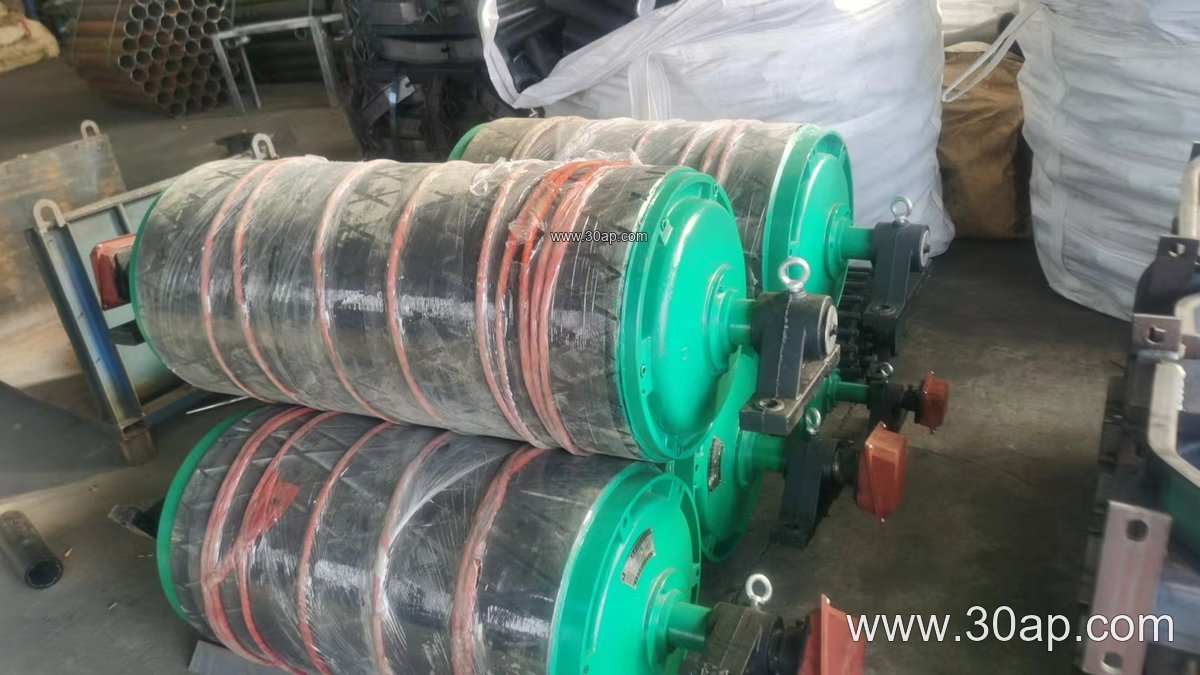
Surface lagging is critical. Plain steel is rare on large drives; instead, buyers choose hot vulcanized rubber, cold-bonded rubber, diamond groove lagging, or ceramic tiles. Lagging thickness commonly ranges from 8 mm to 20 mm. In wet or dusty conditions—such as a coal mining conveyor—diamond or ceramic lagging improves friction and reduces slip. For abrasive rock circuits, a high abrasion resistant conveyor belt works alongside a robustly lagged drive pulley to limit wear.
Where It Fits in the Conveyor
The large drive pulley sits at the discharge end, often called the head pulley. It receives the loaded belt from carrying idlers and sends material into a chute or onto a transfer point. In a quarry conveyor belt system, this drum must withstand constant impact from coarse aggregate. In a power plant coal handling line, the drive pulley may be paired with a flame retardant conveyor belt to meet safety requirements. The same drum style appears in ship loading conveyors and bulk material conveyor belt circuits where high throughput is required.
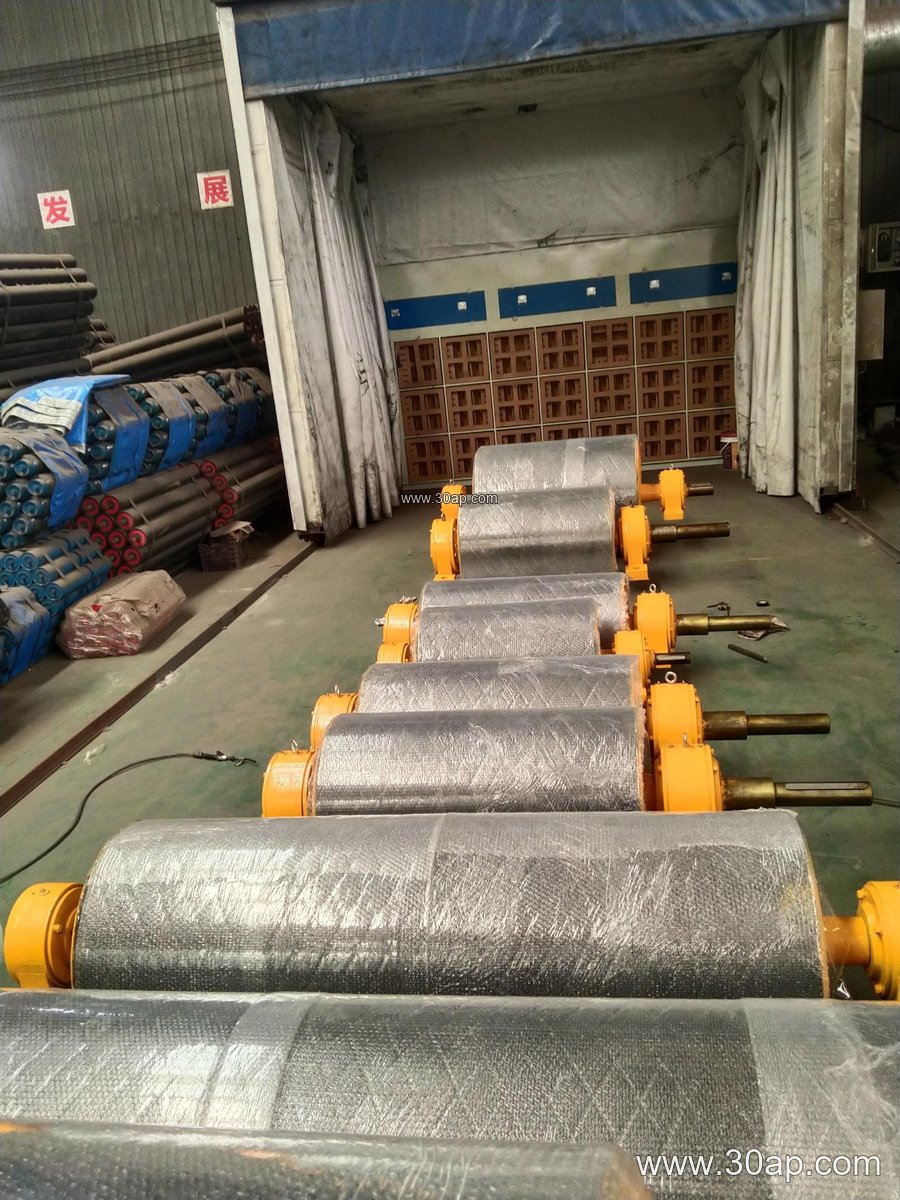
Although drive, tail, and bend pulleys share a cylindrical shape, they are not interchangeable. A tail pulley guides the return belt and may be smaller in diameter; a bend pulley changes belt direction without driving. Only the drive pulley is connected to the motor and gearbox.
Key Parameters for Buyers
Specifying a large drive pulley involves more than matching belt width. The table below shows common reference combinations, but these are examples—not fixed rules. A B800 belt can run on a Ø500 or Ø630 pulley depending on tension and space.
| Belt Width (B) | Typical Pulley Face | Example Diameter | Common Lagging |
|---|---|---|---|
| B800 | 950 mm | Ø500 mm | 10 mm diamond rubber |
| B1000 | 1150 mm | Ø630 mm | 12 mm plain rubber |
| B1200 | 1400 mm | Ø800 mm | 15 mm ceramic |
| B1400 | 1600 mm | Ø1000 mm | 15 mm diamond rubber |
| B1800 | 2000 mm | Ø1250 mm | 20 mm hot vulcanized |
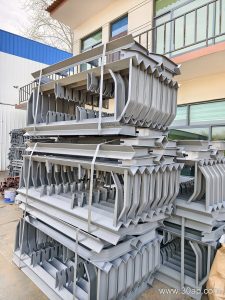
Shaft diameter is often Ø80 to Ø160 for these sizes, but again, torque calculations govern the final choice. Do not assume a fixed shaft size from belt width alone. Also consider the conveyor bracket and pillow block bearings—they must match the shaft and load rating.
Maintenance and Compatibility
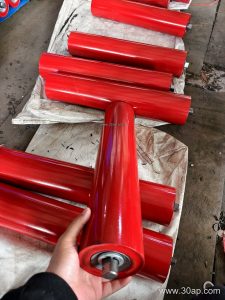
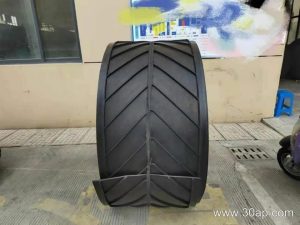
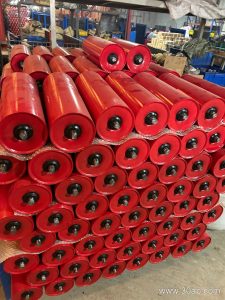
Regular inspection of lagging wear, bolt tightness, and shaft alignment extends pulley life. In dusty environments like a cement plant, keep the drum surface clean to prevent material buildup that causes belt tracking issues. Pair the drive pulley with quality conveyor idler rollers and a suitable conveyor belt—whether EP conveyor belt, steel cord conveyor belt, or multi-ply fabric core conveyor belt—to achieve reliable performance. For extreme cold, a cold resistant conveyor belt may be needed, while oil resistant conveyor belt grades suit recycling or metalworking conveyors.
When replacing a large drive pulley, verify the belt speed, motor power, and starting torque. A larger diameter reduces belt flex fatigue but requires more space; a smaller drum saves room but increases bending stress. The right balance depends on your specific conveyor profile and material characteristics.