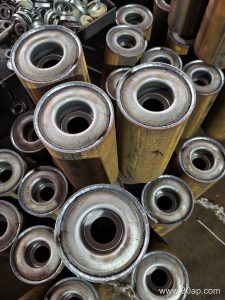
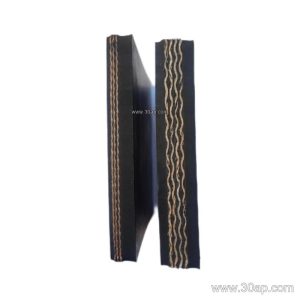
What This Pulley Is and Why It Matters
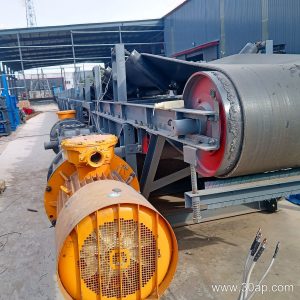
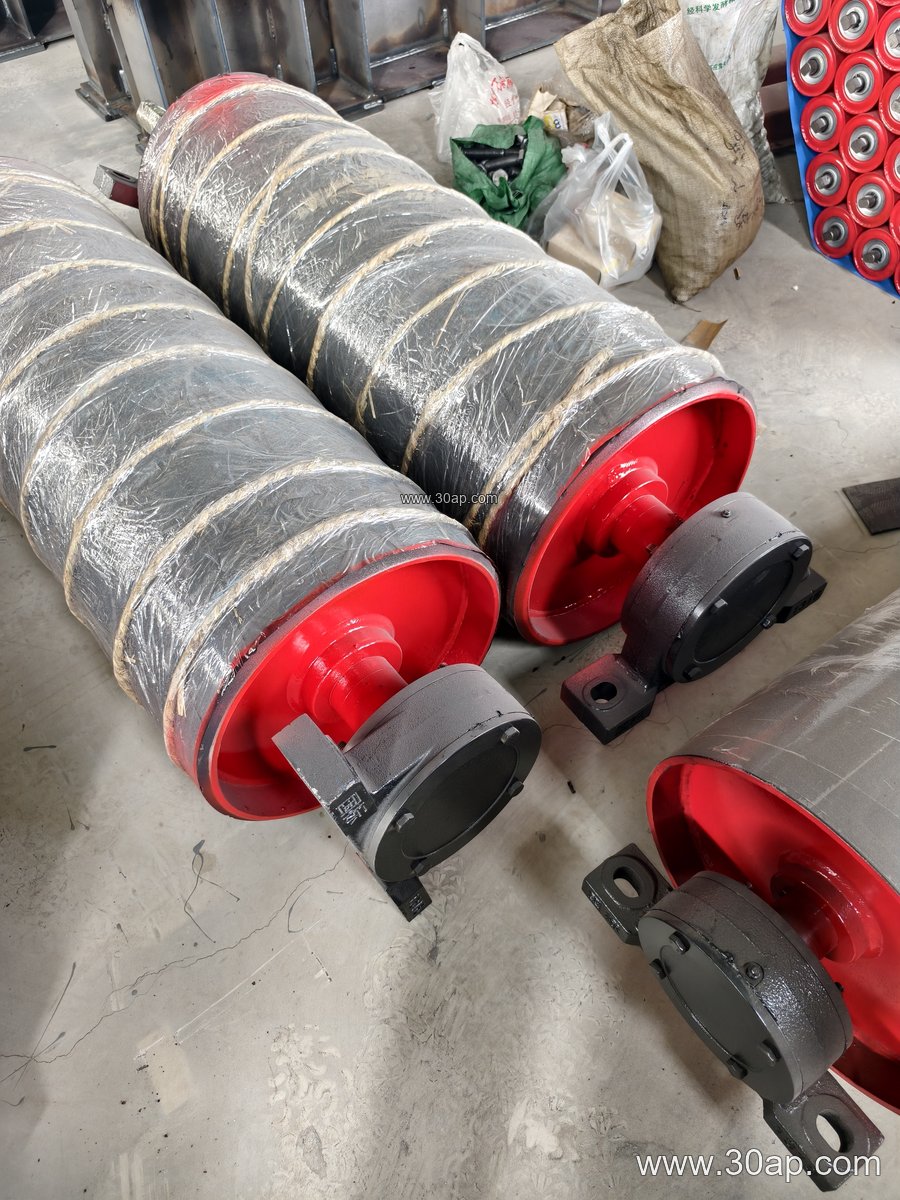
A high wear-resistant lagged pulley is a conveyor pulley whose shell carries a rubber or ceramic lagging layer formulated to survive sliding abrasion, impact and fine particle attack. In practice, the lagging is the working surface that grips the conveyor belt, so its wear life often decides how long the whole pulley stays in service. On a quarry conveyor belt or a crusher conveyor belt handling sharp stone, a standard smooth shell may polish and lose grip within months, while a properly specified wear-resistant lagging keeps friction stable for far longer.
The term describes the wear property of the lagging, not a single fixed design. The same pulley can be supplied as a drive pulley, a tail pulley, a bend pulley or a take-up pulley, and each position imposes different loads on the rubber surface.
How the Lagging Is Built
Most units combine a steel shell, a shaft, end discs and a vulcanised or cold-bonded rubber layer. Heat-sintered rubber lagging typically bonds most reliably, while cold-bonded sheets suit field replacement. Ceramic lagging embeds tile studs in a rubber matrix and resists fine, hard particles that would quickly cut plain rubber.
Common surface forms include plain, diamond and chevron profiles. Diamond lagging sheds water and fines on drive pulleys, while plain lagging is often chosen for bend pulleys where tracking matters more than grip. Lagging thickness usually falls between 8 mm and 20 mm, with 10 mm, 12 mm and 15 mm being frequent choices for abrasive duty.
- Shell: rolled and welded steel, machined for concentricity
- Lagging: abrasion-resistant rubber, ceramic-studded rubber or composite
- Shaft: sized by torque and radial load, not by belt width alone
- Bearings and locking assemblies: matched to the duty cycle
Typical Sizes and Reference Data
The figures below are common reference ranges, not fixed combinations. Diameter, face width and shaft size are determined by belt tension, wrap angle and torque.
| Item | Common reference values |
|---|---|
| Belt width | B400, B500, B650, B800, B1000, B1200, B1400, B1600, B1800, B2000, B2200, B2400 |
| Pulley diameter | Ø200, Ø250, Ø315, Ø400, Ø500, Ø630, Ø800, Ø1000, Ø1250, Ø1400, Ø1600, Ø1800 |
| Lagging thickness | 8, 10, 12, 15, 20 mm |
| Shaft diameter | Ø50, Ø60, Ø70, Ø80, Ø90, Ø100, Ø120, Ø140, Ø160, Ø180, Ø200 |
| Example assemblies | B800 × Ø500, B1200 × Ø1000, B1400 × Ø800 |
Face width is normally slightly wider than the belt, for example B650 around 750 mm and B1000 around 1150 mm. A wider belt does not automatically require a particular diameter, and shaft diameter should follow calculated load rather than a belt-width rule.
Where Abrasive Duty Shows Up
Aggregate plants and stone crushing lines are the classic home for this pulley. A crusher conveyor belt or rock conveyor belt delivers sharp, dry material that grinds against the lagging every shift. In a cement plant, clinker dust and limestone fines create a similar slow-wearing environment. In a coal washing plant, wet fines and slurry add a different challenge, and a flame retardant conveyor belt may be paired with anti-static lagging where the site requires it.
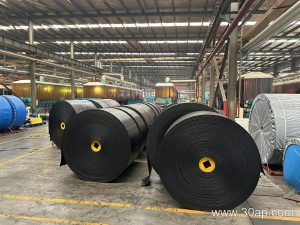
Port bulk terminals handling iron ore or copper ore often use a heavy-duty mining conveyor belt with thick covers, and the drive pulley lagging must match that abrasion level. In a power plant coal yard, a mining conveyor belt runs long distances and the bend pulleys see constant flexing, so lagging wear is inspected at every shutdown.
Selecting the Right Lagging
Start with the material: sharp, dry rock favours ceramic or thick rubber lagging; wet, sticky fines may favour grooved or diamond patterns that clear water. Then check the position. A drive pulley needs high friction, a tail pulley benefits from a self-cleaning profile, and a bend pulley may only need a modest wear layer to protect the shell.
Match the pulley to the belt cover grade. An abrasion resistant conveyor belt with a thick top cover tolerates a more aggressive lagging surface, while a thinner EP conveyor belt or NN conveyor belt may need a smoother profile to avoid edge damage. Belt speed, wrap angle and starting torque all affect how much grip is really needed. Over-specifying grip can increase belt stress, so the pulley should be chosen with the conveyor designer rather than from a catalogue alone.
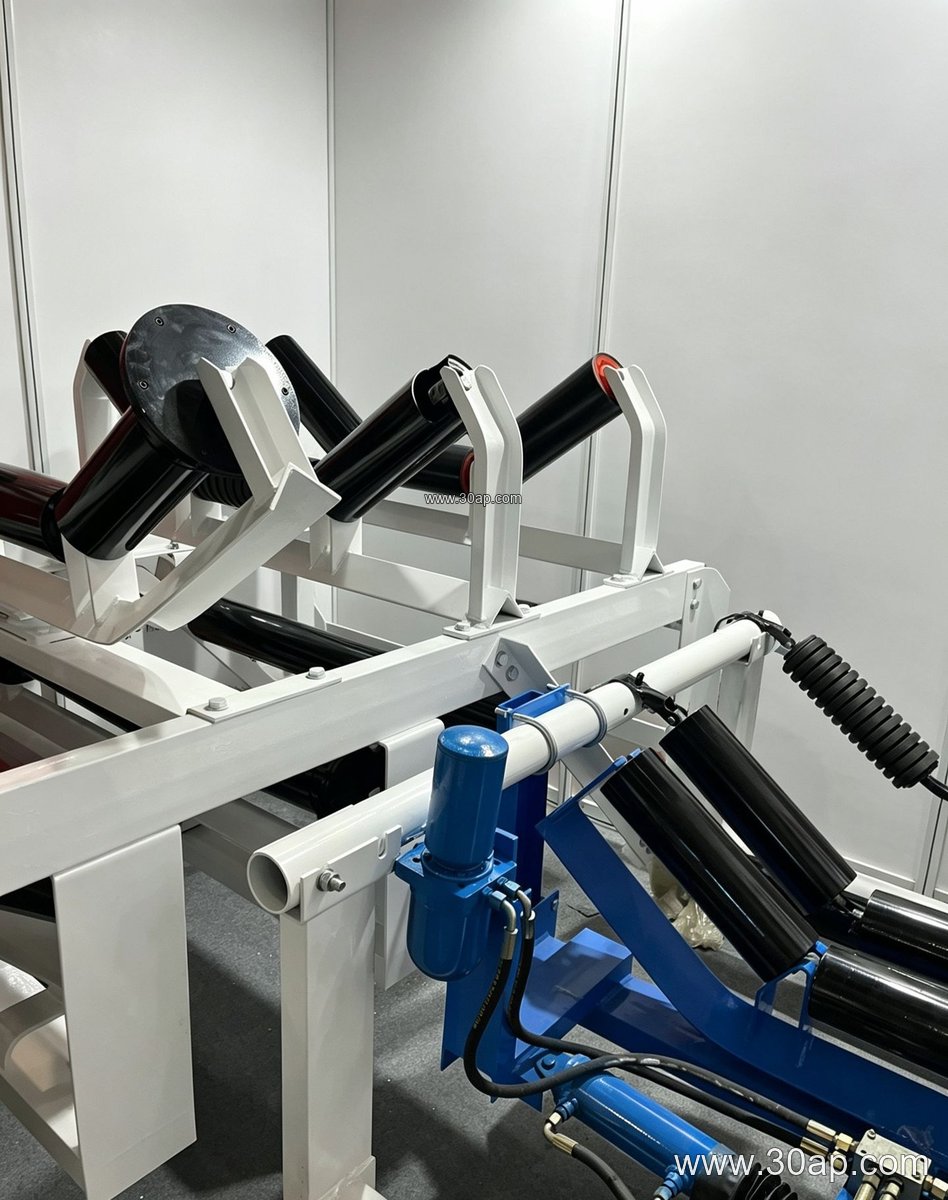
Finally, confirm the interface. The conveyor bracket, bearing housing and take-up arrangement must align with the new pulley, and the idler roller set on the same conveyor should be checked if belt tracking has been poor. A worn lagged pulley often shows up first as belt slip or misalignment.
Maintenance Notes
- Inspect lagging edges and grooves for cracking or chunking.
- Check bolt tightness on split lagging and locking assemblies.
- Keep the belt surface clean so grit does not embed in the rubber.
- Record lagging thickness at each service to plan replacement.
A high wear-resistant lagged pulley is a small part of the conveyor, but it decides how reliably the belt is driven. Choosing the lagging compound, profile and thickness to match the material and position is more useful than simply buying the thickest option available. For more conveyor pulley guidance, visit www.example.com/conveyor-pulley and compare options before ordering.