What a Three-Roll Idler Bracket Does
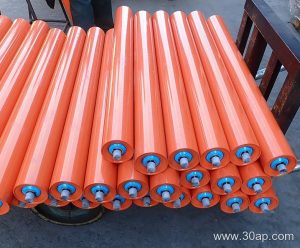
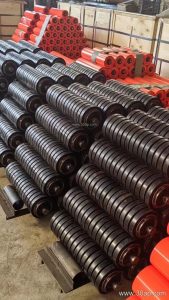
A three-roll idler bracket is the support frame that holds three idler rollers in a troughed arrangement under the carrying side of a conveyor belt. The two outer rolls are tilted upward while the center roll sits flat, forming a trough that keeps bulk material centered on the belt. In a quarry, a coal handling plant, or a cement kiln feed line, this bracket is one of the most repeated steel components on the whole conveyor, so its fit and alignment matter as much as the rollers themselves.
The same item is often called a three-roll idler frame or a troughing idler bracket. Those names describe the same assembly, not a different product category. Drive pulleys, tail pulleys, and bend pulleys are separate components and are not interchangeable with this bracket.
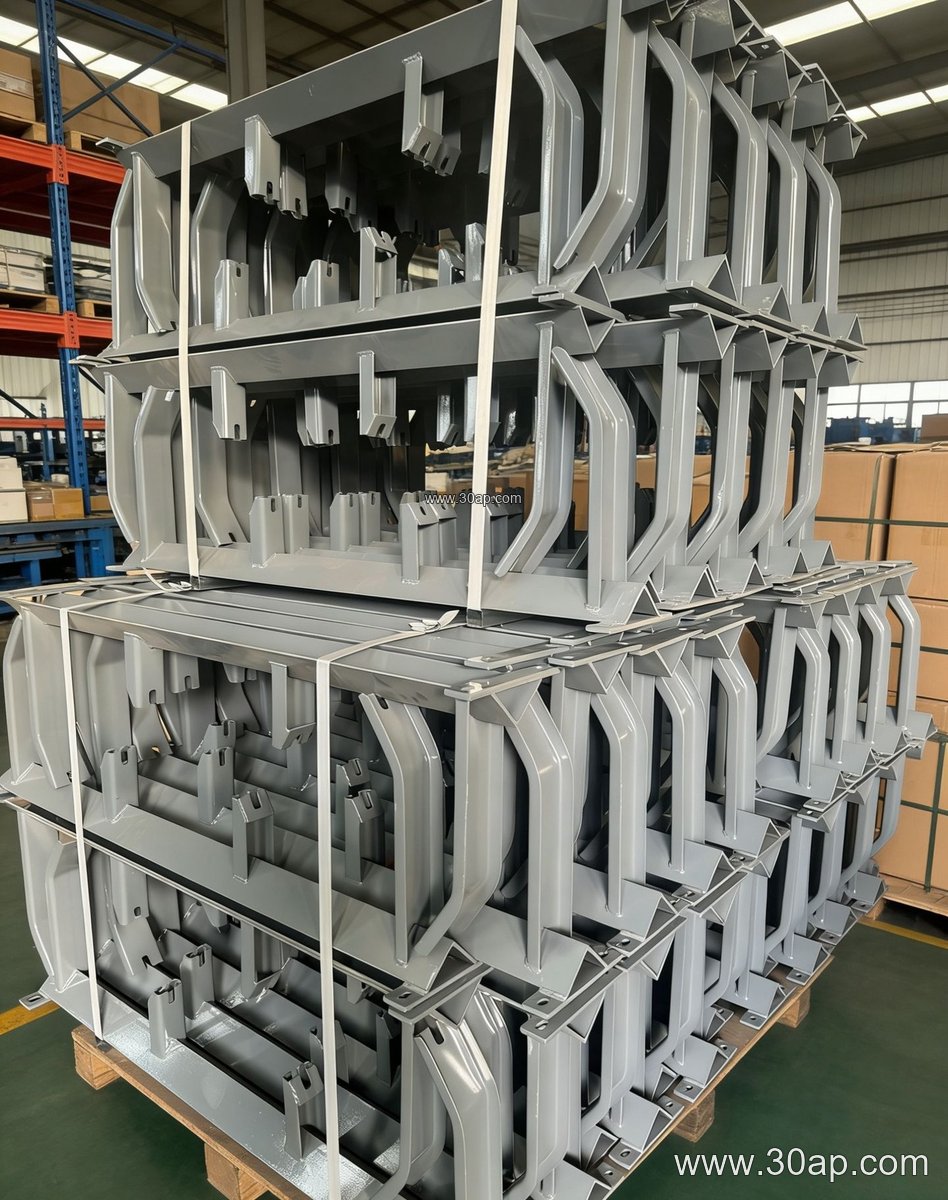
How the Bracket Is Built
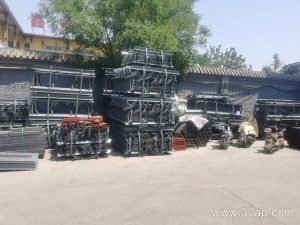
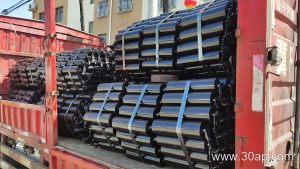
Most three-roll idler brackets are fabricated from angle steel, channel steel, or folded steel plate. The frame carries three mounting positions, each angled to set the trough profile. Slots or drilled holes allow the idler shafts to sit at the designed angle, and the crossbeam length follows the belt width and trough angle rather than a single fixed figure.
- Fixed troughing bracket with a set trough angle
- Adjustable bracket that can be set between common angles
- Transition bracket used near the head or tail to ease the belt from flat to troughed
Surface treatment is usually painted or galvanized, and buyers should confirm the finish suits the site. In a wash plant or a coastal port, corrosion protection deserves more attention than in a dry sand and gravel line.
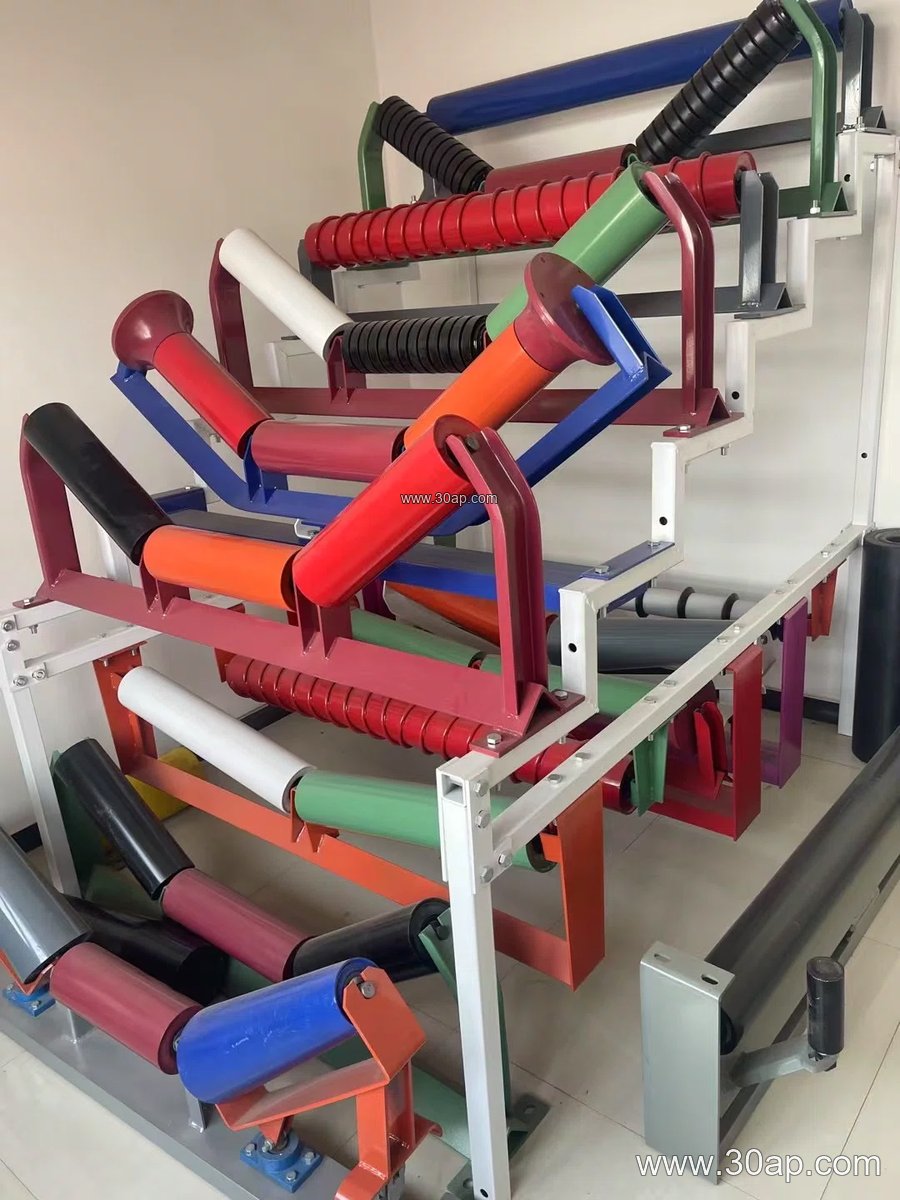
Matching Belt Width, Trough Angle, and Roll Diameter
Three values are usually discussed together: belt width, trough angle, and idler roll diameter. They are related but not locked to each other. A B800 belt may run at 30 or 35 degrees with Ø108 rolls, while a wider B1200 line might use 35 or 45 degrees with Ø133 rolls. The table below shows common combinations for reference only; actual selection follows the conveyor design.
| Belt width | Common trough angle | Common roll diameter |
|---|---|---|
| B500 / B650 | 20 to 30 degrees | Ø89 |
| B800 / B1000 | 30 to 35 degrees | Ø108 |
| B1200 / B1400 | 35 to 45 degrees | Ø133 |
| B1600 / B1800 | 35 to 45 degrees | Ø159 |
| B2000 / B2200 | 35 to 45 degrees | Ø194 |
Do not assume one belt width can only match one trough angle or one roll diameter. Installation hole spacing and crossbeam length change with both width and angle, so the bracket drawing should be checked against the roller supplier’s shaft dimensions before ordering. A forward-tilted arrangement, often about 1.5 to 2 degrees, is a separate design choice that helps belt tracking.
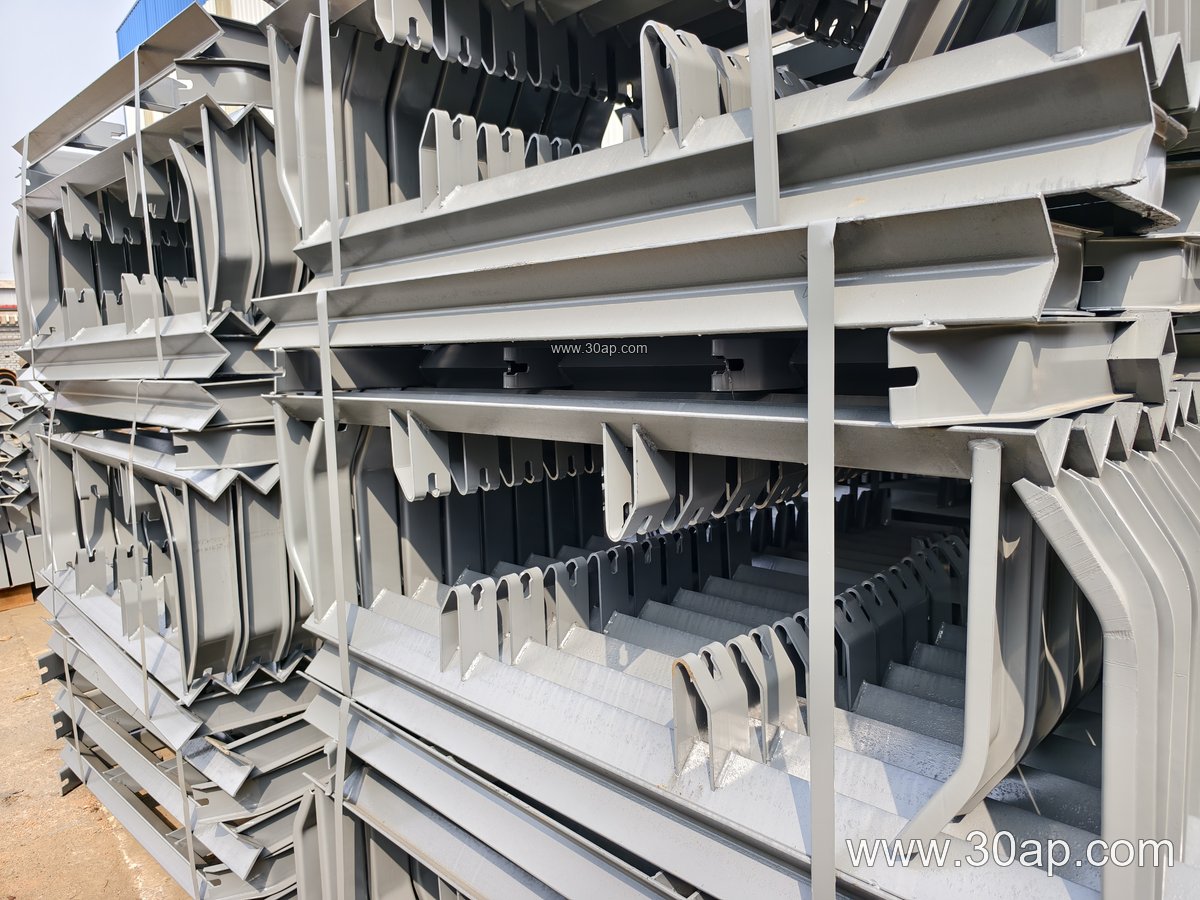
Where It Fits on the Conveyor
The carrying-side three-roll bracket is the standard choice along the loaded run. Near the tail, a transition bracket gradually trains a flat belt into the trough so the edges are not over-stressed. On the return side, a different frame type is used, so the carrying bracket should not be swapped for a return bracket.
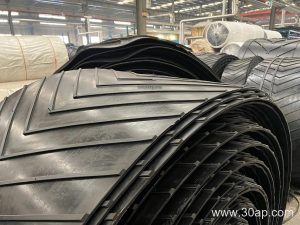
These frames appear in limestone mines, iron ore plants, coal washing facilities, power station coal yards, and aggregate crushing lines. Heavier service, such as a primary crusher discharge, may call for a reinforced frame and impact-resistant rollers beneath a heavy-duty mining conveyor belt.
Buyer Checklist
- Confirm belt width, trough angle, and roll diameter as a set.
- Check shaft size and mounting hole spacing against the chosen idler roller.
- Decide between fixed and adjustable brackets based on how often the profile may change.
- Match the frame material and finish to the site environment.
- Keep spare brackets on hand, since a bent frame can misalign the belt and shorten roller life.
Alignment is the practical payoff. A straight, correctly angled three-roll idler bracket keeps the belt seated, reduces edge wear, and lets the rollers turn freely. For conveyors moving abrasive ore or sticky material, pairing the right frame with an abrasion resistant conveyor belt and quality rollers is what keeps the line running. More conveyor bracket references are available at www.beltconveyorparts.com for maintenance teams planning replacements.