What a Tail Pulley Assembly Does
A tail pulley assembly is the return-end pulley group on a belt conveyor. It supports the conveyor belt at the tail, helps maintain belt alignment, and works with the take-up system to keep tension. In a quarry, coal washing plant, or cement clinker line, this assembly is the anchor point where the belt loops back after discharging its load. Unlike a drive pulley, which transmits power, or a bend pulley, which changes belt direction without driving, the tail pulley assembly primarily guides and tensions the belt. It is not interchangeable with a head pulley or a snub pulley.
Construction and Key Components
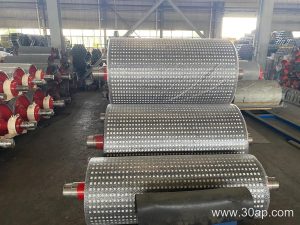
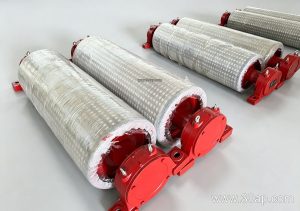
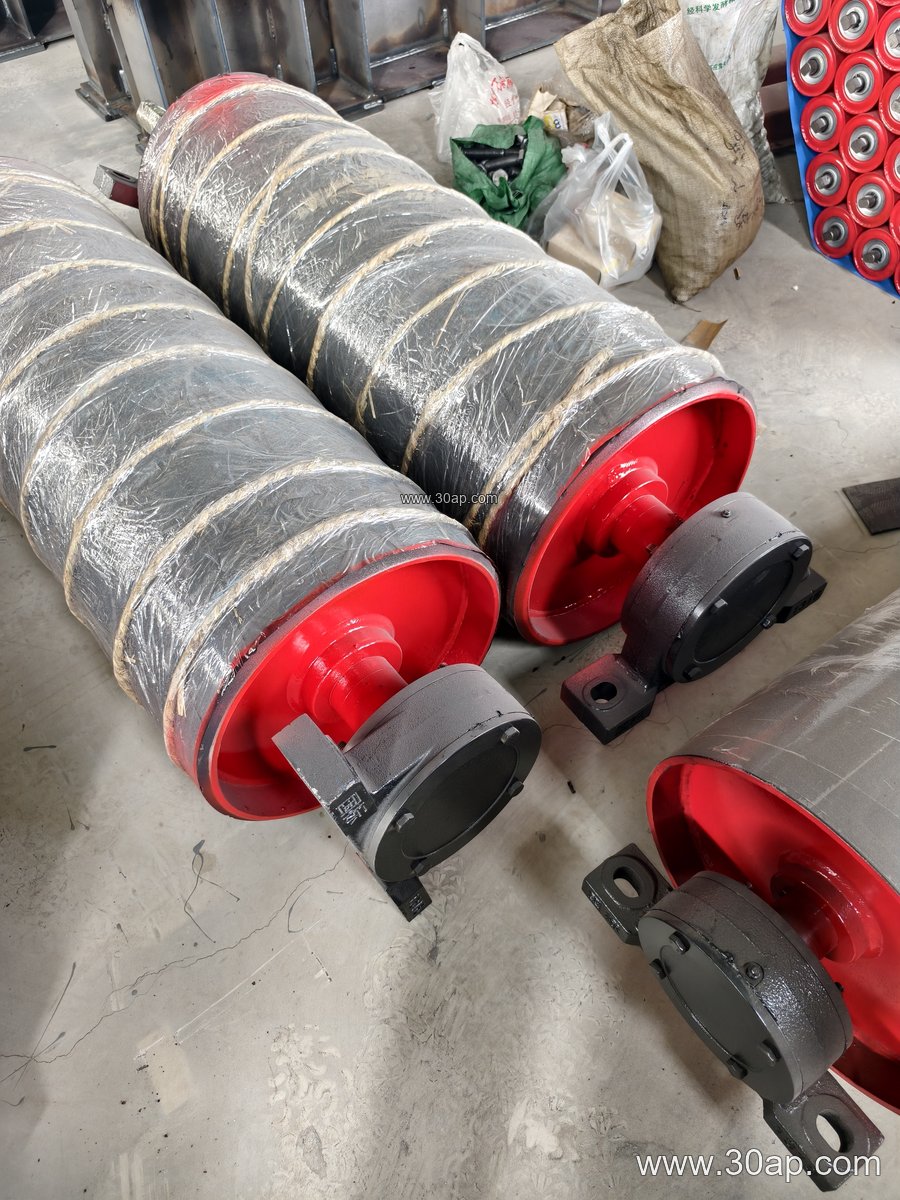
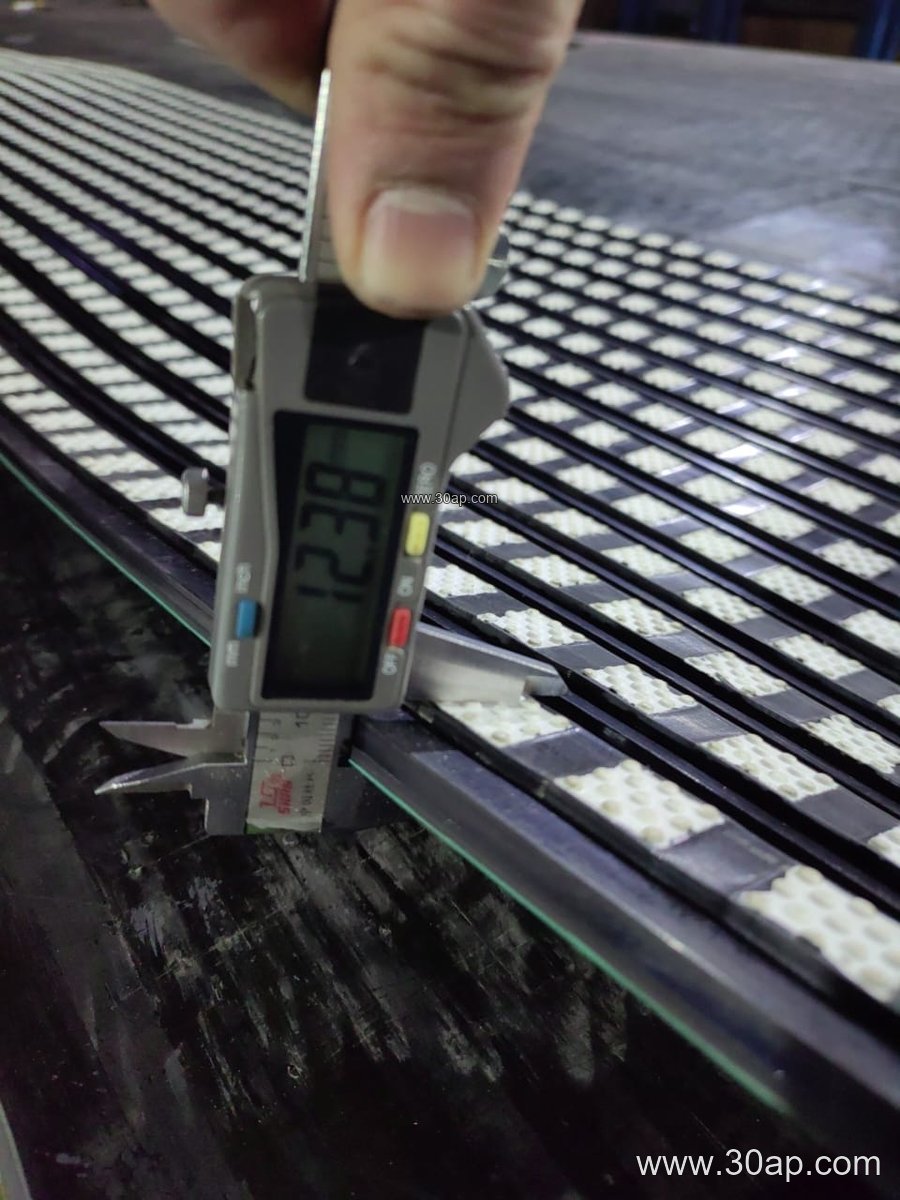
A typical tail pulley assembly includes the pulley shell, shaft, bearings, bearing housings, and a support frame or conveyor bracket. The shell may be smooth, lagged with rubber, or fitted with ceramic lagging for grip and wear protection. Common surface options include plain, cold-bonded rubber, hot-vulcanized rubber, diamond lagging, and ceramic lagging. Lagging thickness often ranges from 8 mm to 20 mm depending on duty. The shaft diameter is selected by torque and load, not by belt width alone. Typical shaft sizes include Ø50, Ø80, Ø120, and Ø160 mm, but final sizing follows the conveyor design.
Common dimensional reference
| Belt width | Typical pulley face width | Example diameter range |
|---|---|---|
| B400 | ≈500 mm | Ø200–Ø315 |
| B650 | ≈750 mm | Ø250–Ø400 |
| B800 | ≈950 mm | Ø315–Ø500 |
| B1000 | ≈1150 mm | Ø400–Ø630 |
| B1200 | ≈1400 mm | Ø500–Ø800 |
| B1400 | ≈1600 mm | Ø630–Ø1000 |
These are reference combinations, not fixed pairings. A B800 conveyor might use a Ø500 tail pulley in one plant and a Ø630 in another, depending on belt tension and space. The face width is usually slightly wider than the belt to allow for misalignment.
Where It Fits in the Conveyor System
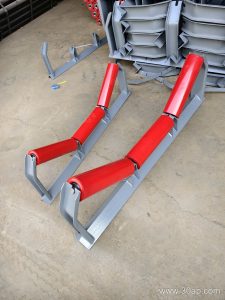
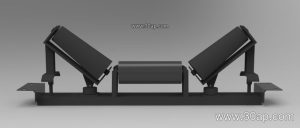
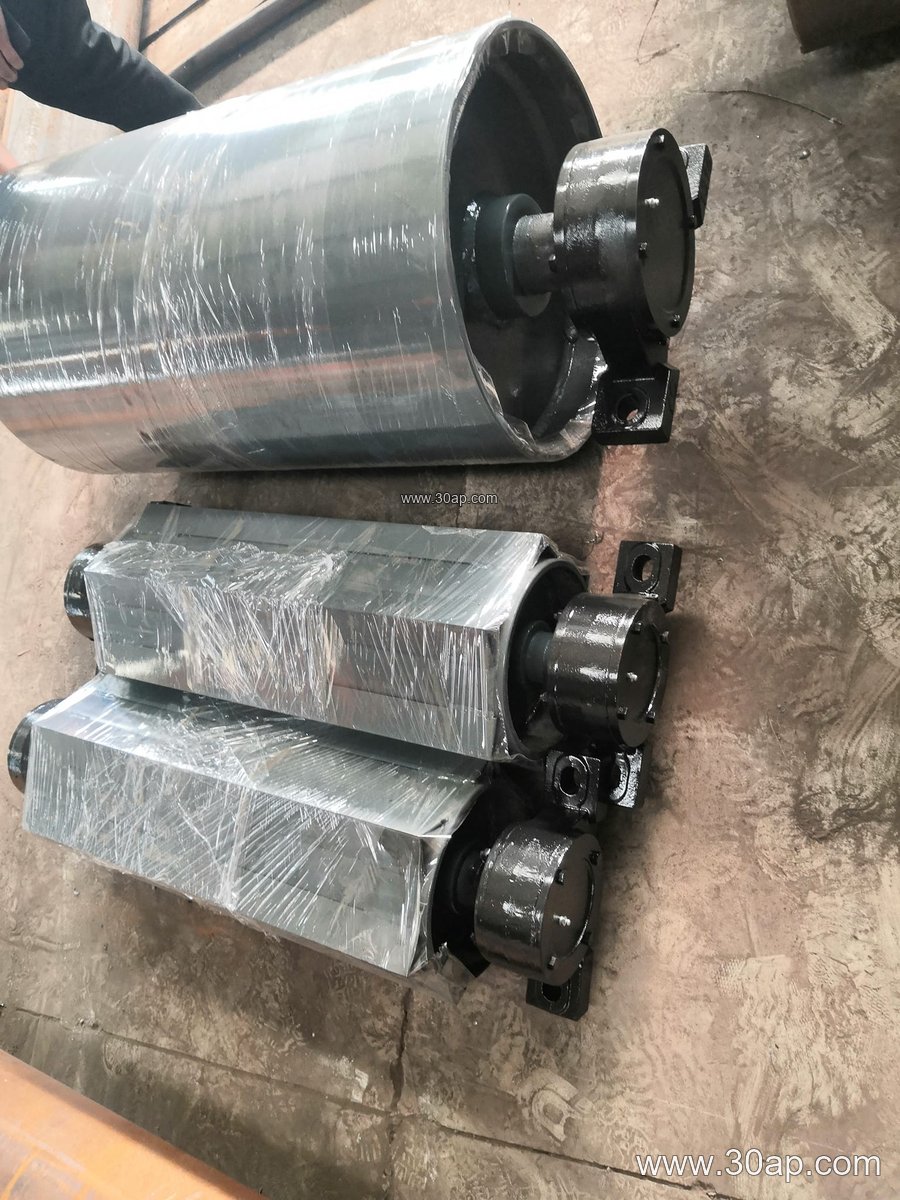
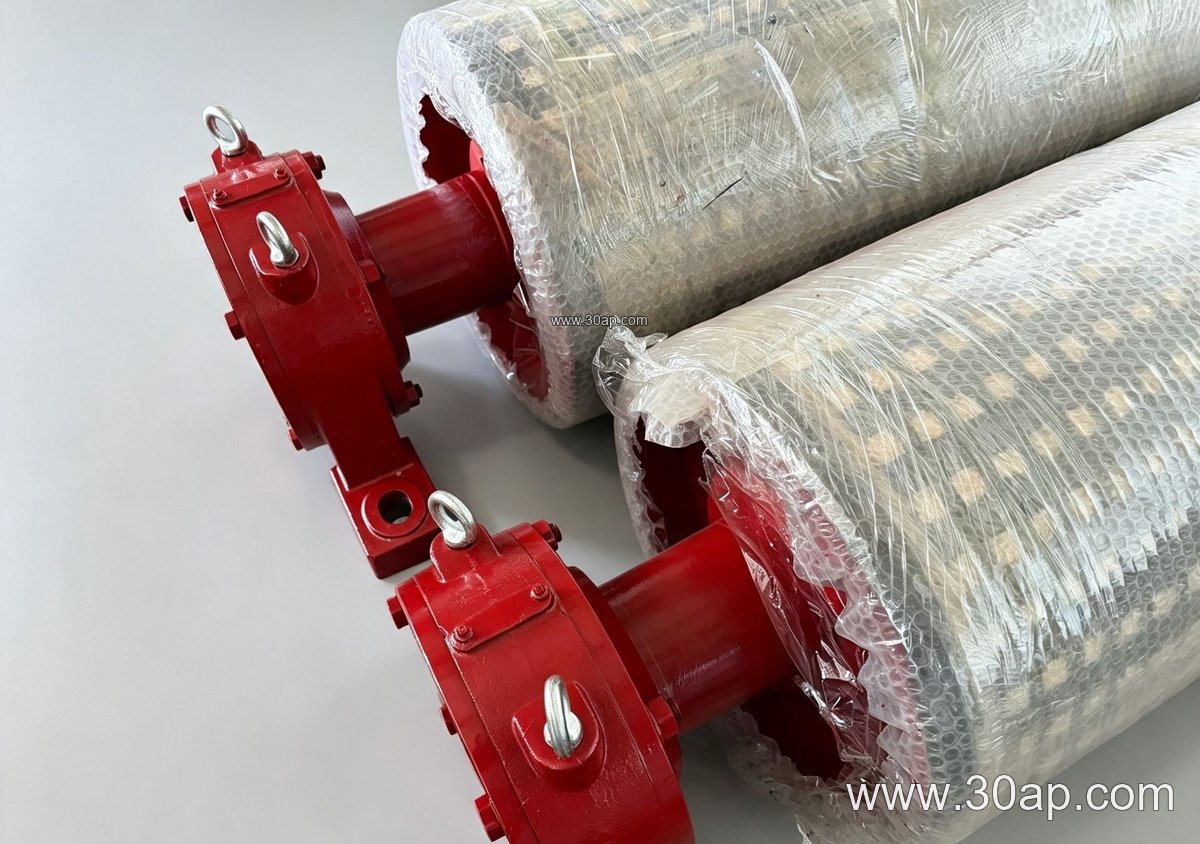
Tail pulley assemblies appear in aggregate plants, iron ore handling, power plant coal yards, and fertilizer granulation lines. In a stone crushing circuit, the tail pulley sits after the discharge zone and before the return run. In underground coal mining, flame retardant conveyor belts and anti-static belts are common, and the tail pulley must be compatible with the belt’s tracking characteristics. The assembly also works with conveyor idler rollers and conveyor brackets to keep the belt centered. When the belt is a heavy-duty mining conveyor belt or a steel cord conveyor belt, the tail pulley needs sufficient lagging and bearing capacity to handle high tension.
Selection and Maintenance Notes
Buyers should match the tail pulley assembly to the belt type, load, and environment. For abrasive materials such as ore or clinker, ceramic or thick rubber lagging extends service life. For coal mining or underground coal mining conveyor belts, flame retardant and anti-static properties of the belt matter, but the pulley itself should be selected for load and alignment. Check bearing seals in dusty quarry or cement plant conditions. Regular inspection of lagging wear and shaft alignment prevents belt mistracking. The tail pulley assembly is not a substitute for a drive pulley or a bend pulley; each has a distinct role in the conveyor.
For more information on compatible conveyor components, visit www.example.com/conveyor-pulley or www.example.com/tail-pulley-assembly.