What a Conveyor Bracket Actually Does
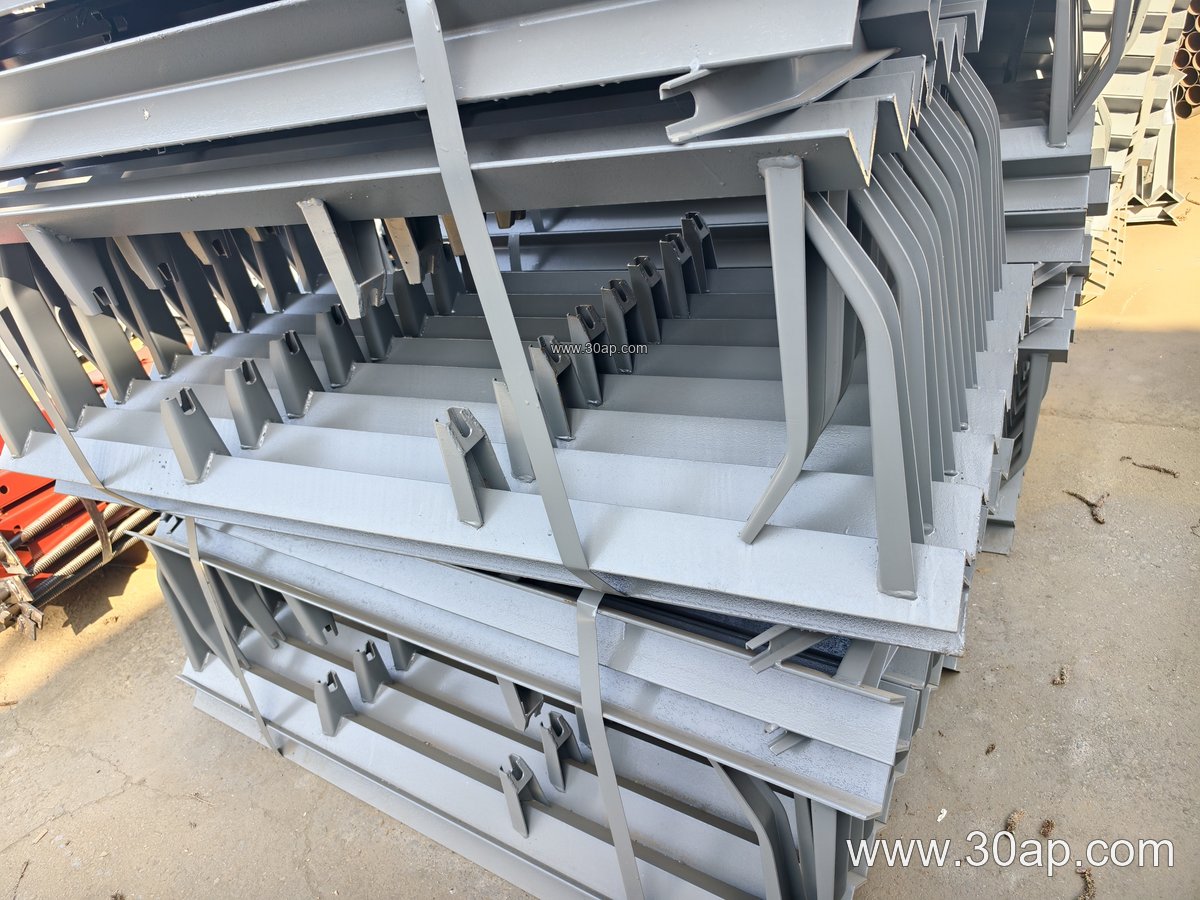
A conveyor bracket is the structural interface between a conveyor frame and the idler roller that supports the belt. In procurement terms, it is a fabricated steel component, usually made from angle steel, channel steel, or bent plate, and it carries the load of the belt, the material, and the roller itself. Buyers often group brackets with idler roller purchases, but the bracket is a separate item with its own tolerances, hole spacing, and material grade. Get the bracket wrong and the rollers sit at the wrong angle, the belt tracks poorly, and maintenance time climbs.
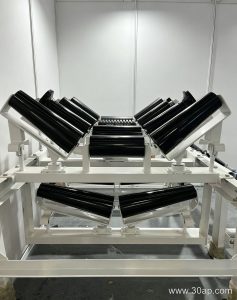
The bracket family is broad. Troughing brackets hold three rollers in a trough shape; return brackets support the empty side of the belt, often with a flat or V-shaped arrangement. Transition brackets, impact brackets, and self-aligning brackets each solve a specific problem at a specific point in the conveyor line. A buyer should know which position the bracket serves before requesting a quote.
Construction and Common Forms
Most brackets are welded assemblies. The main beam is cut to length, the roller seats are positioned, and mounting holes are drilled or punched. Surface treatment matters in dusty or wet plants, so hot-dip galvanizing or painted finishes are usually specified. The table below shows typical reference combinations; these are examples, not fixed rules, and actual hole pitch and beam length follow the conveyor design.
| Bracket Form | Typical Belt Width | Trough Angle | Roller Diameter |
|---|---|---|---|
| Troughing bracket, upper | B500 to B1200 | 20, 30, 35 degrees | Ø89, Ø108, Ø133 |
| Troughing bracket, heavy duty | B1200 to B1800 | 35, 45 degrees | Ø133, Ø159, Ø194 |
| Transition bracket | B650 to B1400 | Adjustable | Ø108, Ø133, Ø159 |
| Return bracket, flat | B500 to B1600 | Flat | Ø89, Ø108, Ø133 |
| V-return bracket | B800 to B2000 | V form | Ø108, Ø133, Ø159 |
| Self-aligning bracket | B650 to B1400 | 30, 35 degrees | Ø108, Ø133 |
Adjustable brackets allow the trough angle to be changed between, for example, 20 and 45 degrees during installation, which helps when the same frame design is used across several conveyors. Forward-leaning brackets, often set at about 1.5 to 2 degrees, are used to encourage belt tracking on the carrying side.
Where These Brackets Are Used
You will find conveyor brackets in nearly any plant that moves bulk material. In a limestone quarry or a crushing and screening line, troughing brackets carry the belt under coarse rock, while impact brackets sit below the loading point. In a cement plant, return brackets and self-aligning brackets keep the belt centered on long inclined runs. In a power plant coal yard, the same bracket forms appear alongside a flame retardant conveyor belt and a sturdy idler roller set. Port terminals, steel plants, and sand and gravel yards all rely on the same basic components, sized to the belt and load.
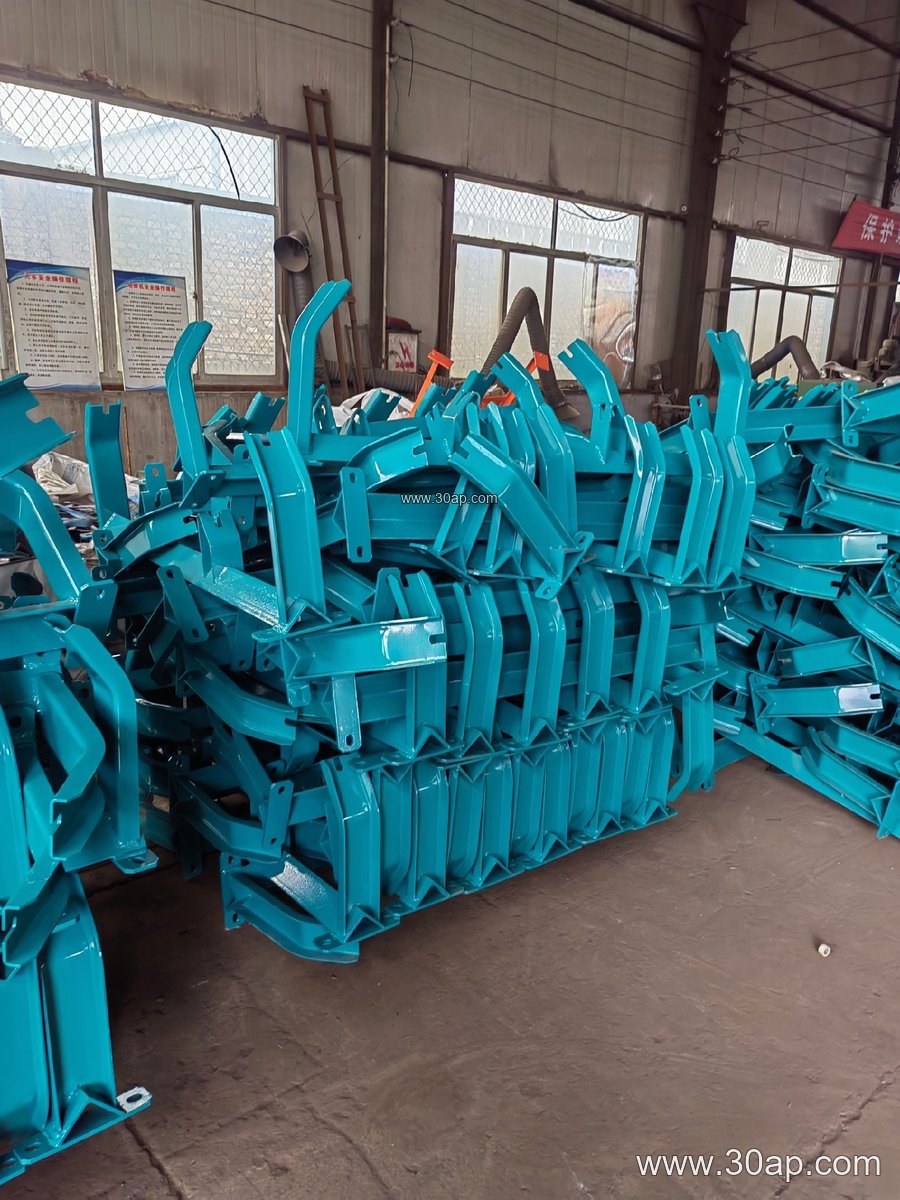
The choice of belt also influences bracket selection. A heavy steel cord conveyor belt or a multi-ply fabric core conveyor belt carries more tension and mass, so the bracket and roller spacing need to match the design load. Where a corrugated sidewall conveyor belt or a skirted conveyor belt runs, the bracket layout must leave clearance for the cleats and sidewalls. In food or grain handling, a food grade conveyor belt may run on stainless or coated brackets rather than painted steel.
Procurement Points to Confirm
- Belt width and trough angle, stated as a pair such as B1000, 35 degrees, rather than width alone.
- Roller diameter and the matching seat or cradle dimension on the bracket.
- Mounting hole spacing and beam length, which vary with width and angle and should be confirmed on the drawing.
- Material and finish: angle steel, channel steel, or bent plate, with galvanized or painted treatment.
- Position type: carrying, return, transition, impact, or self-aligning. These are not interchangeable.
- Quantity per conveyor and spare ratio, since brackets are often replaced together with rollers.
A common mistake is to order brackets by belt width only. Two conveyors with the same B1200 belt can use different trough angles and different roller diameters, and the bracket holes will not line up. Send the frame drawing or the existing bracket sample when possible. If the plant runs an abrasion resistant conveyor belt in a dusty quarry, specify a finish that will not seize the adjusting bolts. For a coal mining conveyor belt installation, confirm that the bracket finish and any non-metallic parts suit the site rules.
Working With Rollers and Belts
Brackets, idler rollers, pulleys, and the belt form one system. A misaligned bracket will wear the edge of an EP conveyor belt or an NN conveyor belt long before the belt reaches its expected service life. During procurement, ask for the bracket drawing together with the roller drawing so the two can be checked against each other. Keep a small stock of the most common bracket forms on site, and record the belt width, angle, and roller diameter on the bin label. That simple habit makes the next conveyor bracket procurement round faster and less error-prone, whether the plant is a quarry, a cement works, or a port terminal.