What an Idler Bracket Does on a Conveyor
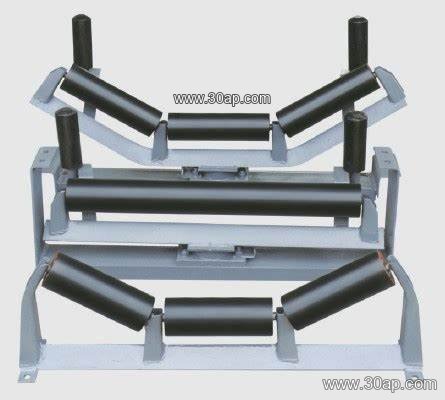
An idler bracket is the structural support that holds idler rollers at the correct position and angle beneath and above the conveyor belt. It is often called an idler frame or roller support bracket, and its job is simple but critical: keep the idlers aligned so the belt runs smoothly, stays centered, and carries material without excessive spillage or wear. In a limestone quarry or a cement plant, a poorly supported idler can cause belt misalignment that spreads quickly along the line. The bracket, not the roller, is what sets the trough angle and the spacing between rollers, so it directly influences how well the belt is supported under load.
How the Bracket Is Built
Most brackets are fabricated from angle steel, channel steel, or folded steel plate. The frame is welded or bolted, with mounting slots or holes positioned to match the idler shaft ends. The bracket must resist vibration, material impact, and corrosion from dust and moisture, so surface treatment such as painting or galvanizing is common. A well-built bracket keeps its geometry over years of service, because even small deformation changes the contact between the idler roller and the conveyor belt.
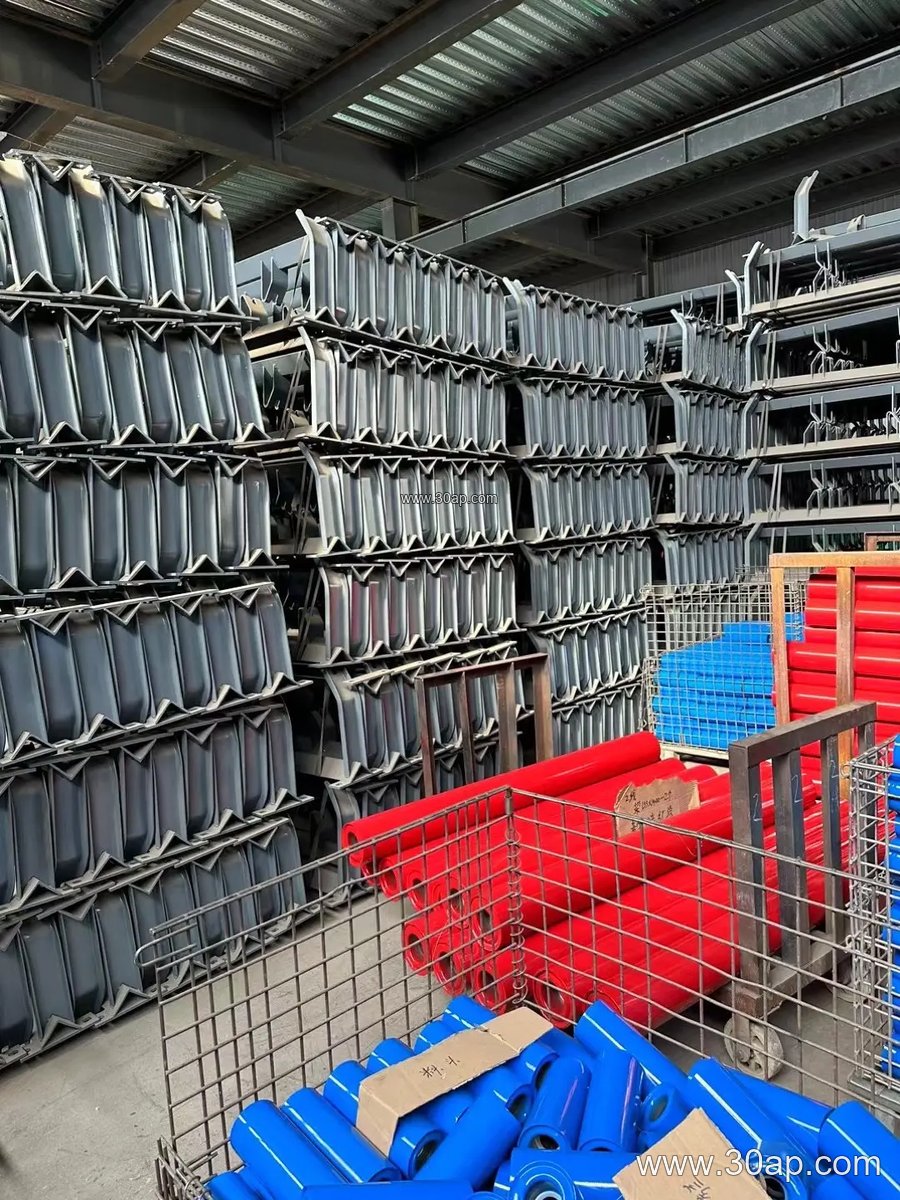
- Carrying brackets hold the upper idlers and set the trough angle.
- Return brackets support the lower run, often with a flat or V-shaped arrangement.
- Transition brackets ease the belt from flat to troughed profile near pulleys.
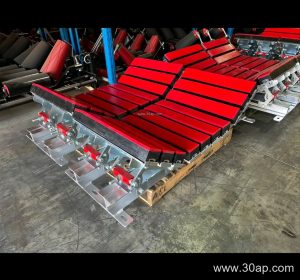
- Impact brackets sit under loading points and carry cushion idlers.
- Self-aligning brackets help correct belt drift on long runs.
Trough Angle and Roller Diameter Choices
The trough angle affects how much material the belt can hold and how the belt behaves at the edges. Common angles are 20, 30, 35, and 45 degrees. Adjustable brackets allow the angle to be changed within a range, which is useful when a line handles different materials. Roller diameters usually follow the belt width and load: typical sizes include Ø89, Ø108, Ø133, Ø159, and Ø194. The table below shows common reference combinations, not fixed rules.
| Belt Width | Typical Trough Angle | Common Roller Diameter | Typical Use |
|---|---|---|---|
| B500–B650 | 20–30 degrees | Ø89 | Light aggregate and sand lines |
| B800 | 30–35 degrees | Ø108 | Quarry and crusher feed |
| B1000–B1200 | 35–45 degrees | Ø133 | Cement and power plant coal handling |
| B1400–B1600 | 35–45 degrees | Ø159 | Iron ore and heavy bulk material |
| B1800–B2000 | 35–45 degrees | Ø194 | Large port and mining conveyors |
Belt width and roller diameter are matched by design, not by a single formula. A wider belt does not automatically require a larger roller, and a given width can work with more than one angle depending on the material and belt type.
Where These Brackets Are Used
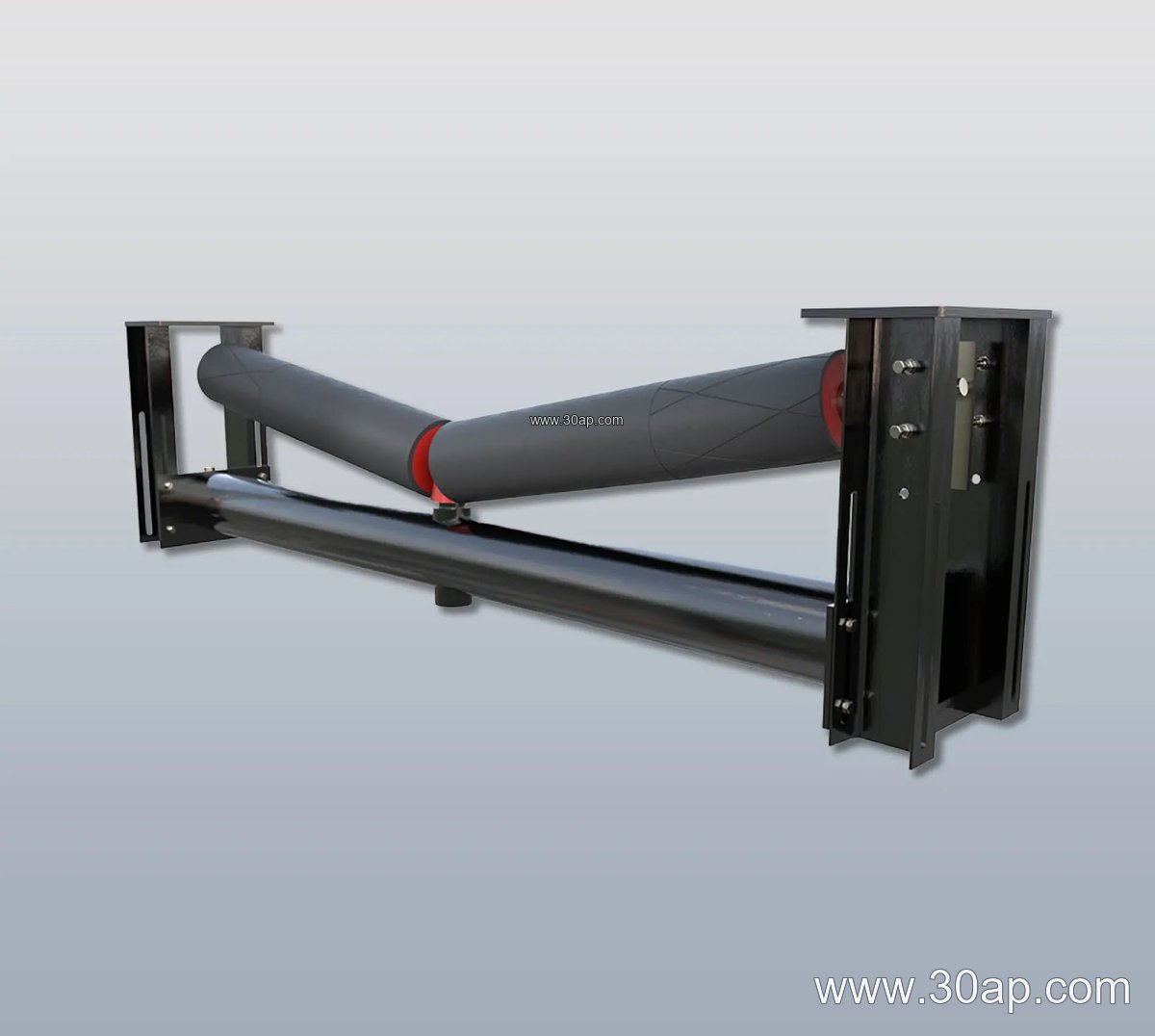
Brackets appear wherever a conveyor belt runs on idlers: in a coal washing plant, a power station coal yard, a stone crushing and screening line, or a fertilizer warehouse. In dusty or wet conditions, the bracket material and coating matter as much as the roller itself. A heavy-duty mining conveyor belt moving abrasive ore puts more stress on the frame than a smooth food grade conveyor belt in a packaging area, so the bracket gauge and mounting detail should suit the duty. On lines carrying a flame retardant conveyor belt underground, brackets are often specified with corrosion protection because of the damp environment. At transfer points, impact brackets and cushion rollers work together with a abrasion resistant conveyor belt to absorb falling material.
Fixed Versus Adjustable Brackets
Fixed brackets are welded or bolted at a set angle and are simple and rigid. Adjustable brackets let maintenance staff change the trough angle or fine-tune roller contact without replacing the frame. Self-aligning and forward-leaning designs are other options for controlling belt wander. The choice depends on whether the line handles one material consistently or switches between products, and on how often the belt needs re-centering. For a belt conveyor moving a steady stream of aggregate, a fixed bracket is often enough; for a plant that changes material and load, an adjustable design saves time during maintenance.
Buyer Checklist
- Confirm belt width, trough angle, and roller diameter before ordering.
- Check mounting hole spacing and beam length, which vary with width and angle.
- Match frame material and coating to dust, moisture, and corrosion risk.
- Decide between fixed and adjustable frames based on operating flexibility.
- Verify the bracket fits the idler roller shaft end and the conveyor bracket mounting points.
- Plan spare brackets for high-wear zones such as loading and transfer points.
For more on compatible conveyor components, see idler bracket, conveyor pulley, and conveyor belt guidance. A correctly chosen bracket keeps the idlers true, the belt centered, and the whole conveying system running with less downtime.