What a lagged pulley does on a conveyor
A conveyor belt lagged pulley is a conveyor pulley with a rubber or ceramic layer bonded to its shell, and the lagging changes how the pulley behaves in two important ways. On a drive position it raises friction between the shell and the belt, so the same motor can pull more load before slip appears. On a return or bend position it protects the shell from abrasive grit and keeps the belt tracking more calmly. In a quarry, a coal washing plant or a cement clinker line, that combination of grip and wear resistance is usually why the lagging is specified at all.
The product is still a drum-shaped conveyor pulley; the lagging is a surface treatment, not a separate machine. Buyers should treat it as one assembly: shell, lagging, shaft, hubs, bearings and bearing housings all need to suit the duty.
How the lagging is built
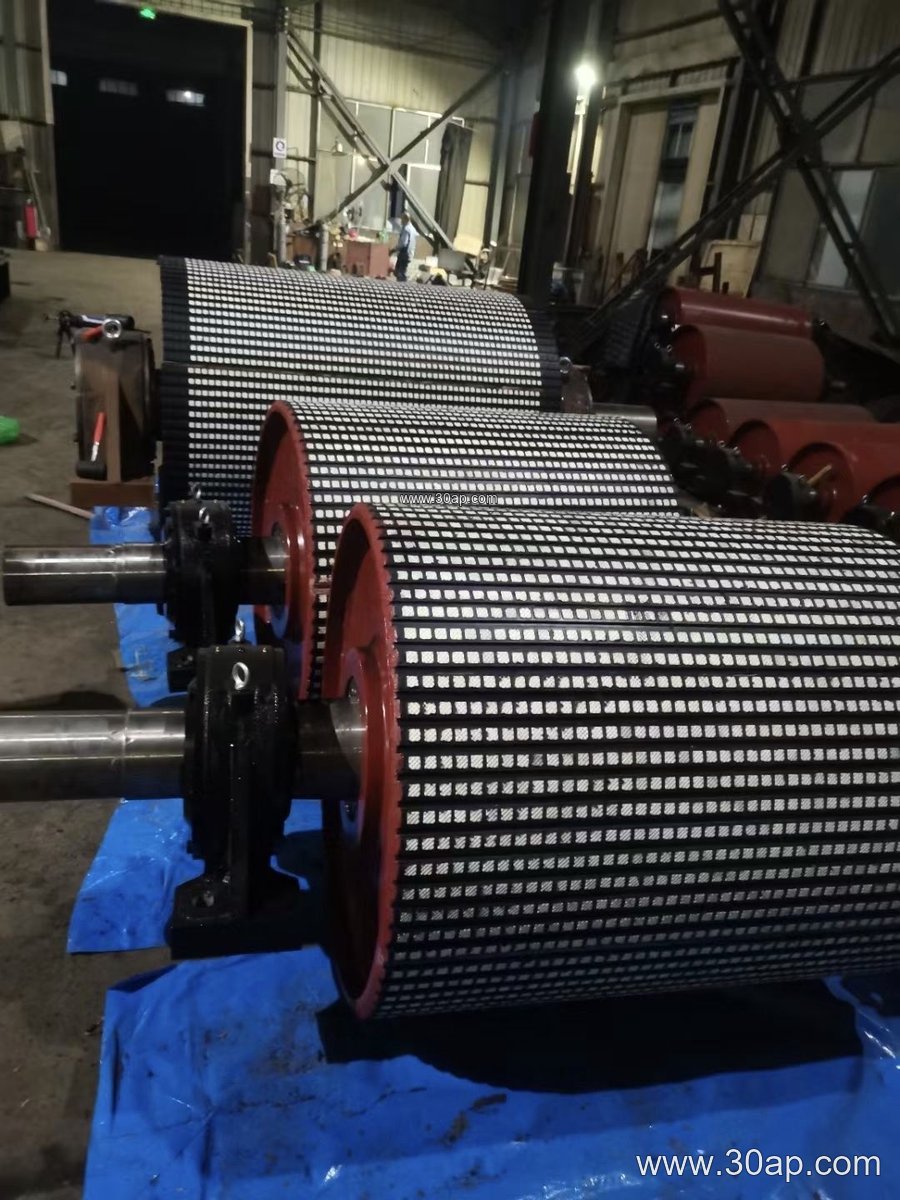
Most lagged pulleys start with a welded or rolled steel shell machined to a true diameter. The rubber layer is then applied in one of several ways. Cold-bonded rubber uses an adhesive system and is common where workshop conditions are simple. Hot-vulcanised lagging is cured under heat and pressure and generally gives a stronger bond, which matters on high-tension drives. Diamond grooved lagging helps water and fine dust escape from the contact area, while plain sheet lagging suits cleaner duties.
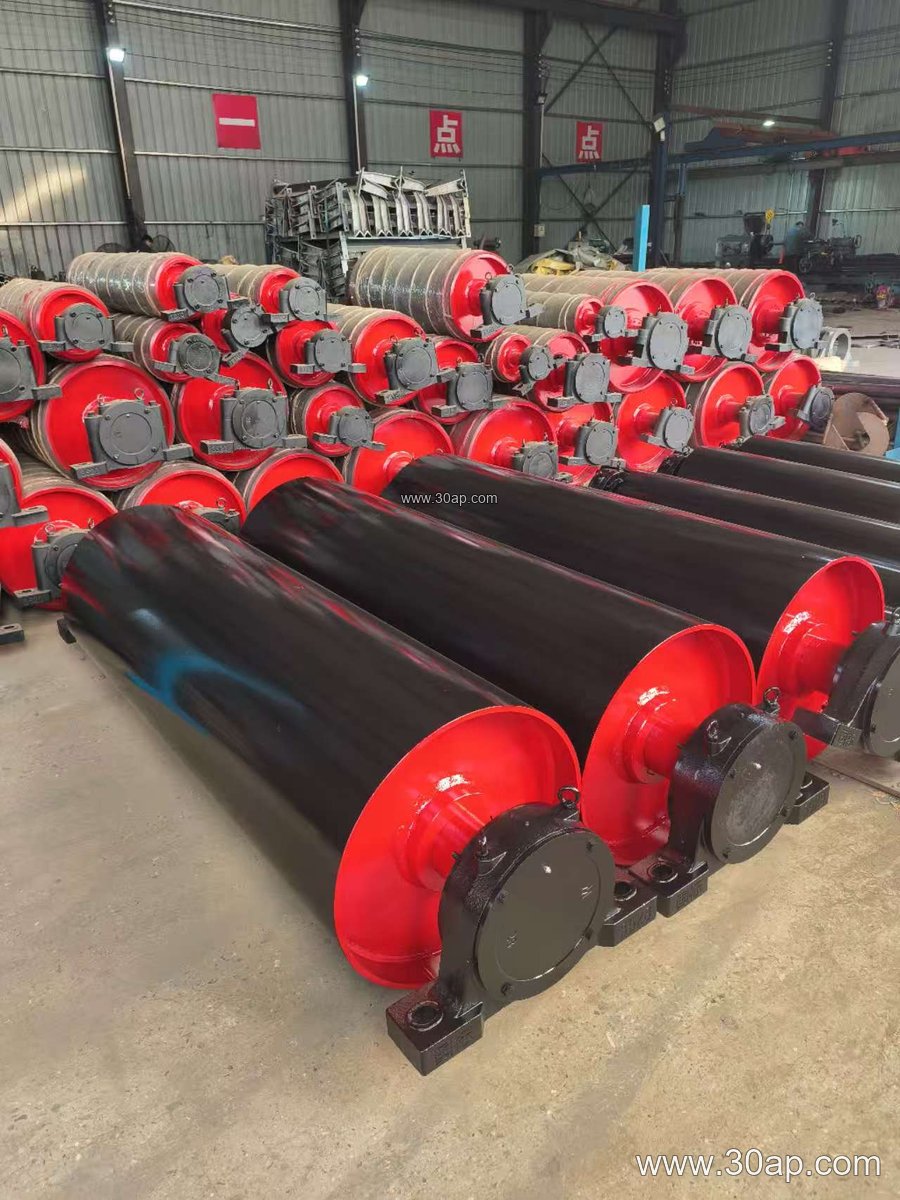
Typical lagging thicknesses are 8, 10, 12, 15 and 20 mm. Thicker rubber is not automatically better: it adds weight and cost, and on small diameter pulleys it can increase bending stress in the belt. The right choice depends on belt tension, pulley diameter and how abrasive the material is.
Common surface options
- Plain rubber lagging for general grip and shell protection
- Diamond grooved lagging for wet or dusty drives
- Ceramic lagging for very abrasive duties with high slip risk
- Hot-vulcanised or cold-bonded rubber as the bonding method
Drive, tail and bend positions are not the same
A drive pulley carries the highest torque and needs reliable friction, so lagging here is almost always specified. The tail pulley mainly guides the belt and tensions it; lagging helps if the return side is dirty or the belt wraps at a steep angle. A bend pulley changes belt direction and usually sees lower load, so a thinner lagging may be enough. These roles should not be confused: a lagged tail pulley is not a substitute for a properly designed drive pulley, and a bend pulley cannot be treated as a drive just because it is lagged.
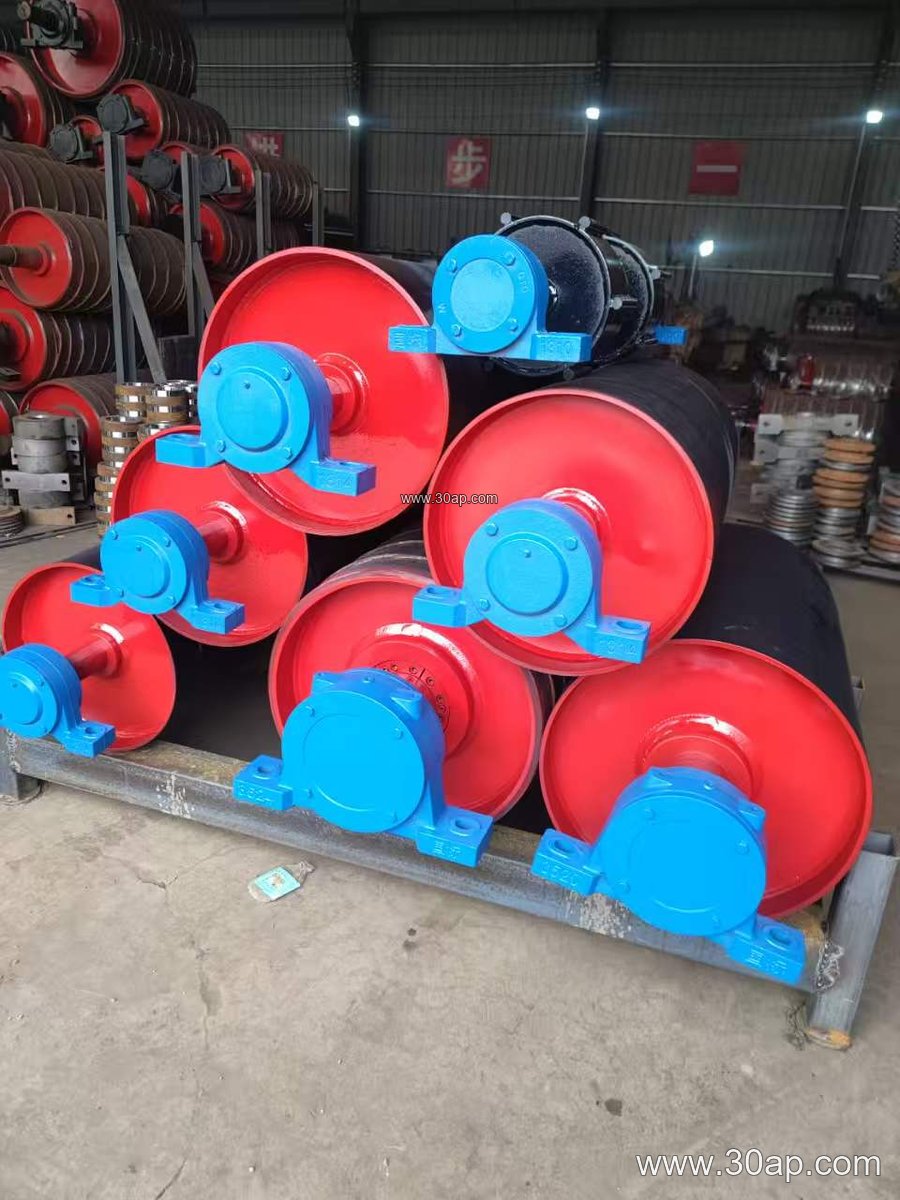
On a heavy-duty mining conveyor belt or a steel cord conveyor belt installation, the drive pulley often works with a high wrap angle and a take-up system. In that arrangement the lagging, the belt cover grade and the tension all interact. A high abrasion resistant conveyor belt running over a poorly bonded lagging will wear the rubber quickly, while an aggressive ceramic surface can be harsh on a light fabric belt.
Matching pulley size to belt width
Pulley face width is normally a little wider than the belt. Reference practice often puts the face at roughly belt width plus 100 to 200 mm, for example B800 with about 950 mm face and B1200 with about 1400 mm. Diameter is set by belt tension, wrap angle and shaft load, not by a fixed rule from belt width. A B800 pulley might commonly be built around Ø500, while a B1200 drive in a heavier duty could use Ø1000 or more. Shaft diameter follows torque and bearing load; Ø80, Ø100 and Ø120 shafts appear across many sizes, but the correct value comes from calculation.
| Belt width | Typical pulley face | Example diameter range |
|---|---|---|
| B500 | about 600 mm | Ø250 to Ø400 |
| B650 | about 750 mm | Ø315 to Ø500 |
| B800 | about 950 mm | Ø400 to Ø630 |
| B1000 | about 1150 mm | Ø500 to Ø800 |
| B1200 | about 1400 mm | Ø630 to Ø1000 |
| B1400 | about 1600 mm | Ø800 to Ø1250 |
These are planning references, not fixed pairings. Final dimensions should come from the conveyor design.
Where lagged pulleys are used
You will find them on primary crushing discharge conveyors in a stone crushing plant, on coal handling belts at a power plant, and on clinker transport in a cement works. In a sand and aggregate line they sit at the head of long inclines where slip would stop production. In a port bulk terminal, a lagged drive pulley helps a wide belt start under load without excessive take-up tension.
The surrounding hardware matters too. A conveyor bracket that is not square, or worn idler rollers nearby, can cause belt misalignment that no lagging will fix. Check the whole conveyor frame when a pulley is replaced.
Buyer checklist
- State the duty: drive, tail or bend, and the belt width and speed.
- Give the calculated belt tension and shaft load, not just the belt size.
- Choose lagging thickness and groove pattern for the material and moisture level.
- Confirm the bonding method and whether the pulley can be re-lagged later.
- Check bearing type, housing fit and bracket dimensions before ordering.
Downtime on a bulk handling line is expensive, and a lagged pulley is one of the cheaper components to get right. Specify it against the actual conveyor duty, keep spare lagging or a spare pulley for critical drives, and inspect the rubber surface at each shutdown for glazing, cuts or separation.