What the Tail Bend Pulley Does
A tail bend pulley is a direction-changing roller mounted near the tail end of a belt conveyor. Its job is not to drive the belt and not to set the final tension at the take-up, but to guide the returning belt into the tail pulley at the correct angle. In many layouts the tail pulley itself sits inside the loop, and the tail bend pulley redirects the slack side so the belt wraps the tail roller properly before it runs back to the carrying side. This small change of direction protects the belt edges, keeps the belt centered, and reduces the chance of mistracking at the loading point.
Because the function is guidance rather than power transmission, the tail bend pulley belongs to the bend or snub family of conveyor pulleys. It is not a drive pulley, and it is not a tail pulley. Those parts carry different loads and different surface requirements. For example, a drive pulley needs a lagged surface to transmit torque, while a bend pulley usually runs with a plain or lightly lagged shell. Mixing the two in a specification is a common source of confusion in quarry and cement plant projects.
Construction and Typical Dimensions
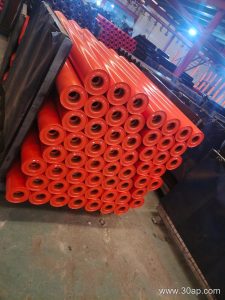
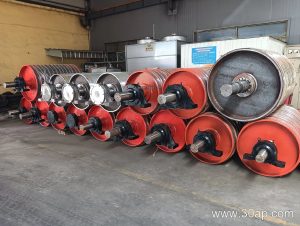
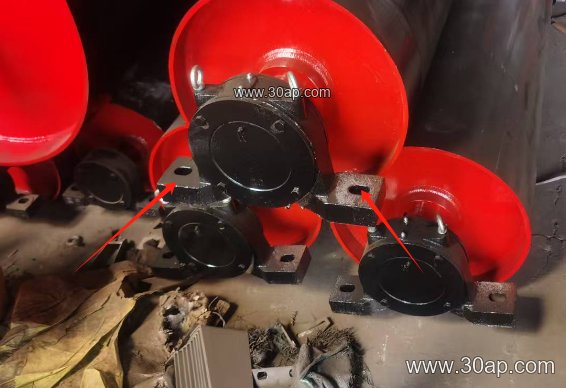
The body is usually a welded steel shell with machined end discs, keyed shafts, and bearing housings that bolt to the conveyor bracket. Shell thickness and shaft diameter are chosen from the belt tension and the resulting shaft load, not from belt width alone. A B1200 belt might run on a Ø500 tail bend pulley in one plant and a Ø800 unit in another, depending on wrap angle, space, and belt stiffness. Typical combinations include B800 × Ø500, B1200 × Ø1000, and B1400 × Ø800, but these are reference examples rather than fixed rules.
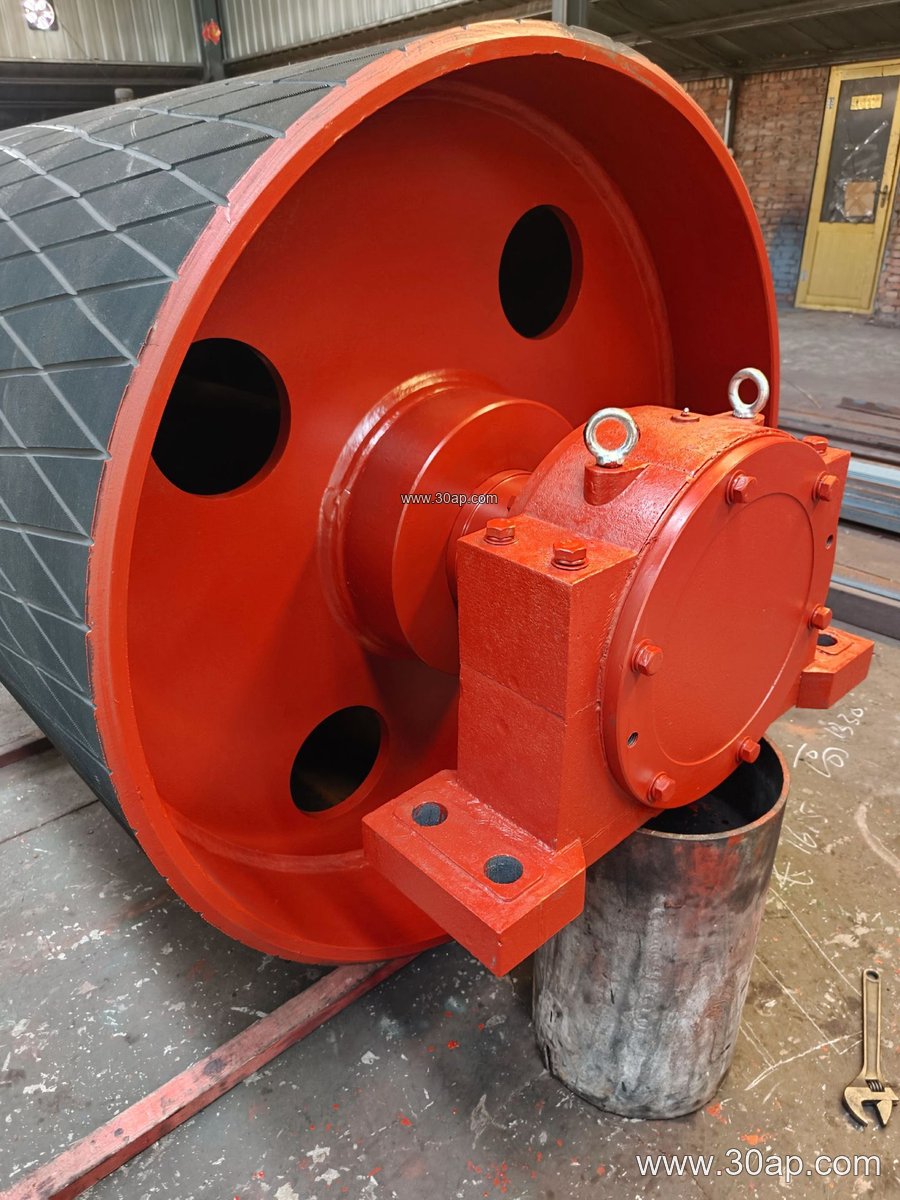
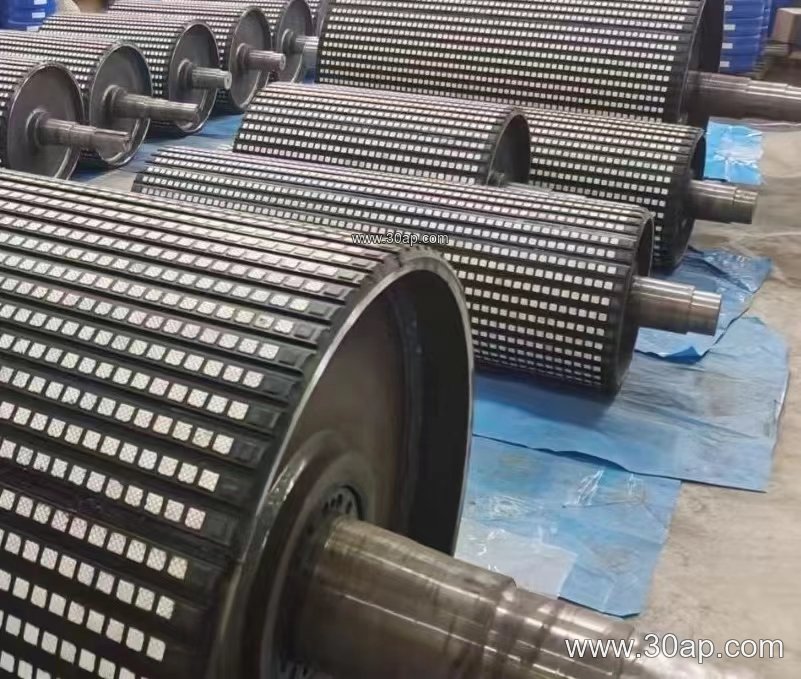
Face width normally exceeds belt width so the belt is fully supported. Common practice gives B650 about 750 mm of face, B1000 about 1150 mm, and B1400 about 1600 mm. Shaft ends are often in the Ø80 to Ø160 range for medium conveyors, while heavier installations may use Ø180 or Ø200 shafts. Surface options include plain finish, cold-bonded rubber, hot-vulcanized rubber, diamond lagging, and ceramic lagging with 8, 10, 12, 15, or 20 mm thickness. A light diamond lagging is often enough to improve traction and shed fines near a wet tail area.
| Parameter | Common reference values |
|---|---|
| Belt width | B500, B650, B800, B1000, B1200, B1400, B1600 |
| Pulley diameter | Ø250, Ø315, Ø400, Ø500, Ø630, Ø800, Ø1000 |
| Face width | About 100 to 200 mm wider than the belt |
| Shaft diameter | Ø60, Ø80, Ø100, Ø120, Ø140, Ø160 |
| Lagging | Plain, diamond rubber, ceramic, 8 to 20 mm |
Where It Fits in the Plant
You will see this roller in stone crushing lines, aggregate plants, and cement clinker conveyors where the tail end is cramped and the belt must turn sharply. In a coal handling system it may sit below the loading chute, guiding the return strand away from structure. In a power plant fuel yard, a tail bend pulley helps route the belt around the take-up frame without rubbing the skirt rubber. Portable crushers and tunnel spoil conveyors also use it to shorten the machine frame.
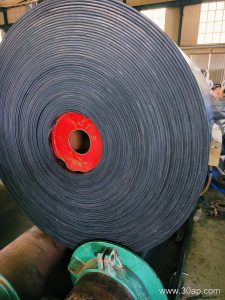
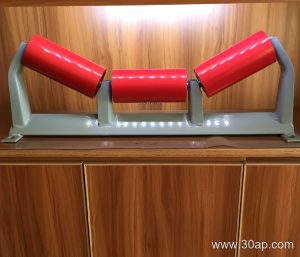
The pulley works with the conveyor belt, the troughing idler roller set, and the return rollers. Its alignment must match the tail pulley centerline; a small offset will pull the belt to one side. When the belt is a heavy-duty mining conveyor belt or an abrasion resistant conveyor belt, the bend pulley surface should be smooth and free of build-up, because a lump of frozen clay or cement dust on the shell can act like a steering roller and cause edge damage.
Selection and Maintenance Notes
- Confirm the wrap angle and the belt path before choosing a diameter; a tighter wrap needs a larger roller or a different layout.
- Match the lagging to the environment: plain or thin rubber in dry stone lines, ceramic or grooved lagging where the shell is wet and slippery.
- Check bearing size against the actual shaft load, not only against belt width.
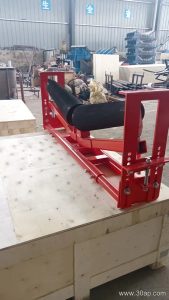
- Use a conveyor bracket that allows shimming, so the roller can be aligned after the belt is tensioned.
- Inspect for shell wear, loose lagging, and grease leakage at each shutdown; a worn bend pulley often shows up first as belt edge fraying.
For a new project, send the belt width, belt type, tail pulley diameter, wrap angle, and expected belt tension to the pulley supplier. Mentioning whether the belt is an EP conveyor belt, an NN conveyor belt, or a steel cord conveyor belt helps the supplier judge stiffness and minimum roller diameter. Buyers comparing offers should ask for the shell thickness, shaft material, bearing brand class, and lagging method in writing, then check that the face width clears the belt and the bracket mounting holes match the existing frame.