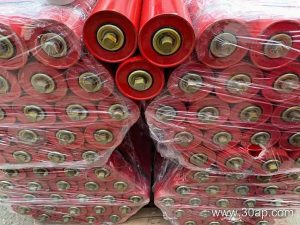
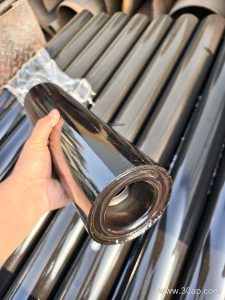
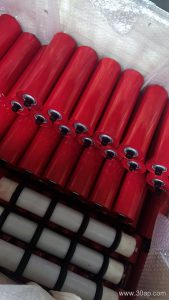
What an Aggregate Production Line Idler Does
An aggregate production line idler is the rotating support that carries the conveyor belt between the head and tail of a crushing or screening circuit. In a quarry or sand and gravel plant, the belt may haul blasted rock, washed stone, or manufactured sand, so the idler must keep the belt tracking while absorbing constant grit, dust, and impact. The same component is also called a conveyor idler roller or belt conveyor idler, and in the aggregate industry the three names describe the same product.
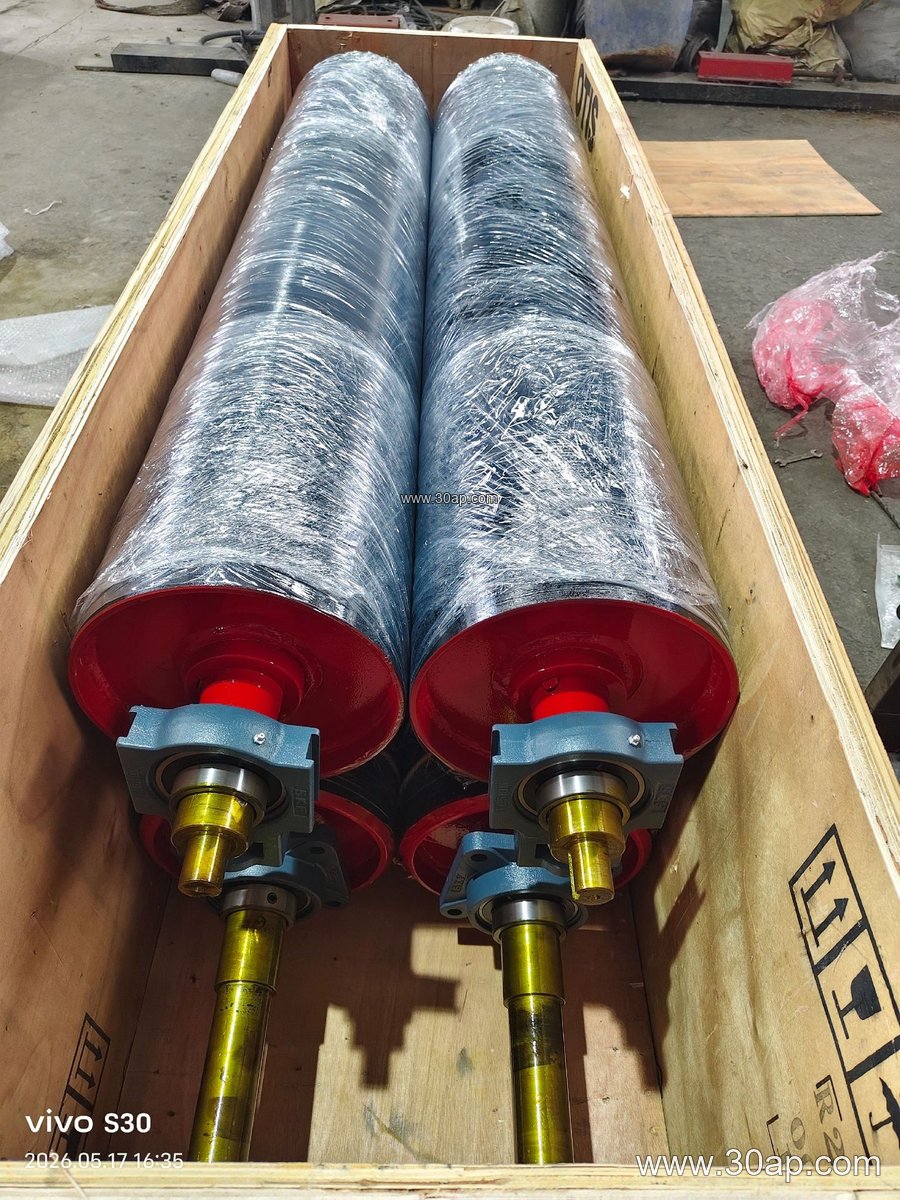
The idler is not a drive component. Drive, tail, and bend pulleys change belt direction or transmit power, while idlers simply support the loaded and return strands. That distinction matters when ordering spares: a conveyor pulley cannot replace an idler roller, and a bend pulley is not a substitute for a return idler.
Construction and Common Forms
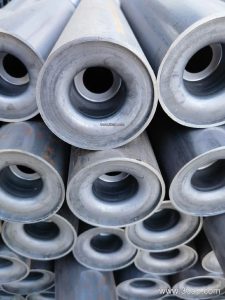
A typical idler roller is a steel tube fitted with bearing housings at each end, sealed against fine dust, and mounted on a fixed shaft. Roller surfaces are usually plain steel; nylon, ceramic, or rubber rings appear where abrasion, build-up, or noise is a concern. Rubber-ring impact idlers are common below crusher discharge points, where lump size is large and drop height is significant.
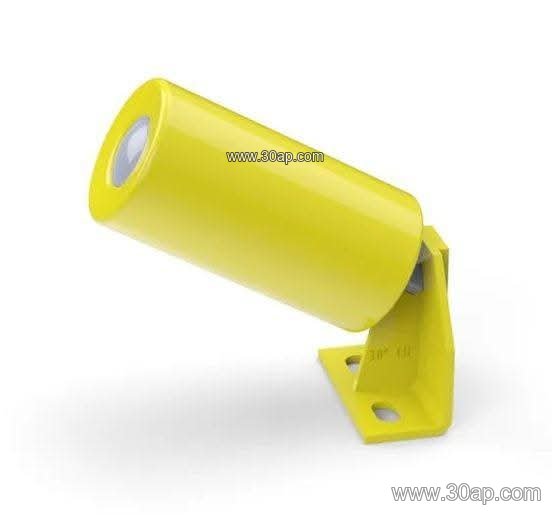
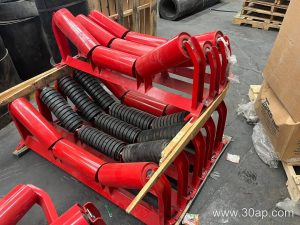
Idlers are supplied as single rollers or as groups. A three-roller troughing set forms the carrying side, a two-roller set is used on smaller belts, and a single roller serves flat or return positions. Transition idlers ease the belt from flat to troughed. V-return and flat return idlers support the empty strand, while self-aligning, friction self-aligning, and tapered self-aligning idlers correct mistracking. Spiral and comb idlers help release sticky material.
Reference Dimensions
The table below gives common reference values, not fixed matches. Roller length changes with belt width, trough angle, and set configuration, and side rollers may differ from the centre roller.
| Item | Common reference values |
|---|---|
| Roller diameter | Ø63, Ø76, Ø89, Ø102, Ø108, Ø127, Ø133, Ø159, Ø178, Ø194, Ø219 mm |
| Belt width | B400, B500, B650, B800, B1000, B1200, B1400, B1600, B1800, B2000, B2200, B2400 |
| Trough angle | 20°, 30°, 35°, 45° |
| Forward tilt | about 1.5° to 2°, mainly on training idlers |
| Bearing | 6204, 6205, 6305, 6306, 6308, 6310 |
| Example roller length, three-roller set | B500 about 200 mm; B800 about 315 mm; B1200 about 465 mm; B1600 about 600 mm; B2000 about 750 mm |
Bearing size is selected from load, speed, and shaft design, never from belt width alone. A Ø108 roller may be built with different bearings depending on the duty, and one belt width can accept more than one pulley diameter in the same circuit.
Where It Fits in the Plant
In a limestone mine or stone crushing line, troughing idlers dominate the primary and secondary discharge conveyors, while impact idlers sit under the crusher outlet. A cement plant uses similar sets on clinker and raw material belts, and a coal washing plant relies on sealed idlers to survive wet, abrasive fines. The idler works together with the conveyor belt, the conveyor pulley at each end, and the conveyor bracket that fixes the frame to the structure.
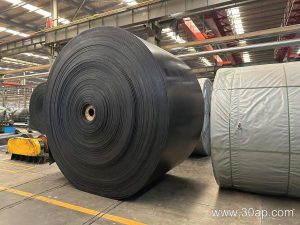
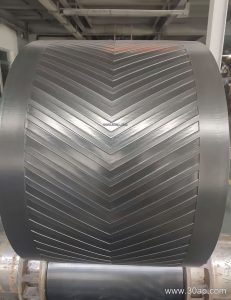
Belt selection and idler selection should be reviewed together. A heavy-duty mining conveyor belt or an abrasion resistant conveyor belt running at high tension needs a stable idler frame and correct roller spacing. Where a pipe conveyor belt or a corrugated sidewall conveyor belt is used, idler geometry follows the belt profile rather than a standard trough. For hot clinker or sinter, a heat resistant conveyor belt is paired with idlers rated for the same temperature.
Buyer Checklist
- Confirm belt width, trough angle, and whether the station is carrying, transition, impact, or return.
- State the material: rock, ore, sand, clinker, or coal, and note moisture and temperature.
- Give the required roller diameter and bearing series, or ask the supplier to confirm from load and speed.
- Check seal type and grease arrangement for dusty or wash-down areas.
- Verify frame dimensions and bracket spacing against the existing conveyor bracket.
- Order self-aligning idlers only where mistracking is confirmed, not as a default.
Maintenance Notes
Seized idlers wear belts quickly and raise power draw. Walk the line regularly, listen for squealing, and check for material build-up on return rollers. Replace rollers in matched sets where possible so the belt keeps an even profile. Keep spare troughing and return idlers on site, and record roller diameter and bearing number so replacements match the original design. For more on belts, pulleys, and frames, see aggregate production line idler and the related conveyor components pages.