What a Conveyor Idler Bracket Does
A conveyor idler bracket is the structural part that holds each idler roller in place along a conveyor frame. It sets the roller height, the trough angle and the spacing between rollers, so the conveyor belt runs on a stable, predictable line. In a quarry, a cement plant or a power plant coal yard, the bracket is the quiet component that decides whether the belt tracks well or wanders.
Because it carries the load path from the belt through the roller into the frame, the bracket must match the belt width, the roller diameter and the duty level. It is not a universal part, and a bracket chosen for one conveyor line will rarely suit another.
How the Bracket Is Built
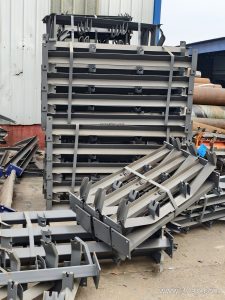
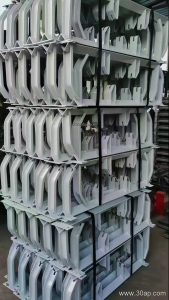
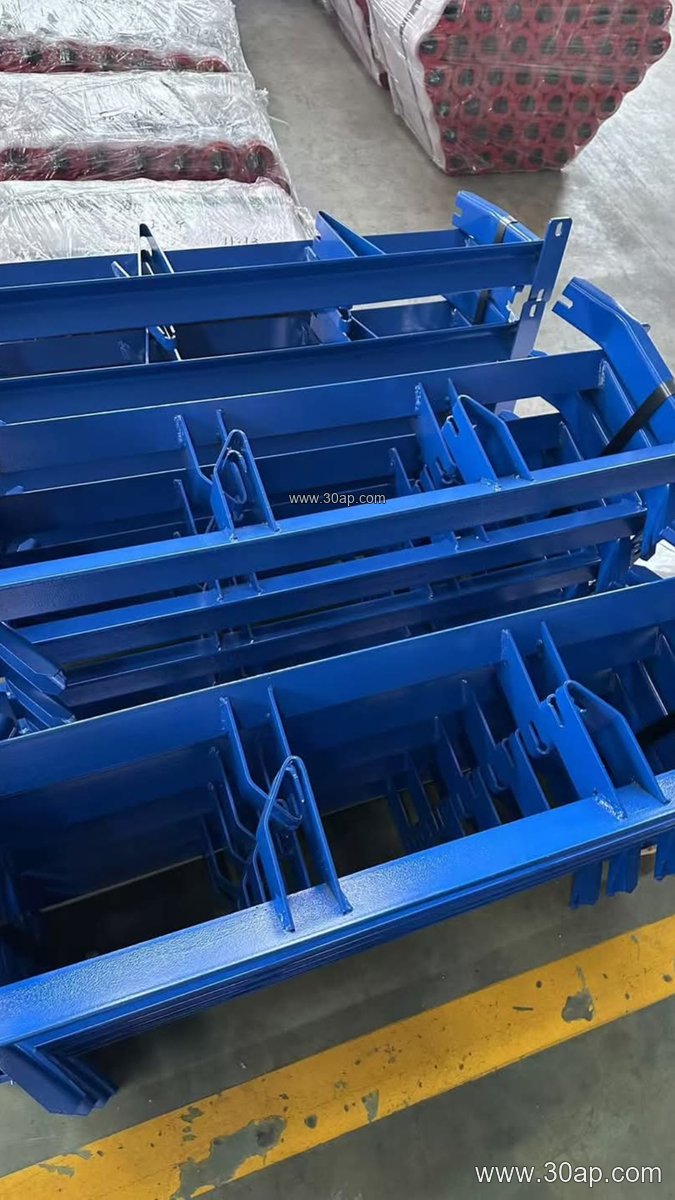
Most brackets are formed from angle steel, channel steel or folded steel plate. The frame is welded or bolted, then drilled to accept the roller shaft. Common forms include the trough bracket on the carrying side, the transition bracket near the tail, the return bracket under the belt, and the V-shaped return bracket that helps centre the belt.
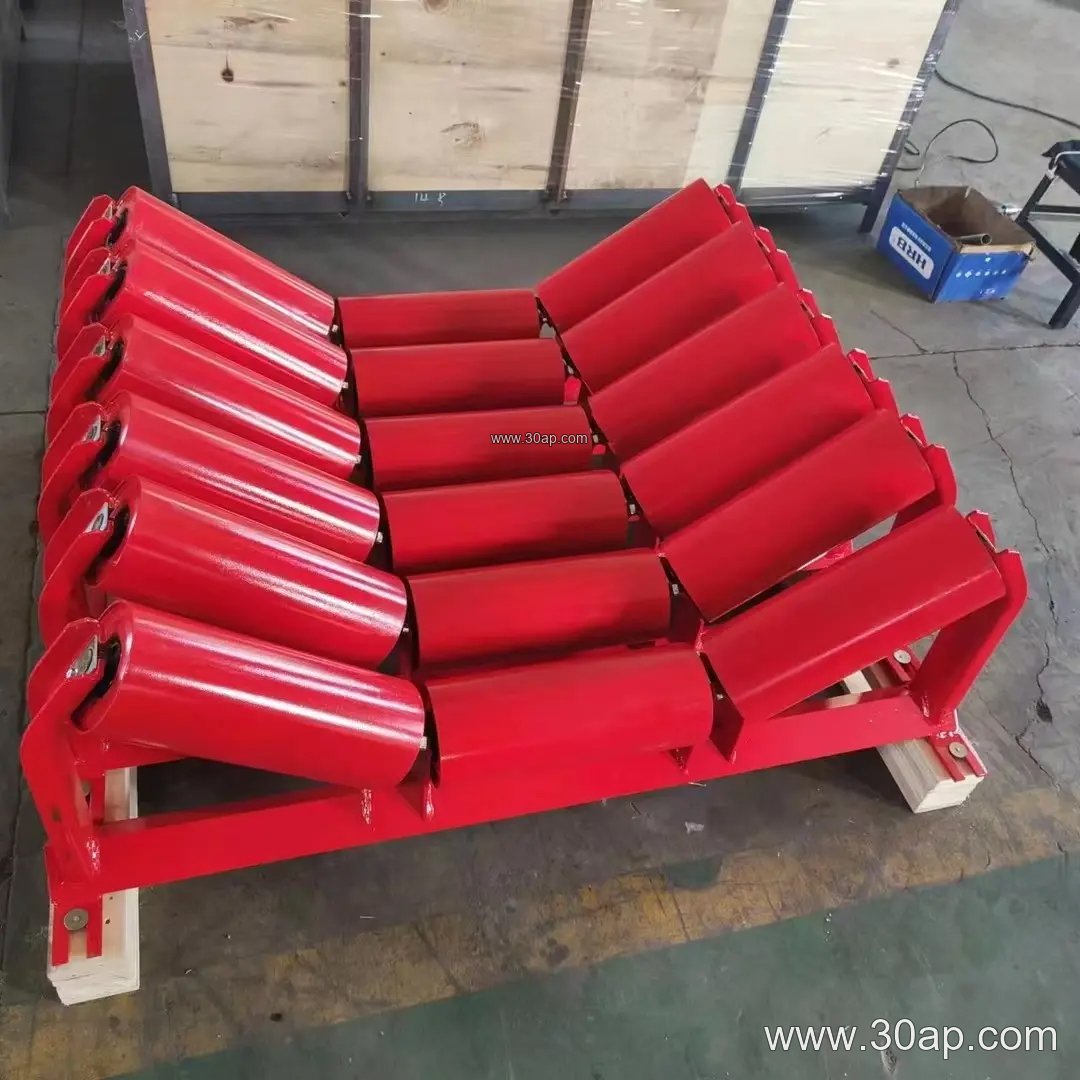
Adjustable brackets allow the trough angle to be changed on site, usually between 20 and 45 degrees. Fixed brackets lock one angle. Forward-leaning designs, often around 1.5 to 2 degrees, are used to encourage belt tracking. Self-aligning and impact brackets are separate subtypes, each built for a specific job rather than as a general replacement.
Matching Bracket, Roller and Belt
The bracket must be ordered with the belt width and roller diameter in mind. Typical reference combinations look like this, and the final figures are always confirmed by the conveyor design:
| Belt width | Trough angle | Roller diameter |
|---|---|---|
| B650 | 30 degrees | Ø89 |
| B800 | 35 degrees | Ø108 |
| B1000 | 35 degrees | Ø133 |
| B1200 | 45 degrees | Ø133 |
| B1400 | 35 degrees | Ø159 |
| B1600 | 45 degrees | Ø159 |
| B1800 | 35 degrees | Ø194 |
These are common pairings, not fixed rules. A wide belt can run with more than one trough angle, and the hole spacing and crossbeam length change with belt width and angle. Buyers should supply the belt width, roller diameter, trough angle and mounting dimensions so the bracket is drilled correctly.
Where These Brackets Are Used
In a limestone quarry or a sand and gravel line, trough brackets hold the rollers that support a heavy, abrasive belt. In a coal washing plant or a power plant coal handling system, flame retardant and anti-static belts run over the same bracket families, and the bracket material must resist dust and moisture. In a cement plant, heat resistant belts near the kiln need brackets that keep their shape under temperature cycling.
The bracket works with the conveyor belt, the idler roller and the conveyor pulley to keep the whole line stable. When a fabric core belt such as an EP conveyor belt or NN conveyor belt is used, the bracket still does the same job: hold the roller, set the angle, and keep the belt supported.
What Buyers Should Check
- Belt width and roller diameter, with the trough angle confirmed.
- Load duty, because a heavy-duty mining conveyor belt or a steel cord conveyor belt needs a stronger frame than a light package line.
- Mounting hole spacing and crossbeam length, which follow the actual conveyor design.
- Environment, since washdown, dust and heat affect the steel finish and coating choice.
- Whether a fixed or adjustable bracket suits the line, and whether a transition or impact bracket is needed at the load point.
For a fast check, visit www.beltconveyorparts.com/conveyor-idler-bracket for bracket drawings, or www.beltconveyorparts.com/idler-roller for matching rollers. Belt data sits at www.beltconveyorparts.com/steel-cord-conveyor-belt, and system notes at www.beltconveyorparts.com/conveyor-pulley. A bracket that fits the frame and the roller is the simplest way to keep a belt running straight.