What Is a Main Drive Pulley?
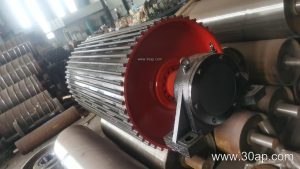
In any belt conveyor, the main drive pulley—often simply called the drive pulley or head pulley—is the component that transmits power from the drive unit to the conveyor belt. It grips the belt on the carrying side and pulls it forward, setting the entire material flow in motion. Unlike tail pulleys or bend pulleys, which guide or tension the belt, the main drive pulley is the only one directly connected to the motor and gearbox, making it the heart of the system’s traction.
This pulley is typically located at the discharge end of the conveyor, though in some configurations it may sit at an intermediate point. Its design must handle high torque, continuous operation, and the abrasive conditions common in industries such as mining, cement, and power generation.
Construction and Key Features
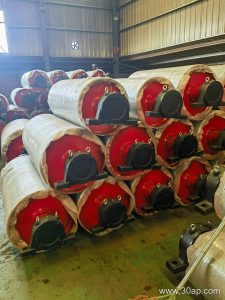
A main drive pulley is built around a sturdy cylindrical shell, usually made from rolled steel, with welded end discs and a shaft that extends through the bearings. The shell surface is often machined to ensure true running, and the shaft is sized according to the torque and radial loads—common shaft diameters range from Ø50 to Ø200 mm, but the exact value is determined by engineering calculations, not by belt width alone.
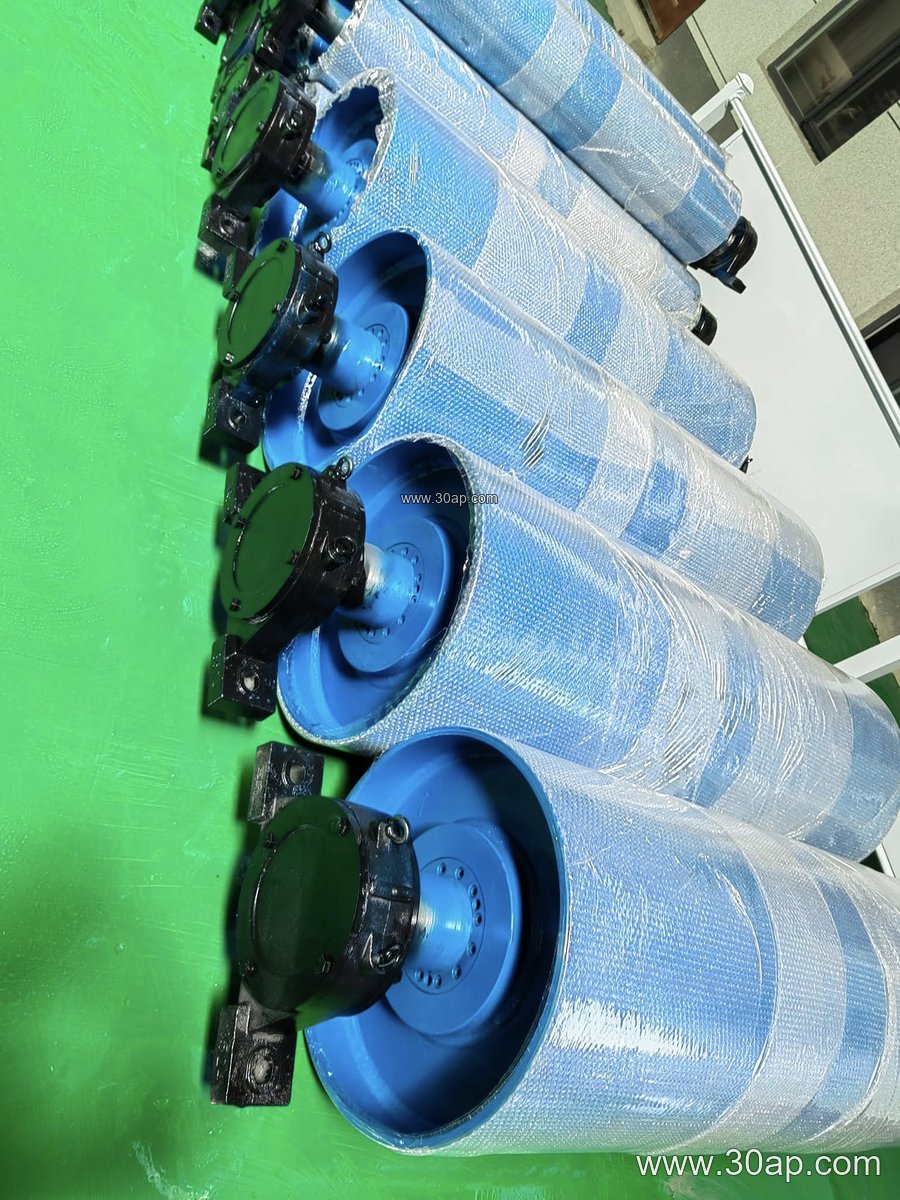
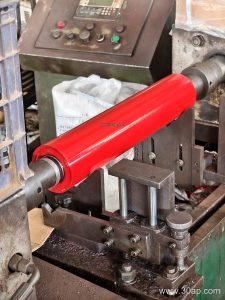
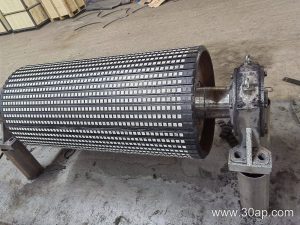
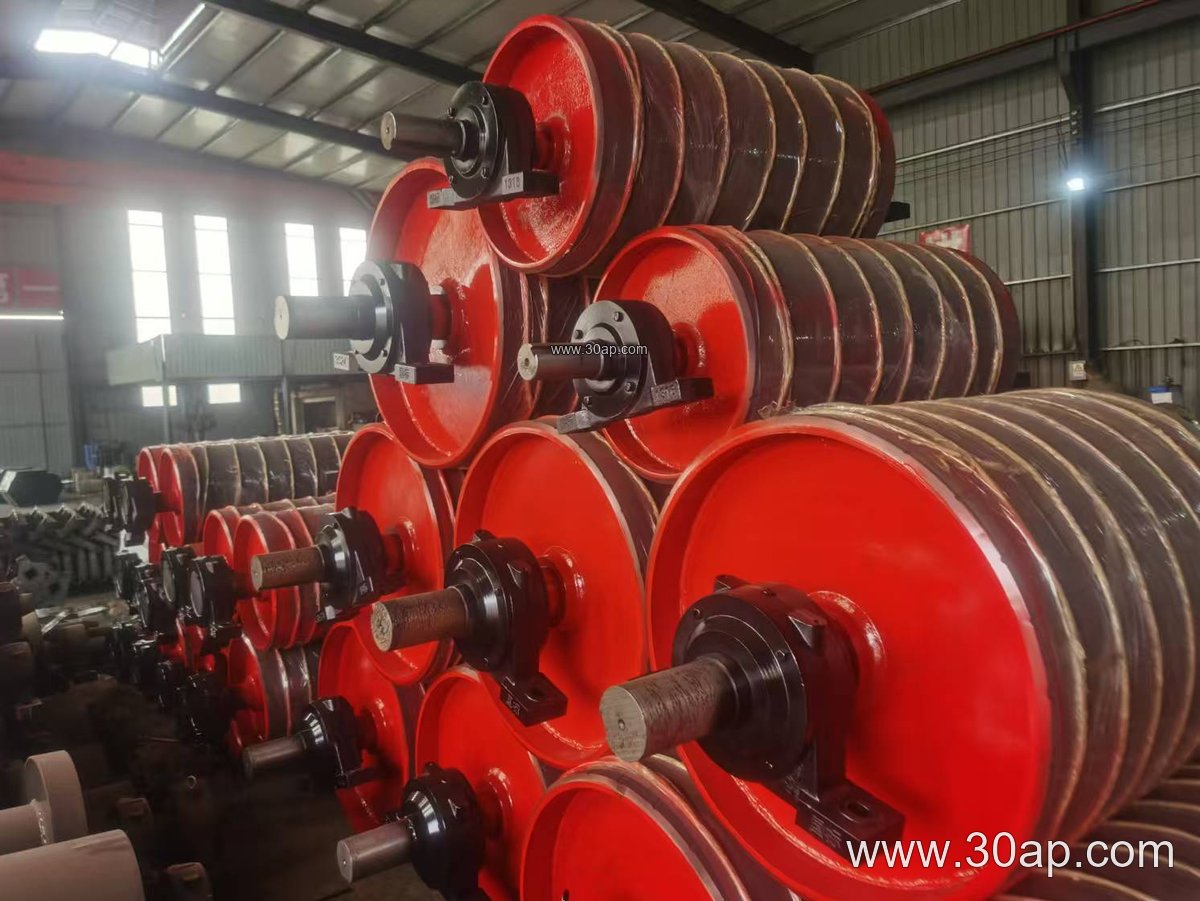
To improve grip and reduce belt slip, the pulley surface may be left plain or covered with rubber lagging. Lagging options include hot-vulcanized rubber, cold-bonded rubber, diamond grooving, herringbone pattern, or ceramic tiles. Thicknesses typically range from 8 mm to 20 mm, with thicker lagging used in high-torque or wet conditions. The pulley face width is usually slightly wider than the belt; for example, a B1200 belt might use a pulley face around 1400 mm, while a B800 belt could use about 950 mm. These are common references, not fixed rules.
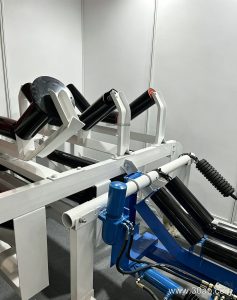
Bearings are housed in sturdy pillow blocks or flanged bearing housings, and the whole assembly is mounted on a conveyor bracket or frame. Some drive pulleys are integrated with an electric motor inside the shell—known as an electric drum pulley—but the traditional external drive remains widespread for heavy-duty applications.
Where It Is Used
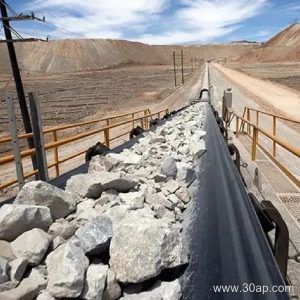
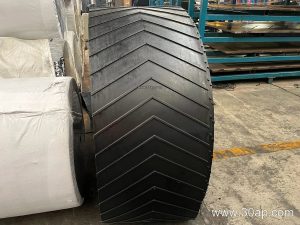
The main drive pulley appears in almost every belt conveyor system. In a limestone quarry, it powers the primary crushing feed; in a coal mining operation, it drives the underground haulage belt; in a cement plant, it moves clinker and raw meal; and in a power plant, it ensures a steady flow of coal to the boilers. The pulley must match the belt type—whether that is an abrasion-resistant conveyor belt, a heat-resistant conveyor belt, or a flame-retardant conveyor belt for underground coal mining. The drive pulley’s lagging and diameter are selected to suit the belt’s tension and the load profile.
How to Select the Right Main Drive Pulley
Buyers should consider several factors beyond simple dimensions. First, calculate the required torque and belt tension to determine the pulley diameter and shaft size. Larger diameters reduce bending stress on the shaft and improve belt life, but they take up more space. Common diameter ranges include Ø200, Ø315, Ø500, Ø800, Ø1000, and up to Ø1800 mm for high-capacity systems. Second, choose the lagging type based on environment: diamond or herringbone rubber for general bulk handling, ceramic lagging for highly abrasive materials like iron ore or copper ore, and plain steel for lightly loaded, clean applications.
Third, match the pulley face width to the belt width—B650 with about 750 mm face, B1000 with about 1150 mm, B1400 with about 1600 mm, and so on. Remember that these pairings are typical references, not mandatory combinations. Finally, verify the bearing type, sealing arrangement, and ease of maintenance. A well-selected main drive pulley will reduce downtime and keep your conveyor running smoothly, whether you are handling aggregates, cement, or coal.
Maintenance Tips for Long Service Life
Regular inspection of lagging wear, belt tracking, and bearing temperature helps prevent unexpected failures. Keep the pulley surface clean and avoid material build-up, which can cause belt misalignment. When lagging wears down, re-lagging or replacement restores traction. Always follow the manufacturer’s torque specifications when tightening shaft-mounted components, and ensure the pulley is properly aligned with the conveyor frame and idler rollers.