What a Large-Diameter Conveyor Pulley Does
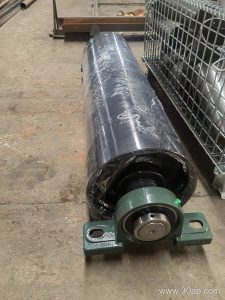
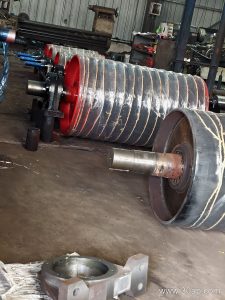
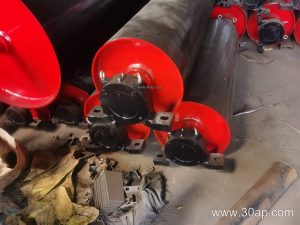
A large-diameter conveyor pulley is the main rotating drum at the head, tail, or tensioning point of a bulk handling conveyor. Its larger shell raises the contact arc and reduces the bending stress that the belt must absorb as it wraps around the drum. In a quarry, a coal washing plant, or a power station coal yard, this drum is often the component that sets the pace for the whole belt line. It is still a conveyor pulley in the ordinary sense; the difference is the shell diameter, the shaft size, and the bearing arrangement needed to carry the load.
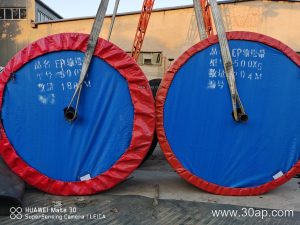
Because the drum is bigger, the belt does not have to bend as sharply. That matters most with stiff carcasses such as Steel Cord Conveyor Belt and heavy Multi-Ply Fabric Core Conveyor Belt, where repeated tight wrapping can shorten service life. A larger pulley also gives more room for lagging and for the bearing housing, which helps on high-tension drives.
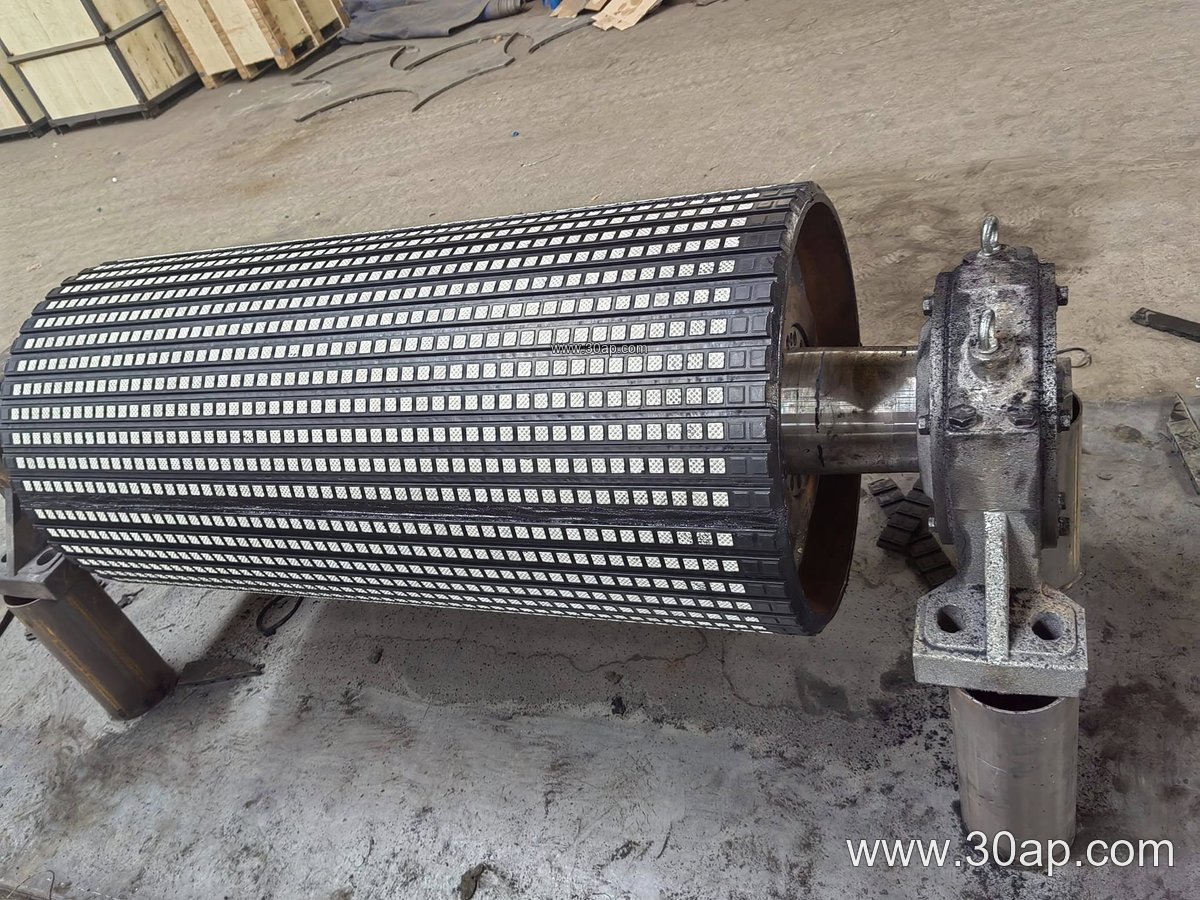
Construction and Surface Options
The shell is usually rolled steel, welded to end discs and a hub, then machined. The shaft is sized by torque and radial load, not by belt width alone. Common shaft diameters range from about Ø80 to Ø200 mm on larger units, while shell diameters commonly run from Ø630 up to Ø1800 mm depending on the duty. Face width is normally wider than the belt, for example a B1200 belt may run on a pulley with roughly 1400 mm face width, and a B800 belt on about 950 mm.
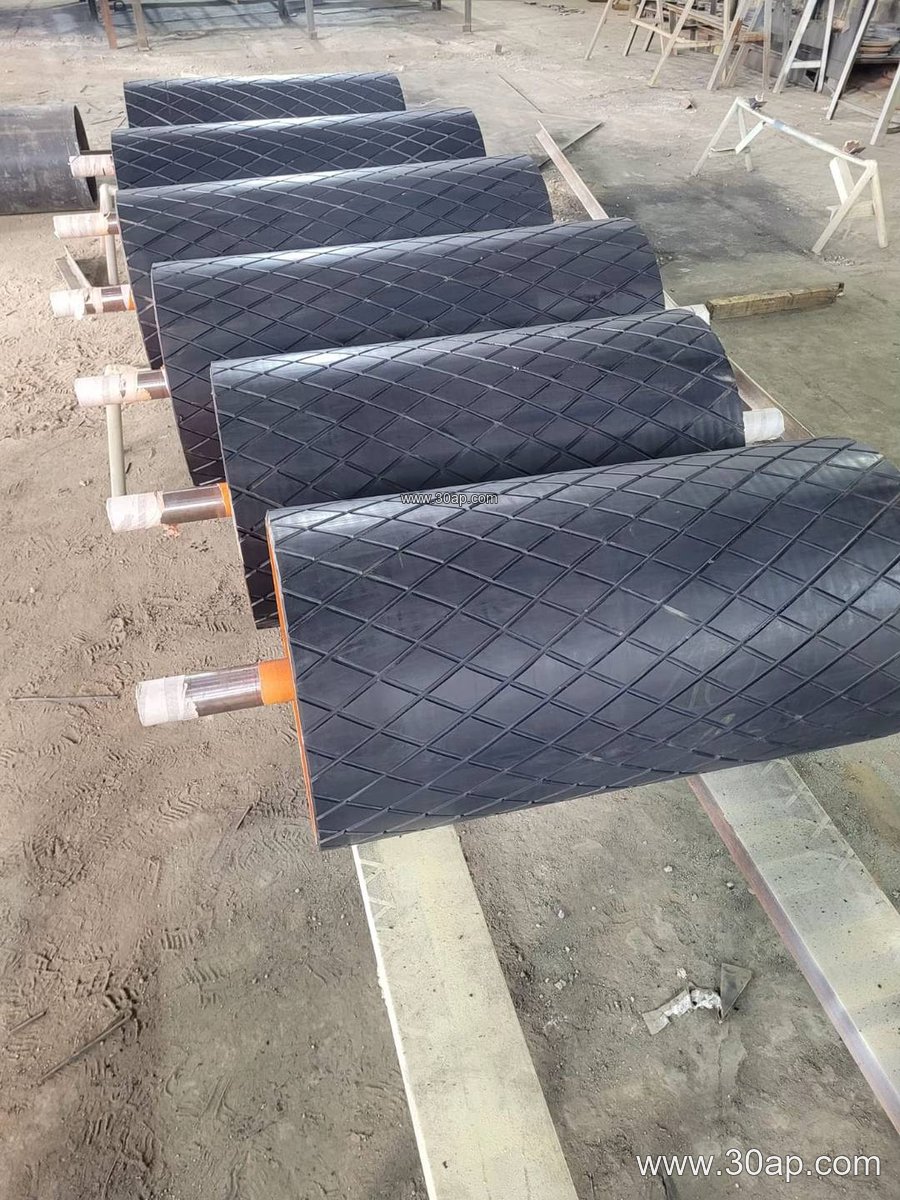
Surface treatment is a key buying decision. Plain finish suits light, clean duty. Rubber lagging, cold-bonded or hot-vulcanized, improves grip and cushions the belt. Diamond and herringbone patterns help shed water and fines, while ceramic lagging is chosen where slip and wear are severe. Lagging thickness is commonly 8, 10, 12, 15, or 20 mm.
- Drive or head position: transmits torque, often with diamond or ceramic lagging.
- Tail position: guides the return belt and may use a self-cleaning surface.
- Bend or snub position: increases wrap angle, usually plain or lightly lagged.
- Tension position: takes up slack, often paired with a take-up frame.
Drive, tail, and bend pulleys are not interchangeable. A bend pulley is not a substitute for a drive drum, and a tail pulley should not be ordered as a drive unit.
Where It Fits in the Plant
These drums appear in stone crushing lines, cement clinker conveyors, iron ore and copper ore handling, port bulk terminals, and tunnel muck removal. In a crusher discharge line, a large-diameter drum at the head keeps a high-tension Abrasion Resistant Conveyor Belt running straight. In a coal yard, a Flame Retardant Conveyor Belt may run over a lagged drive pulley where fire safety is required. A pipe conveyor or a Chevron Conveyor Belt line may also use a larger drum to control belt tracking.
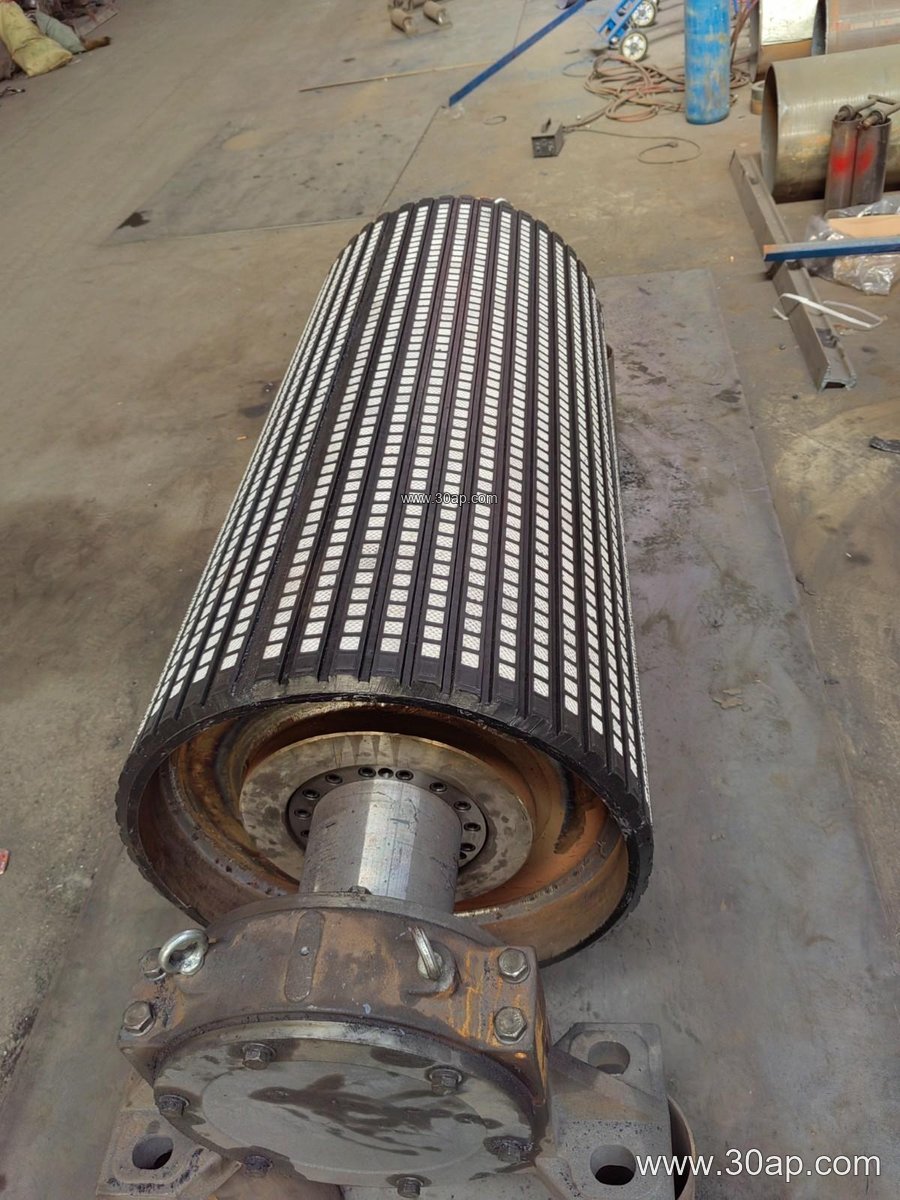
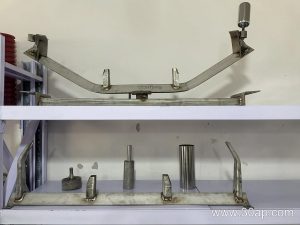
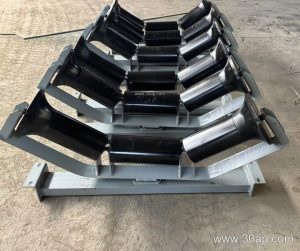
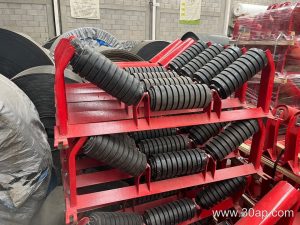
Matching the drum to the belt matters. A Heavy-Duty Mining Conveyor Belt with a thick carcass needs a bigger wrap radius than a thin EP Conveyor Belt. The conveyor pulley, the conveyor belt, and the idler roller set should be reviewed together so that the belt does not kink at the terminal.
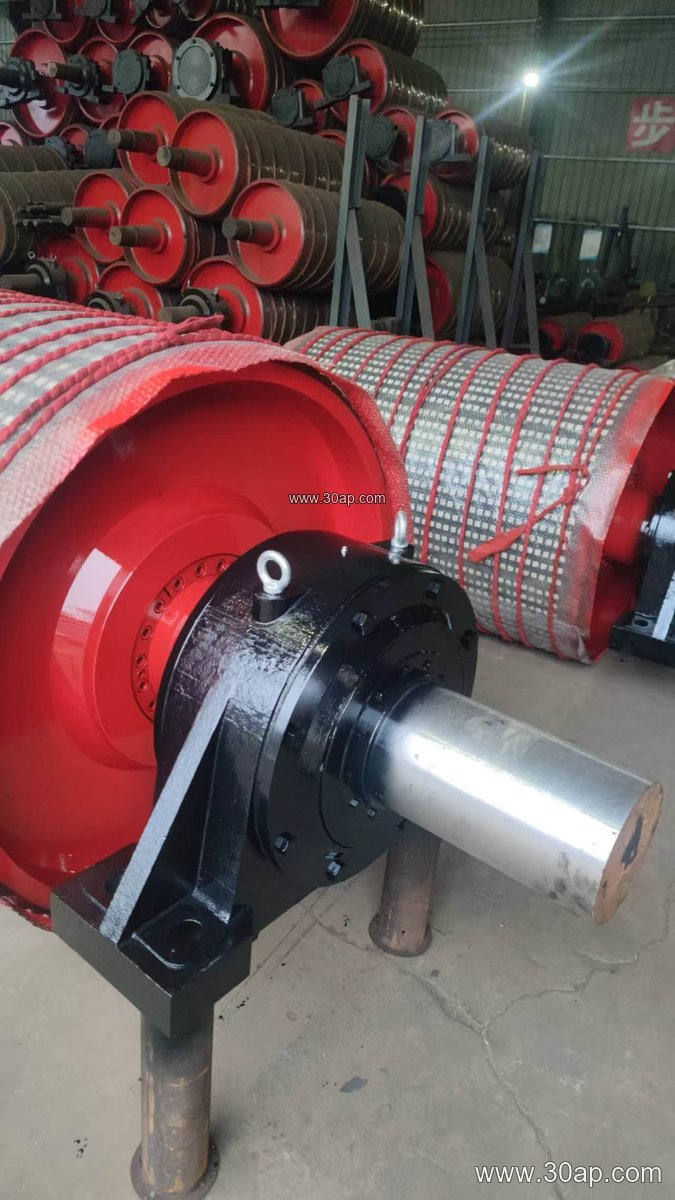
Specification Reference
The table below shows typical combinations. These are reference values, not fixed rules, and final sizes are set by the conveyor design.
| Belt width | Typical face width | Example drum size |
|---|---|---|
| B650 | about 750 mm | B650 × Ø500 |
| B800 | about 950 mm | B800 × Ø500 |
| B1000 | about 1150 mm | B1000 × Ø630 |
| B1200 | about 1400 mm | B1200 × Ø1000 |
| B1400 | about 1600 mm | B1400 × Ø800 |
| B1600 | about 1800 mm | B1600 × Ø1250 |
| B1800 | about 2000 mm | B1800 × Ø1400 |
Shaft diameters commonly range from Ø50 to Ø200 mm. The bearing size, hub fit, and keyway are chosen from the actual load case, not copied from a belt width chart.
What Buyers Should Check
Ask for the calculated shaft load, the lagging type and thickness, and the bearing arrangement. Confirm the face width against the belt, and confirm that the drum radius suits the carcass stiffness. For a conveyor bracket and frame, check that the mounting holes and clearance match the pulley hub. Finally, specify the working environment: a Heat Resistant Conveyor Belt in a cement plant may need a different lagging compound than an Oil Resistant Conveyor Belt in a recycling line.