What a Guide Idler Bracket Does on a Conveyor
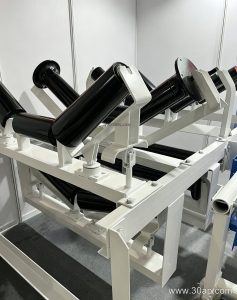
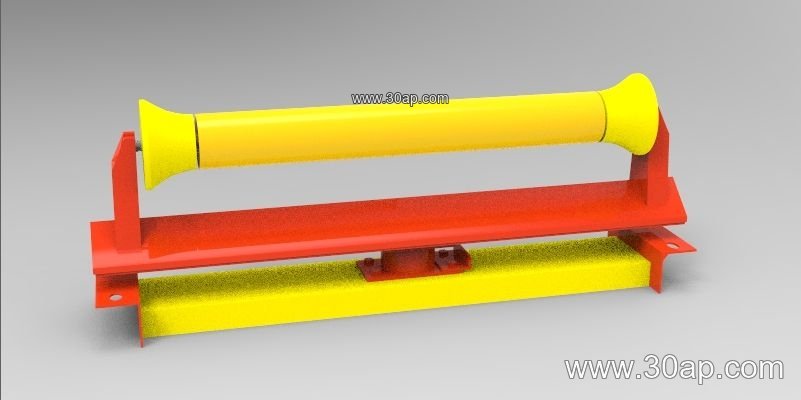
A guide idler bracket is the mounting component that holds a guide idler in a fixed position relative to the belt path, keeping the belt centered as it runs. While a training idler responds to misalignment by pivoting, the guide idler bracket provides a stable reference point, usually near a pulley or at a transfer point where side loads are highest. On a quarry conveyor or a cement plant feed line, this small steel assembly often decides whether a fabric core conveyor belt tracks cleanly or rubs against the structure.
Because the bracket sits close to moving parts, its geometry matters as much as its strength. The mounting face, the offset of the roller axis, and the clearance to the belt edge all influence how the guide idler contacts the belt. A bracket that is too far inboard will pinch the edge; one that is too far outboard will not guide at all.
Construction and Common Materials
Most guide idler brackets are fabricated from angle steel, channel steel, or folded steel plate, then drilled or slotted for mounting bolts. Welded brackets usually receive a protective coating, and in dusty or wet service the coating and the weld quality are what determine service life. The bracket must resist vibration from the idler roller as well as occasional impact from lump material.
- Angle steel frames for light to medium duty sections
- Channel steel for heavier guide assemblies
- Folded plate for compact, low-profile mounts
- Slotted holes to allow field adjustment of position
Adjustability is a practical advantage. A slotted guide idler bracket lets maintenance staff fine-tune the roller position after belt splicing or after the frame has settled, without cutting and re-welding.
Where Guide Brackets Fit in a Conveyor Line
Guide brackets are typically installed just ahead of a conveyor pulley, after a loading point, or along a section where the belt tends to wander. In a coal mining conveyor belt system, they are often paired with self-aligning idlers to correct drift before the belt reaches the head pulley. In a power plant coal handling gallery, a guide idler bracket may be bolted to the stringer close to the transfer chute, where off-center loading is common.
They also appear in aggregate and ore circuits handling abrasive material, where a heavy-duty mining conveyor belt can generate significant side force if tracking is poor. The bracket itself does not carry the main belt load; it positions the guide roller that nudges the belt back on line. For that reason it should be matched to the stringer spacing and to the diameter of the idler it supports.
Matching Bracket, Belt Width, and Roller Diameter
There is no single bracket size for every conveyor. The bracket length and mounting hole spacing follow the belt width and the trough geometry, while the roller seat follows the idler diameter. Common belt widths in the reference range include B500, B650, B800, B1000, B1200, B1400, B1600, B1800, B2000, B2200, and idler diameters such as Ø89, Ø108, Ø133, Ø159, and Ø194. A B800 guide bracket with a Ø108 idler is a typical mid-range pairing, but the same belt width can be designed with other roller diameters depending on load and speed.
| Reference Item | Typical Values | Note |
|---|---|---|
| Belt width | B500 to B2200 | Bracket length follows the frame design |
| Idler diameter | Ø89, Ø108, Ø133, Ø159, Ø194 | Seat height matched to roller |
| Trough angle (related idlers) | 20°, 30°, 35°, 45° | Guide brackets are usually separate from trough sets |
| Mounting | Bolted or welded | Slotted holes aid adjustment |
Note that trough angle is a property of the carrying idler set, not of the guide bracket itself. When a plant uses a 35° trough on an EP conveyor belt line, the guide bracket is selected for position and roller fit rather than for trough angle. Avoid assuming that one belt width locks in one roller diameter; the correct pairing comes from the conveyor design.
Buyer Checklist Before Ordering
Confirm the belt width, the guide idler diameter, the stringer hole pattern, and the required offset from the belt edge. Ask whether the bracket will be welded or bolted, and whether slots are needed for adjustment. Check the surface treatment against the environment, since wash-down areas, coal dust, and coastal humidity demand different protection. For high-abrasion service with a high abrasion resistant conveyor belt, thicker section steel is often worth the extra cost.
Finally, treat the guide idler bracket as part of a system with the idler roller, the conveyor pulley, and the belt. A well-made bracket installed at the wrong offset will still allow mistracking, so field adjustment and periodic inspection of bolt tightness should be part of the maintenance routine.