What a Power Plant Conveyor Pulley Does
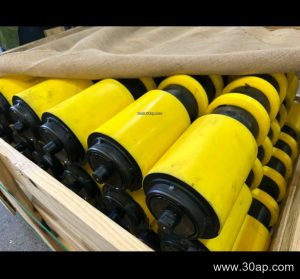
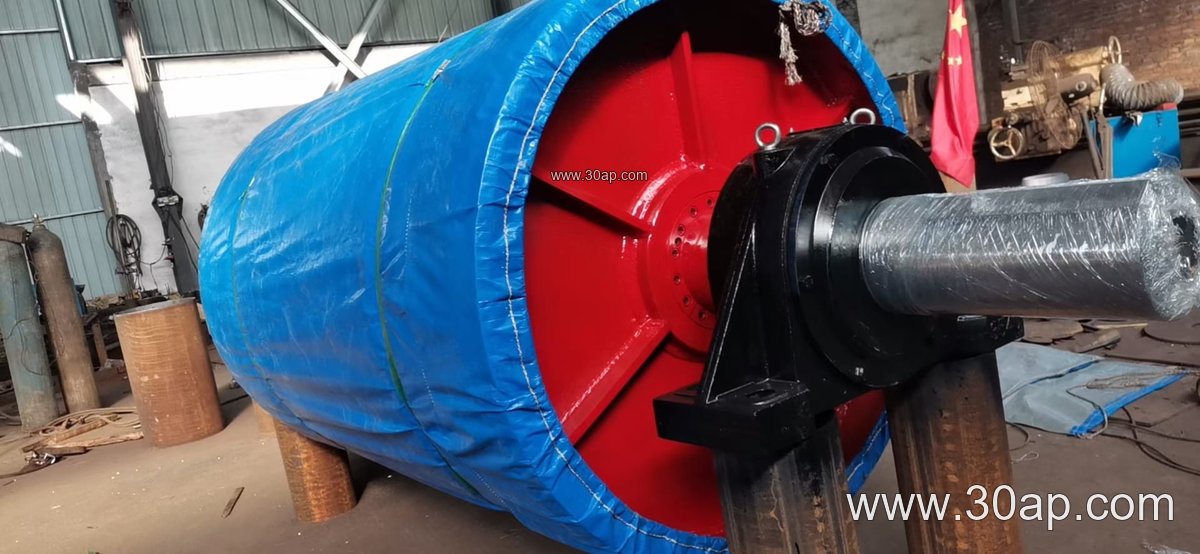
A power plant conveyor pulley is the rotating drum that drives, tensions, or redirects the belt in a coal handling or bulk material transport line. In a typical coal-fired station, these pulleys sit at the head of the unloading conveyor, at the tail where material is fed, and at tensioning or bend stations along the route. The pulley transfers torque from the drive shaft to the belt surface through friction, so its diameter, shell thickness, lagging, and shaft design all affect how reliably the line runs.
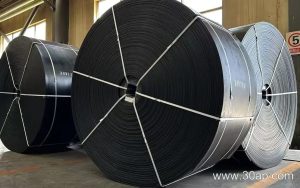
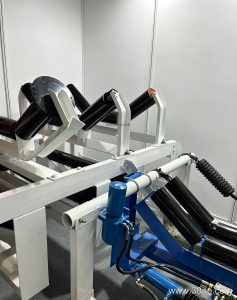
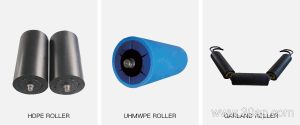
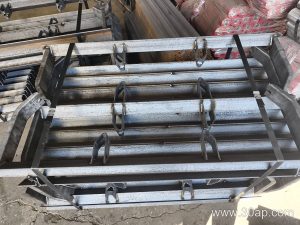
Because power plants often run continuous shifts, the pulley must tolerate dust, abrasive coal, and occasional heat exposure. A well-matched unit keeps belt tracking stable and reduces the load on the conveyor belt, idler roller, and conveyor bracket assemblies.
Construction and Surface Options
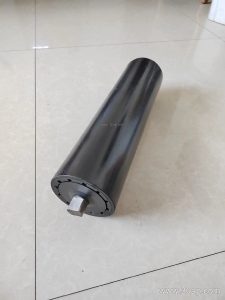
Most units use a welded steel shell with end discs and a through shaft, or a hub-and-bushing design for easier removal. The shell may be plain, or covered with rubber, ceramic, or grooved lagging to raise friction. Common surface forms include plain face, cast rubber, cold-bonded rubber, hot-vulcanized rubber, diamond grooving, herringbone grooving, and ceramic lagging. Lagging thickness is frequently 8, 10, 12, 15, or 20 mm, chosen according to belt tension and slip risk.
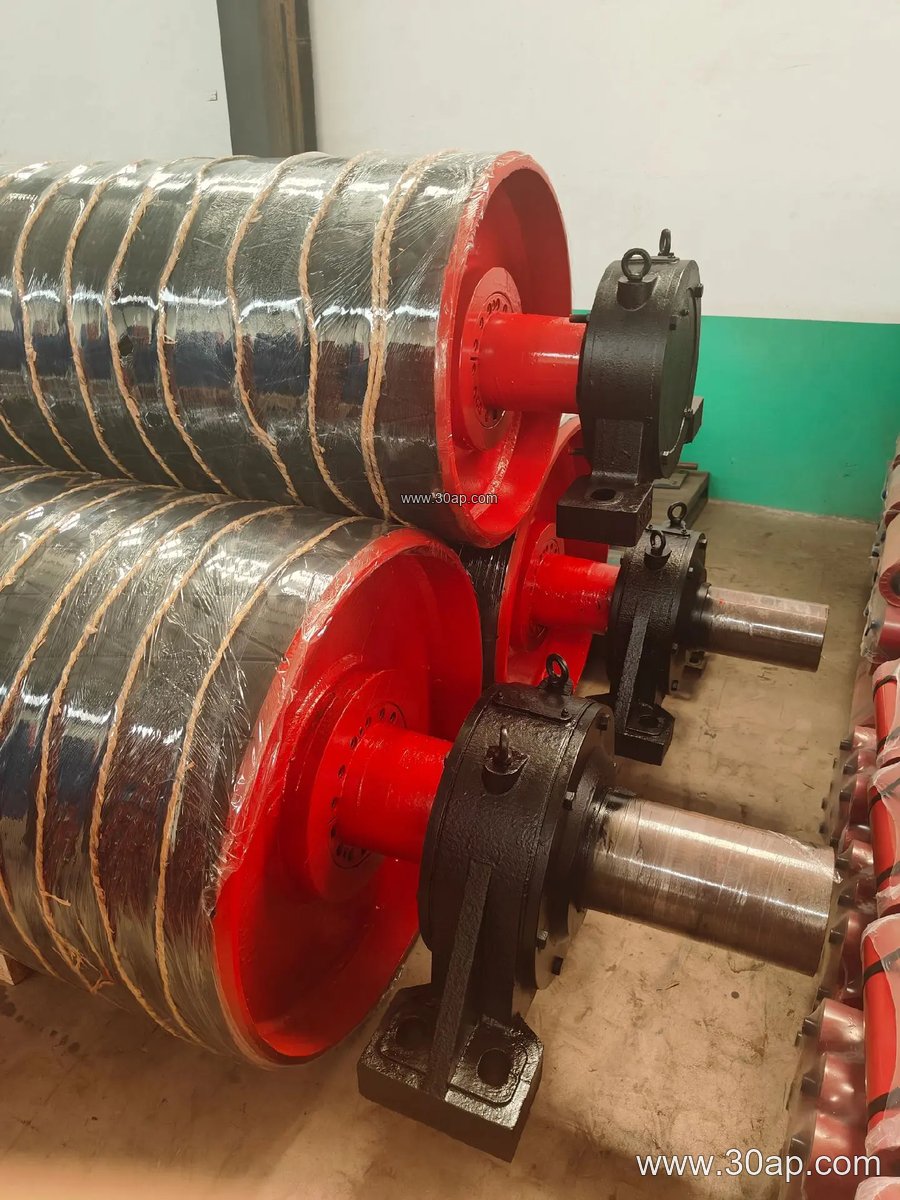
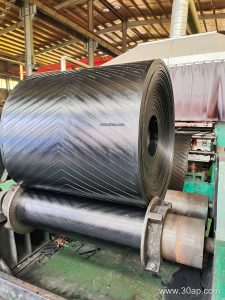
For coal handling, a flame retardant conveyor belt is often paired with anti-static lagging to reduce spark risk. In limestone or ash service, an abrasion resistant conveyor belt and a ceramic-lagged drum work together to limit wear. Where coal arrives warm from a nearby process, a heat resistant conveyor belt may call for a heat-tolerant lagging compound.
Common Sizes and Design Combinations
Dimensions are not universal; they follow the conveyor design. The table below shows typical reference ranges, not fixed supply promises.
- Belt width: B400, B500, B650, B800, B1000, B1200, B1400, B1600, B1800, B2000, B2200, B2400
- Pulley diameter: Ø200, Ø250, Ø315, Ø320, Ø400, Ø500, Ø630, Ø800, Ø1000, Ø1250, Ø1400, Ø1600, Ø1800
- Face width: usually wider than the belt, e.g. B400 about 500 mm, B800 about 950 mm, B1200 about 1400 mm, B1800 about 2000 mm
- Shaft diameter: Ø50, Ø60, Ø70, Ø80, Ø90, Ø100, Ø120, Ø140, Ø160, Ø180, Ø200
Example pairings such as B800 × Ø500, B1200 × Ø1000, or B1400 × Ø800 are common in design drawings, but one belt width can match several pulley diameters depending on wrap angle and tension. Shaft size is set by torque and bearing load, not by belt width alone.
Where It Fits in the Plant
In a coal yard or limestone receiving station, the drive pulley at the head end pulls the loaded belt, while the tail pulley supports the return side. A bend or snub pulley increases wrap angle around the drive, improving grip without a larger drum. Tensioning pulleys in a take-up tower keep the belt from sagging as it stretches.
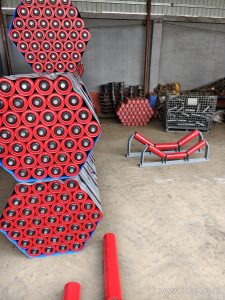
Similar duties appear in cement plants moving clinker, in steel plants handling sinter, and in port terminals loading bulk cargo. In all these settings, the pulley works alongside conveyor idlers, support brackets, and the belt itself, so alignment and balance matter as much as the shell material.
Buyer Checklist
Before ordering, confirm the belt width, belt type, and required wrap angle. State whether the position is drive, tail, bend, or take-up, since these are not interchangeable. Specify lagging form and thickness, shaft diameter, bearing type, and whether the pulley needs a removable hub. Ask for dynamic balance data for high-speed units. For coal or dusty service, confirm flame retardant and anti-static properties of both belt and lagging. Finally, check that the face width suits the conveyor frame and that the pulley can be serviced without dismantling the whole line.