What a Thick Conveyor Belt Is
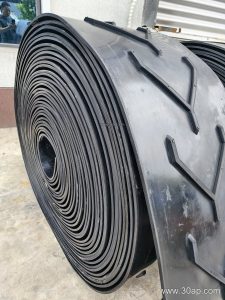
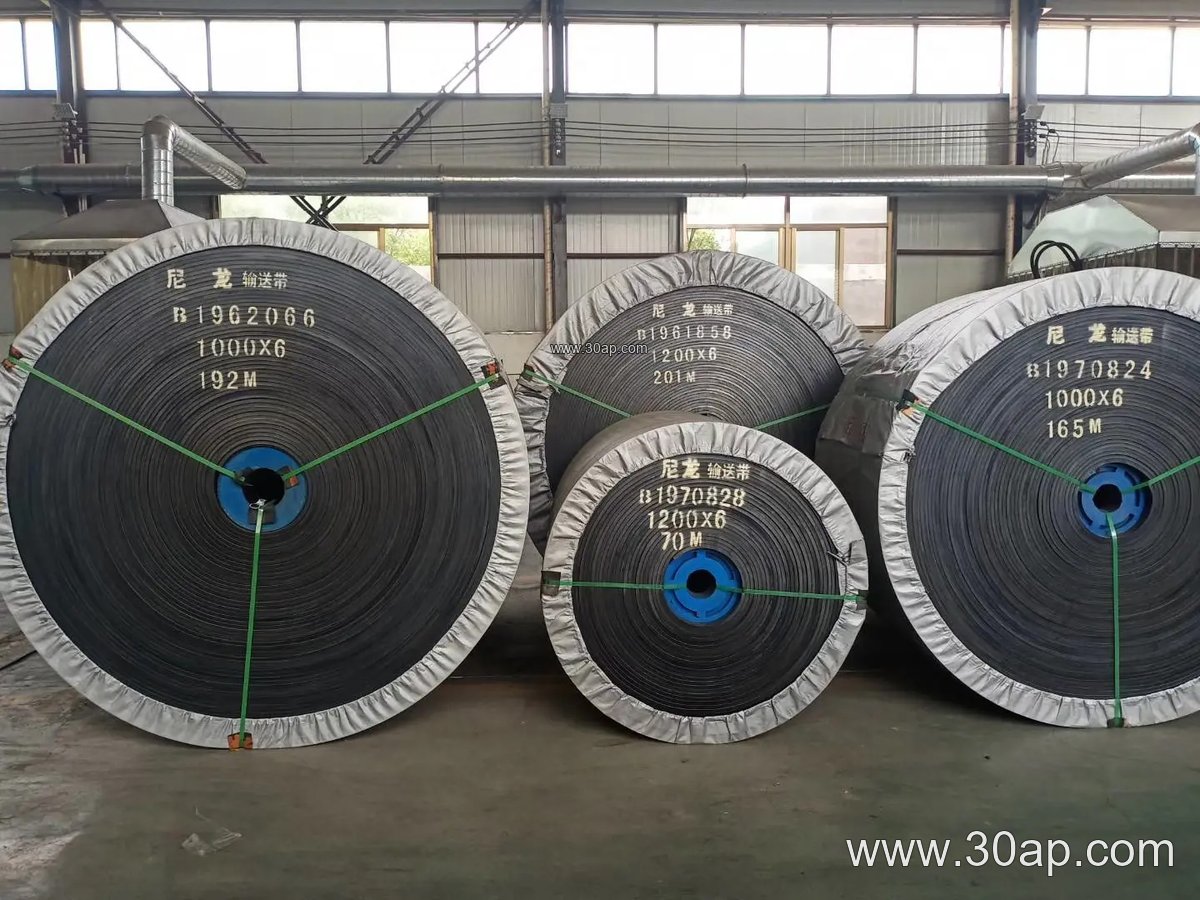
A thick conveyor belt is a heavy-duty belt built with a substantial rubber cover and a strong carcass so it can carry dense, sharp, or high-impact material without failing early. The extra thickness usually sits in the top cover, the bottom cover, or both, and it is matched to a carcass that can hold the load. Buyers often call this a heavy-duty conveyor belt, and the two terms describe the same product family when the added gauge is the defining feature.
Thickness alone does not make a belt suitable for every line. A thick belt must still match the pulley diameters, troughing idler roller spacing, and take-up travel of the conveyor. Drive pulleys, tail pulleys, and bend pulleys each play a different role, and none of them can be swapped for another in the specification.
How the Belt Is Built
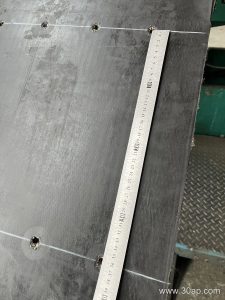
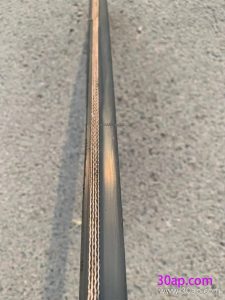
The carcass carries tension and resists tearing. Common constructions include multi-ply fabric, EP fabric, NN fabric, and steel cord. Cover rubber protects the carcass from abrasion, heat, oil, or impact. A typical heavy build might use a 6+2 mm or 8+3 mm cover on a multi-ply core, but the right combination depends on the duty.
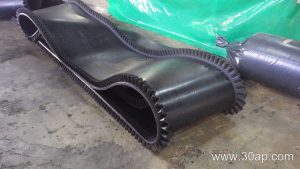
Edge construction matters too. Cut edges are common on fabric belts, while moulded edges help resist fraying in wet or abrasive service. For steep inclines, a chevron conveyor belt or a corrugated sidewall conveyor belt adds profile, but those are separate designs from a plain thick belt and should be specified on their own merits.
Typical Reference Ranges
- Carcass types: EP, NN, multi-ply fabric, steel cord
- Fabric strength grades: EP200 up to EP2000, NN100 up to NN400
- Steel cord grades: ST1000 up to ST3150
- Belt widths: B500, B650, B800, B1000, B1200, B1400, B1600, B1800, B2000
- Cover thickness examples: 4+2, 5+2, 6+2, 8+3 mm
- Ply counts: usually 2 to 6 layers in fabric cores
These figures are reference data, not a universal supply promise. A 1200mm wide conveyor belt and a 1800mm wide conveyor belt can both be built thick, and belt width does not dictate one fixed pulley diameter or shaft size.
Where Thick Belts Fit
Heavy material handling is the natural home. Mining conveyor belts move ore, waste rock, and coal; a coal mining conveyor belt in an underground mine often needs flame retardant and anti-static properties as well. Cement plants use thick belts under crushers and on clinker lines, while power plants, steel plants, ports, and sand and gravel yards rely on them for continuous bulk flow.
In a stone crushing line, a crusher conveyor belt must absorb impact from large lumps, so a thick abrasion resistant conveyor belt with a reinforced carcass is common. Quarry conveyor belts and aggregate conveyor belts face similar wear. Where material is hot, a heat resistant conveyor belt is chosen; where oil mist or grease is present, an oil resistant conveyor belt helps protect the core.
Other environments call for cold resistant, acid resistant, or chemical resistant grades. Food grade belts are a separate specification and should not be assumed from thickness alone. For long overland routes, a steel cord conveyor belt may be preferred over a fabric core because it offers high strength with less stretch.
Matching the Conveyor Hardware
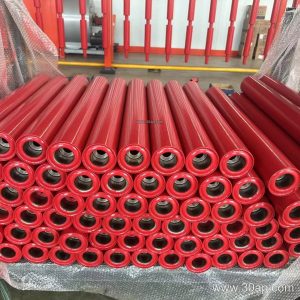
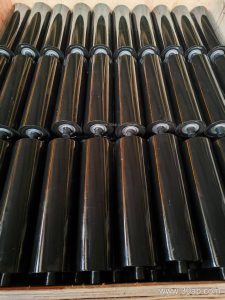
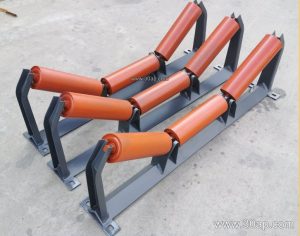
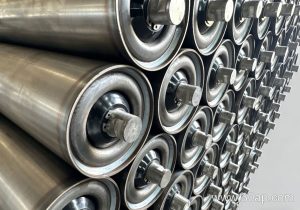
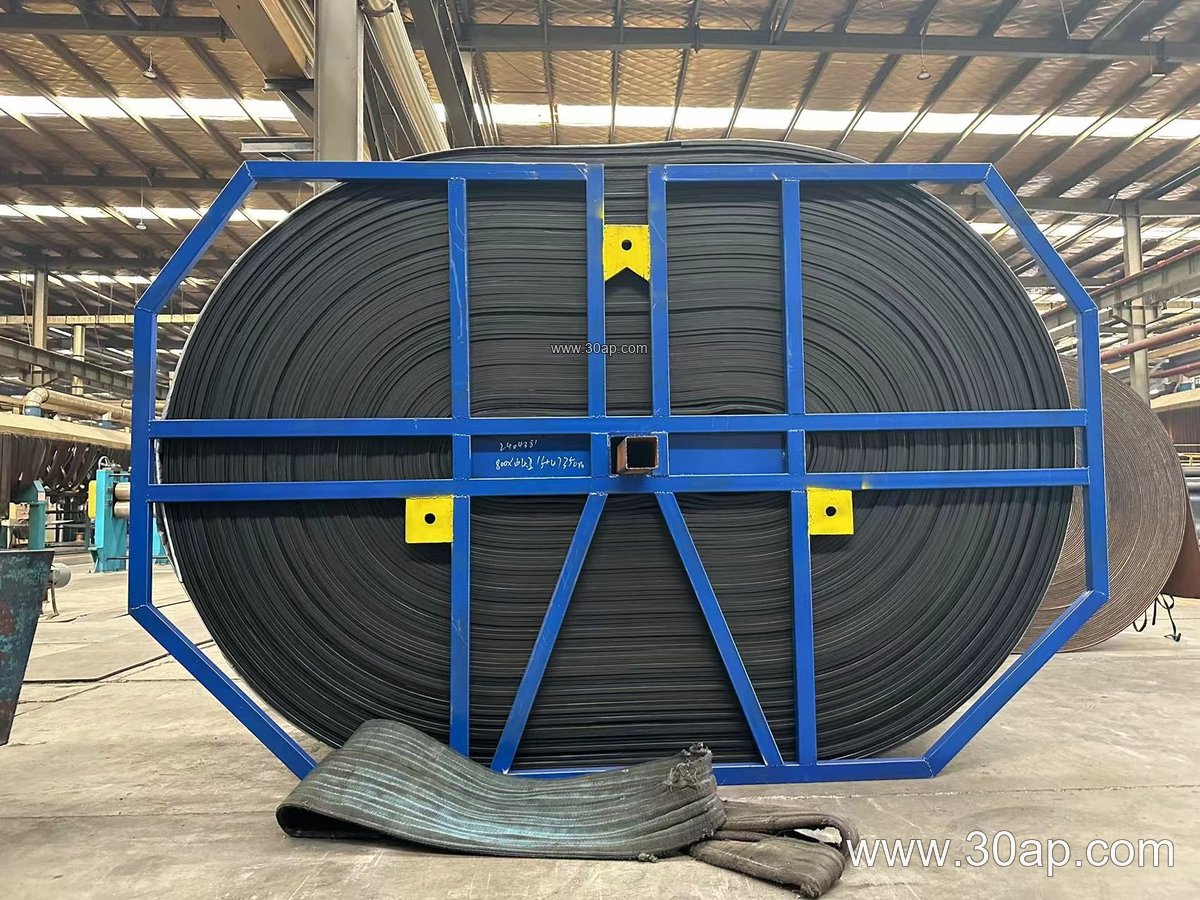
A thick belt is heavier and stiffer than a thin one, so the conveyor layout needs review. Troughing idler rollers should support the belt without pinching the edges. The drive pulley must have enough wrap and friction, and the tail pulley and bend pulley should be sized to suit the belt’s flex. Conveyor brackets and frames should be checked for load and alignment.
Transition distances matter. A very stiff belt needs more room to trough and to return flat. If the belt is too thick for the pulley diameter, flex fatigue can shorten life. This is why the belt specification and the pulley schedule should be reviewed together, not ordered separately.
What Buyers Should Confirm
Start with the material: lump size, temperature, moisture, oil content, and abrasiveness. Then confirm the required strength grade, cover thickness, and width. Ask about edge type, splice method, and whether an endless conveyor belt is needed. For underground work, request flame retardant documentation. For outdoor cold, state the minimum temperature.
Finally, check that the selected thick conveyor belt fits the existing idler roller spacing, pulley diameters, and take-up stroke. A belt that is thick but mismatched to the conveyor can wear faster than a thinner, correctly specified one. The aim is a balanced design, not maximum gauge for its own sake.